- Serving Boston and the Greater Boston Area

Garden Maintenance in Lexington, MA
If deer have eaten your hosta to the ground for the third summer running, or the historic district commission has opinions about what you can plant along your front walk, you are dealing with Lexington’s particular version of garden maintenance. Colonial-era houses on open, sun-drenched lots, many of them under district review, sit beside meadow edges and conservation land that keep deer pressure high year-round. A maintenance program here has to account for both the paperwork and the wildlife before it accounts for anything else.

What Garden Maintenance looks like in Lexington
Maintenance in Lexington starts with reading the property the way a historic commission would. Front-facing beds on Massachusetts Avenue, Hancock Street, and the roads around the Battle Green are often visible from the sidewalk and subject to guidelines about plant selection, hedge height, and fence lines, even when the work is routine pruning rather than new installation. We plan seasonal visits around what is permitted to change and what has to stay put, so a client never finds out mid-season that a shrub they wanted replaced is technically part of an approved streetscape.
The second variable is sun. Lexington’s colonial lots were laid out with open lawns and few mature shade trees close to the house, which was practical for eighteenth-century farming and is less practical for modern perennial borders. Full, unbroken sun for eight or more hours a day pushes soil moisture down fast and stresses plants that were bred for woodland-edge conditions. Our maintenance visits track soil moisture bed by bed rather than applying a blanket watering schedule, and we adjust mulch depth seasonally to hold what rain does fall.
Deer are the third and most persistent factor. Lexington backs onto conservation corridors and larger unfenced parcels, and deer move through residential gardens on a predictable circuit. A maintenance plan that ignores this simply replaces the same plants every spring. We build browse-resistant layers into the planting palette from the start and use repellent rotation and selective fencing where the architecture allows it, rather than treating deer damage as an annual surprise to be cleaned up after.
What we account for here
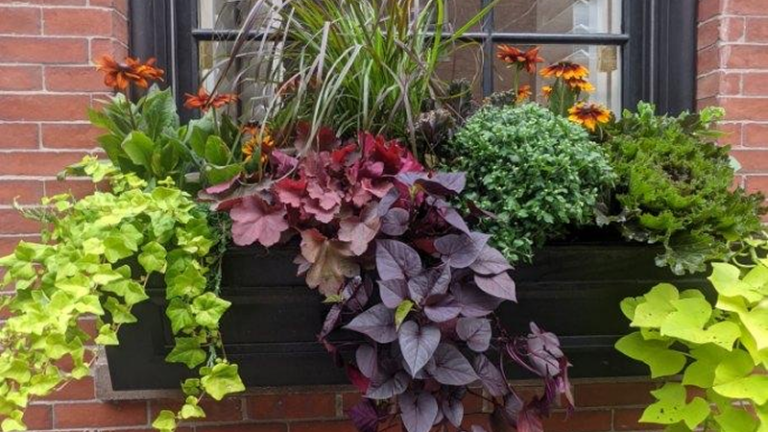
What we account for here
Four constraints come up on nearly every Lexington property we maintain, and each one changes how the work gets scheduled and executed.
Historic district and neighborhood review
Properties inside Lexington’s local historic districts, and many just outside them, are subject to expectations about street-facing plantings even for maintenance work. We keep a record of what has already been approved for each property so seasonal replacements stay within scope and don’t trigger a fresh review.
Open sun with limited canopy
Older colonial lots were cleared for farming and often still lack the tree canopy that shades garden beds in denser neighborhoods. We favor drought-tolerant and heat-tolerant selections for the sunniest exposures and set irrigation cycles to match, rather than relying on a standard suburban watering schedule that under-serves these beds.
Heavy deer pressure
Lexington’s proximity to conservation land and larger open parcels means deer traffic is constant rather than occasional. Plant selection, physical barriers, and a rotating repellent program are built into the maintenance contract from day one, not added after the first browsing incident.
Stone walls, split-rail fencing, and access
Many Lexington properties keep original stone walls or period-appropriate fencing along the property line, which narrows equipment access and changes how we move mowers, spreaders, and debris in and out of a bed. We plan crew size and hand-tool use around these physical constraints so the work doesn’t damage the very features that give the property its character.
Recent Lexington work
A typical recent engagement involved a colonial-era property near the historic district center where the existing front border had been repeatedly browsed by deer and the owner had lost patience with replanting the same perennials each spring. The maintenance plan shifted the palette toward deer-resistant natives and structural shrubs appropriate to the district’s streetscape guidelines, tightened the irrigation schedule to suit the property’s full-sun exposure, and set a pruning calendar that kept the front hedge within the height and form the commission had previously approved. The result was a border that held its shape through the season without the spring-to-spring replanting cycle the owner had grown used to.

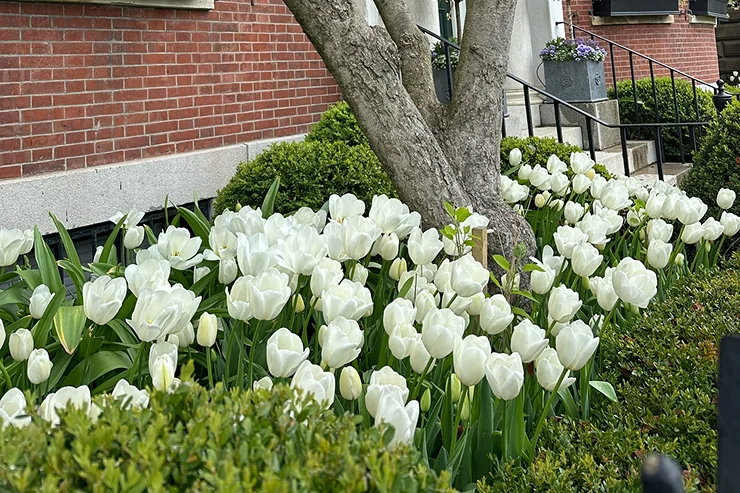
Other services we provide in Lexington
Garden maintenance is often the first service we take on for a Lexington client and rarely the only one. Many properties pair it with broader garden services in Lexington, including new design work for beds that need to be rethought around deer pressure or district guidelines, container and window box plantings for front entries that face the street, and drip irrigation retrofits for the open, sun-exposed lots common to colonial-era lots. Roof deck and terrace planting is less common on Lexington’s larger parcels but comes up on properties closer to the center, and low-voltage landscape lighting is a frequent addition once a garden has been brought back into shape, both to extend evening use and to highlight stone walls and mature plantings without disturbing a historic facade after dark.
How Lexington differs from our other suburban work
We maintain gardens under similarly tight conditions in Weston and Newton, and the comparison is useful. Weston’s challenge is typically large wooded lots and deep shade; Newton’s is often smaller urban footprints with mixed sun and dense neighboring construction. Lexington’s combination of open sun, colonial-era lot layout, and active historic review is its own set of variables, and a maintenance plan built for Weston’s shade tolerance or Newton’s tight-access scheduling would not hold up on a Lexington property without real adjustment.
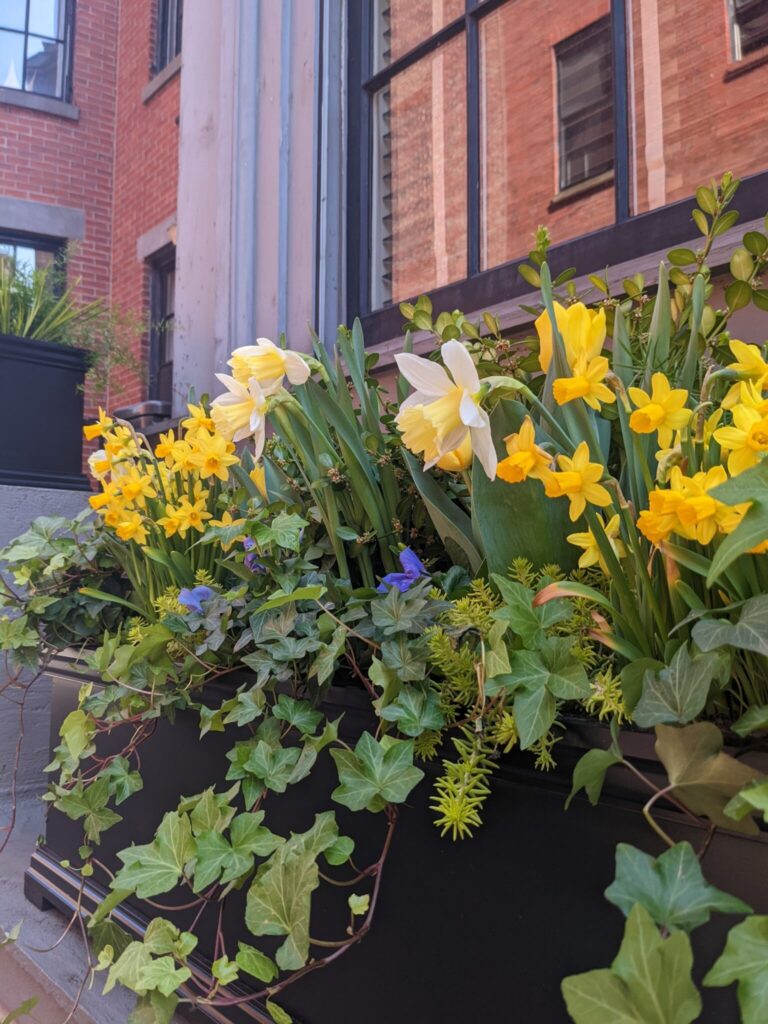
Seasonal scheduling around Lexington's calendar
Lexington’s civic calendar, particularly around Patriots’ Day and the town’s historic tourism season in spring, brings more foot and vehicle traffic through the center than in a typical suburban neighborhood. We schedule the heavier spring cleanup and mulch work either ahead of or just after this window on properties near the Battle Green and the historic district core, so crews and equipment aren’t competing with pedestrian traffic during the town’s busiest civic weeks.
What a maintenance visit actually includes
A standard visit covers bed edging, weeding, deadheading, pruning on a rotation appropriate to each shrub’s bloom cycle, and a check of irrigation lines for the season’s first and last visits. On Lexington properties we add a deer-damage check to every visit, since browsing can happen between scheduled stops, and we note any change to a street-facing bed against the property’s historic district file before making it, so nothing is planted or removed that would need retroactive approval.
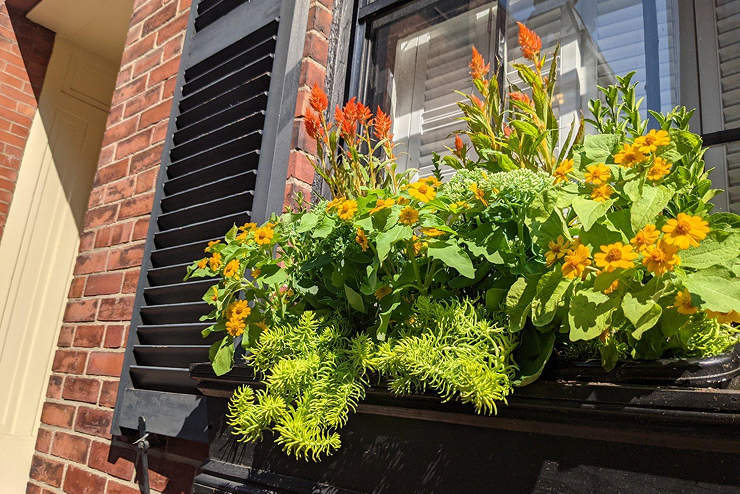
Start a Lexington garden maintenance plan
Lexington is about 10.2 miles from our Lexington location, and we schedule maintenance crews out to the neighborhood on a regular seasonal rotation. Call Rouvalis Gardens to arrange a site visit: we’ll walk the property, note the historic district status if one applies, assess deer pressure and sun exposure bed by bed, and put together a maintenance plan and cost estimate before any work begins. Most Lexington clients hear back with a proposed schedule within a few days of the initial visit.
What Our Customers Say
Frequently Asked Questions
Do you need historic district approval to maintain plantings that are already there?
Routine maintenance, such as weeding, pruning to an existing form, and deadheading, generally does not require new approval. Replacing street-facing plants or changing a hedge's height or footprint on a property inside a local historic district can require a review, and we check a property's status before making that kind of change.
How do you deal with deer without fencing the whole yard?
We build browse-resistant plants into the palette where the design allows it, use selective fencing around especially vulnerable beds rather than the full perimeter, and rotate repellent products through the season so deer don't adapt to a single scent or taste.
Our lot gets full sun all day. Does that change how often you visit?
Yes. Full-sun colonial lots lose soil moisture faster than shaded properties, so we track moisture bed by bed and adjust both mulch depth and irrigation cycles rather than applying the same schedule we'd use on a shadier lot.
Can you work around Patriots' Day and the spring tourist season near the Battle Green?
We schedule heavier spring cleanup and mulch work either before or after Lexington's busiest civic weeks on properties near the historic center, so crews aren't competing with pedestrian and vehicle traffic during that period.
Do you handle properties with original stone walls or split-rail fencing?
Yes. We plan crew size and equipment around narrower access points created by stone walls and period fencing, using hand tools where machinery would risk damaging the wall or fence line.