- Serving Boston and the Greater Boston Area

Garden Maintenance in Newton, MA
A Newton Centre foundation bed planted in 1998 and a Waban border under a stand of mature oaks need almost nothing in common except an experienced hand. Newton’s village lots carry decades of established shrubs and perennials, sit under heavy shade canopies that shrink the plant palette, and answer to a town tree ordinance that governs what can be removed or pruned back hard. Deer move through nearly every neighbourhood from Auburndale to Waban, browsing hostas and yews to the stem by midsummer. Maintenance here is less about installing something new and more about protecting what already works, correctly, on a schedule.

What Garden Maintenance looks like in Newton
Most calls we get from Newton start with a garden that used to look better. The bones are usually good — a mature dogwood, an old hydrangea hedge, boxwood that has been there since the house was built — but the maintenance has slipped into mowing and mulch, and the beds have gone quiet. Our work in Newton starts with an honest read of what the existing planting is actually doing: what the shade canopy allows, what the deer have already eaten back, and what the soil under fifty-year-old foundation plantings has become after decades of leaf litter and root competition.
Access matters more here than in denser Boston neighbourhoods. Newton lots are larger, often with side and rear gardens reached by narrow driveways or a path between houses, and the crew needs to work around cars, above-ground irrigation lines, and in some cases pools or tennis courts tucked behind the main planting. Light is the second constraint. Villages like Waban, Auburndale, and Chestnut Hill sit under a heavy tree canopy that was planted deliberately a century ago and has only gotten thicker, so a maintenance plan has to work with dry shade rather than fight it with sun-loving perennials that will sulk by July.
Deer pressure is the constant. A planting plan or a maintenance program that ignores it is a plan that fails by August. We build deer tolerance into pruning schedules, fertilizing timelines, and replacement selections so the garden isn’t reset every season by browsing. And because Newton enforces a tree ordinance that affects removals and significant pruning of protected trees, any work that touches a mature specimen on the property line or near a sidewalk gets checked against that ordinance before a saw goes near it, not after.
What we account for here
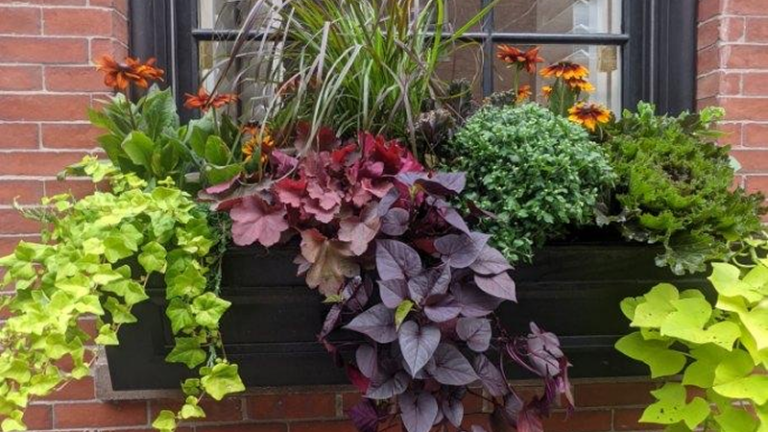
What we account for here
Newton’s mix of older stone walls, sloped lots, and clay-heavy soil shapes how we schedule pruning, feeding, and cleanup. We factor in drainage patterns near foundations, root competition from established trees, and seasonal timing so mulch, edging, and bed work hold up through the region’s freeze-thaw cycles.
Mature foundation plantings past their prime
Many Newton properties have shrubs and perennial borders original to the house, sometimes thirty or forty years old, with woody stems, compacted soil, and gaps where plants have died out. We renovate in stages — selective hard pruning, soil amendment, and targeted replacement — rather than ripping everything out, which preserves the character review boards and neighbours expect on a village street.

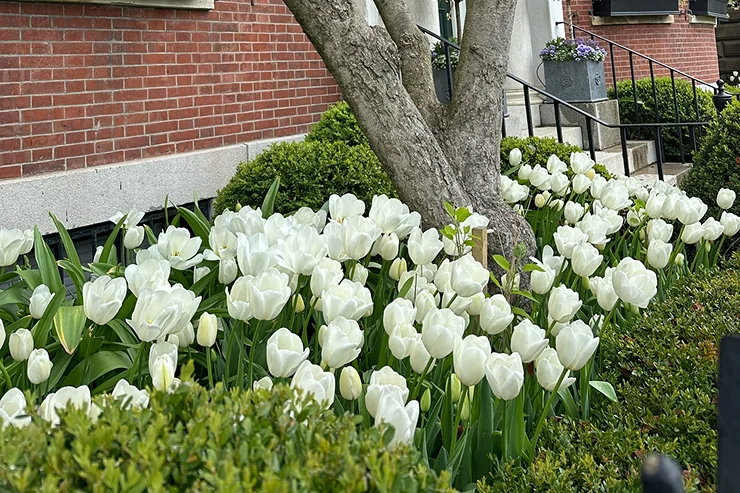
Deer browsing across village lots
Newton’s deer population moves freely through Waban, Chestnut Hill, and the Newton Highlands greenways, and a garden with no deer strategy gets eaten to the ground by midseason. We adjust plant selection toward deer-resistant material where replacement is needed, and where a client wants to keep vulnerable plants like hostas or hydrangeas, we build repellent applications and physical protection into the regular visit schedule instead of treating it as an afterthought.
Heavy shade under mature canopy
Villages like Auburndale and Waban sit under tree cover that has matured for generations, which means dry shade, root competition, and thin turf near the drip line. Maintenance plans account for reduced light and moisture by choosing top-dressing and watering routines suited to shade, and by pruning tree canopies — within what the town ordinance allows — to let enough light through for the understory to hold.

Town tree ordinance and protected trees
Newton regulates removal and significant pruning of trees over a certain size, particularly on lots near the public way. Before any structural pruning or removal that could fall under that ordinance, we confirm what’s required and, where a permit or town review applies, we build that step into the project timeline rather than surprising a client with a delay mid-project.
Recent Newton work
A recent project type we see often in Newton: a foundation planting original to a 1920s Waban colonial, overgrown and browsed hard by deer, brought back over two seasons with selective renovation pruning, deer-resistant replacement plantings along the most exposed edges, and a maintenance calendar timed to the shade pattern of a mature maple canopy overhead. No two Newton properties need the identical plan, but the pattern — protect what’s mature, work around deer and shade, respect the ordinance — repeats across the village.
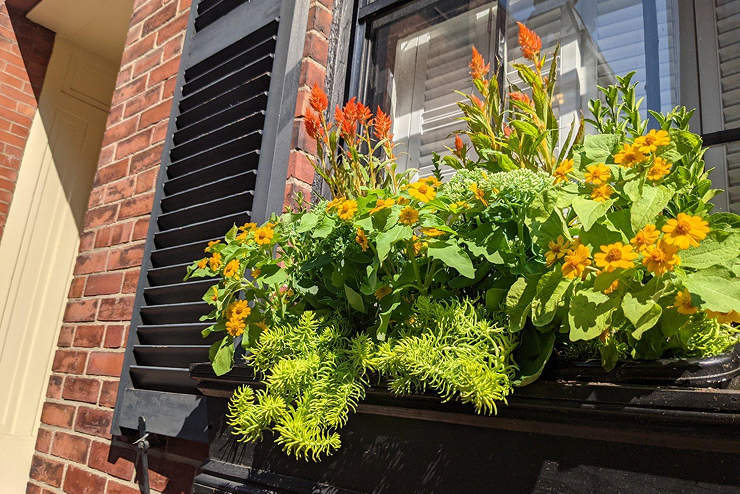
Other services we provide in Newton
Garden maintenance is usually the entry point, but most Newton clients eventually ask about more. We handle full garden services in Newton, including seasonal container plantings and window boxes for front entries facing the street, roof deck and terrace planting where a Newton property has one, drip irrigation installed to keep deep-shade beds and sun-exposed borders on separate watering schedules, and low-voltage landscape lighting for evening use of a garden that’s otherwise dark under canopy by early evening. For a full redesign of an existing bed or a new garden from scratch, our design and installation work is scoped separately and can run alongside an existing maintenance program.
Start a Newton garden maintenance program
Newton is roughly 8.6 miles from our Newton base, and we run regular maintenance routes through the village neighbourhoods on a fixed schedule. Call to arrange a site visit — we’ll walk the property, look at what the deer and the shade have done to the existing planting, and note anything that falls under the town’s tree rules before proposing a plan. Most Newton clients start with a single visit to assess scope, then move to a recurring seasonal schedule from there.
What Our Customers Say
Frequently Asked Questions
Does Newton's tree ordinance affect routine garden maintenance?
Routine pruning and bed work generally fall outside the ordinance. It becomes relevant for significant pruning or removal of larger, protected trees, which we check against town rules before proceeding on any Newton property.
How do you keep deer from undoing a season's work?
We build deer strategy into the maintenance calendar itself — choosing more resistant replacement plants where possible, and scheduling repellent applications or protective measures ahead of the browsing season rather than reacting after damage appears.
Can you maintain a garden that's mostly shaded by mature trees?
Yes, this describes a large share of Newton properties, particularly in Waban and Auburndale. We adjust watering, top-dressing, and plant selection for dry shade rather than applying a sun-garden maintenance routine that won't hold up.
Do you work with properties that already have an irrigation system?
Yes. Many Newton gardens have older in-ground irrigation that needs to be assessed alongside the planting — we'll check zones and coverage as part of the initial visit and flag anything that's watering the wrong areas for the shade pattern.
How often do you visit for maintenance in Newton?
It depends on the garden, but most Newton clients are on a biweekly or monthly schedule during the growing season, adjusted seasonally, with additional visits scheduled around deer browsing peaks and structural pruning windows.