Rouvalis Gardens

Container Gardening in Boston, MA

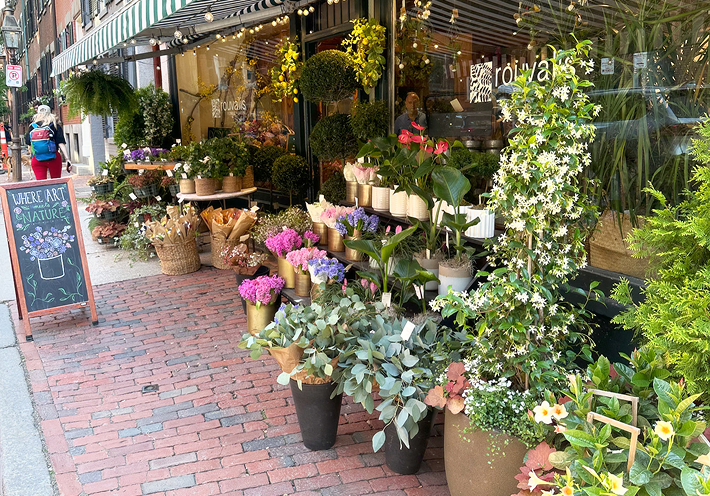
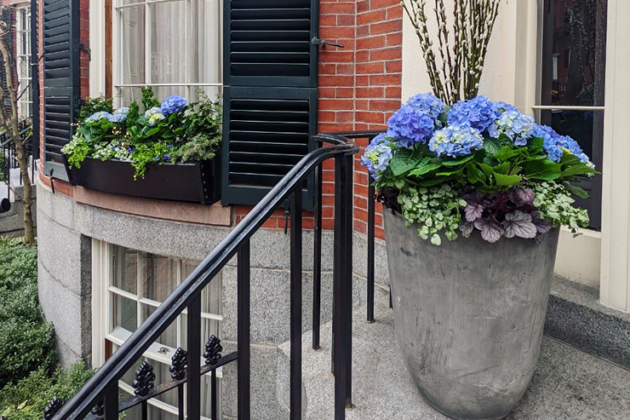
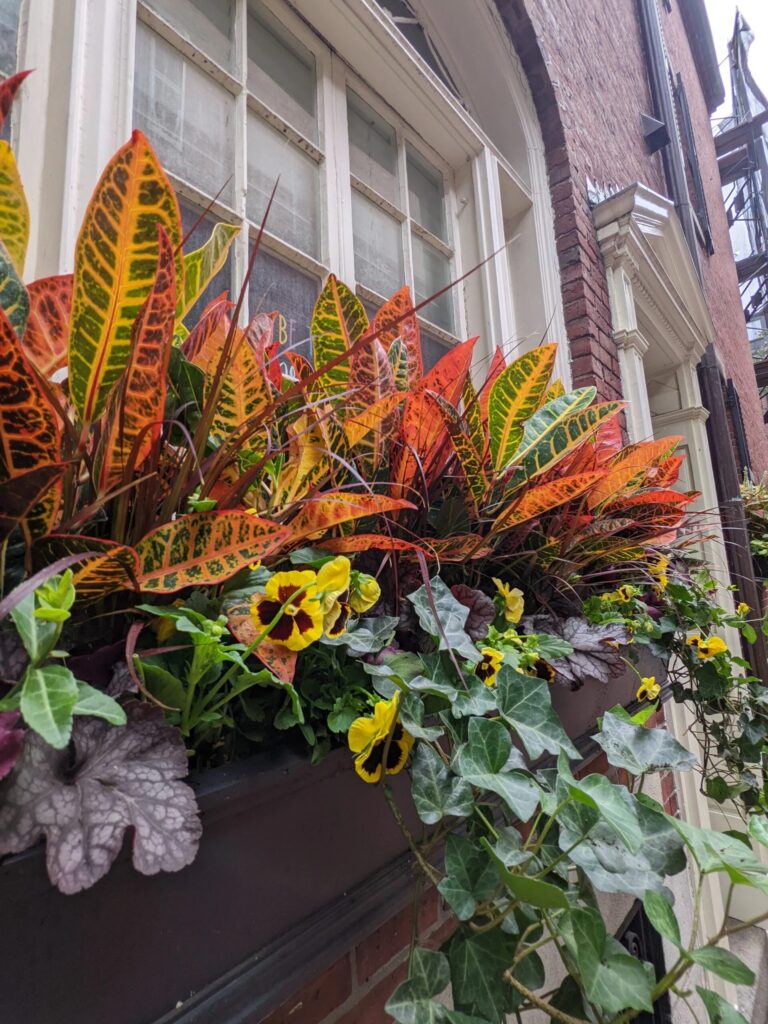
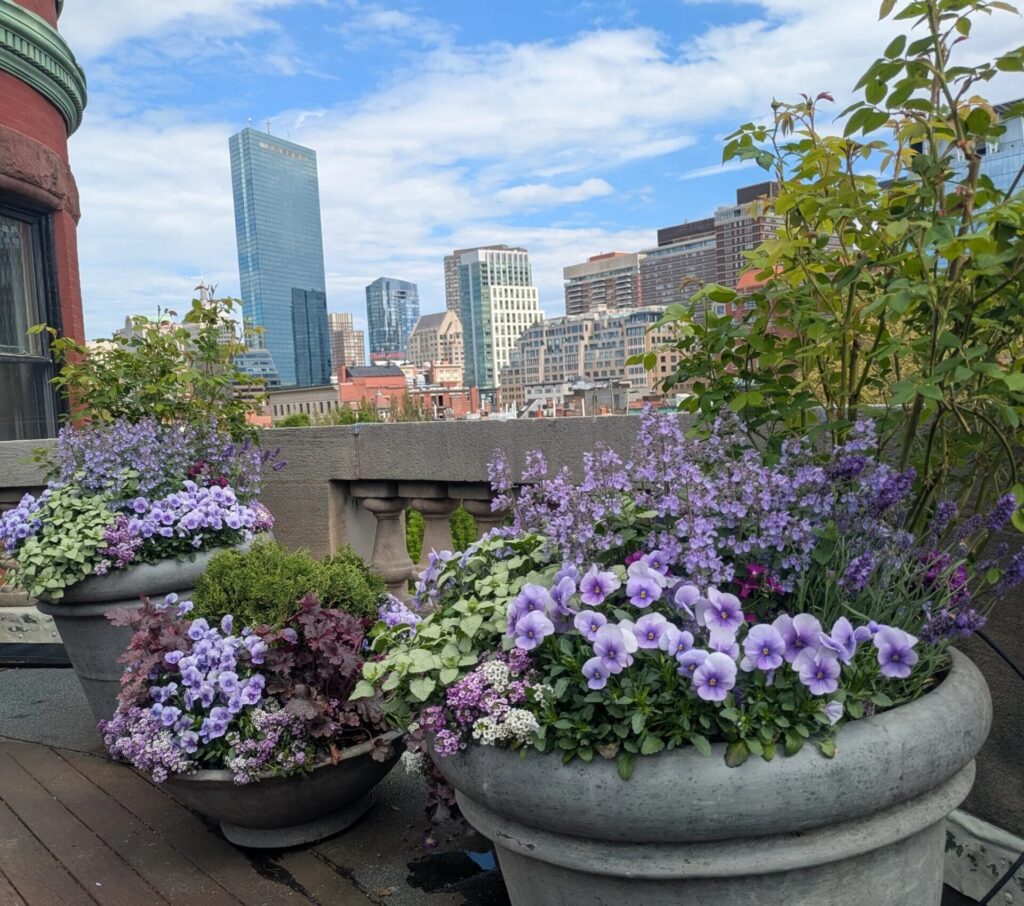
If your property has no planting bed — a brick stoop, a roof deck, a Beacon Hill window ledge, a fourth-floor terrace — container gardening is how you get a real garden anyway. It takes a planting plan matched to the exposure and weight limits of the specific spot, containers sized and drained correctly for a New England winter, and a maintenance schedule that accounts for how fast pots dry out on south-facing brick. Rouvalis Gardens designs, installs, and maintains container plantings for homeowners and property managers across Boston’s historic neighbourhoods and the western suburbs, from a single entry pair to a full rooftop program.

What's included

Site and exposure assessment

Before any plant list gets written, we look at what the space actually does over a full year: sun angle and duration against the facade, wind exposure at height, weight limits on a deck or roof membrane, water source and drainage, and any conditions specific to a historic district review. This determines container material, size, and placement before it determines plant selection.

Container and plant selection

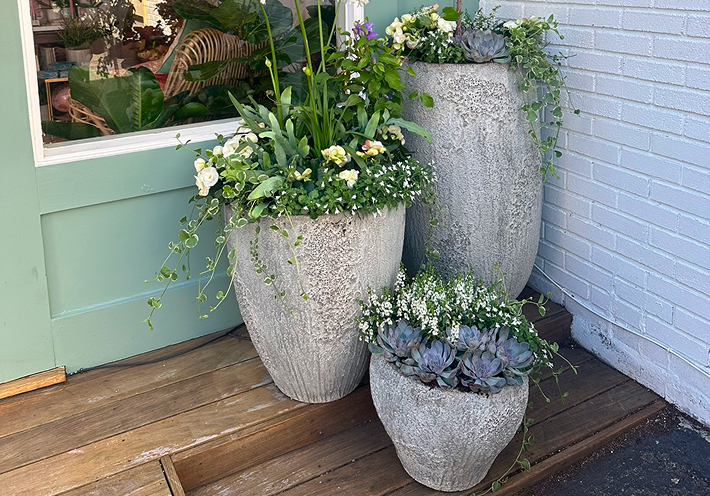
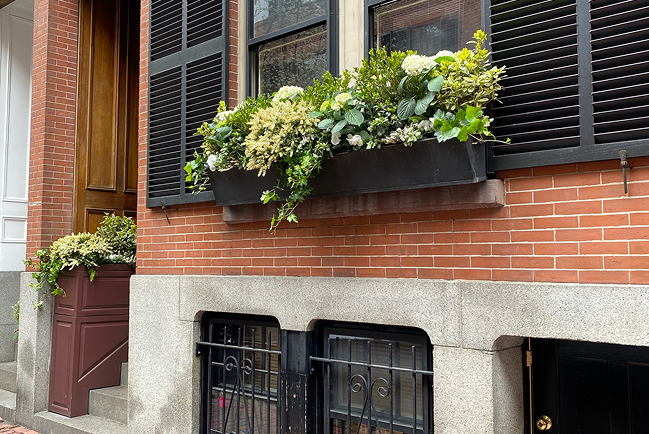
We choose pots and plant palettes together, not separately. Material (glazed ceramic, fiberglass, lead-look composite, wood) is selected for weight, insulation, and appearance; plant selection is built around the exposure assessment and the look the property calls for — formal boxwood and topiary for a Beacon Hill entry, looser perennial and grass combinations for a roof deck, trailing and upright mixes for window boxes. We source from growers we’ve worked with for years, not off a generic list.

Installation

Containers are set, drained, and planted on site, with soil mixes chosen for the container type — a lightweight roof-deck mix is not the same as a heavy ceramic urn mix. Where irrigation or lighting is part of the scope, we coordinate installation so tubing and wiring are placed before the final planting goes in, not retrofitted around it.

Drip irrigation integration

Hand-watering containers through a Boston summer is unreliable at best. We run drip irrigation to containers wherever the site allows a water source and timer placement, sized to the container count and sun exposure, so plants get consistent moisture without daily attention from the homeowner or building staff.

Seasonal changeovers

Container plantings on this schedule get replanted at least twice a year: a spring/summer planting installed after the last frost risk has passed, and a fall/winter planting — evergreens, branches, structural elements — installed before hard frost. We handle removal of the spent planting, soil refresh, and the new install as one visit.

Ongoing maintenance

Between changeovers, containers get scheduled maintenance visits — watering checks, deadheading, feeding, pest monitoring, and irrigation checks — on a frequency set by exposure and season. A south-facing rooftop in July needs more frequent attention than a shaded north-facing entry in April, and we set the visit schedule accordingly rather than applying one interval to every property.

Why container gardening matters in Boston specifically

Container gardening isn’t a stylistic choice for a lot of Boston properties — it’s the only option. Much of the North End and Beacon Hill has no ground-level soil at all: buildings sit directly on brick and stone with no yard, so every plant on the property lives in a container by necessity. That changes how containers need to be built and maintained; there’s no surrounding bed to buffer temperature or moisture, so the container itself has to do all the work a garden bed would normally do.
South-facing brick facades, common throughout Beacon Hill, the Back Bay, and the South End, radiate heat back into containers set against them. By mid-July, a container against south-facing brick can run significantly hotter and dry out significantly faster than the same container in an open bed, which is why plant selection and irrigation frequency for these locations get set differently from the start rather than adjusted after plants start struggling.
Roof decks and terraces above the fourth floor deal with a different problem: wind scour. Wind at that height is stronger and more constant than it is at street level, and it dries containers out fast, stresses tall or loose-branched plants, and can physically tip lightweight pots. Container weight, plant structure, and staking all get chosen with that wind exposure in mind, not just the sun exposure.
And the frost window in Boston runs from roughly mid-October to mid-May — a longer cold season than container plants in many parts of the country have to deal with. Containers left with the wrong soil mix or the wrong material can crack or heave over a Boston winter, and plantings installed on the standard national planting calendar will get caught by a frost that hits earlier, or lingers later, than that calendar assumes. Every planting and changeover schedule we run is set against this actual window, not a generic one.
Our process

1. Site walk and consultation. We visit the property, assess sun, wind, weight limits, water access, and any historic district considerations, and talk through what you want the space to do. Deliverable: a written site assessment and a scope of work.

2. Design and container/plant selection. We put together a planting plan — container sizes and materials, plant palette, placement — matched to the assessment. Deliverable: a design plan with a container and plant list, and pricing.

3. Sourcing and scheduling. Once the design is approved, we source containers and plant material and schedule the install around planting windows and, where relevant, building access or freight elevator booking. Deliverable: a confirmed install date and material order.

4. Installation. Containers are set, drained, planted, and — where in scope — connected to irrigation and lighting. Deliverable: a completed installation and a walkthrough of what’s been planted and how it’s set up to be watered.

5. Seasonal maintenance and changeovers. Ongoing visits keep the planting healthy between the spring/summer and fall/winter changeovers. Deliverable: a maintenance schedule and visit reports so you know what’s been done and when the next changeover is due.
Where we do this work
Rouvalis Gardens installs and maintains container gardens across fifteen neighbourhoods spanning Boston’s historic core and the western suburbs. In the city, that includes Beacon Hill, Back Bay, the North End, Charlestown, the West End, the South End, South Boston, and the Seaport, where ground-level soil is often unavailable and container work is the primary form of gardening a property can have. Further out, we work in Cambridge, Brookline, and Somerville, and in the western suburbs we cover Newton, Wellesley, Weston, and Lincoln. Each neighbourhood page details the specific site conditions — historic commission requirements, typical exposure, common property types — we plan around in that location.
Create Private Outdoor Living Space

Related services

Container gardening is often one piece of a broader planting program. Related services include Rooftop Garden Installation for terraces and roof decks, Seasonal Container Planting for properties on a spring/fall changeover schedule, Window Box Design & Installation, Drip Irrigation for Containers and Beds, and Low-Voltage Landscape Lighting for evening definition on containers and entries.

Year-Round Beauty in Boston Container Gardens

Call (617) 720-2266 to set up a site walk. We’ll assess the space, talk through what you want it to do, and follow up with a design plan and a fixed quote — no obligation to move forward until you’ve seen the plan.

What Our Customers Say

Frequently Asked Questions

Cost depends on container count, size, and material, plant selection, and whether irrigation or lighting is part of the scope. A single entry pair looks very different in cost from a full rooftop program. We give a fixed quote after the site walk, once the actual scope is known.
On south-facing brick or an exposed roof deck, containers can need watering daily during peak summer heat without irrigation. With drip irrigation installed and set on a timer, that drops to a periodic check rather than a daily task for you or building staff.
Yes. Containers get either a winter planting — evergreens, branches, structural elements suited to the mid-October through mid-May frost window — or protective care if they’re being left empty, including consideration of container material so freeze-thaw cycles don’t crack ceramic or ceramic-look pots.
In most cases, yes — container gardening is often the preferred approach precisely because it doesn’t alter the building facade or require ground disturbance. We factor commission guidelines for the specific district into the design so material and placement choices don’t create an approval problem.
We assess weight limits as part of the site walk and select container material and soil mix accordingly — lightweight fiberglass and a lightweight roof-deck soil mix instead of heavy ceramic and standard potting soil, where the limit requires it.
Yes. Container material, color, and shape are chosen as part of the design phase, matched to the facade, entry style, or existing hardscape.
Visit frequency is set by exposure and season — a south-facing or wind-exposed location in summer typically needs more frequent visits than a shaded spot in spring or fall. We set the schedule during the design phase and adjust it if conditions change.
We can do either. Most clients have us source containers as part of the design, matched to weight and exposure requirements, but we’ll work with existing containers where they’re suitable for the site.
For the spring/summer changeover and the fall/winter changeover, booking a few weeks ahead of the target install window gives us time to source plant material properly rather than working from whatever’s available on short notice.
Yes. We work directly with property managers and building staff on scheduling, freight elevator or access coordination, and standing maintenance contracts for shared entries, courtyards, and roof decks.