- Serving Boston and the Greater Boston Area

Garden Maintenance in Weston, MA
A Weston property on two or three wooded acres asks more of a maintenance program than a smaller in-town lot ever will. Deer move through these properties on their own schedule, mature tree canopy limits what will actually thrive at the bed line, and irrigation mains that run three or four hundred feet from the house lose pressure and even coverage by the time they reach the back plantings. Garden maintenance out here has to be engineered around those three facts before it can be about anything else.

What Garden Maintenance looks like in Weston
Most of the gardens we maintain in Weston sit on lots large enough that the planting beds are not one continuous zone but a series of distinct micro-environments: a sun-drenched entry border, a shaded woodland edge along a stone wall, a terrace planting that gets reflected heat off the house, and a lower meadow-adjacent area that stays damp into June. A maintenance visit has to treat each of those as its own problem rather than applying one blanket regimen across the property.
Access is generally easier here than in the denser Boston neighborhoods we also serve — long driveways and side-yard equipment access mean we’re rarely hand-carrying materials any distance — but the scale cuts the other way. A four-acre property with mixed sun and deep shade takes real time to walk, assess, and treat properly, and a crew that rushes it will miss the early signs of deer browse or a failing drip zone until the damage is already done.
Soil on these estate lots is often original glacial till with a shallow topsoil layer built up over decades of leaf litter, which holds moisture well under the canopy but can starve sun-exposed beds quickly in August. We test and amend by zone rather than by property, and we adjust our visit frequency seasonally — tighter in spring when deer pressure on new growth is highest, and again in fall for cleanup and protective treatments before winter.
What we account for here
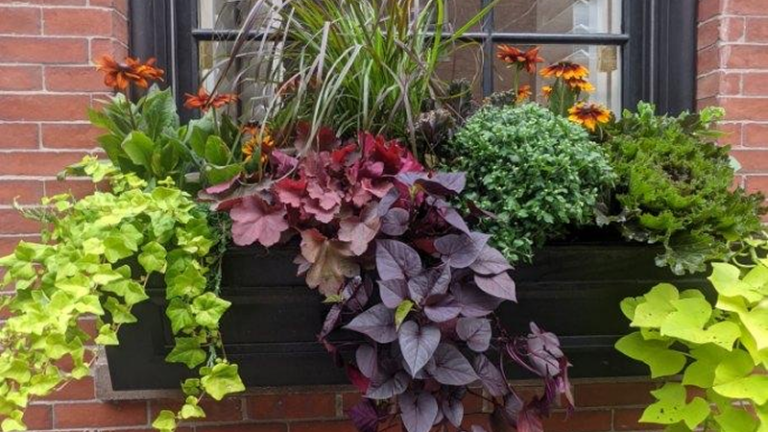
What we account for here
Weston properties tend to sit on generous, mature lots with established plantings, stone walls, and varied microclimates from one bed to the next. We factor in soil conditions, drainage patterns, and how each area of the landscape actually gets used before setting a maintenance schedule.
- Seasonal bed and border care
- Lawn health across sun and shade zones
- Pruning timed to plant type
Deer pressure
Weston carries some of the heaviest deer populations of any town we work in west of Boston. A planting plan that looks intact in April can be stripped by July without a deliberate strategy. We build maintenance visits around a rotation of taste and scent deterrents applied on a schedule tied to rainfall rather than a fixed calendar, and we flag plant selections during routine visits that are proving to be a standing invitation — swapping them out before an entire bed is lost rather than after.

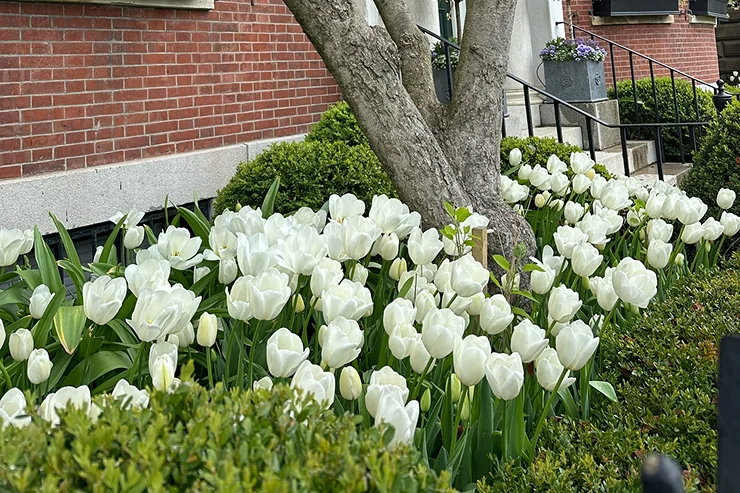
Extensive shade
Mature oak, maple, and white pine canopy across these lots means large sections of most gardens receive filtered or dappled light at best. Turf and sun-bred perennials struggle here regardless of how well they’re fed. Our maintenance approach in the shaded zones focuses on soil health, leaf litter management, and plant choices suited to low light, rather than fighting the canopy with fertilizer and hoping for a result the site conditions won’t support.
Long irrigation runs
When a zone starts several hundred feet from the control valve, pressure loss and uneven coverage are the norm, not the exception. We check pressure at the head, not just at the source, and we zone drip and spray lines by both plant need and distance from the main so that the last bed on a run gets the same reliable watering as the first. Long runs also mean more opportunity for a line break to go unnoticed under mulch or groundcover, so we inspect exposed and buried tubing at every visit rather than waiting for a plant to show stress.
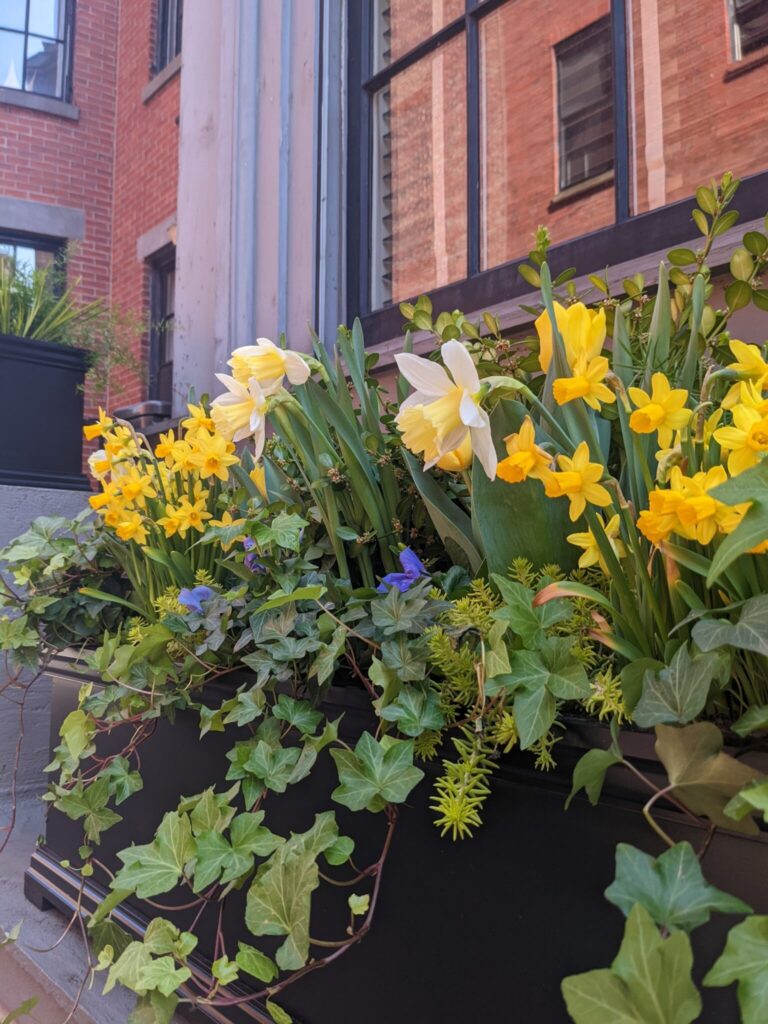
Large wooded lots and equipment access
Acreage this size means a maintenance visit is planned like a small route, not a single stop. We map each property by zone — entry gardens, terrace plantings, woodland edge, lower beds — and sequence the visit so that time and materials go where they’re needed most, rather than treating three acres the way we’d treat a quarter-acre in-town lot.
Recent Weston work
A representative recent project involved a wooded estate lot where the client’s previous maintenance provider had been treating the whole property uniformly and losing new plantings to deer every season. We re-zoned the beds by light and browse exposure, moved several plant groupings to positions the deer traffic patterns don’t cross as heavily, and extended the drip system with pressure-compensating emitters on the longest run to the back border. The client’s biggest complaint — repeated deer damage to spring plantings — dropped off within the first growing season.
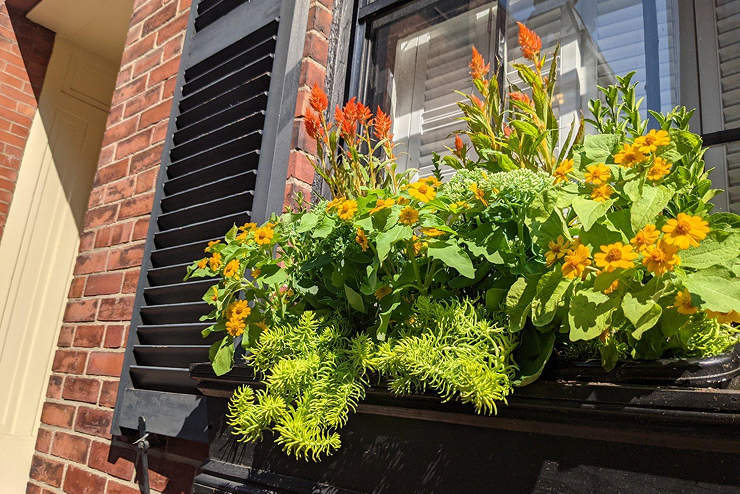
Other services we provide in Weston
Garden maintenance is one piece of a broader program many Weston clients rely on us for. We also handle full garden services in Weston, including seasonal design refreshes and new bed installation on estate properties. For properties with significant hardscape or terrace space, we design and plant containers and window boxes suited to the shade and wind conditions particular to these larger lots, and we install and maintain low-voltage landscape lighting to make woodland gardens and stone walls visible after dark without the glare that flat, open-lawn fixtures produce. Drip irrigation design and retrofits are a natural pairing with maintenance here, given how often existing systems in Weston were installed for smaller planting plans than the ones now in place. Roof deck and terrace planting comes up less often on wooded lots than in-town, but where a property has a pool terrace or bluestone patio, we treat that planting as its own zone within the broader maintenance plan.
Start a Weston garden maintenance plan
Weston is roughly 13.8 miles from our Weston location, and we run regular maintenance routes through town, so scheduling a first visit doesn’t mean waiting weeks for a special trip. Call us to talk through your property — number of zones, deer history, current irrigation setup — and we’ll put together a maintenance plan built around those specifics rather than a generic package. After the call, we schedule an on-site walk of the property, confirm the plan and visit frequency, and get you on the route.
What Our Customers Say
Frequently Asked Questions
How often does a Weston property need maintenance visits given the deer pressure?
Most wooded Weston lots need more frequent spring and early summer visits — often every two to three weeks during peak deer activity — to keep deterrent treatments effective on new growth, tapering to a standard biweekly or monthly schedule once plants have hardened off.
Can you work with our existing irrigation system, or does it need to be replaced?
In most cases we can retrofit and re-zone an existing system rather than replace it outright. Long runs common on Weston's larger lots often just need pressure-compensating emitters and better zoning rather than a full teardown.
Do you maintain gardens in the shaded, wooded parts of the property as well as the open lawn areas?
Yes. On estate lots we treat shaded woodland-edge beds as their own zone with different soil care, plant selection, and watering than sun-exposed borders, rather than applying one maintenance approach across the whole property.
How do you handle deer without resorting to fencing the whole property?
We rely primarily on a rotation of taste and scent deterrents timed to weather and growth stage, combined with plant selection adjustments in the most heavily browsed zones. Fencing is an option for specific high-value beds but isn't usually necessary property-wide.
Is garden maintenance different from the garden design and installation services you offer in Weston?
Yes. Maintenance covers the ongoing care of an existing garden, while our <a href="/garden-services-weston-ma/">garden services in Weston</a> page covers new design, installation, and larger renovations. Many clients use both, starting with a design project and moving into a maintenance plan afterward.