- Serving Boston and the Greater Boston Area

Window Boxes in Wellesley, MA
A window box on a Wellesley estate has to solve for deer before it solves for color. Between the mature tree canopy that shades most street-facing facades by early afternoon and the cooler, damper microclimate that settles around the Wellesley College pond system and rolls out into the surrounding neighborhoods, plant selection here is a different exercise than it is closer to Boston. Formal Georgian and Colonial Revival facades expect boxes with real proportion and restraint, not an armful of trailing annuals bought on impulse.

What Window Boxes looks like in Wellesley
Wellesley’s larger lots mean window boxes are rarely the only planting statement on the property — they sit in relation to foundation beds, allées, and formal entry gardens that were often laid out decades ago with a specific plant palette in mind. A window box installed without reference to that existing design vocabulary reads as an afterthought. We start by looking at what the house is already doing: brick versus clapboard, painted trim color, the pitch of the roofline, and the sightline from the street versus the driveway approach.
Light is the second variable, and it is rarely straightforward. Estate lots with a century of tree growth often put second-floor and even first-floor window boxes in dappled or partial shade for most of the day, which rules out the sun-hungry annuals that perform well in more open Boston neighborhoods. We build mixes around heuchera, caladium, torenia, and shade-tolerant ferns where the canopy demands it, reserving petunias and calibrachoa for the handful of true full-sun exposures a property might have — often a south-facing kitchen wing or a detached garage.
Soil and moisture behave differently here too. The clay-heavy soil common across Wellesley’s older residential streets holds water longer than the sandier fill found in reclaimed Boston lots, which changes drainage requirements inside the box itself and affects how often irrigation needs to run. And because many Wellesley properties are large enough to have their own well or a zoned irrigation system already in place, we design window box drip lines to tie into that existing infrastructure rather than run a separate hose bib solution.
What we account for here
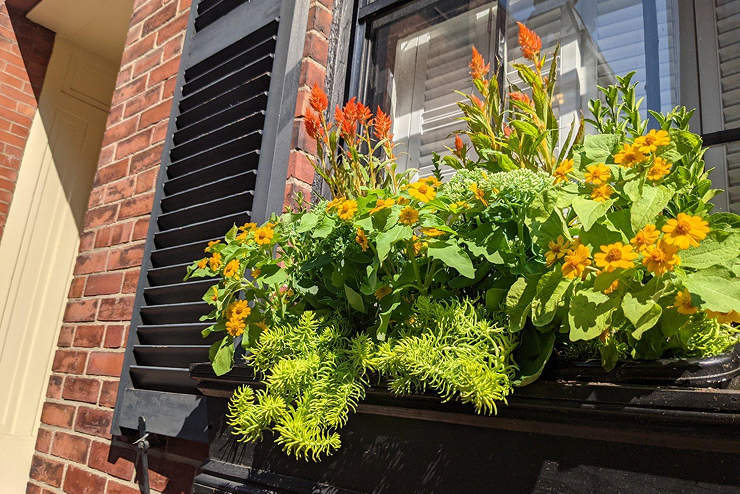
What we account for here
Deer pressure
Wellesley’s wooded lots and abutting conservation land put real deer traffic through residential yards, and window boxes at ground-floor or low second-story height are well within reach. We favor deer-resistant selections — dusty miller, lantana, scented geranium, ageratum — and where a client wants tulips or other browse-favorite bulbs worked in seasonally, we pair them with a taste deterrent program rather than fencing off the front of the house.
The Wellesley College microclimate
Properties near the college and its ponds sit in a noticeably cooler, more humid pocket than the rest of town, with later frost dates in spring and earlier cold snaps in fall. Planting schedules for those addresses get shifted by one to two weeks against our standard Boston-area calendar, and we favor plant varieties with better tolerance for damp, cool root zones.
Historic and formal facade review
Many Wellesley estate properties carry deed restrictions, historic district guidance, or simply a strong existing design language that a window box needs to respect. We work from photographs of the facade and, where relevant, any architectural review guidelines before proposing box dimensions, mounting hardware, or plant color palettes, so the result reads as original to the house.
Mature canopy and root competition
Large trees close to the foundation compete for water and can drop enough debris to smother a poorly maintained box. We build in slightly deeper reservoirs and a maintenance visit cadence that accounts for leaf litter and sap drop from mature oaks and maples overhead, rather than applying a generic maintenance schedule.
Recent Wellesley work
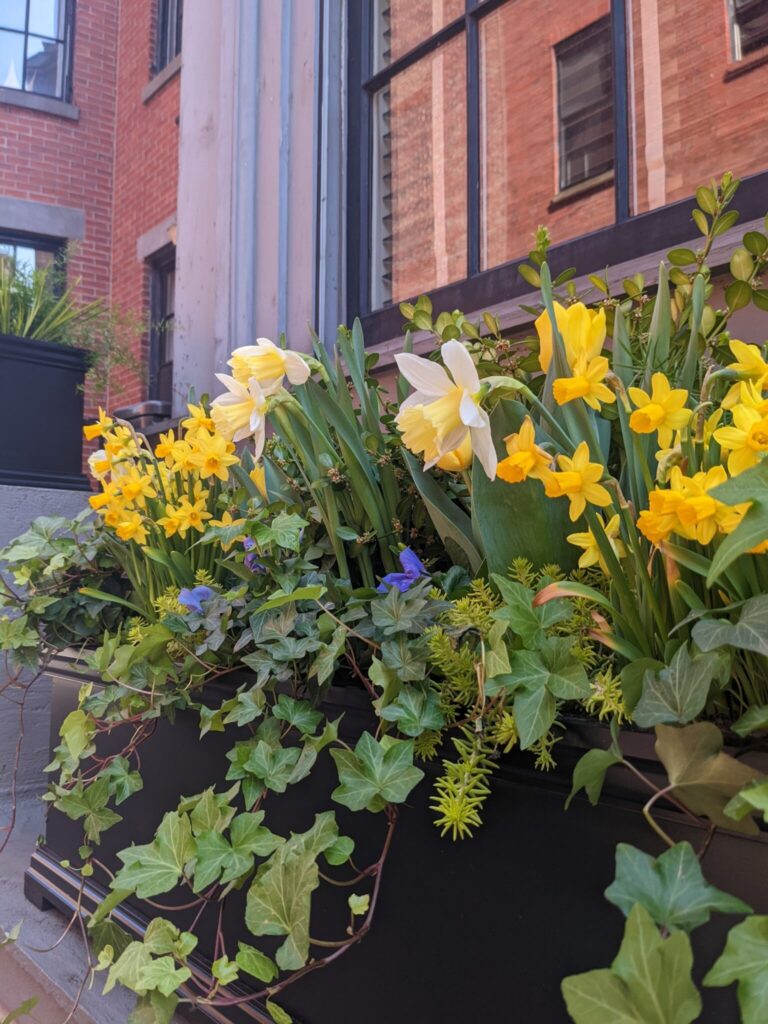
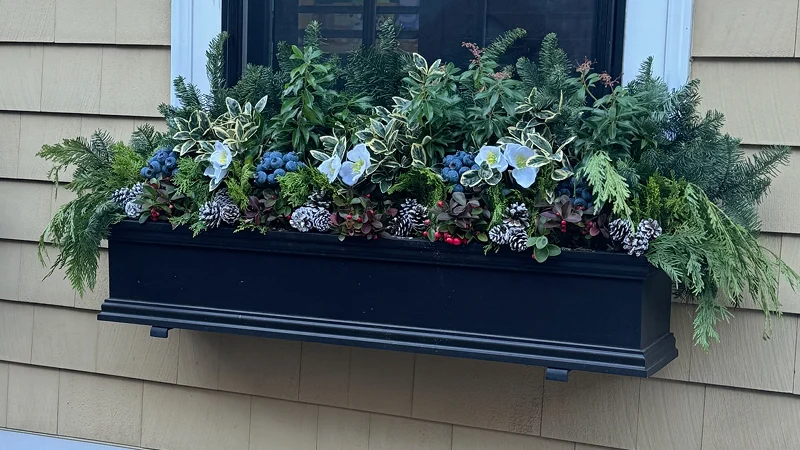
A recent project on one of Wellesley’s formal Colonial properties involved a full run of front-facade window boxes designed around an existing boxwood parterre — the plant palette had to echo the structured green-and-white scheme below without competing with it, and the boxes needed a deer deterrent program layered in from week one given the property’s proximity to conservation land. On a shadier estate closer to the college, we replaced a failing sun-mix planting with a heuchera-and-fern combination that has held its color through summer humidity far better than what was there before. Both projects followed the same pattern common to Wellesley work: read the architecture first, solve for shade and deer second, then choose plants.
Other services we provide in Wellesley
Window boxes are usually one piece of a larger planting picture on Wellesley estates. Many of the same clients ask us to handle full garden services in Wellesley, including seasonal bed maintenance and formal border upkeep suited to older, established landscapes. Where a property has terraces, pool surrounds, or entry courtyards, we design and plant those as containers rather than in-ground beds, and we install drip irrigation and low-voltage landscape lighting to support both the window boxes and the wider grounds — a common pairing on estate-scale properties where evening arrival matters as much as daytime curb appeal. For a look at how the same service is handled elsewhere in the western suburbs, see our window box work in Weston and Lexington, or compare against our approach in Boston proper, where narrower lots and different light conditions call for a different plant strategy entirely.
Start with a consultation
Rouvalis Gardens is based at 5 Crescent St in Wellesley, about 14.6 miles from Wellesley, and we plan every window box installation there around a site visit rather than a phone estimate — the shade patterns, deer traffic, and facade constraints vary too much house to house to guess from photos alone. Call us to schedule that visit. We will walk the facade, note the light and soil conditions, and follow up with a plant palette and installation timeline built specifically for your property, not a template.
How our process unfolds
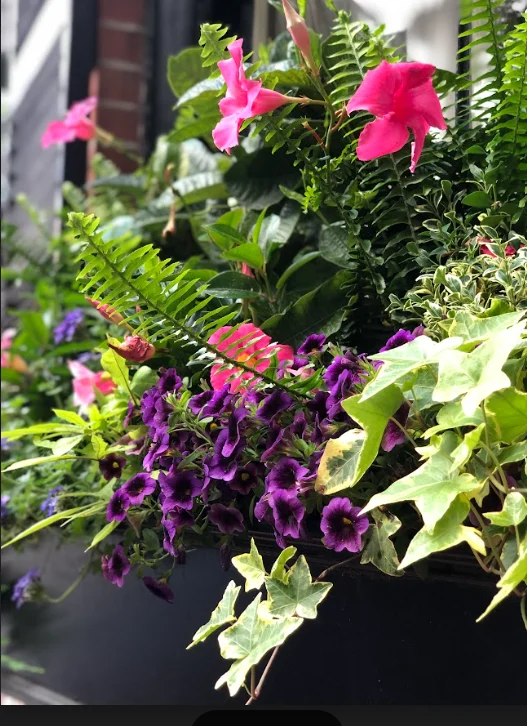
Every Wellesley window box installation starts the same way: we measure each window individually, since older colonials and newer builds rarely share consistent sizing. From there we match box materials and mounting hardware to the siding and trim, then plan a planting scheme suited to the window’s light exposure.
- On-site measurement and hardware assessment
- Material selection for durability and style match
- Planting design tailored to sun or shade conditions
- Installation and seasonal refresh scheduling
Rounding Out Your Wellesley Property
Window boxes are a wonderful start, but they work best as part of a broader plan for a Wellesley home. If the rest of the landscape could use the same attention, our garden design and garden installation services turn ideas for beds and borders into finished plantings, while fine gardening and garden maintenance keep everything looking sharp once it’s in the ground.
For entryways and patios, container gardens extend the same seasonal color found in a window box down to ground level, and seasonal planting along with spring and fall cleanups keep the whole property tidy as the year turns. Homes with outdoor living space often add terrace planting to soften a patio or deck.
Behind the scenes, drip irrigation takes the guesswork out of watering, and low-voltage landscape lighting lets the plantings you’ve invested in stay visible after sunset. For a property that needs more than a refresh, garden renovation covers the larger changes.
Together, these services give a Wellesley property a consistent, well-tended look from the window boxes all the way to the back garden.
Ready When You Are
Reach out and tell us about your Wellesley home, whether it’s a colonial with classic sills or a newer build with clean lines. We’ll ask about sun exposure, window style and how much upkeep you want, then sketch a few options that fit the facade. From there, we schedule a visit, take exact measurements and lock in a build and planting timeline that works with your calendar.
What Our Customers Say
Frequently Asked Questions
Do window boxes in Wellesley need deer-resistant plants?
Most do. Wellesley's wooded lots and proximity to conservation land bring consistent deer traffic through residential yards, and window boxes at ground-floor or low second-story height are within easy reach. We generally build the plant palette around deer-resistant selections and add a taste deterrent program for any client who wants bulbs or other browse-favorite plants included.
Does the Wellesley College area need a different planting schedule?
Yes. Properties near the college and its ponds sit in a cooler, more humid microclimate than the rest of town, with later spring frost dates. We typically shift planting timing there by one to two weeks against our standard schedule and choose varieties with better cold-damp tolerance.
Can you match window boxes to an existing formal garden design?
That is the starting point for most Wellesley estate work. We review the existing plant palette, structure, and color scheme — boxwood parterres, perennial borders, entry plantings — before proposing a window box design, so the result reads as part of the property rather than an addition.
How does heavy tree canopy affect window box plant choice?
Mature oaks and maples common on older Wellesley lots put many window boxes in partial or full shade for most of the day, which rules out sun-loving annuals. We build shade mixes around heuchera, caladium, torenia, and ferns for those exposures, reserving full-sun varieties for the few genuinely open locations a property might have.
Do you install irrigation for window boxes on estate properties?
Yes, and on larger Wellesley properties we typically tie the window box drip lines into the existing irrigation system or well rather than running a separate setup, which keeps watering consistent with the rest of the grounds.