- Serving Boston and the Greater Boston Area

Window Boxes in Weston, MA
On a two-acre lot set back under a canopy of oak and white pine, a window box faces a different set of problems than one on a Back Bay townhouse. Deer walk the property line at dusk and will strip a box of tulips or hosta-adjacent plantings in a single pass. Shade from mature trees can hold a north or east-facing box in near-total dark for half the day. And the distance from the house to a detached carriage house or guest cottage often means the nearest spigot is a hundred feet of hose away. Window boxes in Weston have to be designed for the property as it actually is, not as a catalog photo assumes it to be.

What Window Boxes looks like in Weston
Weston’s building stock skews toward large colonial and shingle-style houses set well off the road, often with multiple structures on one lot — main house, garage, pool house, guest quarters. Window boxes here do more work spread across more elevations than in a dense urban block, and each elevation can have its own light profile depending on where it sits relative to the tree line.
Soil is rarely the limiting factor since the boxes themselves are self-contained, but wind exposure varies sharply. A box on a west-facing gable can take a beating in a fall storm rolling off open lawn, while one tucked under a porch roof barely notices weather at all. We assess each elevation individually rather than treating a house as one uniform planting problem.
Deer pressure is the fact that separates Weston work from almost anywhere closer to Boston. A planting list that would be safe in Weston or the Back Bay is an open invitation here. We build window box designs around deer-resistant plant families first — herbs, ornamental grasses, dusty miller, certain ferns and heucheras — and treat anything more tempting as a seasonal risk to be managed deliberately rather than an oversight.
Irrigation is the other recurring issue. Where the house’s outdoor spigots are far from a given elevation, hand-watering during a hot July stretch becomes a real logistical problem for a homeowner who travels or a property manager covering several addresses. We size soil volume and self-watering reservoirs to stretch intervals between fills, and where it makes sense we tie boxes into an existing drip irrigation zone instead of relying on a hose.
What we account for here
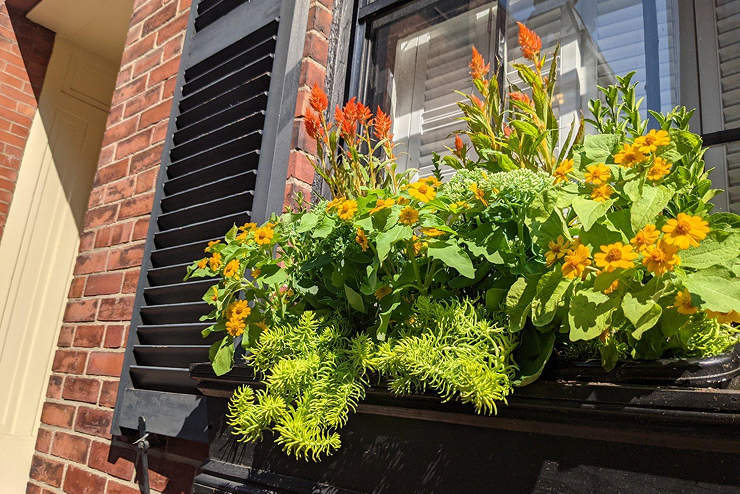
What we account for here
Weston’s older homes bring a mix of clapboard, stone, and brick facades, each with different requirements for mounting a window box securely. Before we design anything, we look at the window’s proportions, the sill or trim condition, and how much weight the wall can safely support once soil and plants are watered in.
We also factor in sun exposure on that particular elevation, the width of the overhang, and how the box will read from the street. That groundwork keeps the final installation sturdy, proportional, and suited to the house itself.
Deer pressure at the tree line
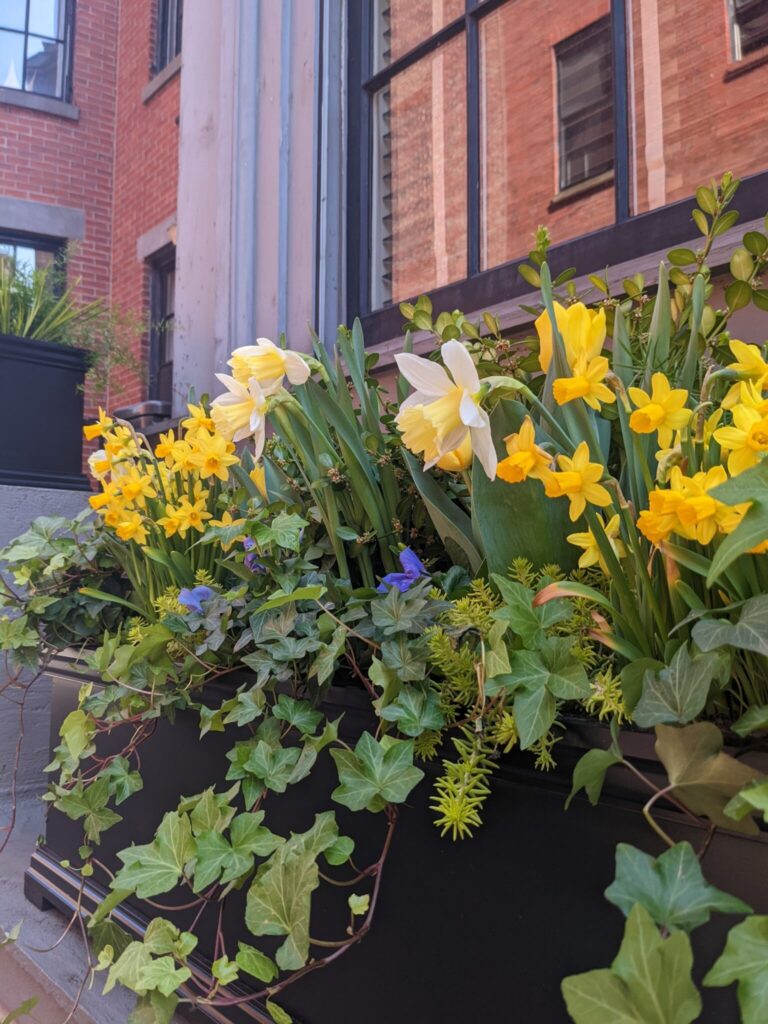
Weston’s wooded lots put window boxes within easy reach of resident deer populations that move through yards nightly, especially in shoulder seasons when natural browse is thin. We default to plant palettes deer generally avoid — lavender, salvia, artemisia, ornamental alliums, and textural grasses — and reserve tulips, pansies, and other favorites for boxes on upper stories or behind screening where deer won’t reach.
Extensive shade from mature tree canopy
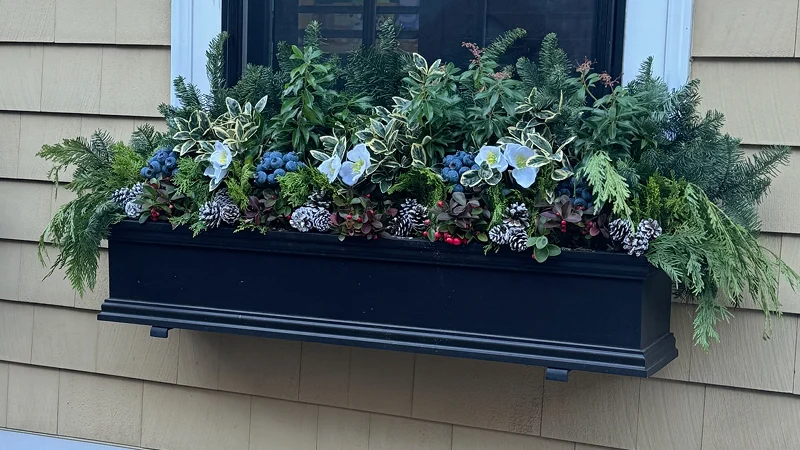
Many Weston properties sit under a heavy canopy of oak, maple, and pine that a Boston streetscape simply doesn’t have. A box that would thrive in full sun downtown may sit in dappled or deep shade here for most of the day. We plant shade-tolerant combinations — heuchera, ferns, begonias, and trailing vinca — and adjust the mix seasonally as the tree canopy leafs out or drops.
Long irrigation runs from the house
On large lots, a window box on a detached garage or far wing of the house can be well beyond the reach of a garden hose left at the back door. We build in extra soil volume and moisture-retentive media to extend the interval between waterings, and for clients who want a hands-off solution we connect boxes to the property’s existing drip irrigation on a dedicated zone.
Access on large estate lots
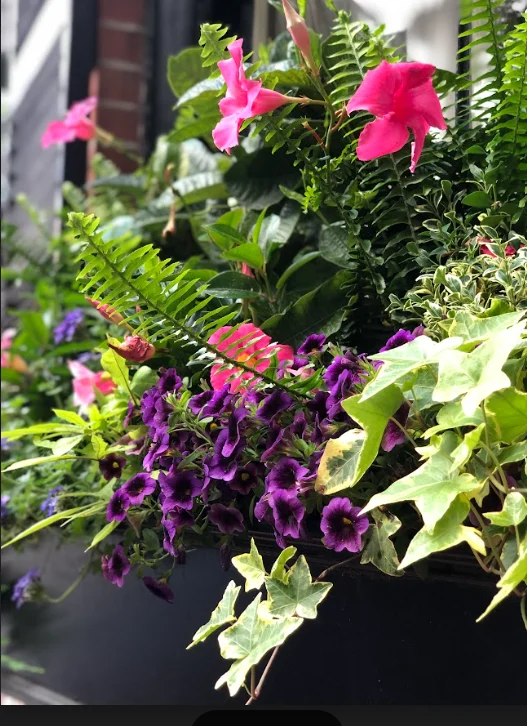
Servicing a dozen window boxes spread across a main house and outbuildings takes more planning than a single street-facing façade. We schedule maintenance visits to cover the full property in one pass, working with property managers or caretakers already on site so access and gate codes are never a holdup.
Recent Weston work
A typical recent project on a wooded Weston lot involved window boxes across a main house and a detached guest cottage, with the main house elevations shaded most of the day by surrounding trees and the guest cottage catching full afternoon sun. The planting plan split accordingly — ferns, heuchera, and trailing vinca for the shaded side, and a deer-resistant sun mix of salvia, ornamental grasses, and dusty miller for the cottage, refreshed on a seasonal rotation through spring, summer, and fall.
Other services we provide in Weston
Window boxes are one piece of a broader garden services program in Weston. For clients managing a full estate lot, we also handle garden design and installation, ongoing fine gardening and maintenance, and seasonal container plantings for terraces, entries, and pool areas. Larger properties with pools or bluestone terraces often add terrace planting, and where hose access is impractical we design and install drip irrigation that ties directly into window box and bed plantings. For evening use of the grounds, we also install low-voltage landscape lighting across driveways, walks, and planting beds. Most Weston clients combine several of these services under one seasonal maintenance schedule.
Start with a consultation
Weston is about 13.8 miles from our Weston location, and we visit for both one-time installations and standing seasonal accounts. Call to arrange a site walk — we’ll look at each elevation’s light and deer exposure, confirm access to water, and put together a planting and service schedule before we leave. From there, installation and seasonal refreshes are scheduled directly with your property manager or caretaker so the work happens without needing you on site.
What Our Customers Say
Frequently Asked Questions
Will deer actually eat window box flowers in Weston?
Yes, regularly. Deer browse close to houses on wooded Weston lots, especially in spring and fall when other food is scarce. Boxes on ground-floor or easily reached elevations are at highest risk, which is why we lean on deer-resistant plants for those spots and save more vulnerable flowers for upper stories.
Can you design window boxes for a shaded elevation under mature trees?
Yes. Heavy tree canopy is common on Weston properties and it changes the plant list significantly. We use shade-tolerant combinations like heuchera, ferns, and trailing vinca that hold color and texture without direct sun.
How do you water window boxes on a large property with the spigot far away?
We size boxes with extra soil volume and moisture-retentive media to stretch watering intervals, and where a property already has drip irrigation we tie boxes into an existing zone so they're watered automatically along with nearby beds.
Do you service window boxes across a whole estate, including guest houses and garages?
Yes. We plan maintenance visits to cover every structure on the property in one trip, coordinating with a property manager or caretaker so access is never an issue.
How far is Weston from your Weston location?
About 13.8 miles. We regularly service properties in Weston for both seasonal window box installations and standing maintenance accounts.