- Serving Boston and the Greater Boston Area

Urban Garden Design in Winchester, MA
If your Winchester property sits anywhere near the Mystic Lakes, your design questions are not generic ones. They are about grading a slope toward the water without erosion, about what will actually grow under a mature oak canopy that shades two-thirds of the yard by July, and about which plants deer will leave alone before they leave anything else standing. A design plan that ignores those three facts will look right in a rendering and fail within a season. We work from what the lot is actually doing, not from a template.

What Urban Garden Design looks like in Winchester
Winchester’s residential streets read as suburban, but the design problems are close to what we solve on tighter urban lots in Boston: limited flat ground, mature trees that dictate light patterns block by block, and homeowners who want a considered plan rather than a patchwork of foundation shrubs. Near the lakes, lots often drop several feet from the house to the water’s edge or to a rear property line, which changes how paths, terraces, and planting beds get laid out. A design that works has to account for drainage first, because water moving downhill through a sloped Winchester yard will find every low point in a bed and sit there.
The oak canopy common to older Winchester neighborhoods, particularly around Wedge Pond and the areas closer to the Mystic Lakes, means large parts of many lots run on dappled to deep shade for most of the growing season, with a narrow window of fuller sun where a tree canopy breaks or a lot faces open water. We plan planting palettes around those actual light readings taken on site, not around what a plant tag promises in ideal conditions.
Deer pressure is a constant in this town in a way it simply is not in Boston’s denser neighborhoods, and it shapes plant selection as much as light or soil does. A garden design here has to assume browsing pressure will be tested within the first year, so we build in deer-resistant structure first and treat anything deer find appealing as an accent to be protected or replaced, not the backbone of the planting plan. We also design with an eye toward what a property looks like from the water, since many Winchester lots are viewed from a boat or dock as often as from the street.
What we account for here
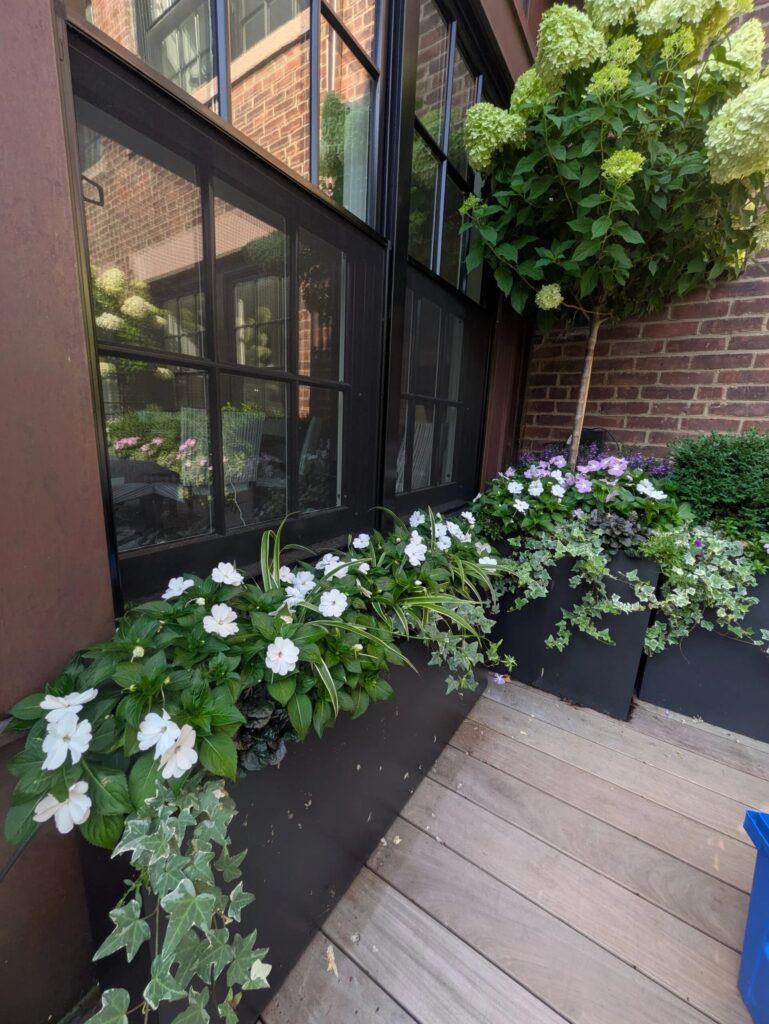
What we account for here
Four conditions come up on nearly every Winchester property we work on, and each one changes a decision we would otherwise make differently.
Slope and lakeside grading
Lots that fall toward the Mystic Lakes need terracing, retaining structure, or graded planting beds that hold soil in place through a New England winter’s freeze-thaw cycle. We grade and stage plantings so runoff is slowed and filtered before it reaches the water, rather than channeled straight down the slope.
Deer browsing pressure
We select and place plant material with deer behavior in mind, front-loading beds with textures and scents deer avoid and reserving anything they favor, hydrangea and hosta among them, for spots closer to the house or behind protective planting. Where a client wants a species deer will target regardless, we discuss fencing or repellent programs honestly rather than promising a planting fix that will not hold.
Mature oak canopy and root competition
Established oaks mean shade, but they also mean dense surface roots competing for water and nutrients. We choose shade-tolerant, root-competitive species and adjust bed depth and irrigation so new plantings are not starved out by an oak that has had thirty years to claim the soil first.
Seasonal water access and lake-facing sightlines
For properties with dock or waterfront access, we plan sightlines from both the house and the water, keeping key views open and using structure and lighting to make the transition between lawn, garden, and shoreline feel intentional rather than accidental.
Recent Winchester work
Recent projects in Winchester have generally fallen into two categories: full renovations of overgrown, deer-damaged perennial beds on lakeside lots, and new planting plans for sloped side yards where drainage and erosion had become a visible problem. In both cases the work started with a site walk to read light, slope, and existing root competition before any plant list was drawn, and in both cases deer-resistant structure plants went in first, with more vulnerable species added only where protection made sense. We do not publish client names or addresses, but the pattern holds across most of the lakeside and near-lake properties we have worked on in this town.
Other services we provide in Winchester
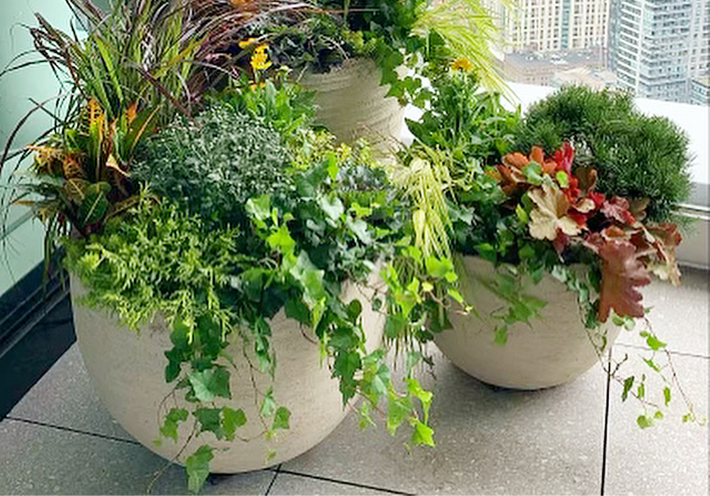
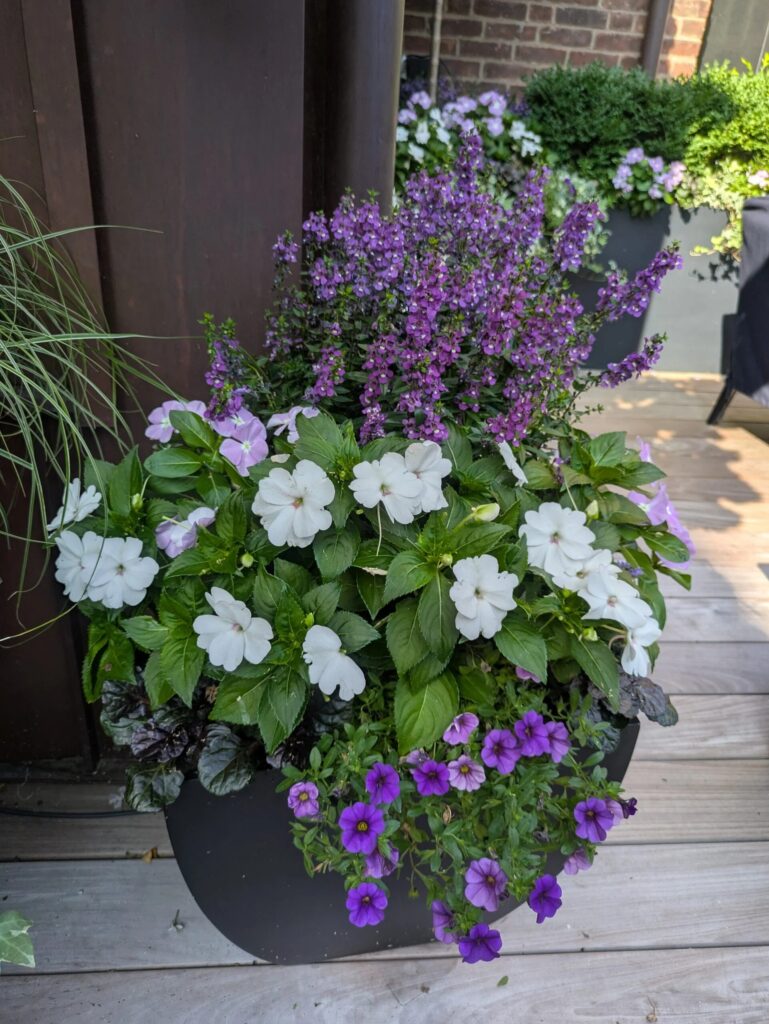
Garden design is usually the starting point, but most Winchester clients ask for more once the planting plan is set. We handle ongoing garden maintenance and fine gardening so beds keep their shape and deer damage gets caught early rather than after a season of unchecked browsing. For homes close to the water, we build containers and window boxes suited to lake-effect wind and light, and we plan roof deck and terrace planting for the few Winchester properties with elevated outdoor space and lake views worth framing. Drip irrigation is close to standard on our sloped lakeside installs, since it delivers water precisely where new plantings need it without washing soil downhill, and low-voltage landscape lighting extends the design after dark along paths, terraces, and the approach to the water. If you are weighing a full urban garden overhaul, our broader urban garden design work in Boston follows the same site-first approach, and we apply the identical method for clients in Newton and Brookline.
Start a Winchester garden project
Winchester is roughly 6.9 miles from our Winchester location, and most first consultations happen on site so we can read slope, light, and deer activity before proposing anything. Call us to set a date, and expect a straightforward walk-through followed by a written plan that addresses your specific lot rather than a standard planting list. There is no obligation attached to the first visit, and no exclamation-point sales pitch either. We tell you what the site can support and what it cannot.
Working within Winchester's lot lines
Winchester’s older neighborhoods often pair narrow side yards with mature trees and established stonework, so an urban garden plan here has to work around root zones, drainage patterns near the reservoirs, and tight access for materials rather than starting from a blank slate. We plan deliveries, plant placement, and hardscape sequencing around what a particular lot can actually accommodate.
- Access routes measured before materials are ordered
- Existing trees and grading factored into the layout
- Plant selections suited to the property’s light and soil conditions
More ways we support Winchester gardens
Urban garden design is often just the starting point for homeowners in Winchester. Many of our clients pair a new layout with ongoing care so the design holds up through the seasons rather than fading after the first year.
- Fine gardening and routine maintenance to keep beds looking intentional, not overgrown
- Seasonal cleanup in spring and fall to reset planting areas around Winchester’s tree canopy and shifting light
- Container and small-space plantings for porches, side yards, and narrow strips near the house
- Drip irrigation installation and repair, useful on compact lots where dragging a hose isn’t practical
- Low-voltage lighting to extend use of tight outdoor spaces into the evening
- Foundation planting and screening for privacy between closely spaced homes
These services are built to work alongside a garden design, not compete with it. Whether you’re near the town center or closer to the reservoir, we scope each visit around your lot’s actual constraints – sun, drainage, and how the space gets used day to day – so the plan we design is one we can also help you maintain.
Bring urban garden design to your Winchester property
Ready to make the most of a compact Winchester lot? Reach out to start the conversation. We’ll set up a site visit to look at sun exposure, sightlines, and existing plantings, then follow with a clear design plan and firm proposal — no vague estimates, just a scoped plan built around your space.
What Our Customers Say
Frequently Asked Questions
Do you design gardens for deer-heavy Winchester properties?
Yes. Deer pressure is one of the first things we assess on any Winchester site visit, and it directly shapes which plants we recommend and where we place them. We favor deer-resistant structure plants and discuss fencing or protective measures honestly for anything a client wants that deer are known to target.
Can you work with a sloped lot near the Mystic Lakes?
Yes, and it is one of the more common lot types we handle in Winchester. Grading, terracing, and drainage planning come before any plant selection on a sloped or lakeside property, since erosion and runoff will undo a planting plan that skips this step.
How do you handle heavy shade from mature oak trees?
We take actual light readings on site rather than assuming based on a lot's general orientation, then select shade-tolerant species that can compete with established oak root systems for water and nutrients. Bed depth and irrigation are adjusted accordingly.
Do you install irrigation on lakeside or sloped Winchester lots?
Drip irrigation is close to standard on our sloped and lakeside Winchester installs. It delivers water directly to new plantings without the runoff that overhead watering causes on a slope, which also protects the soil structure we have just graded.
How far is Winchester from your Winchester location?
Winchester is about 6.9 miles from our Winchester address. Most projects start with an in-person site visit so we can assess slope, light, and deer activity before proposing a design.