- Serving Boston and the Greater Boston Area

Urban Garden Design in Newton, MA
A Newton Centre or Waban lot that came with mature rhododendrons and a canopy of century-old oaks is not a blank canvas, and it should not be treated like one. The foundation plantings were often put in by the original builder or a landscaper two owners ago, the deer move through the village lots on a schedule of their own, and the town’s tree ordinance means the maple you want gone may not be yours to remove without a permit. Garden design here starts with what already exists, not what a catalog suggests.

What Urban Garden Design looks like in Newton
Newton is not one landscape, it is a set of villages, and each has its own version of the same problem: mature lots, tight side yards, and plant material that has to survive both deep shade and browsing deer without looking like a fortress. In Newton Centre and Newtonville, foundation beds are frequently overgrown boxwood and yew installed decades ago, healthy enough to keep but often shaped wrong for the light the house now gets after neighboring trees have grown in or come down. In Waban and Chestnut Hill, the lots run larger and the tree canopy runs deeper, which means usable sun is often confined to a narrow band near the street or a cleared rear corner, and any planting plan has to work around root zones that can extend well past the drip line.
Access is a real constraint on the older streets — Auburndale and West Newton in particular have driveways and side yards built for an earlier era of vehicles and equipment, so material and machinery sometimes have to be staged and moved by hand rather than driven straight to the bed. Soil under these lots is usually intact but compacted from decades of foot traffic and root competition, and it needs real amendment before new plantings will thrive rather than sit in decline. Deer are a constant here in a way they are not closer to Boston proper — hostas, daylilies, and arborvitae are effectively deer candy in Newton, and a planting plan that ignores that will be eaten within a season. Good urban garden design in Newton means reading the existing bones of the property, working the light you actually have rather than the light a plant tag assumes, and choosing a palette the local deer will leave alone.
What we account for here
What we account for here
Every Newton property carries a few conditions that shape the plan before a single plant goes in the ground. These are the ones that come up on nearly every job.
Established foundation plantings
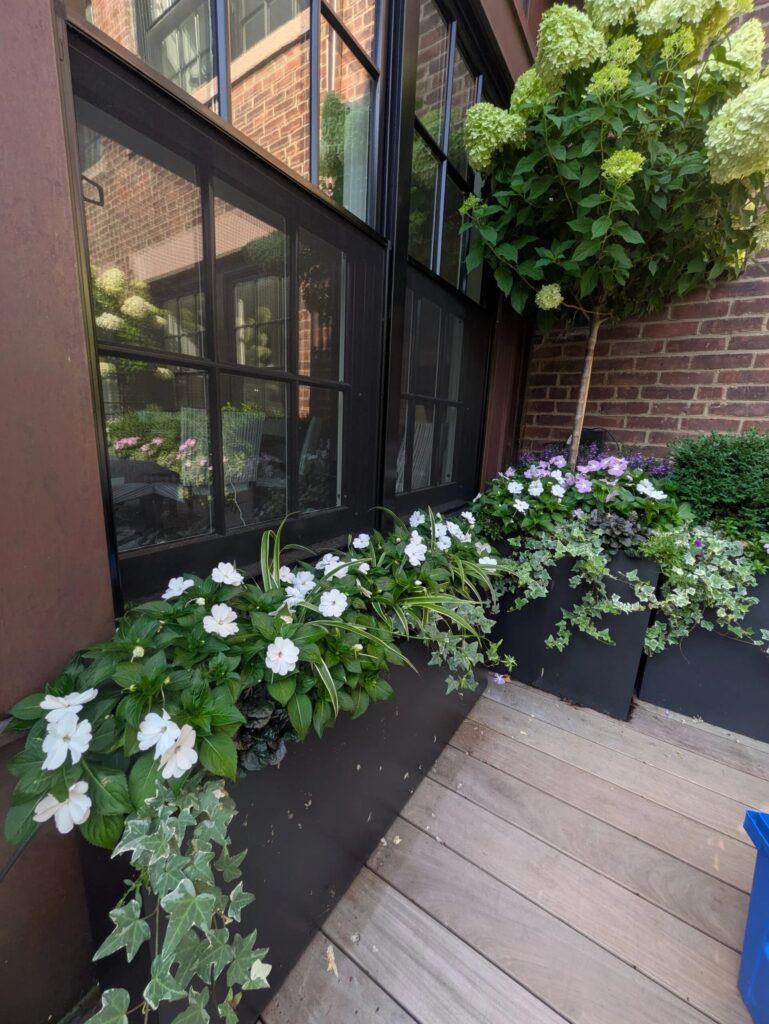
Most village lots already have mature shrubs along the foundation — often overgrown, sometimes decades past their intended shape. Rather than clearing to bare dirt, we assess what is structurally sound and worth keeping, prune and reshape where possible, and design new plantings to complement rather than compete with what has already earned its place in the soil.

Heavy deer pressure
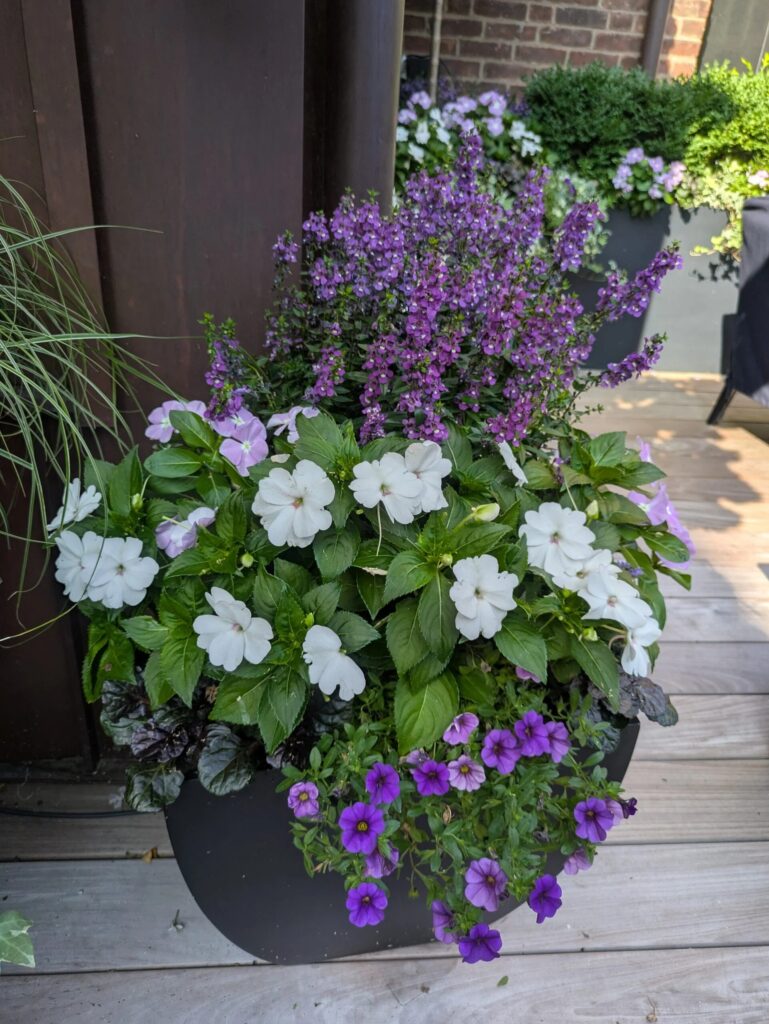
Newton’s deer population treats an unprotected garden as a buffet. We build plant lists around species deer reliably avoid — boxwood, andromeda, and certain ferns and grasses over hostas and tulips — and where a client wants a plant deer do favor, we use discreet fencing or repellent programs rather than giving up the plant entirely.
Deep shade from mature canopy
Many Newton yards sit under trees old enough to predate the house. That canopy is worth protecting, so the planting plan works with the shade rather than fighting it — layered woodland-style beds of hellebores, epimedium, and native shade shrubs that read as intentional rather than as a lawn that gave up.
The town tree ordinance
Newton regulates the removal of trees over a certain size, including on private property in many cases, and getting this wrong means a stop-work order or a fine. Before any removal is proposed as part of a design, we confirm what the ordinance actually requires and handle the permitting so the project stays on schedule.
Recent Newton work
A recent project type in the Newton Centre area involved a foundation bed overtaken by unpruned yews and a shaded side yard that had gone to bare mulch under a stand of mature maples. The work kept the healthiest yews as structure, added a shade-tolerant, deer-resistant underplanting, and resolved a drainage issue that had been pooling water against the foundation for years. It is typical of the kind of call we get from Newton — less about starting fresh, more about correcting what time and neglect have done to a good property.
Other services we provide in Newton
Urban garden design in Newton is usually one piece of a larger relationship. Many clients pair it with ongoing garden services in Newton to keep beds looking the way they were designed to look through every season, since a plan that survives deer and shade still needs a knowledgeable hand tending it year-round. Properties with decks or patios shaded by mature trees often add container plantings suited to low light, and homes with pools or entertaining spaces frequently ask for low-voltage lighting to make the garden usable after dark without disturbing neighbors on a quiet street. Drip irrigation is a common addition on the larger Waban and Chestnut Hill lots, where hand-watering new plantings around established root systems is impractical. We also handle window boxes for the front-facing colonial and Victorian homes common throughout the village centers, matched to the same restrained palette used in the beds below.
Start a Newton garden project
Newton is a straightforward 8.6-mile drive from our Newton location, and most first consultations happen on-site so we can walk the property, look at what canopy and foundation plantings already exist, and talk through what the deer situation has been like. Call to set up a visit — we will look at light, soil, and access, flag anything that touches the tree ordinance, and follow up with a design approach and a clear scope before anything is scheduled.
What Our Customers Say
Frequently Asked Questions
Does Newton's tree ordinance affect my garden design project?
It can. Newton regulates removal of trees above a certain diameter on both public and private property in many situations. If a design calls for removing an established tree, we confirm the requirements and handle the permitting before work starts, so the project is not delayed by an after-the-fact stop order.
What plants actually hold up against Newton's deer?
Boxwood, andromeda, certain ferns, ornamental grasses, and many native shrubs are reliably left alone. Hostas, daylilies, tulips, and arborvitae are the most commonly browsed, and we generally avoid leaning on them as a primary planting unless fencing or a repellent program is part of the plan.
Can you work with the shade from mature trees instead of removing them?
Yes, and in most cases that is the better answer. Newton's tree canopy is one of the reasons the village lots are valuable in the first place. We design layered shade plantings — hellebores, epimedium, shade-tolerant grasses — that work with the existing trees rather than treating them as an obstacle.
Do you replace overgrown foundation plantings or work with what's there?
It depends on the shrub. Many older foundation plantings in Newton are structurally sound under years of neglect and respond well to renovation pruning. We assess plant by plant and only recommend removal where a shrub is genuinely past saving or wrong for the current light conditions.
How far is Newton from your Newton location?
About 8.6 miles. Most Newton projects start with an on-site consultation, since the condition of existing plantings and canopy varies enough from lot to lot that it needs to be seen in person.