- Serving Boston and the Greater Boston Area

Urban Garden Design in Wellesley, MA
A Wellesley property under a century-old beech canopy has almost nothing in common with a downtown roof deck, yet both fall under “garden design” and both get treated the same way by landscapers who work from a single template. Wellesley’s large lots come with formal garden bones laid down decades ago, deer that move through the property lines near the College and the reservoir land as if they own them, and dense shade patterns that shift with every mature oak and maple. Design here starts with what the property already has, not with a plan built somewhere else and dropped in.

What Urban Garden Design looks like in Wellesley
On an estate-scale lot, the design conversation is different from a small urban courtyard. There is usually an existing formal structure to respect or restore: boxwood parterres gone leggy, an allee that has lost half its symmetry, a perennial border that was once maintained by a full-time gardener and has since been let go simplified. Our first work is often reading what the original layout intended and deciding what to keep, what to correct, and what to quietly retire.
Light is rarely uniform across a Wellesley property the way it is on a flat city lot. Mature canopy — much of it protected or simply irreplaceable on a human timescale — throws deep, moving shade over beds that were planted for full sun a generation ago. We map the actual light a bed receives in July, not the light it received when the trees were smaller, and choose plants accordingly.
Deer pressure is the other constant. Wellesley’s mix of wooded lots, the College grounds, and green corridors along the reservoir gives deer easy movement between properties, and a border planted without that in mind gets grazed to stubs by August. We build plant palettes around what deer reliably leave alone, and where a client wants species deer do eat — roses, hosta, hydrangea — we design in physical protection or targeted repellent programs rather than pretending the risk away.
Soil on older Wellesley estates is often better than city soil but not uniform: decades of leaf litter have built rich topsoil in some beds, while areas near old foundations or regraded lawn can be compacted clay. We test bed by bed rather than assuming the whole property behaves the same way.
What we account for here
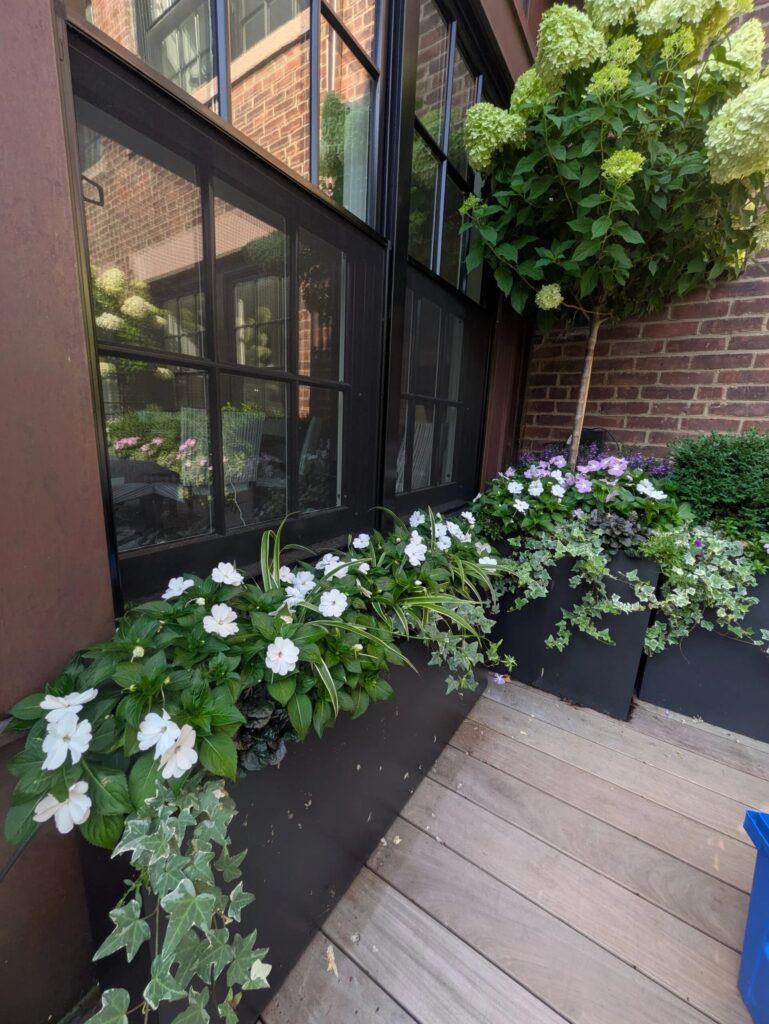
What we account for here
Four conditions come up on nearly every Wellesley project, and each changes how we design and install.
Mature canopy and shifting shade
Century-old trees define most Wellesley properties, and their root zones and shade patterns constrain planting more than any other factor. We design beds that work with root competition rather than fighting it, choosing shade-tolerant perennials and shrubs, and we avoid heavy excavation near trunks that could damage roots or run afoul of tree protection expectations on notable specimens.
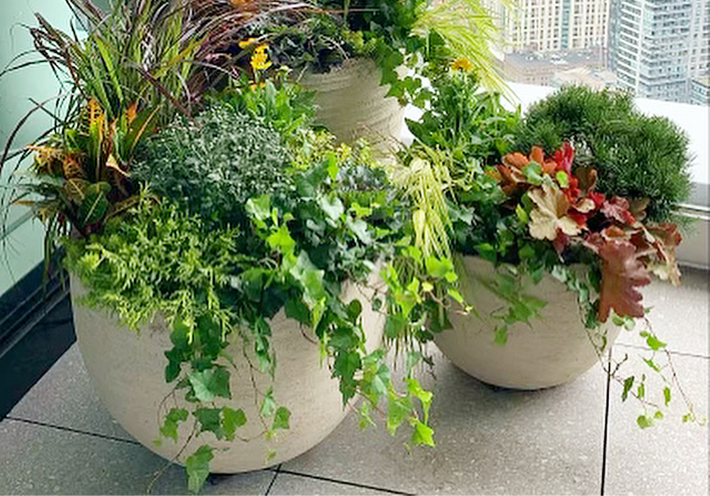
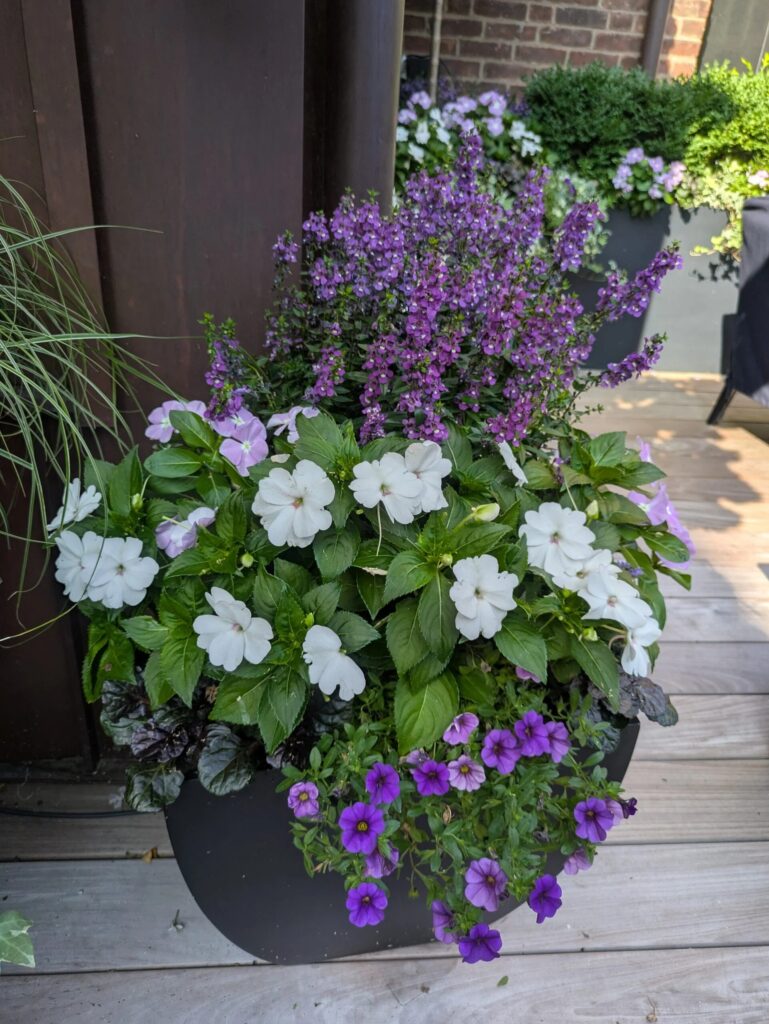
Deer pressure across open and wooded lots
Wellesley’s combination of wooded parcels, the College campus, and undeveloped corridors means deer travel freely. We plant deer-resistant palettes as the default and reserve deer-favorite species for protected zones — near the house, behind fencing, or under drip-line netting installed discreetly enough that it does not read as agricultural.
Formal garden traditions worth preserving
Many Wellesley properties carry a formal design legacy: boxwood hedging, symmetrical borders, a documented planting plan from a prior era. Where that structure still has good bones, we restore and maintain it rather than replacing it with something generic. Where it has genuinely failed, we redesign in the same formal language so the garden still reads as belonging to the house.
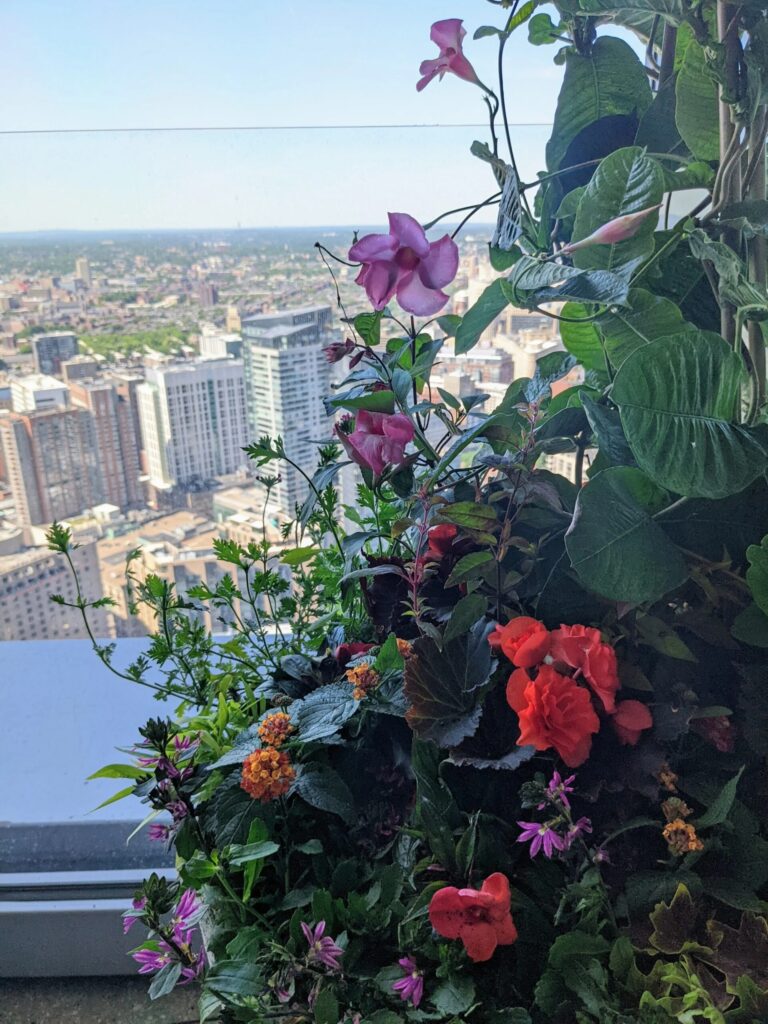
Wellesley College microclimate and drainage
Properties near the College and its wooded, low-lying land can hold moisture differently than lots a half mile away, and cold air can settle into low pockets on clear nights. We factor local drainage and frost behavior into plant selection and bed grading so new plantings are not fighting a microclimate we ignored.
Recent Wellesley work
Recent work in Wellesley has included restoring a formal boxwood and perennial border that had gone untended for several seasons, rebuilding a deer-damaged foundation planting with a resistant palette that still reads as intentional and layered rather than defensive, and integrating a new terrace planting scheme with an existing mature-tree canopy so the new work looks original to the property rather than added on. We do not publish client names or addresses, out of respect for the privacy Wellesley homeowners generally expect, but references are available on request.
Other services we provide in Wellesley
Garden design is usually the start of a longer relationship, and most Wellesley clients bring us in for more than one thing at once. Once beds are planted, ongoing fine gardening and maintenance keeps a formal garden from sliding back into the state we found it in — pruning, deadheading, seasonal rotation, and the kind of attention a part-time crew rarely provides. Estate entries and terraces often call for custom containers and window boxes that carry the same design language as the beds. Properties with pools, pergolas, or bluestone terraces benefit from drip irrigation set to the specific water needs of each bed rather than a single zone running on a timer, and low-voltage landscape lighting that extends a formal garden’s presence into the evening without the glare of standard fixtures. For a broader look at what urban garden design means across our footprint, see our Boston urban garden design page, or compare how the same estate-scale approach plays out at properties we serve in Weston and Lexington.
Start a Wellesley garden project
Rouvalis Gardens works out of Wellesley, about 14.6 miles from Wellesley, and we schedule on-site consultations across the town on a regular basis. Call to arrange a walk-through of your property. We look at the canopy, the existing structure, the deer pressure your specific lot sees, and the soil, then follow up with a written design direction and a straightforward scope — no pressure to commit on the spot, and no surprises once work begins.
What Our Customers Say
Frequently Asked Questions
Can you design a garden that survives Wellesley's deer without giving up on flowers?
Yes. We build the framework of the garden — structure, hedging, foundation plantings — from genuinely deer-resistant species, then place flowering plants deer favor in protected zones close to the house or behind unobtrusive netting. It takes more planning up front but avoids a garden that gets stripped every summer.
Do you work with the existing formal garden structure or replace it?
We restore what still has good bones. Many Wellesley properties have a formal layout worth keeping — boxwood parterres, symmetrical borders, an established allee — and our first step is assessing what to preserve before we propose anything new.
How do you handle planting under mature trees without damaging the roots?
We avoid heavy excavation near trunks and root zones, choose shade-tolerant species suited to root competition, and where soil amendment is needed we work it in without disturbing the tree's structural roots.
Do you handle irrigation and lighting on estate-scale properties, or only planting?
Both. We design drip irrigation zoned to the actual water needs of each bed rather than a single blanket zone, and low-voltage lighting sized to the property, not retrofitted from a smaller residential kit.
How far is Wellesley from your Wellesley location?
About 14.6 miles. We regularly schedule consultations in Wellesley and can typically arrange an on-site visit within a week or two depending on season.