- Serving Boston and the Greater Boston Area

Seasonal Container Planting in Back Bay, MA
A Back Bay stoop planting has to clear the Back Bay Architectural Commission before it can clear anyone’s aesthetic opinion, and the rear garden behind that same brownstone is often reached only through a shared alley too narrow for a truck. Add fill-land soil sitting over a high water table — common across the neighborhood since it was built on filled tidal flats — and a straightforward planter box becomes a project with drainage, access, and approval all working against each other at once. Seasonal container planting here is a different exercise than in almost any other Boston neighborhood, and it needs to be planned as one from the start.

What Seasonal Container Planting looks like in Back Bay
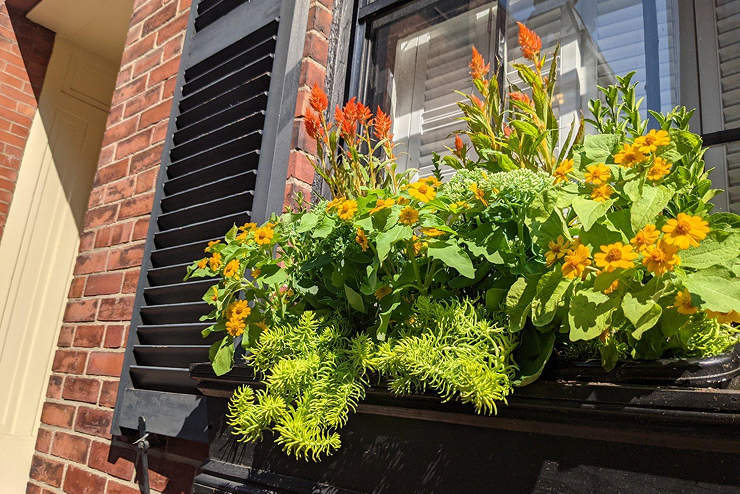
Most of our Back Bay work falls into two categories: the street-facing containers and stoop plantings that face public review, and the rear or roof-level plantings that face none but come with their own access problems. On Commonwealth Avenue, Marlborough, and the numbered cross streets, front stoop urns and window boxes sit inside the district the Back Bay Architectural Commission oversees, which means container material, height, and in some cases plant selection are subject to guidelines even though the plants themselves change with the seasons.
Behind the brownstone, conditions flip. Many rear gardens are accessible only through a shared alley or a gate barely wide enough for a wheelbarrow, so anything heavy goes in by hand, in stages, on a schedule that respects neighbors sharing the same passage. The soil itself is a factor everywhere in the neighborhood: Back Bay sits on nineteenth-century fill over a naturally high water table, which means containers and raised beds alike need real drainage engineering rather than a layer of gravel and hope. Light varies block to block and floor to floor — a south-facing parlor-level window box gets far more sun than a shaded garden-level entry three doors down — so plant palettes get built per address, not per street.
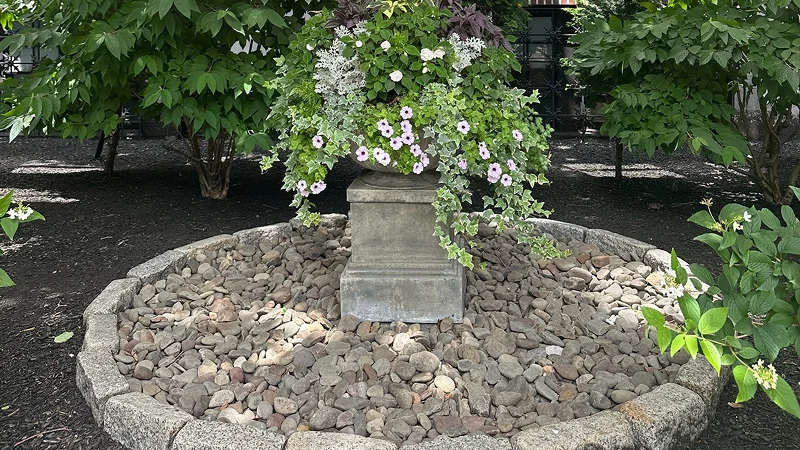
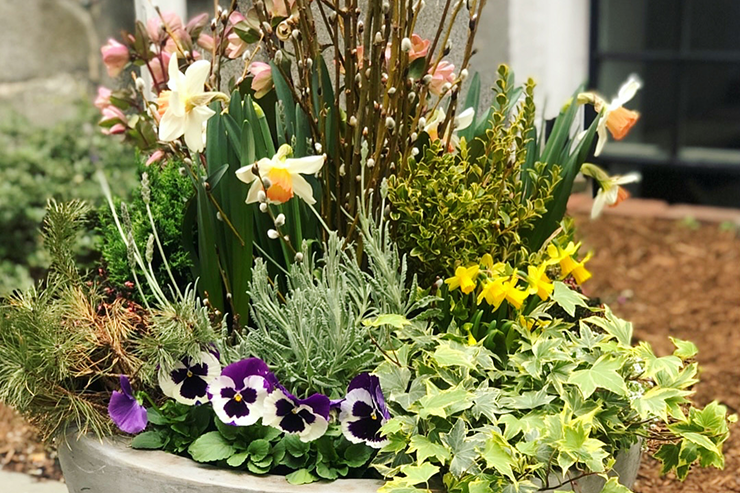
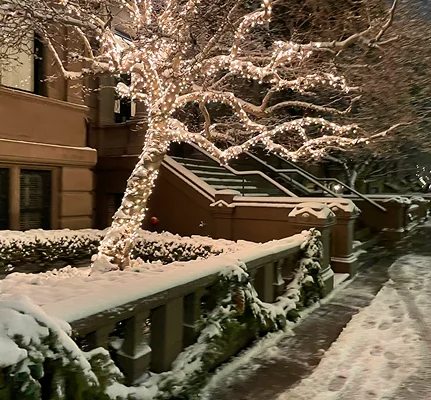
We plan five to six rotations a year for most clients: a spring bulb-and-bloom transition, a full summer planting, a fall changeover with mums, kale, and grasses, and a winter installation of evergreens, birch, and lighted branches that holds through the coldest months. Each rotation accounts for what the Commission allows out front and what the alley access allows out back.
What we account for here
What we account for here
Architectural Commission review for street-facing plantings
Container material, color, and height on stoops and window boxes visible from the public way fall under Back Bay Architectural Commission guidelines. We select urns, boxes, and mounting hardware that read as period-appropriate and keep seasonal plant changes within what the district expects, so clients are not caught explaining a new planter to the Commission after the fact.
Alley-only access to rear gardens
A large share of Back Bay’s rear garden space is reached through a shared service alley, sometimes shared with three or four abutting properties. We size containers and schedule deliveries around what can actually move through that passage by hand cart, and we coordinate timing with property managers so a planting day does not block a neighbor’s only route to their own back door.
Fill-land soil and a high water table
Back Bay’s built-on-fill history means groundwater sits closer to the surface here than in most of Boston. Containers get engineered drainage layers and, where beds are in-ground, we raise root zones rather than fight standing water at the base. This matters most in spring and after heavy rain, when a poorly drained container can drown a planting in days.
Light that changes by floor and by block
A fourth-floor roof deck, a parlor-level bay window, and a garden-level stoop on the same building can each see a different number of sun hours. We plant each location on its own light reading rather than applying one seasonal palette to an entire facade.
Recent Back Bay work
A typical recent job: a run of matching stoop urns along a block of Marlborough Street, planted on a schedule that keeps every entrance in the row changing over on the same week so the block reads consistently, paired with a rear courtyard reached through a gated alley where containers were sized specifically to clear that gate. We do not name clients or addresses without permission, but this pattern — coordinated street-facing plantings out front, access-constrained garden work out back — describes a large share of what we do in the neighborhood.
Other services we provide in Back Bay
Container planting is rarely the only thing a Back Bay property needs. We also handle full garden services in Back Bay, including design and installation for rear courtyards and roof decks, ongoing fine gardening and seasonal maintenance for properties that want the beds and containers looked after between visits, window box installation and planting for facades under Commission review, drip irrigation systems sized for containers and raised beds that need consistent watering without a hose dragged through the alley, and low-voltage landscape lighting for stoops, garden walls, and small rear terraces. Property managers overseeing several Back Bay buildings often bundle container planting with maintenance visits so nothing is left to individual tenants to remember.
Container planting across Boston
The approach above is specific to Back Bay’s fill soil, alley access, and Commission review. We plant on the same seasonal schedule in Cambridge and the Seaport, though the conditions and review boards differ in each. For a broader look at how we handle container planting across the city, see our seasonal container planting in Boston overview.
Start a Back Bay container planting plan
We are 2.6 miles from Back Bay, out of our Back Bay shop at 5 Crescent St, and we already know which streets fall under Commission review and which rear gardens need a hand cart instead of a truck. Call to schedule a walkthrough of your stoop, window boxes, or rear garden. On that visit we assess access, light, and any Commission requirements for your specific address, then propose a seasonal schedule — typically spring, summer, fall, and winter rotations — before any planting begins.
Other services we provide in Back Bay
Seasonal container planting is usually just one part of what a Back Bay brownstone or condo association needs from us. Many of the same stoops and light wells also call for garden design and installation when a client wants more than pots, or a standing fine gardening and maintenance visit schedule so containers get refreshed on the same rhythm as the rest of the property. Where the planting is built into a bay window or a railing rather than sitting in a freestanding urn, we treat it as window box planting with its own seasonal review.
Back Bay’s roof decks and small rear terraces bring their own requirements, so we pair roof deck and terrace planting with drip irrigation installation for containers that can’t easily be hand-watered several stories up, and with low-voltage landscape lighting for buildings used into the evening. Turnover between seasons connects naturally to spring garden cleanup and fall garden cleanup, timed around each new planting rotation.
For the smaller number of Back Bay properties with an actual planting bed rather than only container space, we offer perennial border design and urn and planter arrangements together, and a standalone garden consultation for owners who’d rather work from a plan before any installation begins.
- Garden design and installation
- Fine gardening and maintenance
- Window box planting
- Roof deck and terrace planting
- Drip irrigation installation
Ready for containers that suit Back Bay's brownstones
From Commonwealth Avenue mall frontages to narrow Marlborough Street entries, Back Bay properties call for plantings scaled to tight stoops and formal facades. Request a consultation and we’ll assess your entryway’s light, foot traffic, and any building or association guidelines before recommending a seasonal design.
Reach out and we’ll arrange a site visit soon.
What Our Customers Say
Frequently Asked Questions
Do Back Bay stoop containers need Architectural Commission approval for seasonal changes?
Street-facing containers and window boxes in the district generally need to stay within existing Commission-approved guidelines for material and placement. Seasonal plant changes within an approved container are typically not a separate review, but new hardware or a change in container style can require sign-off. We design within existing approvals whenever possible to avoid delays.
How do you get containers into a rear garden with only alley access?
By hand cart, in stages, sized to clear the narrowest point of the alley or gate. We measure access before ordering containers and schedule delivery times that avoid blocking neighbors who share the same passage.
Why do containers need special drainage in Back Bay specifically?
Back Bay was built on filled tidal land, and the water table sits higher here than in much of Boston. Standard drainage that works elsewhere can leave containers waterlogged after rain, so we build in raised root zones and engineered drainage layers as standard practice, not an upgrade.
How many times a year do you change over containers?
Most Back Bay clients get four to five rotations: spring bulbs and early bloom, a full summer planting, a fall changeover, and a winter evergreen and branch installation. Some properties add a short late-spring refresh depending on what the summer planting needs.
Can you match plantings across a row of connected brownstone stoops?
Yes, and we do this regularly on blocks where several adjoining owners or one property manager wants a consistent look. We coordinate plant selection and changeover timing so the whole row transitions together rather than looking patchwork.