- Serving Boston and the Greater Boston Area

Landscape Design in Brookline, MA
A landscape design for a Brookline property has to work around two things at once: a mature canopy that was likely planted before the current owner’s grandparents bought the house, and a Preservation Commission that will have an opinion about anything visible from the street. Add deer pressure that gets noticeably worse as you move toward the Newton line, and the design brief for a half-acre lot in Chestnut Hill looks nothing like one for a Brookline rowhouse garden. Rouvalis Gardens designs for the property in front of us, not a template — call to talk through what your lot actually allows.

What Landscape Design looks like in Brookline
Brookline’s older neighborhoods — Chestnut Hill, Cottage Farm, the areas around Brookline Village and Fisher Hill — tend to sit on larger parcels than most of Boston proper, which changes the design problem in a useful way: there’s room to work with grade, sightlines, and mature specimen trees rather than fighting for every square foot. But that room comes with its own conditions. Many of these lots carry plantings that are forty, sixty, even eighty years old — copper beeches, mature rhododendron banks, old-growth hedgerows — and a good design plan treats those as the framework to build around, not obstacles to clear.
Light is often the first constraint to solve for. Established tree canopy throws deep, shifting shade across lawns and beds that were planted for full sun decades ago, so a redesign frequently starts with an honest light survey before a single plant goes on the plan. Soil on these older properties is usually better than what we see on infill lots elsewhere in Boston — decades of leaf litter and prior cultivation build real structure — but drainage can be uneven where original grading has settled or where additions and driveways have altered runoff over the years.
Then there’s the review question. A meaningful share of Brookline’s housing stock sits inside Local Historic Districts overseen by the Preservation Commission, which means anything visible from a public way — front walks, fencing, retaining walls, even certain plantings tied to a streetscape — may need sign-off before installation. And deer, largely a non-issue in the denser parts of Boston, become a real design variable the closer a property sits to the Newton line, where browse pressure on hostas, hydrangeas, and arborvitae is heavy enough to shape plant selection from the start.
What we account for here
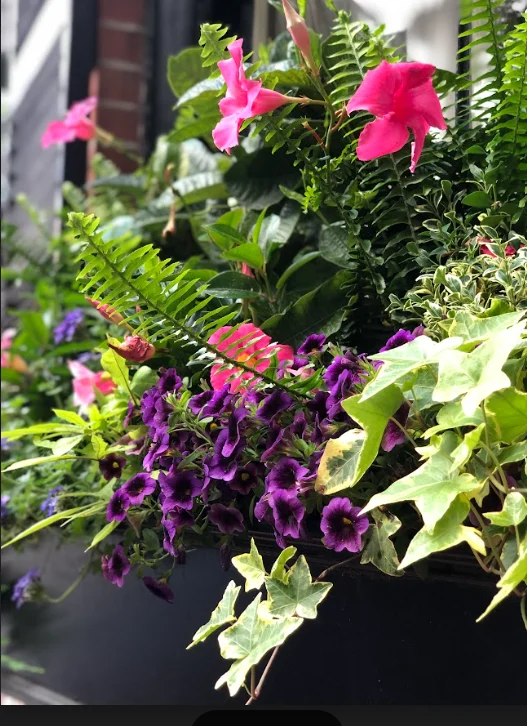
What we account for here
Brookline lots often mix tight setbacks, shared driveways, and established plantings that neighbors care about. We factor in lot lines, sightlines from the street, existing hardscape condition, and how new beds will hold up through New England seasons before finalizing any design.
Working around mature specimen trees
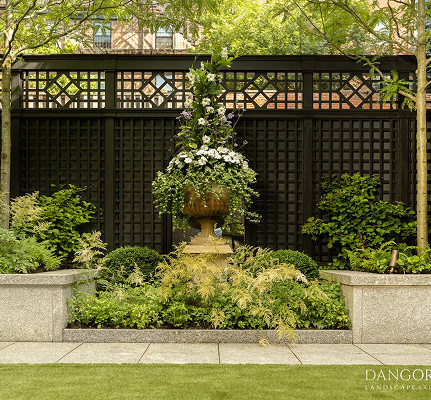
A design plan for an established Brookline lot starts with a tree survey, not a plant list. Root zones under mature beeches, oaks, and maples dictate where new beds, irrigation lines, and lighting cable can go without stressing roots the property has depended on for decades. We design new plantings to complement the existing canopy’s shade pattern rather than compete with it, choosing understory species that will actually thrive beneath it.
Deer pressure near the Newton line
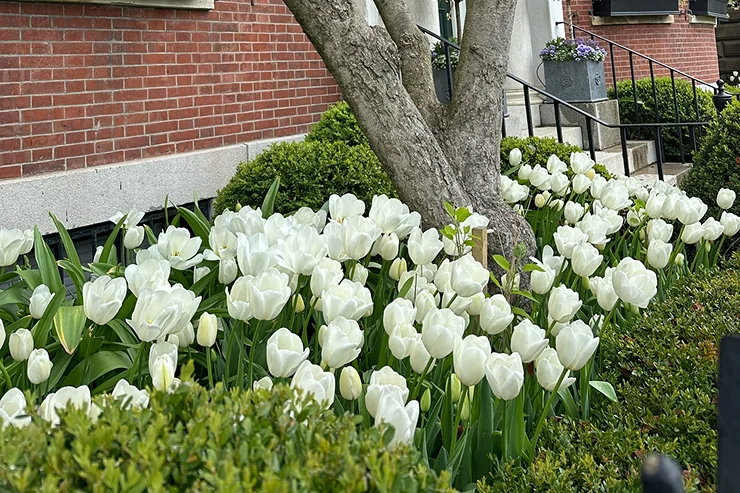
On properties toward Chestnut Hill and the town line, we shift plant selection toward genuinely deer-resistant material — boxwood, andromeda, certain ornamental grasses, alliums — and where a client wants species deer favor, such as hydrangea or hosta, we plan for discreet fencing or repellent programs built into the maintenance schedule rather than treating deer damage as an afterthought.
Preservation Commission review
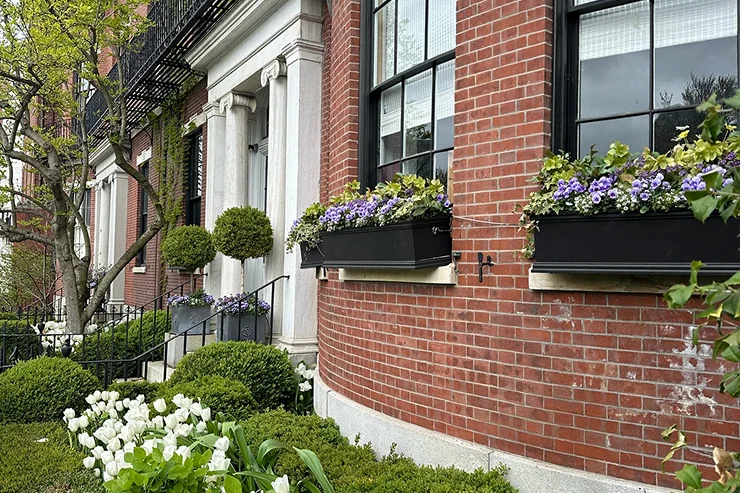
For properties in a Local Historic District, we prepare renderings and material specifications in the format the Commission expects, and we sequence design approval before ordering plant material or hardscape components. This keeps a project moving instead of stalling at the point where visible-from-the-street elements need a hearing date.
Drainage on older grading
Settled grading and decades of additions mean water doesn’t always move the way original plans intended. We assess drainage patterns as part of design, routing new plantings and hardscape to correct standing water or runoff toward foundations rather than designing around a problem that will resurface after the first heavy rain.
Recent Brookline work
Recent design work in Brookline has included reworking a Chestnut Hill perennial border that had been overtaken by shade as neighboring trees matured, replacing struggling sun-loving plantings with a layered shade palette while keeping the original stone edging intact. On another property near the Newton line, we redesigned a backyard planting scheme around deer-resistant species after repeated browse damage to a client’s hydrangea collection, integrating discreet fencing into the layout rather than relying on it as a visible barrier. Both projects moved through Preservation Commission review for street-facing elements before installation began.
Other services we provide in Brookline
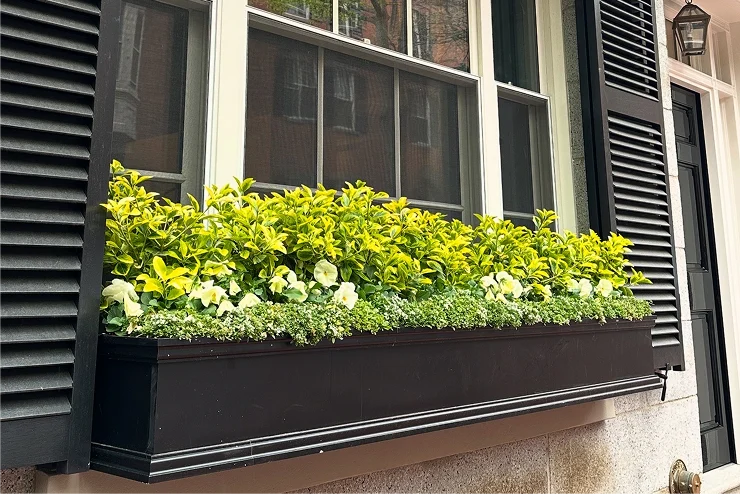
Landscape design is usually the starting point, not the whole project. Many Brookline clients pair a new design with ongoing garden services in Brookline to keep mature plantings and new beds performing through the season, along with fine gardening and seasonal maintenance calibrated to established landscapes. We also install drip irrigation sized for large, established beds and mature root systems, low-voltage lighting that highlights specimen trees and stone walls without disrupting historic streetscapes, and container and window box plantings for entries that fall under Preservation Commission review. Roof deck and terrace planting comes up less often here given lot sizes, but it’s available for the town’s condominium and multi-unit properties. For design work elsewhere in the city, see our approach to landscape design in Boston, and for how we handle comparable large-lot, review-board conditions elsewhere, our landscape design in Winchester and landscape design in the South End pages cover similar ground from different angles.
Start a Brookline project
Rouvalis Gardens is based at 5 Crescent St in Brookline, about 5.4 miles from Brookline — close enough for a site visit on short notice and for the ongoing maintenance visits a mature landscape needs. Call to set up a consultation: we’ll walk the property, review any Preservation Commission requirements up front, and put together a design plan and timeline before any material is ordered. Most Brookline projects start with that site visit, not a phone estimate.
What Our Customers Say
Frequently Asked Questions
Does my Brookline property need Preservation Commission approval for landscape design?
If your property sits within one of Brookline's Local Historic Districts, elements visible from a public way — front walks, fencing, walls, and some plantings tied to the streetscape — typically need Commission review before installation. We identify this during the initial site visit and prepare the required renderings and materials as part of the design process, so it doesn't stall the project later.
How do you design around deer near the Newton line?
For properties close to the town line, we favor deer-resistant plant selections such as boxwood, andromeda, and certain grasses, and where a client wants species deer favor, we build discreet fencing or a repellent program into the plan from the start rather than reacting to damage after it happens.
Can you design around mature trees instead of removing them?
Yes, and on most Brookline lots that's the point. We survey root zones and existing shade patterns first, then choose new plantings and hardscape placement that work with established trees rather than requiring their removal.
How far is Brookline from your Brookline location?
About 5.4 miles. We regularly work in Brookline for both design projects and the ongoing maintenance that mature landscapes require, and can typically schedule a site visit within the week.
Do you handle irrigation and lighting as part of a landscape design, or separately?
Both are usually planned alongside the initial design rather than added later, since irrigation line placement and lighting cable runs need to work around mature root zones and any Commission-reviewed elements. We can also add either service to an existing landscape if the original design didn't include it.