- Serving Boston and the Greater Boston Area

Landscape Design in Winchester, MA
A design that works two streets from the Mystic Lakes rarely works on a steep, oak-shaded lot half a mile inland, and Winchester has both within its borders. Lakeside properties fight soggy edges and open exposure, while the hillside lots off the ponds deal with root-bound shade, grade changes, and deer that move through the yards like they own them. A landscape design for Winchester has to start with which of those conditions you actually have, not with a generic plant list.

What Landscape Design looks like in Winchester
Winchester’s terrain does most of the talking before a single plant goes in the ground. Properties near the Mystic Lakes sit on soil that stays wet longer into spring and drains slowly after storms, which changes what can be planted near the water’s edge and how beds are graded to shed excess moisture away from foundations. Move a few blocks up from the lakes and the story flips: mature oak canopy, some of it well over a century old, creates deep dry shade and a root network that limits where you can dig without damaging a tree the town would rather you kept.
Sloped lots are common through the Rangeley, Wedgemere, and Winter Pond areas, and grade is the first design problem to solve, not the last. Retaining walls, terraced beds, and stepped paths have to be planned around drainage patterns that move water downhill toward neighboring properties or toward the lake system itself, so runoff control is part of the design conversation from day one, not an afterthought added when erosion shows up.
Deer pressure is real and constant here. Winchester borders enough open land and reservoir property that deer travel freely through residential yards, and a planting plan that ignores this ends up half-eaten by June. We design with deer behavior in mind from the start: layering resistant species where browsing is heaviest, reserving vulnerable plants for protected courtyards or fenced areas, and building in physical deterrents where the design calls for something deer find appealing anyway.
Light is the other variable that shifts block by block. Open lakeside lots often get full sun and wind off the water, while the interior, tree-heavy streets run shaded most of the day. A design that treats Winchester as one light condition will underperform somewhere on the property.
What we account for here
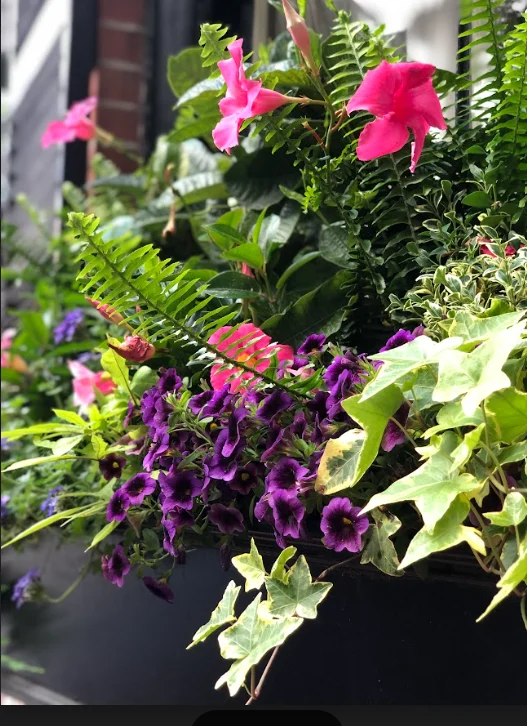
What we account for here
Winchester’s landscape design challenges break down into a handful of recurring, site-specific constraints. Here is how each one shapes the work.
Deer pressure across the property
Deer move through Winchester’s residential streets year-round, not just in fall and winter. Plant selection favors species deer generally avoid — boxwood, andromeda, spirea, most ornamental grasses — while anything deer find attractive gets placed inside fenced courtyards, walled beds, or areas close to the house where human activity keeps browsing down. Where a client wants plants deer typically target, we build in netting or low-voltage deterrent options rather than leaving new plantings exposed.
Grade and slope
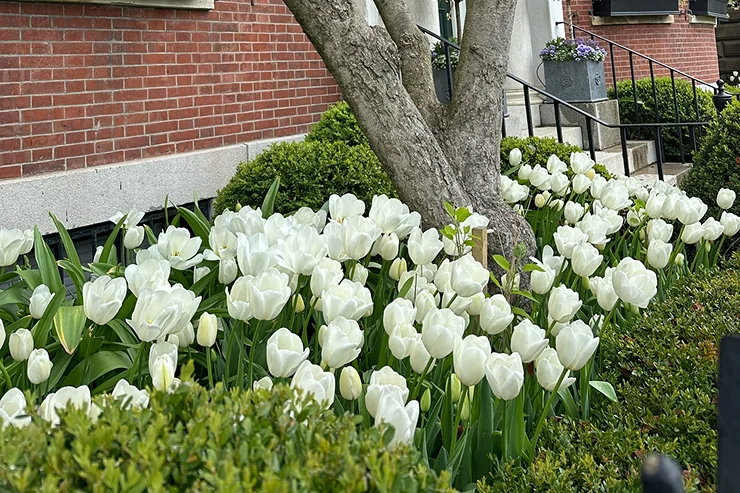
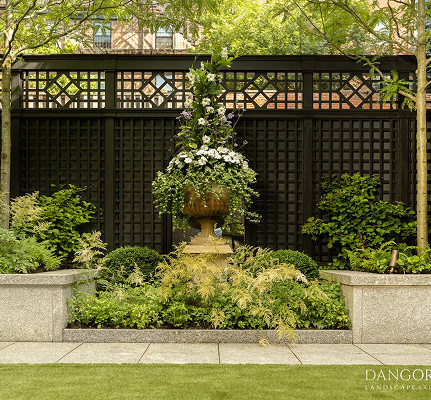
Many Winchester lots drop significantly from street to backyard, especially around Wedgemere and the streets climbing away from the lakes. We plan retaining structures, terracing, and planted slopes to manage that grade rather than fight it, keeping soil in place and directing water away from foundations and neighboring lots instead of letting it run unchecked downhill.
Mature oak canopy and root zones
Winchester’s tree canopy is one of its defining features and also one of its planning constraints. Digging near established oaks means working around root systems that can extend well beyond the drip line, so bed placement, irrigation trenching, and even foot traffic patterns during installation are planned to avoid compacting soil over roots or cutting through structural ones.
Proximity to the Mystic Lakes
Lots near the lakes deal with higher water tables, occasional flooding at the immediate shoreline, and runoff regulations tied to the watershed. Plant choices near the water lean toward species that tolerate periodic saturation, and any grading or drainage work is designed to keep fertilizer and soil runoff from reaching the lakes rather than washing straight in.
Recent Winchester work
Recent work in Winchester has included a sloped backyard near Winter Pond regraded and terraced to stop erosion while adding usable flat space for a patio, and a shaded, oak-canopied side yard replanted with a deer-resistant understory after the previous plantings had been repeatedly browsed down to stubs. Both projects started with the same first step: reading the specific slope, light, and pressure on that lot before proposing a single plant.
Other services we provide in Winchester
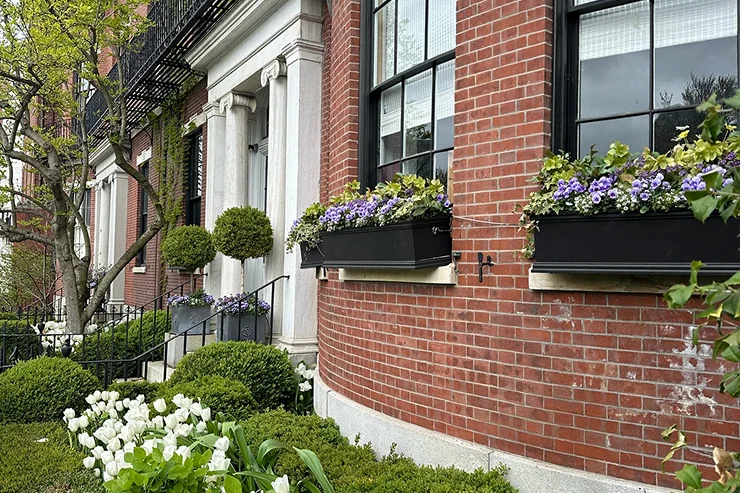
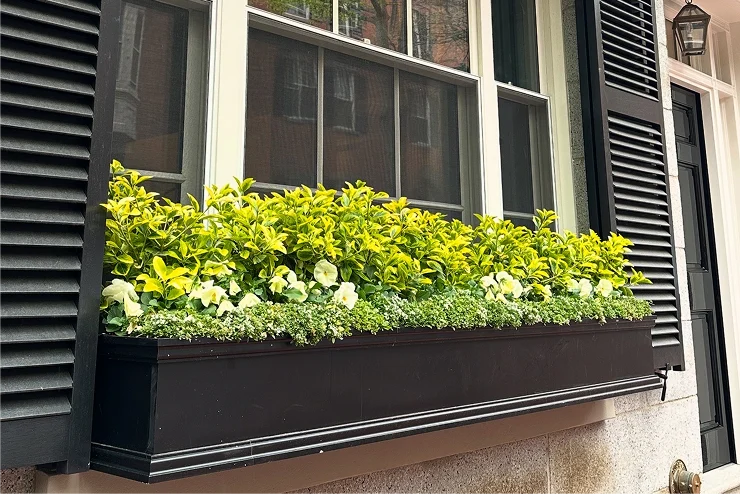
Landscape design is usually the starting point, not the whole scope. Many Winchester clients pair a new design with ongoing garden services in Winchester to keep beds, lawns, and specimen trees in shape once the installation is finished. Sloped and shaded properties often benefit from drip irrigation zoned separately for sun and shade areas, and low-voltage lighting that highlights the oak canopy and defines paths on uneven grade after dark. Properties with decks or patios overlooking the lakes frequently add container plantings and seasonal window boxes for color without disturbing the surrounding beds. We also handle fine gardening and seasonal maintenance for clients who want the design to hold its shape year over year rather than drift.
Start a Winchester project
Winchester is about 6.9 miles from our Winchester location, and we work throughout the town regularly, from the lakeside streets to the hillside lots further in. Call Rouvalis Gardens to set up a consultation. We will walk the property, talk through slope, light, and deer pressure specific to your lot, and follow up with a design proposal scoped to what that site actually needs. From there, installation is scheduled around the season and the scope of the work.
What Our Customers Say
Frequently Asked Questions
Can you design around Winchester's deer population without giving up on flowering plants entirely?
Yes. We reserve flowering perennials and other deer-favored species for protected areas close to the house or inside fenced courtyards, and use deer-resistant varieties in the more exposed parts of the yard. It is a layout decision as much as a plant selection one.
Do you work on lots right along the Mystic Lakes?
Yes, including properties where the higher water table and lakeside runoff rules affect grading and plant choice. We design drainage and plant selection to account for periodic saturation and to avoid runoff reaching the lakes.
My yard slopes steeply from the street to the backyard. Is that a problem?
It is a common condition in Winchester, particularly around Wedgemere and the streets near Winter Pond, and it is something we plan for directly with terracing, retaining walls, or planted slopes rather than treating it as an obstacle.
Will digging near my oak trees damage the roots?
We plan bed locations and any trenching for irrigation or lighting around known root zones, and avoid compacting soil over root systems during installation. Mature oaks are worth protecting and it changes how we sequence the work.
How far out do you book landscape design consultations for Winchester?
It varies by season. Spring and early summer are our busiest planning windows, so reaching out a few months ahead of when you want work done gives the most scheduling flexibility.