- Serving Boston and the Greater Boston Area

Landscape Lighting in Winchester, MA
A lot that slopes down toward the Mystic Lakes creates lighting problems most towns never see: fixtures that need to hold a grade without becoming a hazard on a dark path, canopy from mature oaks that swallows moonlight completely by September, and deer traffic that makes anything at nose height fair game for knocking loose. If your Winchester property backs onto water, sits under old-growth trees, or steps down a hillside in terraces, a generic lighting plan bought off a truck will fail within a season. We design around those three conditions specifically, not around a catalog layout.

What Landscape Lighting looks like in Winchester
Winchester’s housing stock runs from Victorian-era homes near the town center to mid-century houses built up the slopes around the Mystic Lakes and along Winchester’s reservoir-adjacent streets. The lighting brief changes block by block. Near the water, we’re usually solving for elevation change — steps, retaining walls, and terraced beds that need low, shielded fixtures so the path reads clearly from the house down to the dock or patio without glare bouncing off the lake at night. Under oak canopy, the challenge flips: there’s little ambient light to work with, so path and specimen tree lighting has to do real work rather than accent an already-lit facade.
Soil here is a mix of glacial till and, closer to the lakes, a wetter, siltier profile that affects how we run wire and set transformers — we avoid low points that pond after storms and keep connections above grade where drainage is uncertain. Deer pressure is real and constant in Winchester’s leafier sections, which means exposed low-voltage cable and delicate fixture caps get tested by hooves and antlers whether we plan for it or not. We route cable below grade or along structure lines rather than loose through beds, and we choose fixture housings that won’t crack under casual contact.
Many of the homes we work on near the center of town or along the more established streets carry some degree of historic character, even without formal district review. We keep fixture finishes and mounting hardware unobtrusive — no visible conduit, no fixtures that compete with period trim or stone walls — so the lighting reads as an extension of the architecture rather than an add-on.
What we account for here
What we account for here
Lakeside grading and water proximity
Properties near the Mystic Lakes often have a meaningful drop from the house to the water’s edge. We run transformers and junctions well above any flood-prone low point and use fixtures rated for damp locations wherever a run passes near the shoreline or a seasonally wet lawn.
Mature oak canopy
Old oaks mean root systems that can’t be trenched through carelessly and a canopy that blocks most natural light after dusk. We hand-dig around root zones, use narrow-gauge trenching where possible, and lean on uplighting into the canopy itself to recover some of the depth the trees take away.
Deer traffic
Winchester’s wooded lots see regular deer movement, especially near conservation land and along the lake paths. We bury cable, secure fixture caps against casual contact, and place low path lights slightly off the most obvious game trails through a property rather than directly in them.
Sloped, terraced lots
Where a yard steps down in tiers toward the water or a lower garden level, we stagger fixture heights and angles by tier so no single terrace washes out the one above or below it, and so steps stay legible from the top of the slope.
Recent Winchester work
A recurring project type in Winchester is lighting for a lakeside rear yard where the client wanted the path from the house to the water usable after dark without a wall of brightness visible from the lake itself. That typically means shielded path fixtures set low, a few well-placed uplights on shoreline trees, and a transformer location tucked near the house rather than down near the water table. We’ve also handled canopy-heavy front yards near the town center, where the goal was simply making the front walk and entry readable at night under oaks that block almost all ambient light by early evening. Both project types are common enough here that we’ve refined a standard approach rather than starting from scratch each time.
Other services we provide in Winchester
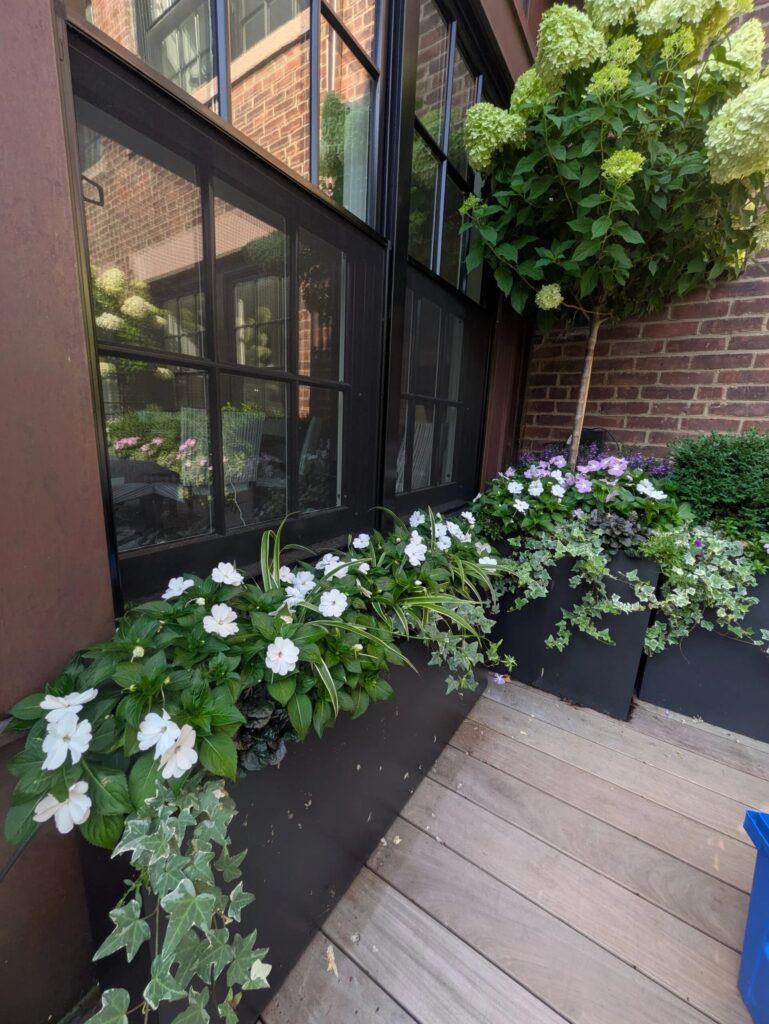
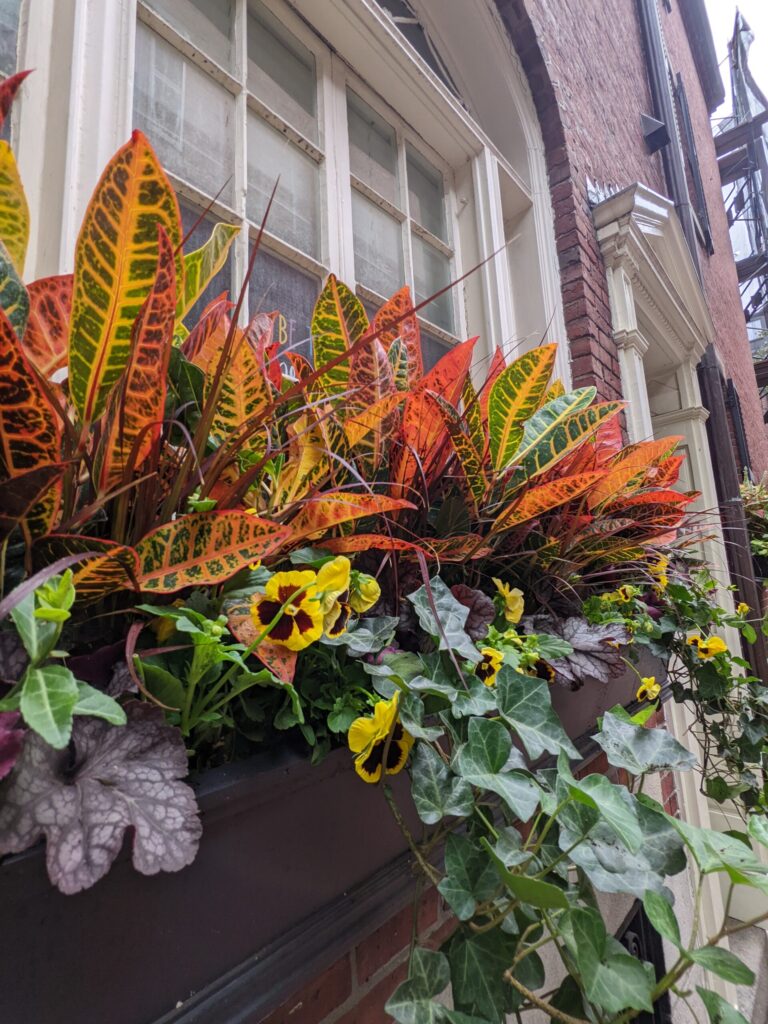
Landscape lighting is one piece of a broader Winchester practice. We handle full garden services in Winchester, including design and installation for lakeside and sloped properties, fine gardening and season-long maintenance for beds that take real deer pressure, container and window box plantings for homes near the town center, roof deck and terrace planting for the flatter in-town lots, and drip irrigation systems sized for the sandier, faster-draining soil found on the higher ground away from the lakes. Most clients start with one service and add lighting or irrigation once the planting plan is settled, since the underground work for both is easiest to coordinate before beds are finished.
Lighting design that respects the site, not just the plan
We treat every fixture placement as a decision about the property after dark, not a decoration on top of a daytime landscape. That means walking a Winchester site at dusk before finalizing a plan, checking sightlines from the house, from the street, and where relevant, from the water, and adjusting for how a slope or a stand of oaks actually behaves once the sun is down rather than how it looks on a survey. It’s a slower process than pulling fixtures off a shelf, and it’s the reason lighting plans built this way hold up over years rather than needing a redo the first season.
Working around review boards and neighborhood character
Winchester doesn’t carry the same blanket historic district review as some closer-in Boston neighborhoods, but plenty of individual properties and streets have informal expectations around exterior changes, and some parcels near the center of town do fall under local historic guidelines. We keep fixture selection and placement conservative on these properties by default — recessed or low-profile hardware, no visible transformer boxes near the front facade, and finishes that read as neutral rather than decorative. Where a formal review is required, we provide the documentation needed without treating it as an afterthought.
Landscape lighting across Boston and the western suburbs
Winchester sits about 6.9 miles from our Winchester base, and lakeside, sloped, and canopy-heavy sites like these come up regularly across our service area. If you’re comparing options, our landscape lighting work in Boston covers the tighter, more urban end of the same craft, while our lighting projects in Newton and Brookline deal with similar terrace and mature-tree conditions on a different lot pattern. The underlying approach — site-specific design, buried and protected wiring, fixtures chosen for the actual conditions rather than a catalog default — carries across all of them.
Next step for Winchester properties
The most useful first step is a site walk at dusk, when we can actually see how your slope, your tree canopy, or your lake-facing rear yard behaves once natural light drops off. From there we put together a fixture and placement plan specific to your lot, give you a straightforward estimate, and schedule installation around your timeline. Call Rouvalis Gardens to set up a consultation for your Winchester property — we’re a short drive up from our Winchester base and familiar with the lakeside and canopy conditions that make lighting here different from a flatter, treeless lot.
What Our Customers Say
Frequently Asked Questions
Does landscape lighting near the Mystic Lakes need special fixtures?
Yes. We use damp-location-rated fixtures on any run near the shoreline or low, wet turf, and we keep transformers and wire splices set well above the seasonal high-water line rather than in the lowest part of the yard.
Will deer damage low-voltage lighting installed in Winchester?
Exposed cable and loosely set fixtures are vulnerable to deer traffic, which is common in Winchester's wooded and lakeside sections. We bury cable, secure fixture caps, and position path lights off the most obvious game trails to reduce contact.
Can you light a yard that's mostly shaded by mature oaks?
That's one of the more common Winchester conditions we design for. Because the canopy blocks most ambient light after dusk, we typically use a mix of uplighting into the trees and stronger path lighting than we'd use on an open, unshaded lot.
Do sloped, terraced properties cost more to light?
Terraced and sloped lots usually need more fixtures per square foot than a flat yard, since each level has to be lit and staggered so one tier doesn't wash out the next. We'll size the plan to your specific grade during the site walk rather than quote a flat rate.
How far is Winchester from your Winchester location?
About 6.9 miles. We work in Winchester regularly and are familiar with the lakeside, sloped, and canopy-heavy lots that are common in town.