- Serving Boston and the Greater Boston Area

Landscape Lighting in Newton, MA
A Newton foundation bed planted forty years ago, thick with rhododendron and yew under mature canopy, does not light the way a new-construction yard does. The shade that keeps those plantings alive most of the day becomes near-total darkness at night, and the deer pressure that has already shaped what you can plant also shapes where a fixture can safely sit without becoming a rub post or a trip hazard on a path the deer use as readily as you do. On a village lot in Newton Centre, Waban, or Auburndale, landscape lighting has to work with an established garden, not around one.

What Landscape Lighting looks like in Newton
Newton’s older villages — Newton Centre, Waban, Chestnut Hill, Auburndale, Newtonville — were platted with narrower setbacks and mature street trees long before anyone thought about low-voltage wiring runs. That means most of our lighting work here starts with a walk of the existing beds rather than a blank-slate plan: where the foundation planting already crowds the house, where a specimen Japanese maple or an old copper beech has grown into the sightline from the street, and where forty years of leaf litter has built up soil that drains differently than it did when the beds were first cut.
Shade is the dominant condition on most of these lots, which changes the lighting approach considerably. Uplighting a canopy that filters even summer sun down to a green gloom needs a different fixture and a different beam spread than the same technique on an open lawn. We also design around deer routes, since a fixture or cable run placed where deer travel gets kicked, chewed, or buried within a season — something a first-time low-voltage installer in this market learns the hard way. Newton’s tree protection ordinance adds another layer: any lighting plan that requires trenching near a protected tree’s root zone, or that’s proposed alongside work that could affect a tree covered by the ordinance, gets reviewed with that in mind before we ever run a wire. We’d rather adjust a transformer location or reroute a cable path than put a client’s tree, or their permit, at risk.
The result on most Newton properties is a lighting plan built around what’s already there — the specimen tree worth uplighting, the stone wall worth grazing, the path through dense shade that actually needs illumination to be usable after dark — rather than a generic package of driveway spotlights.
What we account for here

What we account for here
Newton’s village lots repeat the same handful of real constraints from one property to the next. These are the ones that shape almost every lighting design we do here.
Established foundation plantings and heavy shade
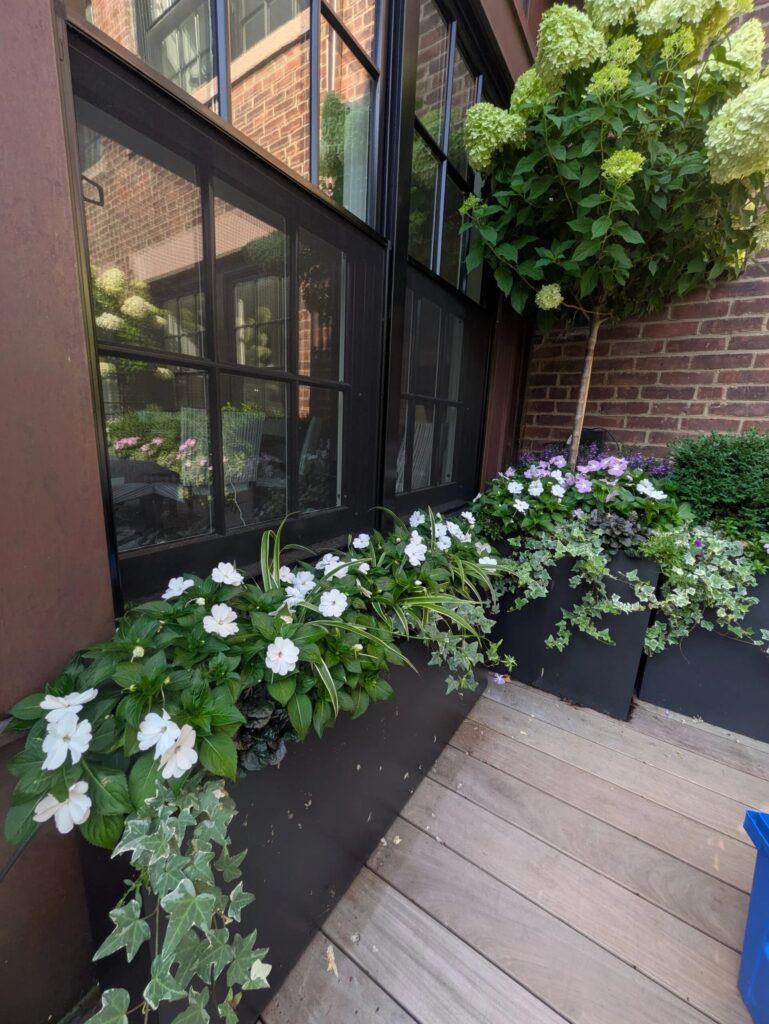
Overgrown or mature foundation beds mean fixtures often go in among root systems and dense underplanting rather than open mulch. We use low-glare, adjustable fixtures that can be aimed up through a shaded canopy without over-lighting the leaf mass closest to the source, and we place transformers and junction boxes where they can be serviced without disturbing established roots.
Deer pressure
Deer travel established routes through these older lots and will investigate anything new at ground level. We run cable below grade wherever the route allows and choose fixture housings that stand up to being brushed against repeatedly, rather than lightweight units meant for open, low-traffic lawns.
The tree protection ordinance
Newton regulates removal and, in some cases, work within the protected zone of trees over a certain size. Before any trenching plan goes final, we check it against the ordinance and against any tree already under review or protection, and we’ll route cable around a root zone rather than through it even when that means a longer run.
Village-scale front yards and street presence
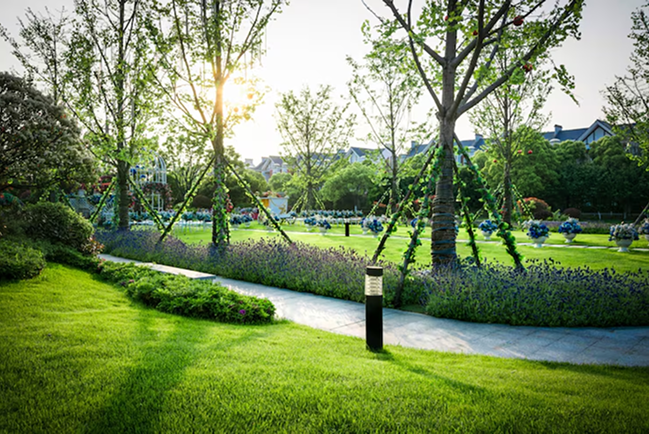
Many Newton village lots sit close to the street with limited setback, so lighting reads immediately from the sidewalk. We keep front-facing fixtures restrained — path lighting and selective uplighting rather than broad floodlighting — so the result looks considered from the street, not lit up like a commercial lot.
Recent Newton work
A recurring project type across Newton’s villages is re-lighting an established front garden that’s outgrown its original plan: a foundation bed that’s matured into real shade, a stone wall or terraced retaining wall worth highlighting, and a front walk that’s become genuinely hard to navigate after dark under a full canopy. We’ve handled that kind of retrofit on properties from Newton Centre to Waban, working the new low-voltage plan into existing beds rather than tearing them out to start over. On more open Chestnut Hill and Newtonville lots, the work leans more toward path and steps lighting plus selective tree uplighting where a specimen has room to be shown off.

Other services we provide in Newton
Lighting is usually one part of a broader Newton project. We also handle full garden design and maintenance in Newton, including work suited to the shaded, deer-pressured foundation beds common here — fine gardening and seasonal maintenance, garden design and installation for lots being reworked around mature trees, containers and window boxes for front entries and porches, roof deck and terrace planting for the newer condo and carriage-house conversions in the village centers, and drip irrigation designed to work around root zones protected by the town’s tree ordinance. If your property crosses village lines or you’re comparing options, we provide the same landscape lighting service in Lexington and Winchester, and for city properties see our landscape lighting in Boston page.
Landscape Lighting, Newton, MA — 8.6 miles from Newton
We run Newton projects out of our Newton base at 5 Crescent St, about 8.6 miles away, and travel out regularly for both new lighting installations and retrofits to existing beds. Call to set up a site visit; we’ll walk the property, note the shade patterns, deer routes, and any trees under ordinance protection, and follow up with a plan and a clear next step. Most Newton lighting projects move from that first visit to a proposal within a week, and installation is scheduled around your garden’s existing planting and maintenance calendar so we’re not disturbing beds mid-season.
What Our Customers Say
Frequently Asked Questions
Can you add landscape lighting without disturbing established foundation plantings?
Yes. Most Newton lighting jobs go into beds that have been in place for decades, so we route cable around root systems and place fixtures by hand among existing plants rather than clearing and replanting. It takes longer than lighting a bare bed, but it protects plantings that took years to establish.
Does Newton's tree ordinance affect where you can trench for lighting cable?
It can. Newton regulates work affecting protected trees, so before any trenching plan is finalized we check it against the ordinance and reroute cable around a protected root zone when needed. This is part of the design conversation, not an afterthought after digging starts.
Will landscape lighting attract or bother deer?
Well-placed low-voltage lighting doesn't attract deer, but poorly placed cable and fixtures along their travel routes get damaged. We identify the paths deer already use on a property and keep fixtures and exposed cable clear of them, or use housings sturdy enough to withstand incidental contact.
How does heavy shade change a lighting design?
Shade changes both fixture choice and beam angle. Uplighting a canopy that's already dim during the day needs a tighter, brighter beam than the same fixture would need on an open lawn, and placement has to account for how far light will actually travel through dense leaf cover.
How far is Newton from your Newton location?
About 8.6 miles. We service Newton regularly and schedule site visits and installations around each property's planting and maintenance calendar.