- Serving Boston and the Greater Boston Area

Planting & Maintenance in Weston, MA
If deer have already eaten last spring’s hostas to the ground, or the far end of the lawn never quite gets enough water pressure to green up, the property is telling you something common to Weston: these are large, wooded lots with real distance between the house and the property line, heavy shade from mature oak and maple canopy, and a deer population that treats most nursery-standard planting as a buffet. A planting and maintenance plan that ignores any one of those three conditions fails within a season. One built around them holds up for years.

What Planting & Maintenance looks like in Weston
Weston properties are rarely small. Many sit on an acre or more, with the planted areas around the house separated from the street by long driveways, stone walls, and stands of untouched woodland. That scale changes how we approach both design and upkeep. Irrigation has to be engineered for pressure loss over distance, not just zoned by bed. Planting plans have to account for deep shade under mature trees alongside sun pockets near the house, sometimes within the same sightline. And because deer move through these properties as a matter of course rather than as an occasional visitor, plant selection is a filtering exercise from the very first design conversation — not an afterthought once something has already been chewed back.
Soil on older Weston lots is often compacted clay under a thin layer of topsoil, or acidic and root-choked near established trees, both of which limit what will actually establish well without heavy amendment. We test before we plant rather than guess. Access matters too: long driveways and gated entries mean crews and equipment need clear staging plans worked out in advance, especially for larger seasonal installs or bed renovations that involve trucking in soil or removing failed plantings. None of this is exotic work, but it is specific work, and it is why a maintenance program built for a tighter in-town lot does not simply scale up to a Weston estate without changes to irrigation design, deer strategy, and crew logistics.
What we account for here
What we account for here
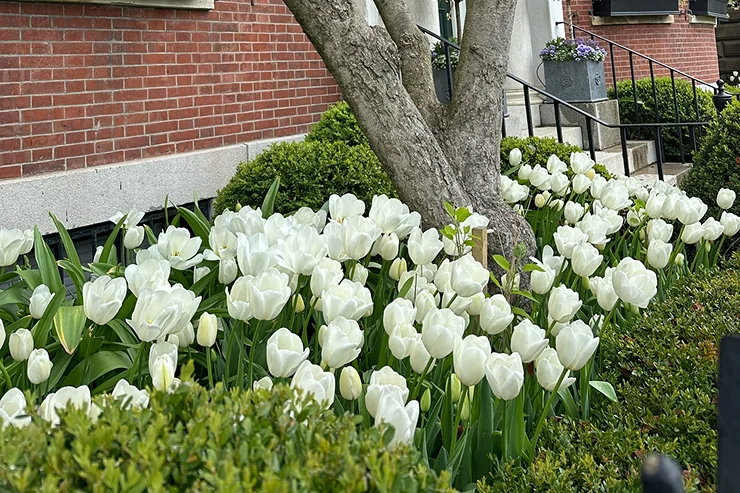
Four conditions come up on nearly every Weston property we work on. Here is how each one shapes the plan.
Severe deer pressure
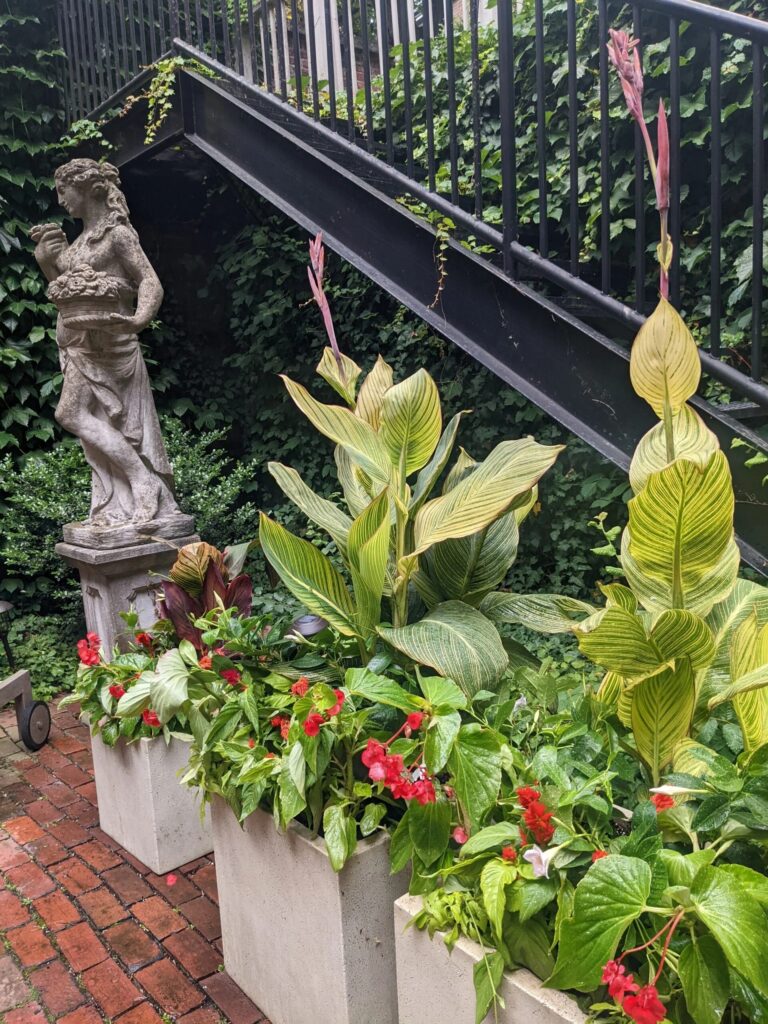
Weston’s deer population is dense enough that a planting plan without a deer strategy is not really a plan. We lean on genuinely deer-resistant palettes — boxwood, andromeda, certain viburnum varieties, ornamental grasses, and specific perennials with a track record on nearby properties — rather than plants marketed as deer-resistant that get tested and fail in year one. Where a client wants a specific plant that deer do favor, such as hostas or hydrangeas near an entry, we handle it with targeted repellent applications on a maintenance schedule or discreet fencing during the vulnerable early-establishment period, rather than avoiding the plant altogether.

Extensive shade from mature canopy
Large lots with decades-old trees mean a lot of the planting area is working with dappled or full shade for most of the day. We plan around it with a shade-tolerant structure — ferns, hellebores, epimedium, shade-adapted hydrangea varieties, and groundcovers that actually fill in under a canopy rather than thin out — instead of forcing sun-loving perennials into beds that will always underperform. Where a client wants more color than deep shade allows, we identify the sun pockets that do exist, often near a south-facing wall or a clearing, and concentrate brighter planting there.
Long irrigation runs from the house
On a smaller in-town lot, irrigation is mostly about zoning. On a Weston estate, it is about engineering for distance. Beds at the far edge of the property, past a pool house or beyond a stand of trees, need pressure and pipe sizing calculated for that run, not just an extra zone tacked onto an existing system. We design drip irrigation layouts with this distance built in from the start, and during the season we check pressure at the far ends of the system as part of routine maintenance visits, since that is where a slow leak or a clogged emitter shows up last and does the most damage before anyone notices.
Recent Weston work
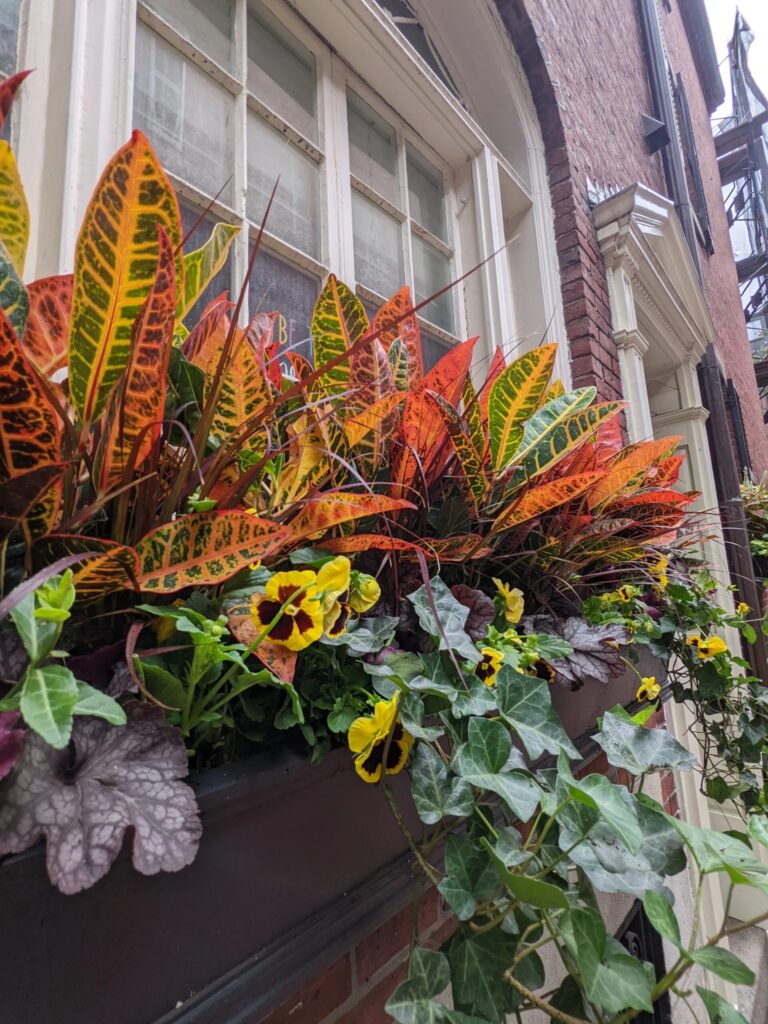
Recent work in the area has included renovating a deer-damaged perennial border along a shaded woodland edge with a resistant plant palette, redesigning a drip system to correct pressure loss across a long back-lawn run, and building out a mixed shade planting under an established oak canopy near a client’s terrace. We do not publish client names or addresses for properties in this area, in keeping with the privacy most Weston homeowners expect, but the work itself is representative of what a typical estate lot in town requires.
Other services we provide in Weston
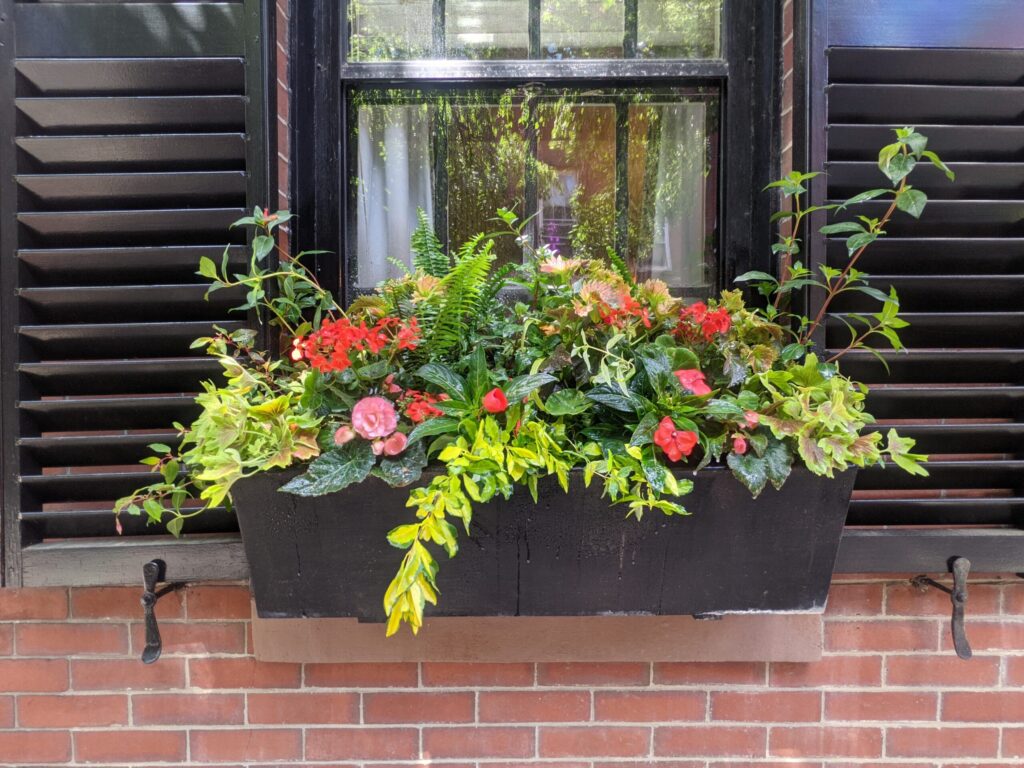
Planting and maintenance is one piece of a broader program most Weston clients end up wanting once the beds are right. We also handle full garden design and installation for properties starting from scratch or resetting an overgrown landscape, container and window box planting for entries and terraces, drip irrigation design and repair sized for exactly the distances described above, and low-voltage landscape lighting to make long driveways, stone walls, and specimen trees visible and safe after dark. For a full picture of what we do on Weston properties, see our garden services in Weston page. If your maintenance needs are more general — seasonal cleanups, mulch, and routine bed care without a heavy design or deer-management component — that page covers it as well.
How this compares to our work in Boston and nearby towns
The planting and maintenance work we do in Weston shares a design philosophy with our in-town work — right plant, right place, maintained on a schedule that actually fits the property — but the constraints differ enough that we treat them as separate problems. In Boston, the pressure points are tight urban lots, historic district review, and rooftop or courtyard microclimates. Out in the western suburbs, it is scale, shade, and deer. We see the same estate-scale conditions in Wellesley and Lexington, and a Weston client considering either town as a comparison point will find the same team applying the same standards there.
Getting started in Weston
Rouvalis Gardens is based at 5 Crescent St in Weston, roughly 13.8 miles from most Weston properties, and we schedule Weston consultations on set days each week to make the drive efficient rather than tacking on a rushed visit at the end of a route. Call to set up a walk-through of the property. We look at existing plant health, deer damage history, irrigation coverage, and shade patterns on that first visit, then follow up with a written plan and a clear next step — no pressure to commit on the spot, and no work begins until the plan is approved.
What Our Customers Say
Frequently Asked Questions
Can you actually keep deer from destroying new plantings in Weston?
Deterrence, not elimination, is the realistic goal — Weston's deer population is too established for any planting to be fully deer-proof. We combine resistant plant selection with targeted repellent schedules and, where needed, discreet temporary fencing during establishment, which reduces damage to a manageable level rather than promising none at all.
Do you design irrigation differently for large Weston lots than for smaller in-town properties?
Yes. On an estate lot, pipe sizing and pressure calculations have to account for the distance between the water source and the farthest beds, which is rarely a concern on a compact urban property. We engineer the system for that distance up front rather than adding zones to a design that was never sized for the run.
What can you actually grow well in heavy shade under mature trees?
A good amount, once the palette is matched to the light. Ferns, hellebores, epimedium, certain hydrangea varieties, and shade-tolerant groundcovers all perform reliably under a mature canopy. We also identify any sun pockets on the property and reserve brighter, more color-driven planting for those spots.
How often does a Weston property need maintenance visits during the growing season?
It depends on the size and complexity of the planting, but most Weston estates on a fine gardening program see weekly or biweekly visits from spring through fall, with irrigation checks, deer-deterrent reapplication, and seasonal bed work handled on that same schedule.
Do you work with Weston's larger driveways and gated properties without disruption?
We do. Crew scheduling and equipment staging are planned around each property's access before work begins, so larger installs or bed renovations move efficiently without blocking a driveway or disrupting a household's daily routine.