- Serving Boston and the Greater Boston Area

Planting & Maintenance in Wellesley, MA
A planting plan for a Wellesley property has to survive three things most towns don’t combine: browsing deer that move down from the college’s wooded edges and the Charles River corridor, root competition from a hundred-year canopy of oak and beech, and a formal garden tradition that residents expect to be maintained, not reinvented. Get any one of those wrong and the bed looks thin by August. Rouvalis Gardens designs and maintains planting for Wellesley properties around all three at once, not as an afterthought after the design is chosen.

What Planting & Maintenance looks like in Wellesley
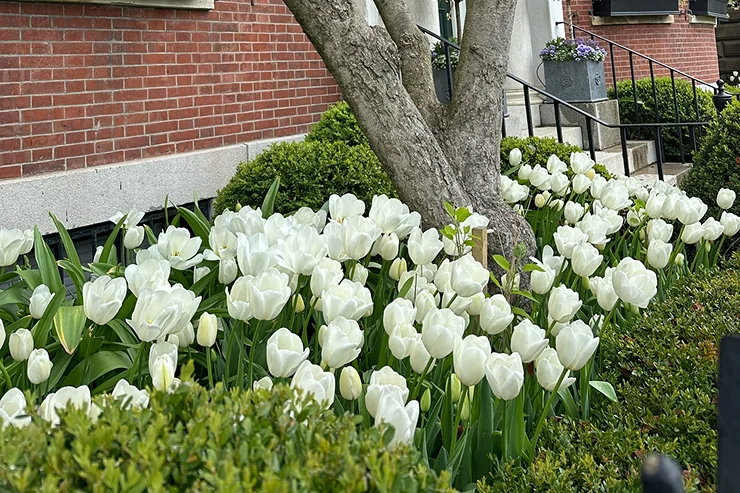
Most of the properties we work on in Wellesley sit on lots large enough to have a genuine garden hierarchy — a formal entrance planting, a perennial or cutting garden further back, foundation beds under mature trees, and often a pool or tennis court surround that needs its own screening. Planting and maintenance here means treating those as separate problems with a shared plant palette, not one undifferentiated landscape.
Light is the first variable that changes street to street. A Cliff Road or Dover Road lot shaded by a century of oak and beech canopy has dramatically less usable sun than a newer build off Washington Street, and the difference shows up in what will actually establish: hosta, hellebore, and native ferns thrive under canopy, while the sunnier, more exposed lots near Wellesley College and the reservoir support the perennial borders and rose plantings that formal Wellesley gardens are known for.
Soil is the second. Much of Wellesley sits on glacial till with pockets of dense clay that hold water through spring and then bake hard by July, which is a different management problem than the sandy loam we see closer to the coast. We amend and plan drainage per bed rather than applying one soil program across a property.
Then there is deer pressure, which shapes plant selection on nearly every job in town more than any other single factor, and the expectation — spoken or not — that a formal garden will read as formal all season, not just at installation. Maintenance visits are scheduled to keep hedges, edges, and borders at the standard the original design called for, not to catch up after they have slipped.
What we account for here
What we account for here
Four constraints come up on nearly every Wellesley property we take on. Each changes how the work is planned before a single plant goes in the ground.
Deer pressure across the town
Wellesley’s tree cover and proximity to conservation land and the college campus mean deer move through residential lots freely, especially near Fuller Brook Park and the wooded parcels off Cedar Street. We select and combine plant material — boxwood alternatives, deer-resistant perennials, selectively fenced cutting beds — so a garden reads as intentional and full rather than obviously deer-proofed. Where a client wants specific plants deer favor, such as hosta or roses, we plan targeted fencing or repellent programs into the maintenance calendar rather than losing the planting by June.
Mature canopy and root competition
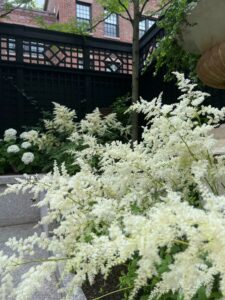
Many Wellesley lots carry oak, beech, and maple specimens that predate the house. Their root systems compete hard for water and nutrients, and their canopy dictates a shade palette for anything planted beneath them. We test soil and light per bed rather than per property, and we build irrigation runs that account for canopy drip lines so root zones near mature trees are not starved or flooded by a single zone designed for open lawn.
Formal garden traditions and historic commission input
A number of Wellesley’s older estate properties, particularly those with front elevations visible from the street or on registered historic parcels, involve some level of review before hedging, fencing, or structural planting changes near the house go in. We prepare planting plans with the plant list, mature sizes, and sightline impact documented up front, which is the material a review typically asks for, so the timeline is not held up by a request we could have anticipated.
Seasonal water swings on clay-heavy soil
The till and clay pockets common across Wellesley hold water in spring and shed it fast once summer heat sets in, which stresses new plantings unevenly across a single property. We design drip irrigation zoned to soil type and slope rather than lawn area alone, and we walk beds during the first growing season to catch drainage problems before they show up as dieback.
Recent Wellesley work
Recent work in Wellesley has included refreshing a formal entrance border on a Cliff Road-area estate where deer had thinned the original planting over several seasons, rebuilding a shaded foundation bed under mature oaks with a fern and hellebore palette suited to low light and root competition, and installing zoned drip irrigation across a property with both open perennial beds and heavily canopied side yards. Each project started with a site read for light, soil, and browsing pressure before any plant list was finalized.
Other services we provide in Wellesley
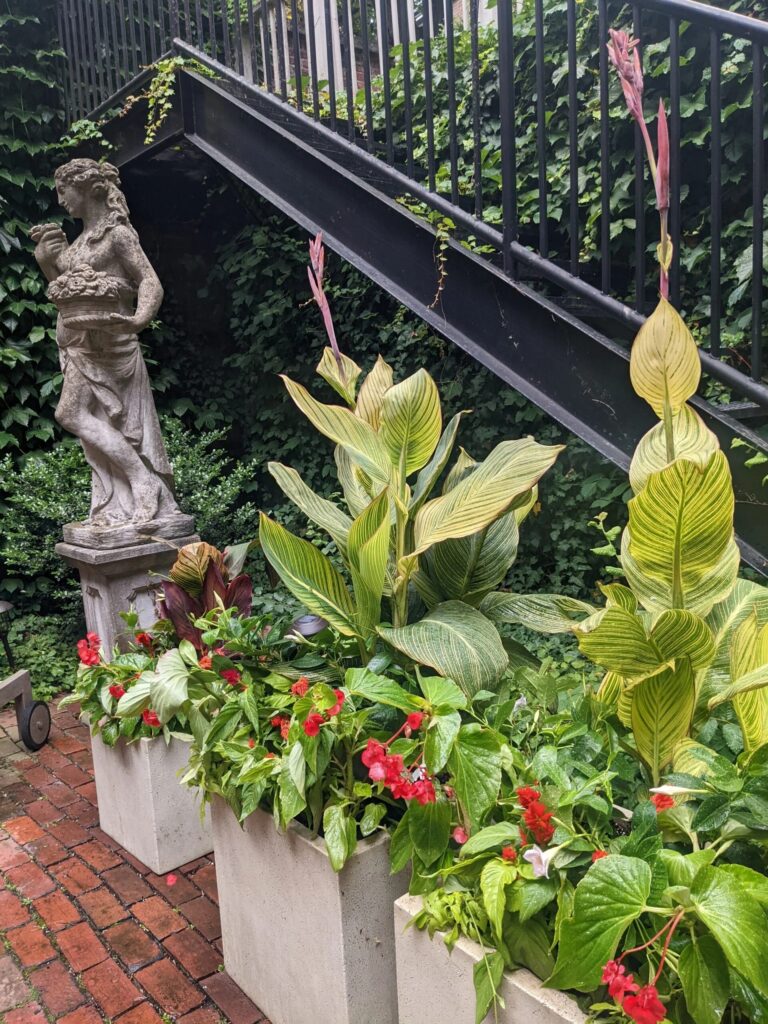
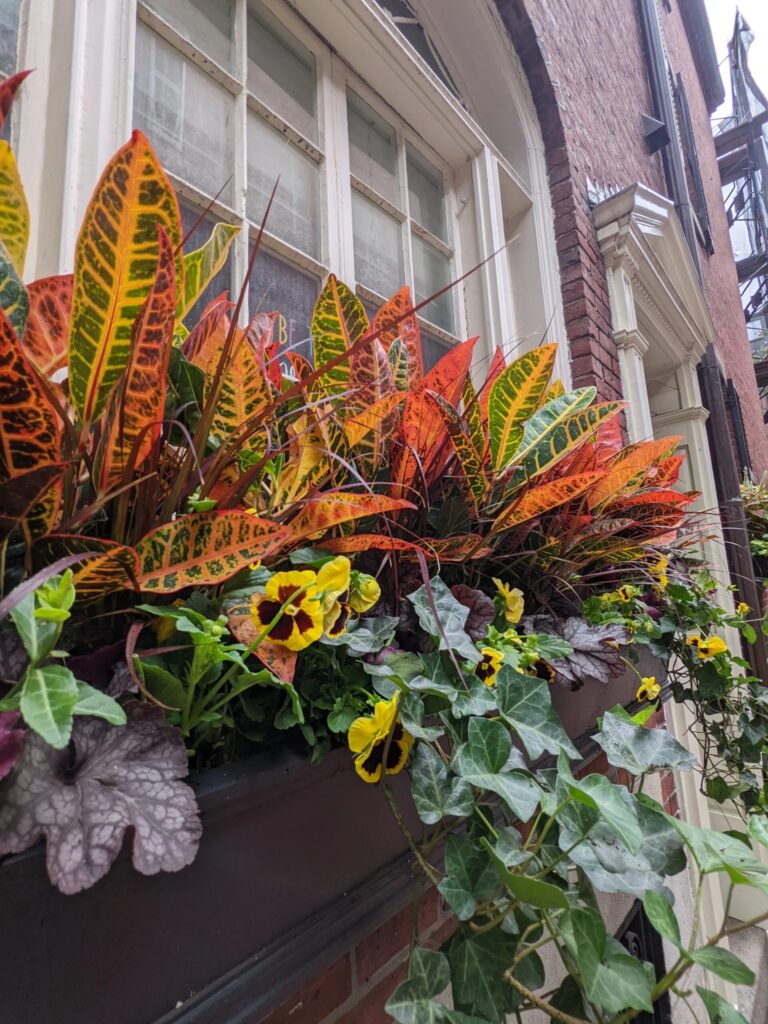
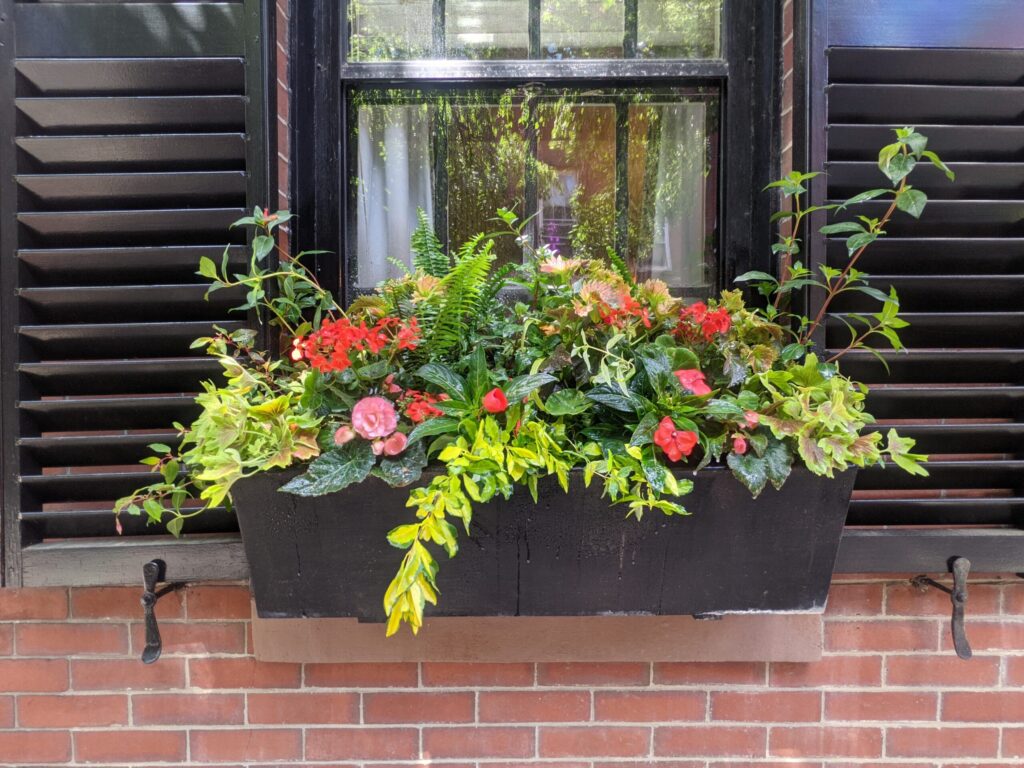
Planting and maintenance is one part of a broader program we run for Wellesley properties. Many clients pair it with full garden design and installation for new beds or a renovated entrance sequence, container and window box planting refreshed seasonally for porches and terraces, and low-voltage landscape lighting to carry a formal garden’s structure into the evening. Properties with pools, courtyards, or upper-level outdoor space also use our roof deck and terrace planting service, and drip irrigation is frequently installed alongside new planting to protect the investment through Wellesley’s uneven summer rainfall. For the full range of what we offer locally, see our Wellesley garden services overview.
Planting & Maintenance beyond Wellesley
We run the same planting and maintenance program, adjusted for local conditions, in nearby towns with similar estate-scale properties. See our work in Weston and Lexington, or our broader approach for Boston planting and maintenance if your property sits closer to the city.
Getting started in Wellesley
Rouvalis Gardens is based at 5 Crescent St in Wellesley, about 14.6 miles from Wellesley, and our crews are on estate properties in town on a regular seasonal schedule. A first conversation starts with a site visit to read light, soil, and deer pressure on your specific lot, followed by a written plan and, where applicable, the documentation a historic or architectural review would require. Call to schedule a consultation and we will set a visit that works around your property’s calendar, not a generic route.
What Our Customers Say
Frequently Asked Questions
Do you design around deer without the garden looking fenced-in?
Yes. Most Wellesley properties we work on use plant selection and layout to reduce browsing damage first, reserving fencing for specific beds where a client wants deer-favored plants like hosta or roses. The goal is a garden that reads as intentional, not defended.
Will planting near the street need historic commission approval?
Some Wellesley properties, particularly older estate parcels with street-facing elevations, do require review for changes to hedging, fencing, or structural planting near the house. We prepare plant lists and mature-size documentation up front so the review process doesn't add delay.
How do you handle planting under mature oak and beech trees?
We test light and soil per bed rather than treating a whole property as one zone, and select shade-tolerant material such as hosta, hellebore, and native ferns for areas where root competition and canopy limit what will establish.
Does Wellesley's clay soil affect irrigation planning?
It does. Clay-heavy pockets common across town hold spring moisture and then dry hard by midsummer, so we zone drip irrigation by soil type and slope rather than by lawn area alone, to avoid over- or under-watering new plantings.
How far is Wellesley from your Wellesley location?
About 14.6 miles. We maintain a regular seasonal schedule for Wellesley properties and can arrange a first site visit at a time that fits your property's calendar.