- Serving Boston and the Greater Boston Area

Planting & Maintenance in Seaport, MA
A roof terrace in Seaport is a different growing environment than a backyard anywhere else in Boston. Wind off the harbor moves faster and more constantly at fourteen or twenty stories than it does at street level, salt spray off the water shortens the working life of ordinary plant material, and every planter, soil volume, and irrigation line has to answer to a structural engineer’s load table before it answers to a garden designer. Planting and maintenance here is an engineering conversation first and a horticultural one second.

What Planting & Maintenance looks like in Seaport
Most of our Seaport work sits on amenity decks and private roof terraces attached to new-build residences and condominiums between the Fort Point Channel and the harbor edge. The buildings are recent, the finishes are high, and the outdoor space is usually the single most expensive square footage in the unit — which means the planting has to perform at a level that matches the interior design, not trail behind it.
Light is rarely the constraint it is in a shaded brownstone garden — most Seaport terraces get full, unobstructed sun for most of the day. The constraint is everything else: wind speed, salt deposition, weight limits set by the building’s structural engineer, and access that usually runs through a lobby, a freight elevator, and a building management office rather than a side gate. We plan around all four before we plan around a plant list.
Soil, in the conventional sense, doesn’t exist up there. Everything is a growing medium in a container or built planter, sized to the load the roof or terrace slab can actually carry — which means plant selection starts with root volume and weight per square foot, not with bloom time. Irrigation is not a convenience feature on a Seaport roof; without an automated drip system, containers at that height and exposure can dry out within a day in summer wind. We treat irrigation as a structural requirement of the design, not an add-on.
What we account for here
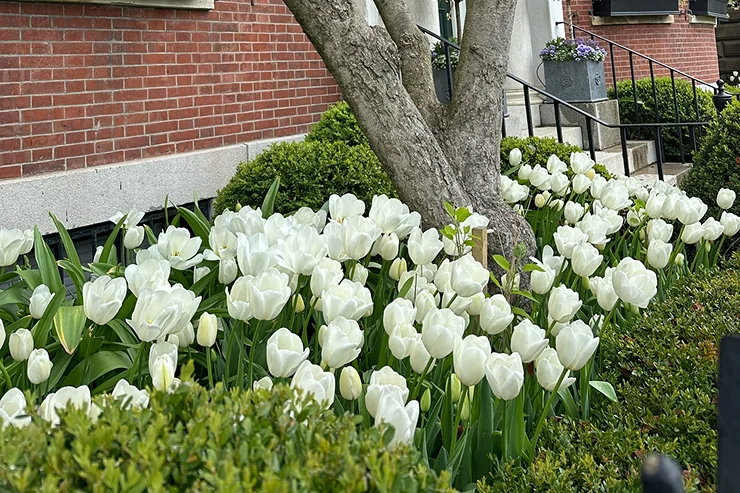
What we account for here
New construction in Seaport means variable soil quality, reflective glass heat, and tight loading-dock schedules for deliveries. We plan plant selection and maintenance visits around these realities, so installations settle in well and stay healthy despite the building’s demands.
Extreme wind exposure at height
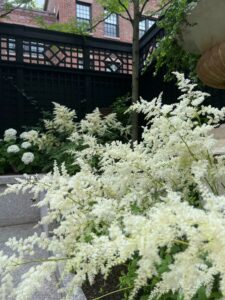
Wind at the fourteenth floor is not the same wind at street level — it’s faster, more constant, and it desiccates foliage and dries containers far quicker than a ground-level garden. We select plant material bred for coastal and rooftop exposure — ornamental grasses, tough evergreen shrubs, and salt-tolerant perennials — and anchor larger specimens and planters against gusts that would tip or shred anything chosen for a sheltered courtyard.
Salt spray and harbor-air exposure
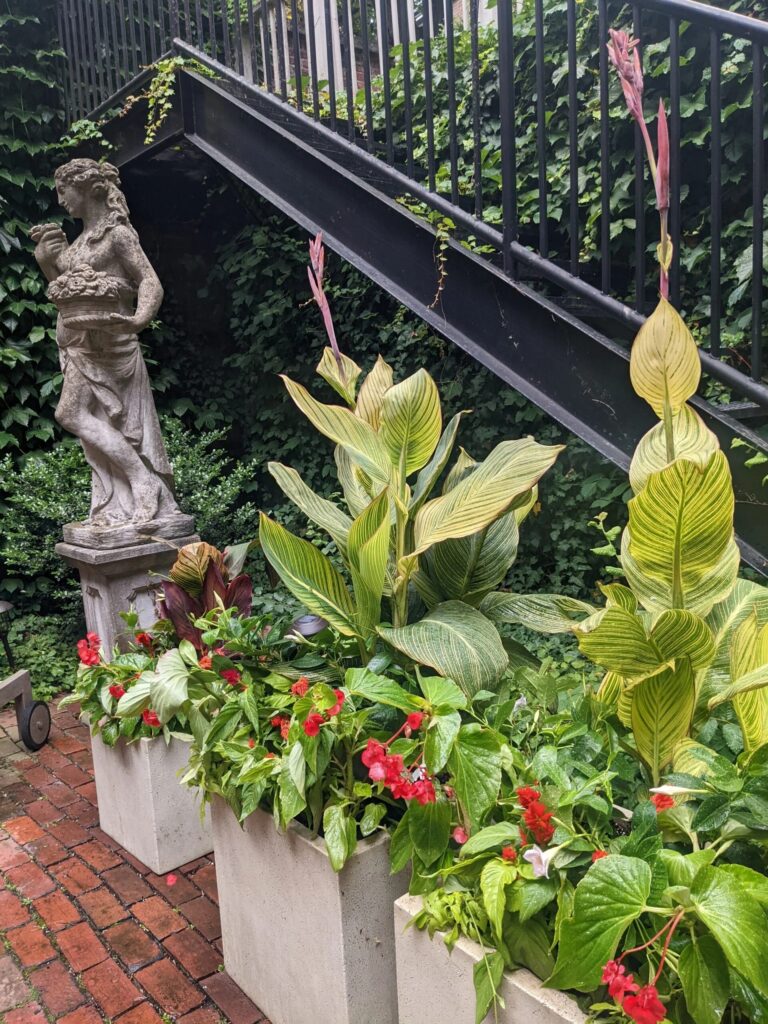
Proximity to the water means airborne salt settles on foliage and metal fixtures alike. We favor species with a demonstrated tolerance for salt exposure, and we build a rinse-down into the maintenance visit for both plants and any exposed hardware or lighting fixtures, since salt residue degrades metal and glazing faster than it degrades plant tissue.
Structural load limits on roofs and terraces
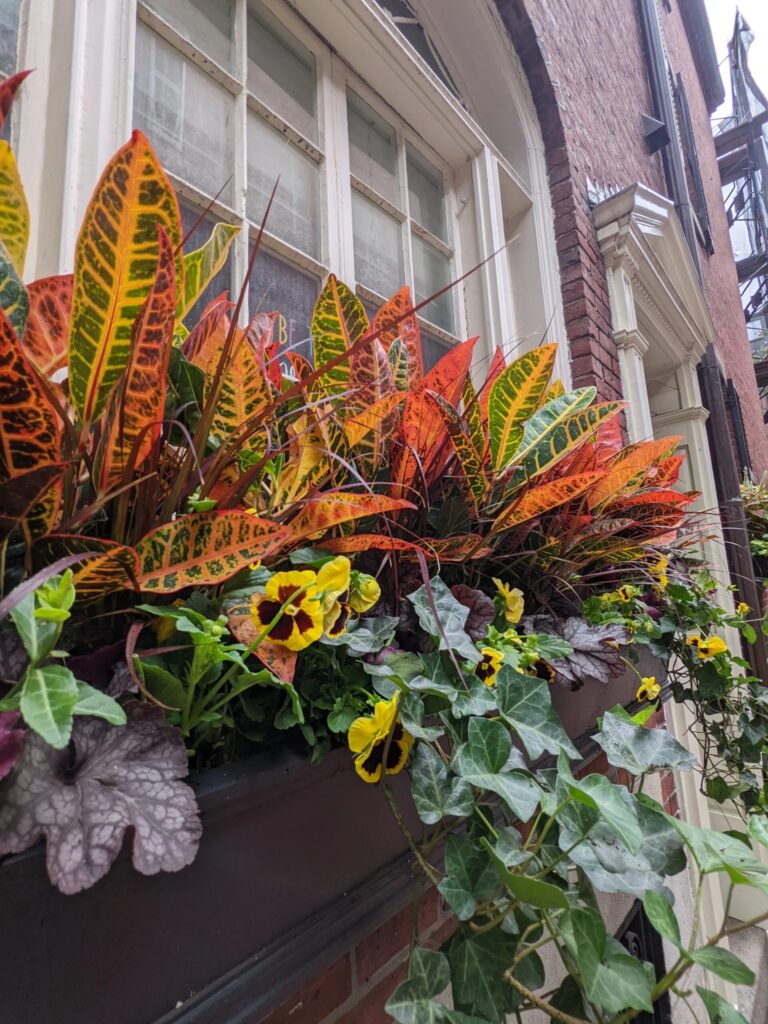
Every Seaport roof deck and terrace has an engineered weight capacity, and it is almost always lower than a client expects once soil, water, and hardscape are added together. We size containers and growing medium to the load the structure was engineered to carry, using lightweight soil blends and, where the design calls for larger plantings, working directly from the building’s structural documentation before a single planter is ordered.
Mandatory irrigation and building access
A drip irrigation system is not optional on a Seaport terrace — the exposure and container volumes make hand-watering unreliable within days, not weeks. We install and maintain automated drip systems calibrated to each container’s volume and sun exposure, and we coordinate every visit through building management, freight elevator scheduling, and any resident access rules the property requires, so maintenance happens without disrupting the building or its other residents.
Recent Seaport work
Recent projects in the neighborhood have included full planting design and installation for a private roof terrace on a new-build residential tower, where the brief was screening from neighboring units and wind protection for a dining area, and an ongoing maintenance program for a building’s shared amenity deck that required coordinated access scheduling with the property manager and a salt-tolerant plant palette able to hold its structure through harbor winters. We do not publish client names or unit addresses, in keeping with the privacy most Seaport residents and buildings expect, but the pattern is consistent: high-exposure, high-visibility spaces that need to look considered year-round with minimal owner involvement.
Other services we provide in Seaport
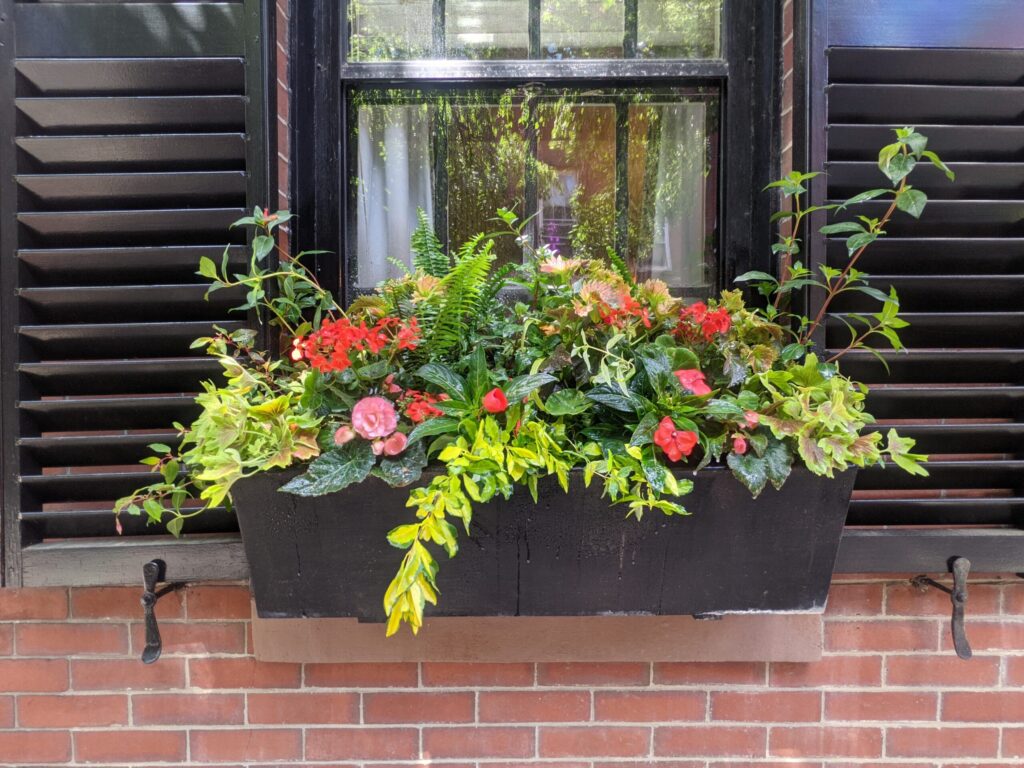
Planting and maintenance is usually the entry point, but most Seaport terraces need more than plant care alone. We handle garden design and installation for terraces being built out from scratch, containers and window boxes sized to rooftop load limits, dedicated roof deck and terrace planting plans built around wind and salt exposure, drip irrigation installation and seasonal calibration, and low-voltage landscape lighting rated for coastal exposure. For a full view of what we handle in the neighborhood, see garden services in Seaport. We also maintain planting and maintenance programs a short distance away in Back Bay, Boston, and citywide detail is covered on our planting and maintenance in Boston page.
Rouvalis Gardens is 2.4 miles from Seaport
Rouvalis Gardens is based at 5 Crescent St in Seaport, roughly 2.4 miles from the towers and terraces along the Seaport waterfront. That proximity means our crews can move quickly between a scheduled maintenance visit and an irrigation check or storm-damage response, and it means we already know the building access patterns, loading dock hours, and management contacts for much of the neighborhood before a first consultation even happens.
What Our Customers Say
Frequently Asked Questions
Can container plants actually survive on an exposed Seaport roof deck?
Yes, with the right plant selection and irrigation. We choose species bred for coastal and rooftop conditions — salt-tolerant, wind-hardy, and able to hold structure through harbor winters — and pair them with automated drip irrigation so they aren't dependent on hand-watering during high-wind, high-evaporation stretches.
How do you know what weight our roof or terrace can actually hold?
We work from the building's structural documentation and, where that isn't available, involve the building's engineer of record before finalizing container sizes and soil volumes. Weight per square foot drives the design before plant selection does.
Is irrigation really necessary, or can a maintenance visit just include watering?
On a Seaport terrace, hand-watering alone is not reliable. Wind and sun exposure at height can dry containers within a day in summer, so we treat drip irrigation as a required part of the installation, not an optional upgrade.
How do you handle building access and management coordination for maintenance visits?
We schedule around freight elevator availability, loading dock hours, and any resident access rules the property has in place, and we maintain a standing point of contact with building management so recurring visits happen without disruption.
Do you work on shared amenity decks as well as private terraces?
Yes. We maintain both private residential terraces and shared building amenity decks in Seaport, often under a recurring maintenance contract coordinated directly with the property management company.