- Serving Boston and the Greater Boston Area

Landscape Lighting in Seaport, MA
A rooftop planting scheme in Seaport is only as good as its light source after dark, and most of the fixtures sold for suburban yards fail here within a season. The wind off the harbor is constant and abrasive, salt spreads further than most owners expect even a dozen floors up, and every cable run has to answer to a structural engineer before it answers to a designer. Landscape lighting on a Seaport terrace is a different discipline from landscape lighting anywhere else in the city, and it needs to be specified that way from the first site visit.

What Landscape Lighting looks like in Seaport
Almost every lighting project we take on in Seaport starts on a roof deck or a terrace attached to a new-build residential tower, not a ground-level yard. That changes the entire approach. There is no soil bed to run wire through and no fence line to mount fixtures on — everything attaches to railings, planters, parapet caps, or the underside of pergola structures, and every attachment point has to be reviewed against the building’s rooftop load documents before we drill or clamp anything down.
Wind is the second constant. Gusts off the harbor move through these amenity decks in a way that a ground-floor garden in the South End never experiences, and any fixture that isn’t rated and mounted for sustained wind load will loosen, swing, or fail at the gasket within a year or two. We spec fixtures and transformer placement with that movement in mind rather than treating wind as an afterthought.
Irrigation is not optional up here either — it’s a building requirement, since planters on a membrane roof have no natural drainage relief and dry out fast in open wind. Because lighting and drip irrigation share the same low-voltage trenches and conduit runs on most of these decks, we plan both systems together from day one rather than retrofitting lighting around irrigation that’s already in the ground, which is how most of the sloppy installs we get called to fix in this neighborhood happened in the first place.
Sightlines matter more here too. Seaport towers are glass from top to bottom, which means a poorly aimed fixture doesn’t just light a planter badly — it throws glare straight into someone’s living room three floors up, or the unit next door. We aim and shield every fixture with that in mind, not just for the terrace owner’s view but for the building’s.
What we account for here

What we account for here
Seaport’s mix of waterfront promenades, roof decks, and dense commercial frontage means every fixture placement has to balance visibility with glare control. We plan for reflective surfaces off the harbor, pedestrian traffic patterns, and building management restrictions before running a single wire, so the finished lighting works with the site instead of against it.
New-build roof terraces and structural load limits
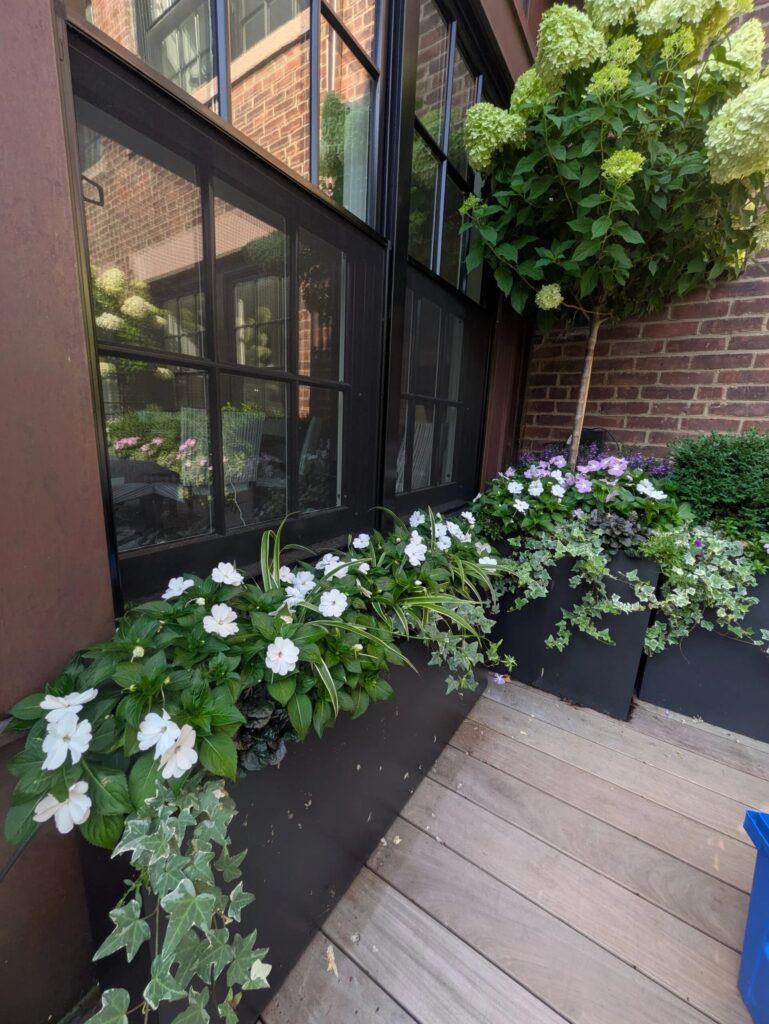
Rooftop amenity spaces in Seaport are engineered to a specific point load, and that number is documented and enforced by the building’s property manager or condo association, not negotiable on-site. Before we run a single low-voltage cable, we confirm anchor points against those load limits and use surface-mount or planter-integrated fixtures that don’t require penetrating the roof membrane. Every transformer and junction box gets placed where it can be serviced without opening up finished decking.
Extreme wind exposure
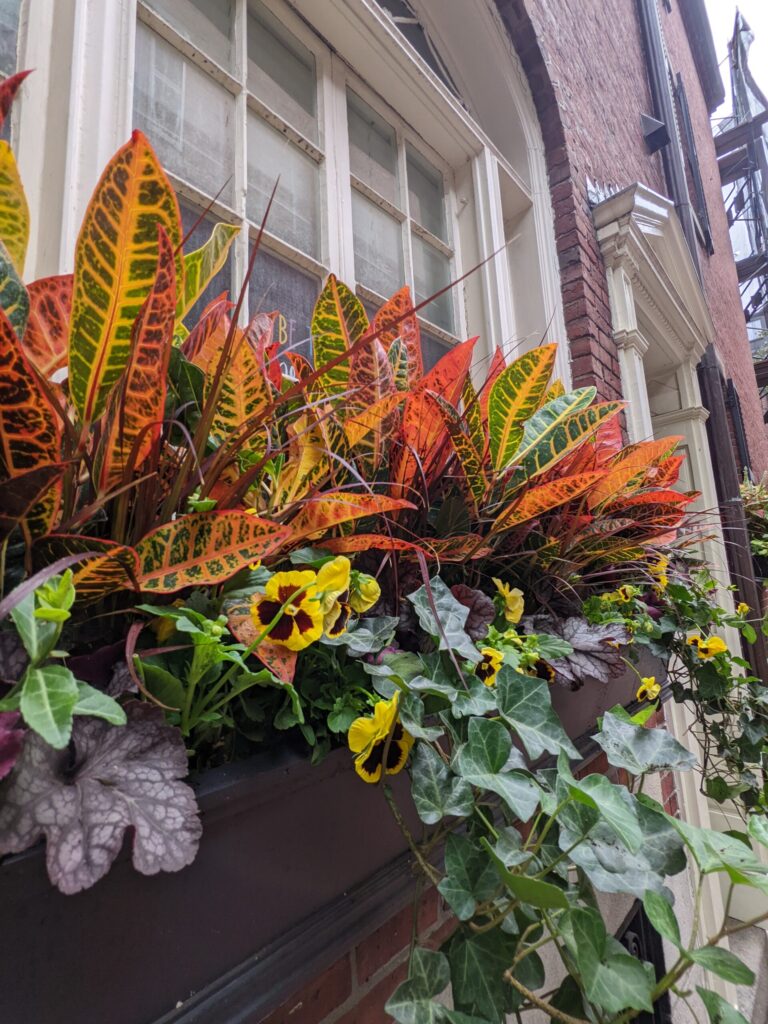
A fixture that’s fine at grade will rattle loose on a twelfth-floor terrace inside a year. We use marine-grade housings, mechanically secured lenses, and mounting hardware rated for sustained gusts rather than the standard-grade fixtures that get specified for a typical Back Bay townhouse garden. Cable runs are secured at tighter intervals than a ground-level job would need, because wind works cable loose at connection points over time.
Salt air and corrosion
Salt travels further vertically than most people assume, and it settles on every exposed metal surface on a Seaport roof deck. We spec brass or marine-grade stainless fixtures with sealed, gasketed connections, and we build a maintenance visit into the plan specifically to check for corrosion at connectors and transformer housings before it becomes a failure point.
Mandatory drip irrigation coordination
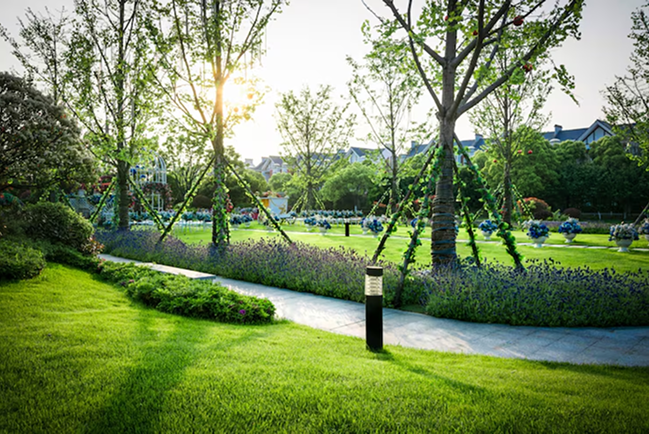
Because irrigation isn’t optional on these decks, lighting has to be planned around it rather than the other way around. We coordinate trench and conduit runs so both systems share space cleanly, and we sequence installation so irrigation lines go in first and lighting is fitted around confirmed planter locations, not the reverse.
Recent Seaport work
A recent project in this pattern: a private roof terrace attached to one of the newer residential towers near the waterfront, where the owner wanted the perimeter planters and a small seating area lit for evening use without spilling light into the neighboring unit’s floor-to-ceiling windows. We ran the lighting circuit alongside a new drip system installed the same week, used shielded well lights recessed into the planter rims rather than surface fixtures that would have caught the wind, and set the transformer inside a service closet off the elevator lobby so the building’s engineer could access it without going onto the deck. It’s a fairly typical brief for this part of the neighborhood — light the plantings, protect the sightlines, and build something that survives a winter of harbor wind.

Other services we provide in Seaport
Landscape lighting rarely stands alone on a Seaport project, since most of the work here happens on the same rooftop or terrace footprint as everything else we install. We handle full garden services in Seaport alongside lighting, including container and window box plantings sized for wind-exposed railings, roof deck and terrace planting designed around the building’s load limits, and the drip irrigation systems that keep rooftop planters alive through a Boston summer. For owners who want the whole terrace designed rather than assembled piece by piece, we start with garden design and installation and build lighting, irrigation, and planting into a single coordinated plan, then keep it running with ongoing fine gardening and maintenance visits scheduled around the salt and wind exposure specific to this stretch of the waterfront.
Landscape Lighting, Seaport, MA — 2.4 miles from Seaport
We run this same low-voltage lighting practice out of Seaport, 2.4 miles from Seaport, and it’s a straightforward trip across the harbor for a site visit or an ongoing maintenance call. If you’re comparing neighborhoods, our landscape lighting in Boston page covers the citywide picture, and we do the same rooftop-specific work for landscape lighting in Back Bay, where townhouse roof decks bring a similar set of wind and access constraints. Call to arrange a walk-through of your terrace — we’ll assess load limits, wind exposure, and existing irrigation on-site, then follow up with a fixture and layout plan within a few business days.
What Our Customers Say
Frequently Asked Questions
Can landscape lighting be installed on a Seaport roof deck without penetrating the membrane?
In most cases yes. We use surface-mounted, planter-integrated, or railing-clamped fixtures specifically to avoid penetrating roofing membranes on new-build terraces, and we confirm the approach against the building's roof warranty documents before installation.
Does landscape lighting need building or condo association approval in Seaport?
Often yes, particularly for anything attached to shared structural elements like parapet caps or building railings. We can provide fixture specs and mounting details for association or property manager review before we schedule installation.
How does wind off the harbor affect fixture choice?
Sustained gusts loosen standard-grade fixtures and work cable connections loose over time. We use marine-rated housings and tighter cable securing intervals specifically because ground-level fixtures aren't built for what a twelfth-floor Seaport terrace experiences.
Can lighting and drip irrigation be installed together?
On Seaport roof decks we generally recommend it, since irrigation is effectively mandatory for rooftop planters and both systems often share the same conduit runs. Planning them together avoids retrofitting one around the other later.
How far is Seaport from your Seaport location?
About 2.4 miles. It's a quick trip across the harbor and doesn't add meaningfully to scheduling for either a first consultation or a return maintenance visit.