- Serving Boston and the Greater Boston Area

Container Gardening in Wellesley, MA
A pair of urns flanking a Wellesley front door has to do more work than the same pair would in a denser neighborhood. Deer move freely through many of the town’s larger lots, mature oaks and beeches throw deep shade over front approaches for half the day, and the microclimate around Wellesley College tends to run a few degrees cooler and damper than open suburban sites nearby. Container plantings here need to hold a formal line, survive browsing pressure, and still perform in filtered light.

What Container Gardening looks like in Wellesley
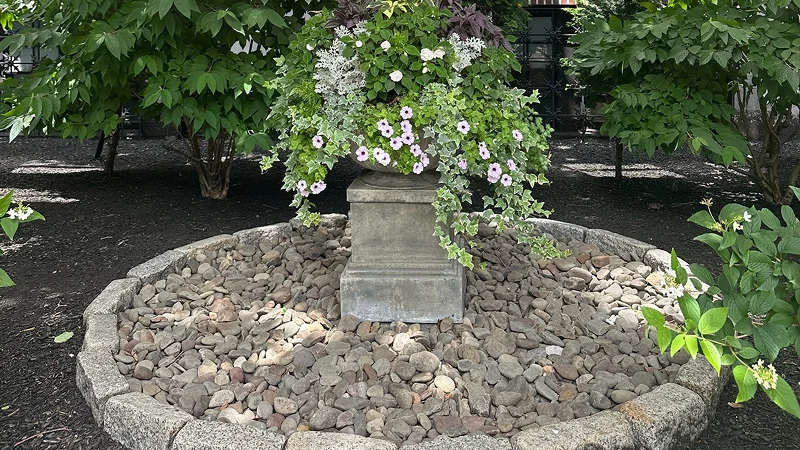
Most of the container work we do in Wellesley sits on properties with an established formal garden structure already in place — boxwood parterres, allées, a symmetrical front walk — where new plantings have to read as an extension of that design rather than a departure from it. That means container selection leans toward classic material: lead-look fiberglass, cast stone, aged terracotta, in proportions sized to match existing urns or pedestals rather than whatever looks good on its own.
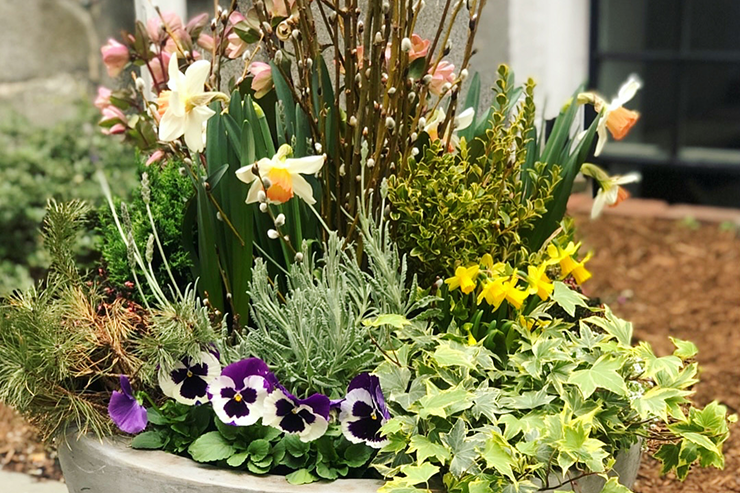
Light is the second variable that shapes everything. Estate lots with decades-old tree canopy often have front entries and terrace edges that get two or three hours of direct sun at most, with the rest of the day in dappled or full shade. We build the palette around that reality — heuchera, Japanese forest grass, caladium in summer, dwarf conifers and Lenten rose for structure through winter — rather than defaulting to sun-loving combinations that thin out by midsummer.
Deer are the constraint that changes the plant list most. Wellesley’s larger, wooded lots see regular deer traffic, and containers placed near the property edge or along a driveway are browsed within days if the palette is wrong. We plant selectively — alliums, salvia, dusty miller, and strongly aromatic foliage the deer pass over — and hold anything genuinely deer-candy for tighter, more enclosed courtyard spots the animals rarely reach. Soil in containers is fully controlled regardless of what’s underneath, which matters on properties with the heavy, poorly drained clay common on older Wellesley lots — we’re not fighting native soil, just building a mix that drains and holds moisture correctly for what’s planted above it.
What we account for here
What we account for here
Deer pressure on open and wooded lots
We select and place plants specifically to reduce browsing — deer-resistant palettes for exposed containers, more tender material reserved for enclosed courtyards and terraces the deer don’t reach, and we’re candid with clients about which combinations simply won’t survive on an unprotected front lawn.
Mature canopy and low, filtered light
Front entries and terrace containers under old-growth oaks and beeches often run shade-to-part-shade all season. We build combinations around that light level from the start rather than planting for full sun and watching them fail by July.
The Wellesley College microclimate
Properties near the campus and Lake Waban run cooler and more humid than the town’s higher, more open lots. Plant selection and watering schedules are adjusted accordingly — what thrives on a sunny Wellesley Hills lot can rot or stall out a mile away near the lake.
Formal garden traditions and historic proportion
Many Wellesley properties carry an established formal design — clipped hedges, symmetrical urns, a defined axis from street to door. New containers are sized and styled to sit inside that tradition, not compete with it, and on properties under historic commission guidance we keep street-facing material period-appropriate before installation.
Recent Wellesley work
A recent project on a formal Wellesley property involved re-planting a long run of matched urns lining a front allée under mature shade trees, moving the palette from a sun-based scheme that had been failing every year to a shade-tolerant, deer-resistant combination that finally held its structure through the full season. Work like this is typical of what we’re called in for in Wellesley — not a blank slate, but an existing formal framework that needs a plant palette matched to the light, deer pressure, and proportions already on site.
Other services we provide in Wellesley
Container work is rarely a stand-alone request on Wellesley properties of this scale. It’s most often part of a broader garden services engagement covering seasonal changeovers and the fine gardening that keeps a formal layout looking intentional year-round. We also handle full garden design and installation for properties reworking a bed line or entry sequence, drip irrigation to keep containers and beds on a controlled watering schedule through Wellesley’s warmer summer stretches, low-voltage landscape lighting to carry a formal front garden into evening, and terrace and roof deck planting for the newer builds and additions with elevated outdoor space. Property managers overseeing several Wellesley homes typically fold container gardening into an ongoing maintenance contract so plantings are checked and refreshed on the same schedule as the rest of the grounds.
Why containers here differ from Boston proper
Container work in Wellesley and container work in the Back Bay or Beacon Hill start from different problems entirely. In the city, our container gardening in Boston work deals with wind tunnels between buildings, reflected heat off brick and pavement, and tight sidewalk footprints. In Wellesley, the constraints are canopy shade, deer, and matching an existing formal design language rather than fighting an urban microclimate — which means larger containers, different plant lists, and a design conversation that starts with what’s already growing on the property rather than what will survive between two buildings.
The same service in neighboring towns
The estate conditions we plan around in Wellesley — deer, mature canopy, formal garden traditions — show up in similar form just down the road. We do the same kind of work for container gardening in Weston and for container gardening in Lexington, both towns with comparable lot sizes, tree cover, and deer pressure. If you’re weighing options across more than one property, it’s worth looking at how the approach shifts slightly town to town.
Getting started in Wellesley
Rouvalis Gardens is based at 5 Crescent St in Wellesley, roughly 14.6 miles from Wellesley, and we regularly work estate properties throughout town. A phone call is the fastest way to start — describe the site, the light, and whether deer have been an issue, and we’ll schedule a walk-through to look at existing structure, current containers, and what the property calls for before proposing a plan and a plant list.
Ready to plan your Wellesley containers?
Reach out or request a consultation to schedule a walk-through of your porch, patio, or entryway. We’ll review light, scale, and seasonal goals, then follow up with a planting plan and quote before any containers are installed.
What Our Customers Say
Frequently Asked Questions
Can container plantings survive deer pressure in Wellesley without fencing or repellent sprays?
Yes, with the right plant selection. Deer-resistant options like allium, salvia, and dusty miller planted in exposed containers hold up well without ongoing spray treatments, though we'll always flag which more tender choices are better reserved for an enclosed courtyard where deer don't typically go.
Do you match containers to an existing formal garden design?
We do, and on established Wellesley properties this is usually the starting point. We size and style new containers to match existing urns, pedestals, or hedging lines so the addition reads as part of the original design rather than a separate element.
What plants actually work in the shade under mature trees?
Heuchera, Japanese forest grass, caladium through summer, and dwarf conifers or Lenten rose for cooler-season structure all perform reliably in the two-to-three-hours-of-sun conditions common under Wellesley's older canopy.
Does the Wellesley College area need a different watering schedule than the rest of town?
Often, yes. Properties near the campus and Lake Waban tend to run cooler and more humid than higher, more open lots elsewhere in town, so we adjust watering frequency and drainage in the container mix to match.
Do you handle container gardening as a one-time seasonal service or ongoing?
Both. Some clients want a single seasonal changeover; most fold container work into an ongoing maintenance visit so plantings get checked, watered, and refreshed on the same schedule as the rest of the garden.