- Serving Boston and the Greater Boston Area

Container Gardening in Lexington, MA
A window box or entry urn on a Colonial-era Lexington property has to solve three problems at once: it needs to survive open, all-day sun with no tree canopy to soften it, it needs to be a plant deer will not treat as a buffet, and if it sits anywhere visible from the street it likely needs to read as appropriate to a house under historic district review. Get any one of those wrong and the container either dies by August, gets stripped overnight, or draws a comment at the next commission meeting.

What Container Gardening looks like in Lexington
Lexington’s center and the roads radiating from it — Hancock, Massachusetts Avenue, Bedford Street — are lined with 18th and early 19th century houses, many sitting on lots with almost no shade structure beyond a mature tree or two. That means containers here are working in full, unfiltered sun for most of the day, which changes the plant palette and the watering schedule from what we’d specify on a shaded Cambridge side street or a wind-tunnel Boston rooftop. Soil quality is rarely the constraint — Lexington’s residential soil is generally workable — the constraint is exposure and grazing pressure.
Deer move freely through the town’s wooded lots, conservation land, and unfenced yards, and they are unbothered by a front step. A container planted with hosta, tulips, or soft annuals near a ground-floor window is often stripped within a week of installation. We design around this by defaulting to deer-resistant structure plants — boxwood, ornamental grasses, lavender, and select heat-tolerant perennials — and reserving anything deer find appealing for elevated boxes or enclosed courtyards out of easy reach.
For properties within Lexington’s historic districts, we also plan the visible containers — anything a passerby or an abutter would see from the road — with an eye toward what a review board expects: classic material choices, restrained color, and proportions that read as original to the house rather than a modern addition. This isn’t extra paperwork on our end, it’s simply how we specify the work from the first site visit, so nothing gets flagged after installation.
What we account for here
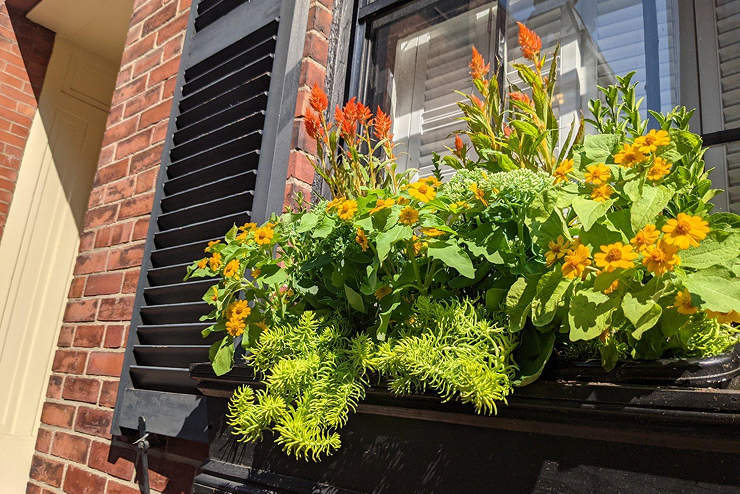
What we account for here
Four constraints show up on nearly every Lexington container project. Here’s how each one gets handled before a single pot is planted.
Full, unshaded sun exposure
Many Lexington facades face open sky with little to no afternoon shade. We select plant material rated for full sun and specify a container size and soil mix that holds moisture through hot stretches, then pair it with drip irrigation on a timer where the site allows, so watering isn’t dependent on someone remembering.
Deer pressure at ground level
Anything within a deer’s reach at grade gets planted with material they reliably avoid — boxwood, ornamental grasses, salvia, and similarly textured or scented plants — while species deer do favor are kept to elevated window boxes, porch rails, or fenced courtyards.
Historic district visibility
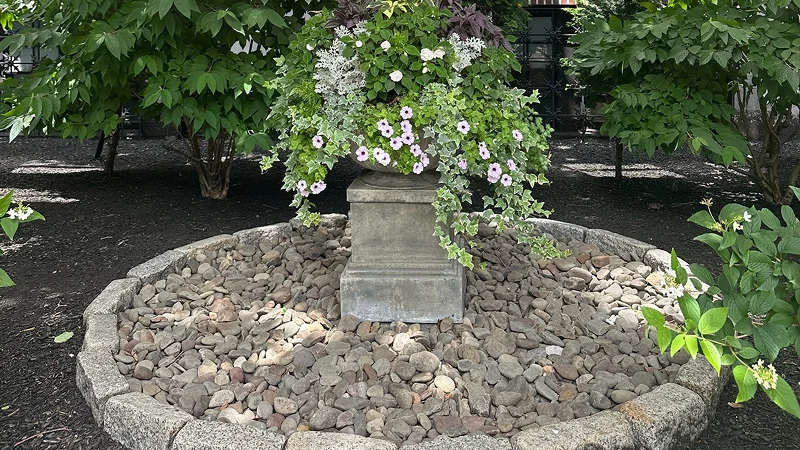
For containers facing the street on a property under commission review, we default to traditional urn and box styles, restrained plant palettes, and finishes that read as period-appropriate, so the installation supports the house rather than competing with it.
Seasonal turnover on a fixed calendar
Lexington’s town character means front-facing plantings are noticed — by neighbors and by the historic commission alike — so we schedule spring, summer, and fall changeovers on a set calendar rather than waiting for a container to look tired first.
Recent Lexington work
A recent project in one of Lexington’s historic center neighborhoods involved a pair of street-facing urns and a run of window boxes on a Colonial with heavy deer traffic from an adjacent wooded lot. We specified full-sun, deer-resistant plantings for the ground-level urns and reserved the more delicate seasonal color for the second-floor window boxes the deer couldn’t reach, with the visible urns kept to a palette the homeowner’s historic district was comfortable with. It’s a pattern we see often enough in Lexington that it’s become close to a default approach for properties with this exact combination of sun, deer, and district oversight.
Other services we provide in Lexington
Containers are rarely a standalone project for Lexington clients — they’re usually one piece of a larger plan. We also provide full garden services in Lexington, including garden design and installation for Colonial-era lots, fine gardening and ongoing maintenance suited to historic plant beds, roof deck and terrace planting for the town’s newer construction, drip irrigation runs that pair naturally with container work, and low-voltage landscape lighting that highlights a facade without disturbing a historic district’s character. If you’re weighing containers against a fuller landscape plan, we typically start with a single walk-through and scope both at once.
How container plantings are chosen for a Lexington property
We start every Lexington consultation by walking the property at the time of day the containers will actually be seen, checking sun exposure against the house’s orientation, and noting any deer trails or browse damage on existing plantings nearby. If the property sits in a historic district, we confirm what’s visible from the public way before specifying anything, since that determines the palette and container style far more than personal preference does. From there we build a planting and irrigation plan sized to the site rather than a standard seasonal list.
Maintaining containers through a Lexington season
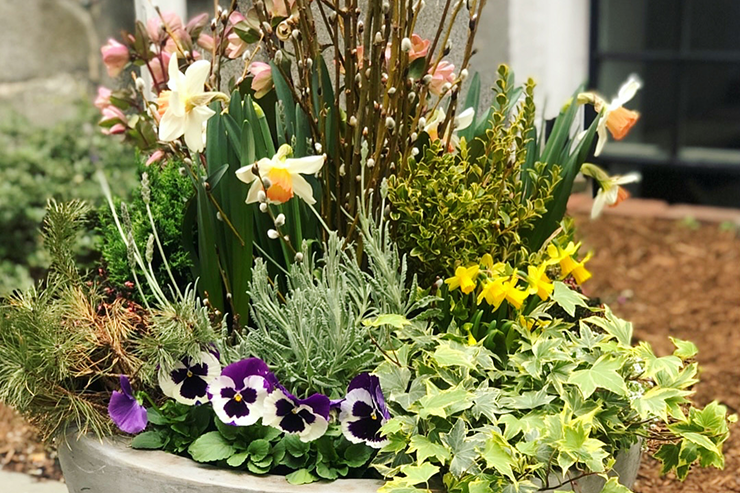
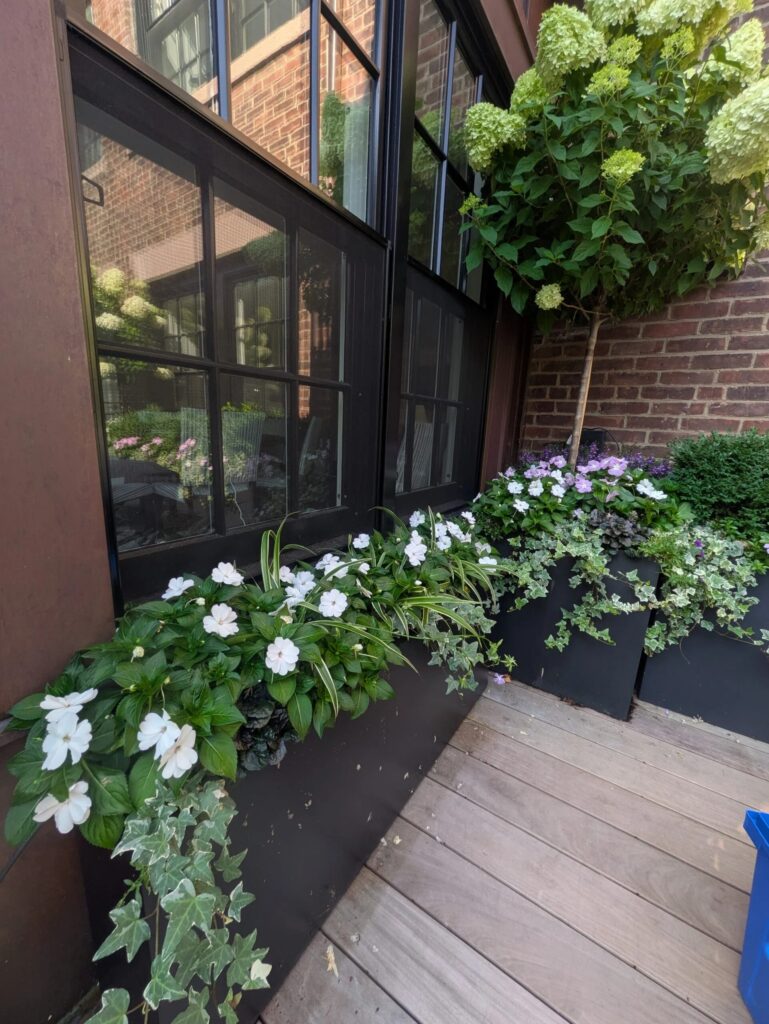
Full sun plus summer heat means Lexington containers dry out faster than shaded ones, and a missed watering cycle shows within a day or two. Clients on our maintenance plans get scheduled watering checks, deadheading, and pest monitoring through the growing season, plus the seasonal swap from spring bulbs to summer heat-tolerant material to fall color, timed to the calendar rather than left until a box looks spent.
Rouvalis Gardens and the Lexington service area
Rouvalis Gardens is based at 5 Crescent St, Lexington, MA, about 10.2 miles from Lexington. We work regularly across Lexington’s historic center and surrounding residential streets, and we bring the same crew and design standard to Lexington that we use on Lexington’s own colonial housing stock, adjusted for the sun exposure and deer pressure that define container work here specifically.
Ready to plan your Lexington containers?
Request a consultation to get started. We’ll review your porch, patio, or entryway, note sun exposure and space constraints, then follow up with a container selection and planting plan along with a quote before any work begins.
What Our Customers Say
Frequently Asked Questions
Will deer really eat container plants in Lexington?
Yes, consistently. Lexington's conservation land and unfenced residential lots give deer easy access to front yards, and ground-level containers planted with tulips, hosta, or soft annuals are frequently stripped within days. We default to deer-resistant plants for anything at grade and save more delicate material for elevated boxes.
Do I need historic commission approval for a window box or urn?
It depends on whether the container is visible from the public way and whether your property sits within one of Lexington's historic districts. We check this during the initial site visit and specify a palette and container style suited to what the commission typically expects, so you're not caught off guard later.
How often do container plantings need to be changed out in Lexington?
Most Lexington properties on our maintenance schedule get three seasonal changeovers a year — spring, summer, and fall — timed ahead of when the previous planting starts to fade, particularly given how much sun exposure accelerates wear on street-facing containers.
Can you install drip irrigation for containers on an older Lexington property?
In most cases, yes. We run drip lines discreetly to window boxes and urns wherever the site allows, which matters in Lexington especially since full sun exposure means containers dry out faster than they would under tree cover.
How far is Lexington from your Lexington location?
About 10.2 miles. We schedule Lexington container projects and maintenance visits regularly and can typically get a design consultation on the calendar quickly.