- Serving Boston and the Greater Boston Area

Container Gardening in Winchester, MA
If you garden near the Mystic Lakes, your containers are competing with two things most Boston-area properties never deal with at the same time: deep shade thrown by mature oak canopy, and deer that treat tulips and hosta like a standing invitation. Add a sloped lot — common on the streets rising away from the lakeshore — and a straightforward pot placement becomes a question of drainage, wind exposure at the top of the grade, and how the container reads from the street below. This is the work we do in Winchester every season.

What Container Gardening looks like in Winchester
Winchester’s housing stock runs from Colonial Revival homes near the center to lakeside contemporary and mid-century properties along Ridge Street, Bacon Street, and the roads that wrap Upper and Lower Mystic Lake. Each context changes how a container planting is built. Lakeside lots often sit on a grade, which means a pot placed at the top of a slope dries out faster than one at the bottom and needs a different watering schedule entirely — we set irrigation zones by elevation, not by the number of containers.
Oak canopy is the other constant. Mature oaks throw dense, dry shade for most of the growing season, and their root systems pull moisture from anything planted too close. We treat container gardening as the workaround: large-format pots let us build a soil environment the oak roots can’t compete with, and we choose plant material — heuchera, Japanese forest grass, ferns, shade-tolerant hydrangea — that performs under a closed canopy instead of fighting it. On the sunnier, open lakeside frontages we plant the opposite palette: sun-loving perennials and tropicals that can take reflected light and wind coming off the water.
Deer pressure shapes nearly every plant list we write for this town. Winchester borders open space and the lake corridor gives deer an easy travel route through residential yards, so anything at ground level or in an easily browsed container needs to be selected for resistance or protected structurally. We also account for slope stability when containers are large or heavy — a top-heavy urn on a graded lawn is a different engineering problem than the same urn on a flat terrace, and we anchor and site accordingly.
What we account for here
What we account for here
Four conditions come up on nearly every Winchester property we plant. Here is how each one changes the work.
Deer pressure at the lake corridor
Properties within a few blocks of either Mystic Lake see consistent deer traffic, especially at dawn and dusk. We build plant lists around genuinely deer-resistant material — boxwood, lavender, salvia, ornamental alliums, certain ferns — rather than relying on repellent sprays alone, and we’ll flag any client request that’s likely to get eaten so there are no surprises by June.
Mature oak canopy and root competition
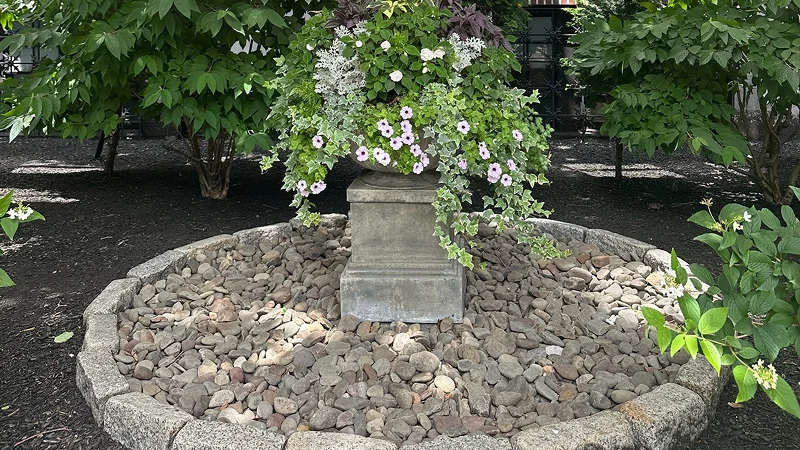
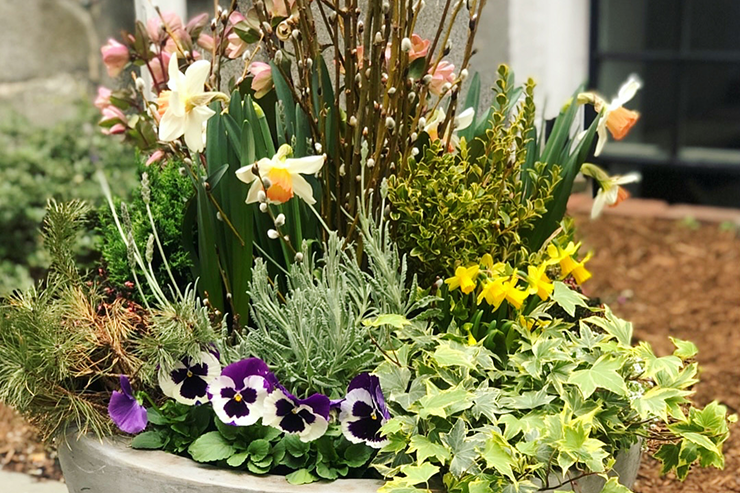
Established oaks dominate the soil and the light on many older Winchester lots. Rather than fighting root competition in the ground, we lean on container volume and quality soil mix to give plantings an environment the oak roots can’t invade, and we choose a shade-adapted palette that doesn’t need direct sun to perform.
Sloped lots and drainage
Grade changes near the lakeshore mean water moves fast off some containers and pools in others. We site pots with runoff in mind, use risers or gravel bases where standing water is a risk, and set irrigation timing by each container’s position on the slope rather than a single watering schedule for the whole property.
Wind and exposure off the water
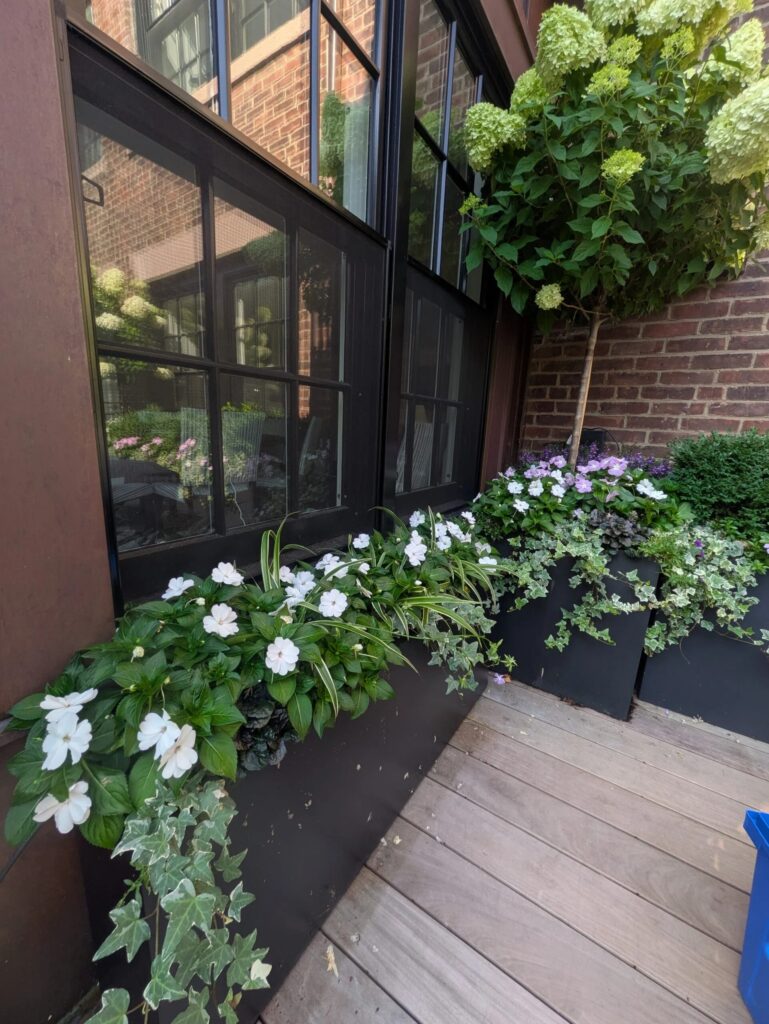
Open lots facing Upper or Lower Mystic Lake get more wind than the canopy-covered interior streets. For these we choose heavier, more stable containers, secure taller plant material, and select species that tolerate exposure rather than tropicals that will shred by midsummer.
Recent Winchester work
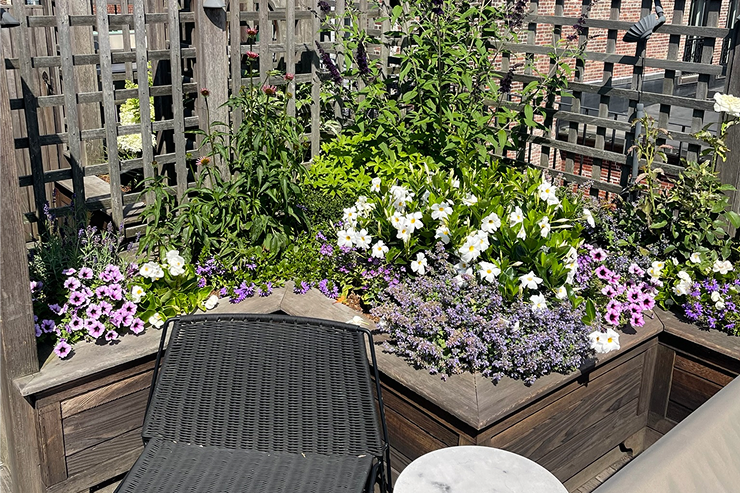
A recurring project type in this town is the lakeside terrace refresh — a homeowner with a deck or patio overlooking the water who wants seasonal color that can survive both deer traffic from the adjacent tree line and the wind off the lake. We’ve also done a fair amount of shaded entry and walkway container work for the oak-canopied properties closer to the center of town, where the goal is texture and structure rather than bloom, since bloom often struggles under that much shade. We don’t publish client names or addresses, but if you’re picturing a specific style of property, it’s likely one we’ve already worked on nearby.
Other services we provide in Winchester
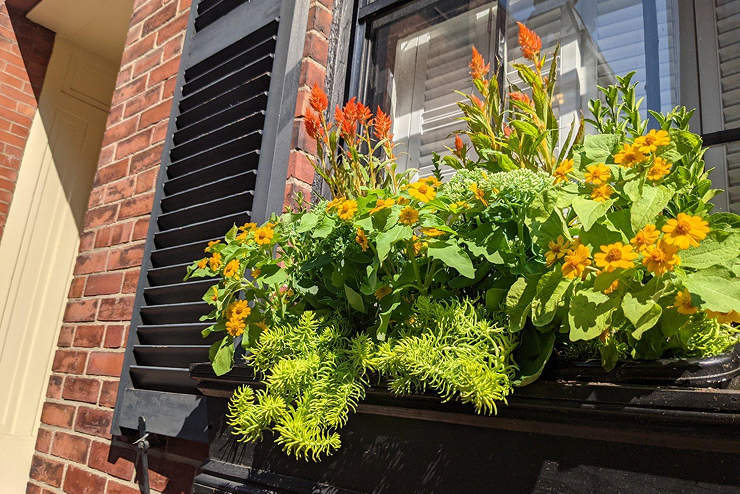
Container gardening is rarely the only need on a Winchester property. Many of our container clients here also work with us on full garden design and installation, since a cohesive plan for the beds and the pots reads better from the street and from inside the house. Sloped, tree-heavy lots often call for drip irrigation so containers and in-ground plantings aren’t on the same watering schedule as the lawn. Properties near the water frequently add low-voltage landscape lighting to highlight containers and pathways after dusk, when deer are most active and a lit approach also improves safety on a graded driveway. We also maintain plantings season to season through our fine gardening and maintenance program, and handle window boxes and terrace planting for the lakeside homes with elevated decks. If your Winchester property also has a florist relationship for indoor arrangements, we keep our garden work entirely separate from that side of the business — our focus here is the grounds, the pots, and what grows in them.
Rouvalis Gardens and the drive from Winchester
Rouvalis Gardens is based at 5 Crescent St, Winchester, MA, about 6.9 miles from Winchester — a short, predictable drive for our crews whether the visit is a spring container refresh or a full-season maintenance account. We also serve container gardening clients in Newton and Brookline, and for city properties see our Boston container gardening page for how the approach differs on tighter urban lots.
What Our Customers Say
Frequently Asked Questions
Can container plantings actually survive the deer around the Mystic Lakes?
Yes, with the right plant selection. We build Winchester container lists around genuinely deer-resistant species — boxwood, lavender, salvia, alliums — rather than relying on scent repellents, which wash off and need constant reapplication. If a client wants something deer find appealing, like tulips or hosta, we'll flag it upfront and offer a resistant alternative that gets a similar look.
Do containers work under mature oak trees, or is it too shady?
Containers are actually the better option under oak canopy, because in-ground plantings have to compete directly with oak roots for water and nutrients. A well-built container with a quality soil mix and shade-tolerant plant material — heuchera, ferns, Japanese forest grass — performs reliably where an in-ground bed under the same tree would struggle.
How do you handle containers on a sloped lakeside lot?
We site each container with drainage and grade in mind, use risers or gravel where runoff pools, and set irrigation by elevation rather than treating the whole property as one zone. A pot at the top of a slope needs more frequent watering than one at the bottom, and we plan for that from the start rather than adjusting after something dries out.
Do you service Winchester properties with historic commission review?
Some Winchester properties, particularly near the town center, fall under local historic guidelines that can affect anything visible from the street, including container placement and material choice. We're familiar with working within those constraints and will flag anything that might need a lighter touch before we propose it.
How far is Winchester from your Winchester location?
Winchester is about 6.9 miles from our base at 5 Crescent St in Winchester, which keeps travel time short for both one-time container installations and ongoing seasonal maintenance visits.