- Serving Boston and the Greater Boston Area

Rooftop Garden Installation in Weston, MA
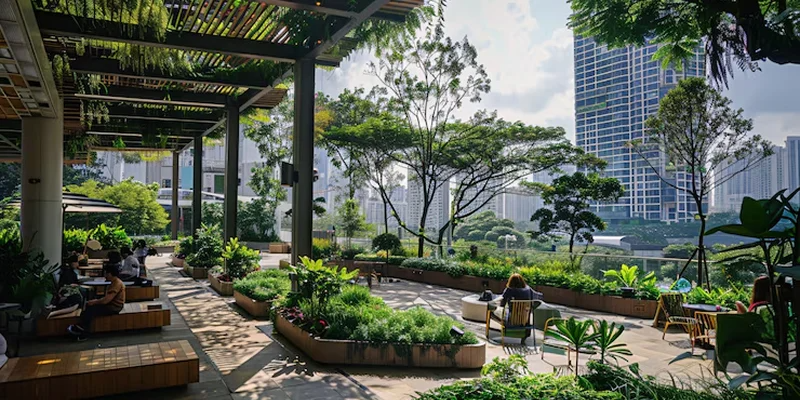
A rooftop or elevated terrace garden on a Weston property has to solve for problems most rooftop gardens never face: getting water uphill and out to a structure set back from the house on a wooded lot, keeping deer from finding their way up onto a deck that overlooks a browse-heavy tree line, and designing for shade thrown by mature oak and white pine canopy rather than for the open sun most people picture when they hear “rooftop garden.” If your plan for a roof deck or elevated terrace still looks like a plan for a Back Bay penthouse, it will underperform here within a season.

What Rooftop Garden Installation looks like in Weston
Most of the rooftop and terrace projects we take on in Weston sit above garages, pool houses, or additions set well back from the main house on lots that run one to three-plus acres. That distance matters more than it does anywhere closer to Boston: a run of drip irrigation or a low-voltage lighting circuit has to travel much farther from the house’s water and power sources, and every added foot of run is a foot where pressure drops and voltage sags if the system isn’t sized correctly from the start. We plan supply lines for the full distance before we plant anything, not after the containers are in place and struggling.
Light is the second variable that changes the brief. A roof deck or terrace tucked under or near a tree canopy on a wooded Weston lot may get four hours of usable sun where a comparable structure in an open suburb gets eight. We map actual sun hours across the deck before specifying plant material, and we build in flexibility — large containers we can shift seasonally, and plant palettes with a genuine shade tolerance rather than sun-lovers we’re hoping will cope.
Then there is the deer. Weston’s deer population will climb a low retaining wall, browse a ground-floor bed, and — where a deck or terrace sits low relative to grade, or where planting spills toward an adjoining lawn — reach elevated containers too. Any planting plan for an elevated space here gets checked against deer palatability the same way a ground-level bed would, because the assumption that height alone protects a terrace garden doesn’t always hold on these properties.
What we account for here
What we account for here
Four constraints come up on nearly every Weston rooftop or terrace project. Here is how each one gets handled before installation begins.
Long irrigation runs from the house
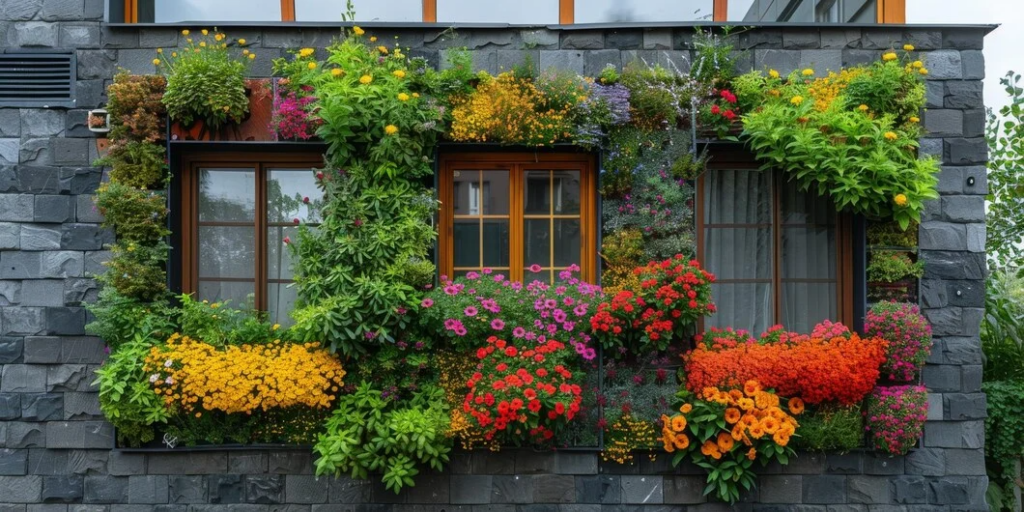
On a Weston estate lot, the water source is often the house itself, and the deck or terrace can sit fifty, eighty, or well over a hundred feet away by the time the line routes around structures and grade changes. We size supply lines, pressure-compensating drip emitters, and zone controllers for the actual run length and elevation change, and we test flow at the far end of the line before anything gets planted — not after.
Deer pressure on elevated plantings
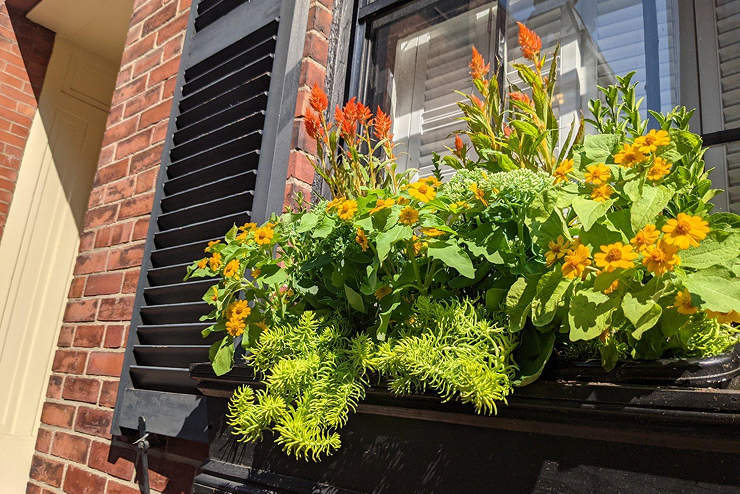
We treat containers and terrace beds on lower or mid-level decks as exposed to browse, not exempt from it. That means favoring boxwood, lavender, ornamental grasses, and other deer-resistant material in the working palette, and where a client wants tulips or hostas anyway, building in discreet netting or repellent programs rather than losing the planting by June.
Shade from mature tree canopy
Wooded Weston lots routinely cut available light by half compared with an open site. We walk the deck at different times of day before finalizing a plant list, then design around ferns, heuchera, hakonechloa, and other shade-tolerant material sized for real container life, so the planting reads full and intentional rather than thin and stretching for light.
Access across large, wooded properties
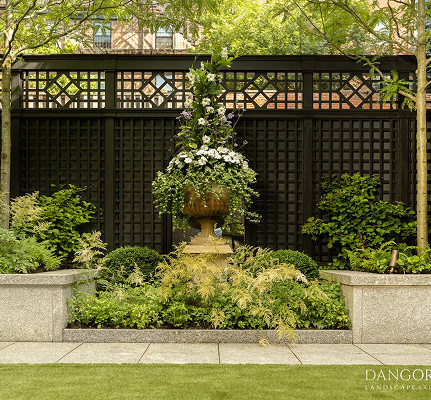
Getting soil, containers, and lighting equipment from a truck on a long Weston driveway up to a rear or elevated deck is a logistics question before it’s a design question. We scope access — driveway width, gates, stairs, terrain — during the site visit and plan crew size and equipment accordingly, so installation day runs on one pass rather than several.
Recent Weston work
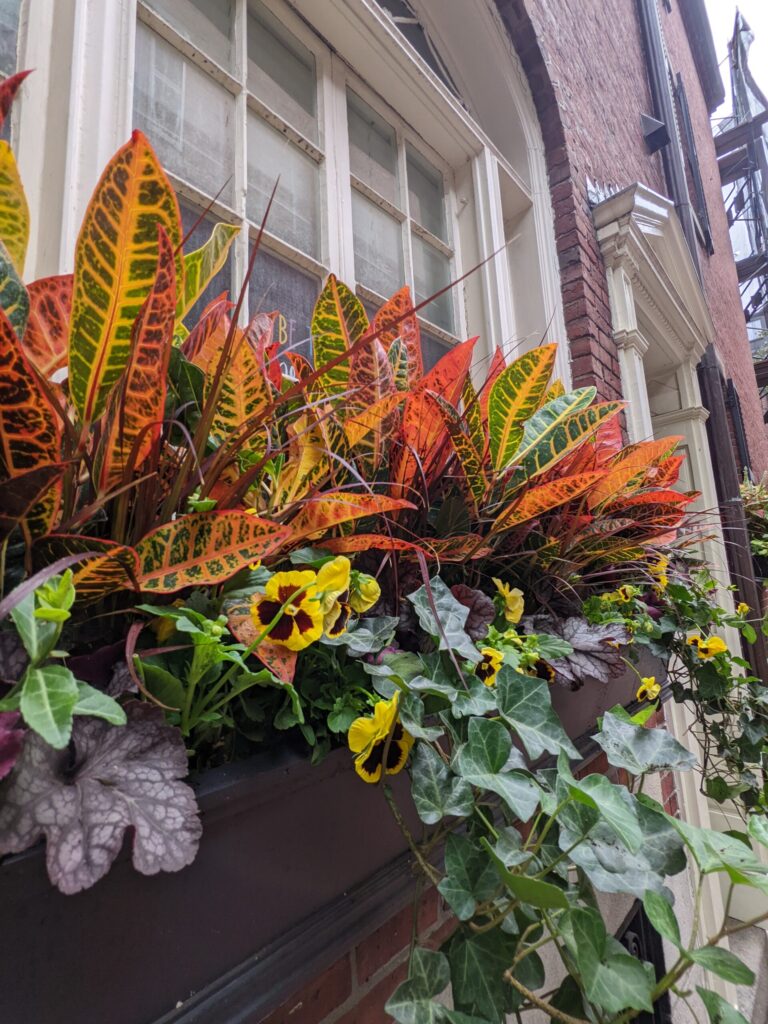
A recent project of the type we see often in Weston involved an elevated deck off a home’s second story, set back from the street behind a long wooded drive. The brief was a low-maintenance, deer-resistant container planting that could handle partial shade for most of the day and run on an irrigation line extended well beyond the original zone near the house. The finished planting leaned on structural greens and grasses with seasonal color rotated in containers rather than fixed beds, which kept the deck looking considered through spring, summer, and fall without daily attention.
Other services we provide in Weston
Rooftop and terrace work is one piece of what we do on Weston properties. Many clients pair it with broader garden services in Weston covering the rest of the landscape — perennial borders, woodland edge plantings, and seasonal cutback and cleanup suited to a wooded lot. We also handle full garden design and installation for new plantings around the house and outbuildings, ongoing fine gardening and maintenance so beds stay ahead of deer and weed pressure through the season, container and window box plantings for entries and porches, drip irrigation designed for exactly the long-run conditions described above, and low-voltage landscape lighting that extends safely from the house across a large property without overloading a single circuit. If your project centers on a roof deck or terrace anywhere else in the region, see our rooftop garden installation in Boston page, or our matching pages for Wellesley and Lexington if you have properties in those towns as well.
Start a Weston garden project
Weston sits about 13.8 miles from our Weston location, and we make regular site visits to estate properties throughout town for rooftop, terrace, and full-property garden work. Call to arrange a site visit — we’ll walk the deck or terrace, check sun exposure and access, and talk through irrigation and deer protection before we put together a proposal. Most Weston projects move from that first visit to a written plan within a week or two, with installation scheduled around the season best suited to the work.
What Our Customers Say
Frequently Asked Questions
Can a rooftop or elevated deck garden in Weston really have a deer problem?
Yes, on decks and terraces set at or near grade level, or where planting spills toward an adjoining lawn or wooded edge, deer can and do reach containers. We assess each deck's exposure individually and choose plant material and protection methods accordingly rather than assuming height alone is a deterrent.
How does irrigation work for a deck or terrace far from the house?
We run dedicated drip lines sized for the full distance and elevation change from the house's water source, with pressure-compensating emitters so plants at the far end of the run get the same water as those near the start. We test the completed system before planting.
What plants actually handle the shade on a wooded Weston lot?
Ferns, heuchera, hakonechloa, and several other shade-tolerant perennials and grasses perform well in containers and terrace beds under partial canopy. We select the palette after walking the deck at different times of day to confirm actual sun exposure rather than assuming from the site plan.
Do you handle access for large properties with long driveways?
Yes. We scope driveway width, gates, and terrain during the initial site visit and plan crew size and equipment so materials move efficiently from the truck to the deck or terrace on installation day.
How far is Weston from your Weston location?
Weston is about 13.8 miles from our Weston address, and we make regular visits to estate properties in town for both rooftop and terrace projects and full-property garden work.