- Serving Boston and the Greater Boston Area

Rooftop Garden Installation in Newton, MA
A flat roof or deck off the back of a Newton Corner or Waban colonial is rarely a blank slate — it usually sits above a village lot already crowded with mature foundation plantings, deep shade from neighboring trees, and a resident deer population that treats anything green at ground level as a buffet. Add Newton’s tree ordinance, which governs removal of qualifying trees even on private property, and a rooftop planting plan has to account for what’s happening below it before a single container goes up. We design roof and terrace gardens in Newton with all of that in view, not as an afterthought.

What Rooftop Garden Installation looks like in Newton
Most of the rooftop and terrace work we do in Newton sits above single-family houses on lots that were subdivided decades ago — Newton Highlands, Auburndale, Chestnut Hill — where the ground floor is already committed to foundation beds, hedges, and shade trees planted two or three owners ago. That changes what a roof garden needs to do. Because deer move freely through these villages and browse almost anything within reach at grade, the roof or upper terrace is often the one place a client can grow tulips, hostas, or edible herbs without netting or repellent spray. We treat that as the starting point for design, not a side note.
Light is the second variable. A roof over a two-story colonial gets very different sun than the shaded understory below it, so plant lists diverge sharply from what’s already growing in the yard — full-sun perennials and grasses replace the hydrangeas and ferns doing the work at ground level. Wind exposure is generally moderate compared to a true urban rooftop, but Newton’s tree canopy means some decks sit in the lee of a large oak or maple, which shifts both light and moisture patterns seasonally.
Access is usually more forgiving than in a dense city neighborhood — many Newton properties have a driveway or side yard wide enough for a small lift or hand-cart run — but soil and drainage still have to be engineered from scratch, since a roof deck has none of its own. We build root-zone depth, drainage layers, and irrigation to match what the structure and the client’s planting ambitions actually require.
What we account for here
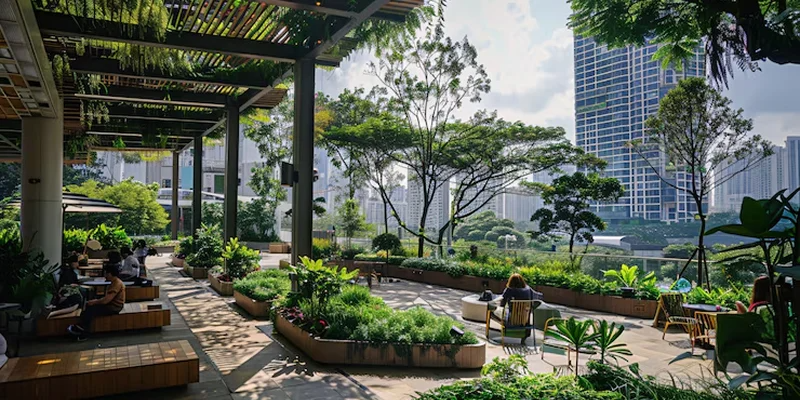
What we account for here
Four conditions come up on nearly every Newton rooftop or terrace project, and each one changes a decision we’d otherwise make differently.
Established foundation plantings at grade
When the ground-level beds are already mature, we design the roof or terrace as a distinct planting zone rather than a rooftop echo of what’s below — different color story, different bloom timing, so the two levels read as complementary rather than repetitive.
Deer pressure at ground level
Newton’s deer population makes anything at grade a target. We use the elevated planting surface as the place for tulip bulbs, lilies, and tender edibles that would otherwise need cages or spray, while keeping ground-level recommendations realistic about what deer will leave alone.
Shade cast by mature trees
Large street and yard trees common to Newton’s older villages shade parts of many roofs and terraces for a portion of the day. We map actual sun hours before finalizing a plant list rather than assuming full exposure just because the surface is elevated.
The town tree ordinance
Newton regulates removal of qualifying trees on private property, which affects any project where a client is weighing whether a tree near the house should come down to open light to a planned terrace. We flag those situations early and work within the ordinance rather than assuming removal is an option, adjusting the planting plan to the light that will actually be available.
Recent Newton work
A representative project type in Newton: a rear terrace off a renovated kitchen addition, planted with a four-season container scheme after the client’s ground-floor beds — inherited from the prior owner and heavy with old rhododendron and yew — were left largely intact. The terrace became the spot for the seasonal color and cut-garden herbs the deer wouldn’t allow at grade, with drip irrigation run to each container group so the planting held up through August without daily attention.
Other services we provide in Newton
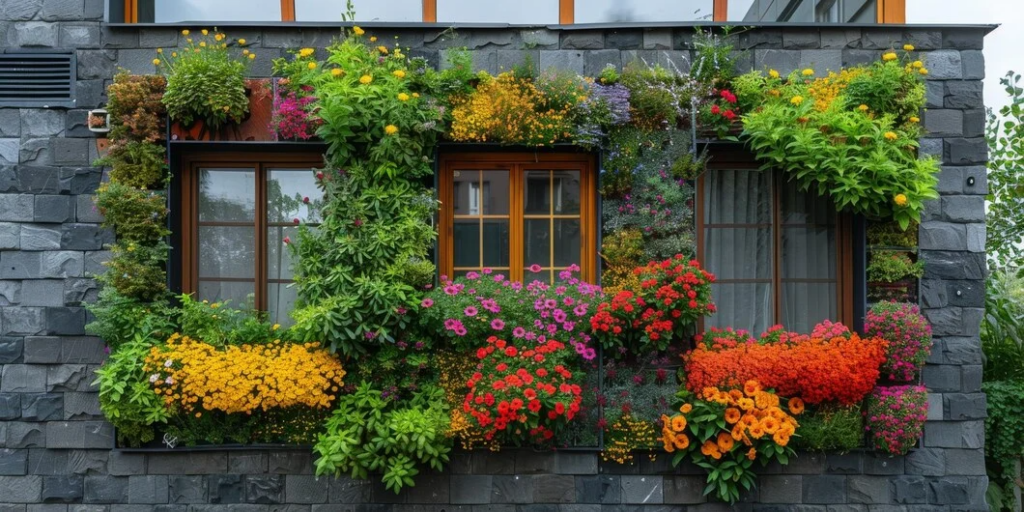
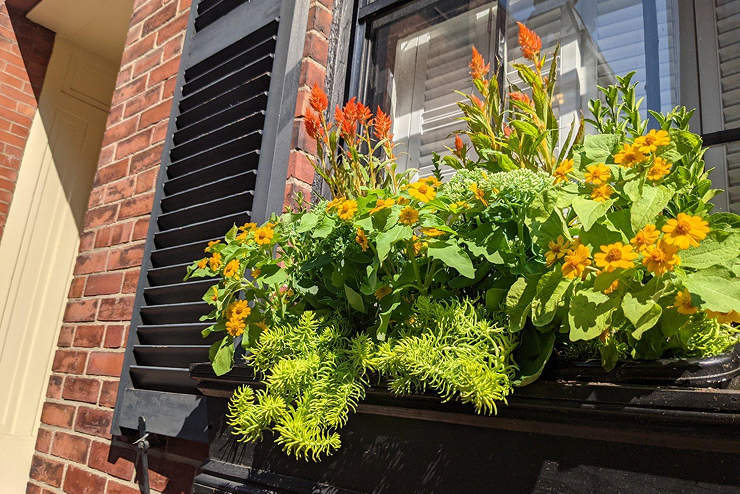
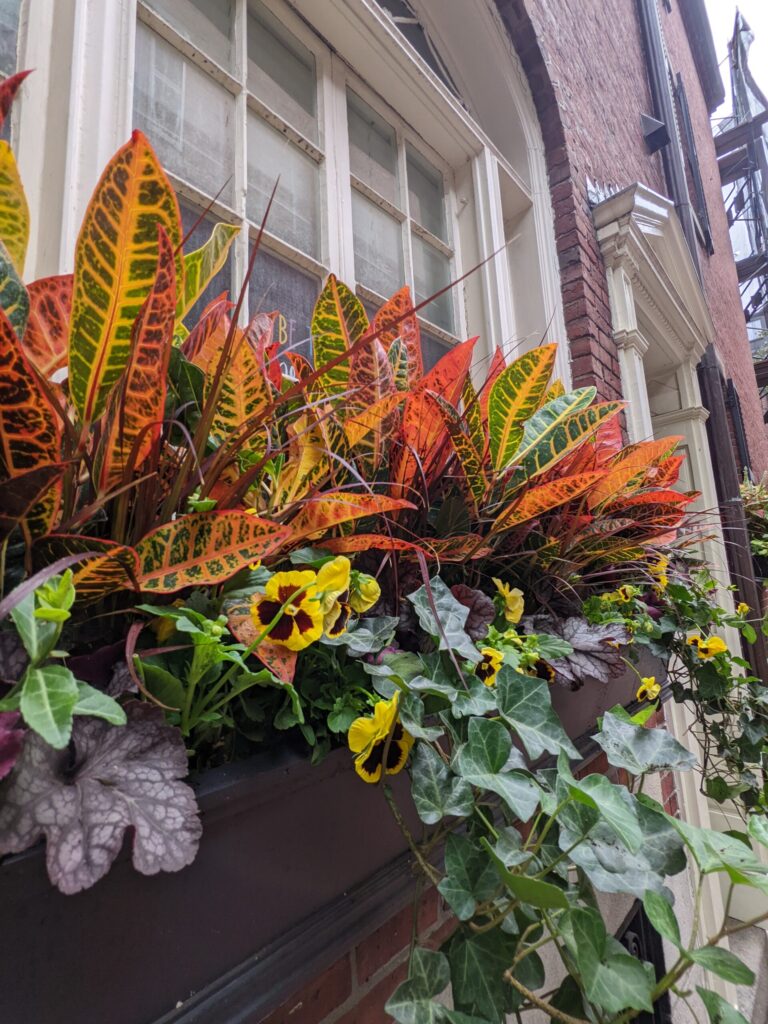
Rooftop and terrace planting is one piece of a broader scope of work we handle across Newton’s villages. We do full garden services in Newton for clients who want the terrace and the ground-level beds designed together, along with fine gardening and seasonal maintenance to keep both in condition through the year. Container and window box plantings are a natural companion to roof work for clients who want continuity from street level up. Where deer pressure and mature tree canopy make ground-level planting difficult, we also install drip irrigation systems sized to the site and low-voltage landscape lighting that makes an evening terrace usable well past sunset — a common request on the same properties where we handle the rooftop planting itself.
Rooftop gardens beyond Newton
The same conditions — mature landscaping at grade, deer pressure, and municipal tree rules — show up in several neighboring towns, and we design rooftop and terrace gardens there with the same approach. See our rooftop garden work in Lexington and Winchester, or our citywide overview at rooftop garden installation in Boston for context on how the work differs in denser, taller settings.
How a Newton project typically starts
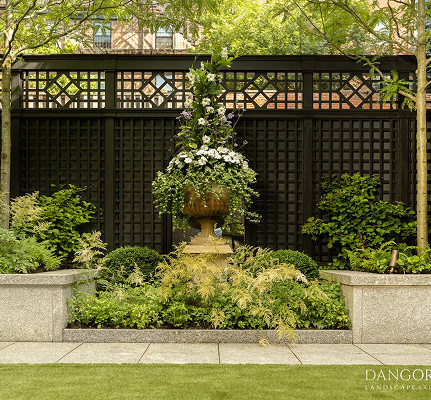
Most Newton clients start with a site visit — we walk the roof or terrace, note existing foundation plantings and tree canopy nearby, and take stock of light, drainage, and access. From there we put together a planting and structural plan, price it, and schedule installation around the growing season so plants go in at a point where they’ll establish well rather than simply survive.
What determines cost on a Newton project
Pricing on a Newton rooftop or terrace job depends mainly on planting scale, whether irrigation and lighting are included, and how much site prep the surface needs before anything goes in. A container-based terrace scheme costs less than a full built-in planting system with integrated irrigation across a larger deck. We give a specific number after the site visit rather than a rule of thumb, since the mature landscaping already in place at most Newton properties changes the scope more than it does on a bare lot.
Start a Newton garden project
Newton is 8.6 miles from our Newton location, and we work throughout the town’s villages on a regular basis. Call to schedule a site visit — we’ll look at the roof or terrace, talk through what the deer, the tree canopy, and the town’s tree rules mean for your specific property, and follow up with a plan and a price. Most clients hear back within a couple of business days of the visit.
What Our Customers Say
Frequently Asked Questions
Can we grow tulips and other bulbs without the deer getting them in Newton?
At ground level in Newton, deer will find most bulbs within a season. A roof or terrace planting is usually the one spot on the property where tulips, lilies, and similar bulbs can be grown without cages or repellent, since deer don't reach elevated surfaces.
Does Newton's tree ordinance affect a rooftop or terrace project?
It can, if a client is considering removing a tree near the house to open light to a planned terrace. Newton regulates removal of qualifying trees on private property, so we check the ordinance early and design around the light that will actually remain available rather than assuming removal is straightforward.
Our yard is already heavily planted — does that limit what we can do on the roof?
No. We generally treat the roof or terrace as a separate planting zone with its own light conditions and color story, so it complements the established beds at grade rather than duplicating them.
How much shade does a typical Newton roof deck actually get?
It varies more than people expect. Mature street trees and yard trees common to Newton's older villages shade parts of many terraces for a portion of the day, so we measure actual sun hours on-site rather than assuming an elevated surface gets full sun.
How far is Newton from your Newton location?
About 8.6 miles. We work in Newton regularly and can schedule a site visit within a few business days of your call.