- Serving Boston and the Greater Boston Area

Window Boxes in North End, MA
If you own or manage a building on Hanover, Salem, or one of the alleys off Prince Street, you already know there is nowhere to put a garden. There is no yard, often no fire escape wide enough for a decent planter, and the wind coming off the harbor and up the funnel of the narrow streets will shred anything not properly secured. A window box, mounted correctly and planted for the exposure, is usually the only real growing space a North End property has. That is the whole design problem, and it is what this page is about.

What Window Boxes looks like in North End
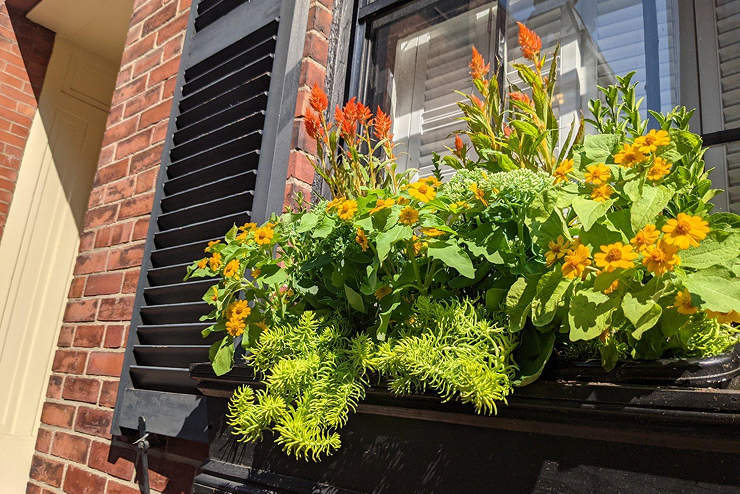
North End buildings are almost entirely masonry — brick and brownstone party walls built shoulder to shoulder, with sills that were never engineered to carry a loaded planter. Before we choose a box, we assess the sill and lintel condition, because a badly mounted box on a 19th-century sill is a liability, not a decoration. We use galvanized steel brackets rated for wind load and, where the masonry allows it, a safety cable back to an interior anchor point — a detail we treat as standard here, not an upsell.
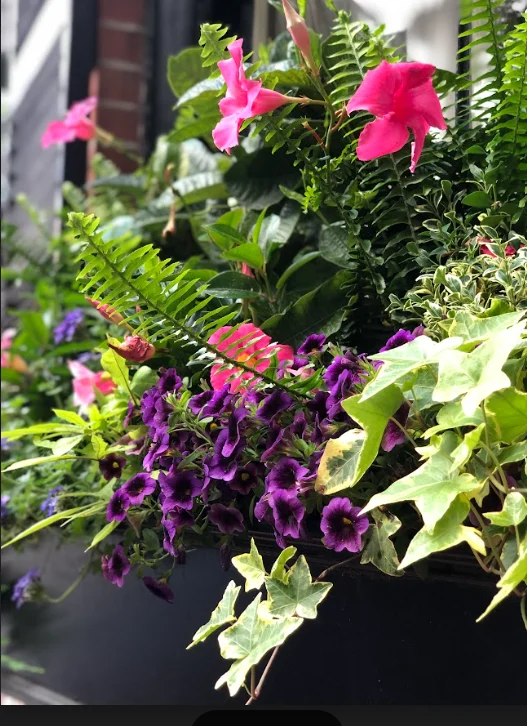
Light varies block by block more than in almost any other neighbourhood we work in. A box on a north-facing sill on Unity Street gets a few hours of reflected light off the building across the way; a box three blocks over on a south-facing exposure on Commercial Street bakes all afternoon with wind off the water on top of it. We plant each box for its actual exposure rather than defaulting to one shade-tolerant or one sun-loving palette across a whole building, which is the shortcut that leads to half-dead boxes by July.
Soil is a non-issue in the traditional sense — there isn’t any — so everything lives in a lightweight, moisture-retentive container mix chosen to survive wind-drying between our maintenance visits. And because most of the North End sits inside the Boston Landmarks Commission’s North End Historic District, street-facing window boxes on landmarked buildings need to read as appropriate to the building’s period: proportion, material, and color matter as much as the planting itself.
What we account for here
What we account for here
Historic district approval on street-facing sills
Any window box visible from a public way on a North End Historic District property is subject to Landmarks Commission guidelines on materials, color, and scale. We build boxes and select plant palettes that align with what the commission has approved on comparable buildings nearby, which keeps first-time applications moving instead of stalling in review.
Wind funneling between narrow buildings
The tight street grid between Hanover and Commercial accelerates wind rather than blocking it. Every box is mechanically fastened with brackets rated well above what a typical suburban install would need, and plant selection favors species with flexible stems and lower leaf surface area so they don’t tear apart in a February nor’easter.
Alley and stair-only access
Many North End buildings have no vehicle access at all — deliveries come in by hand cart through an alley or up a narrow interior stair. We plan material drops around this in advance, pre-building boxes off-site where possible so installation on location is fast and doesn’t block foot traffic on streets that were laid out for pedestrians, not trucks.
Salt air and masonry staining
Proximity to the harbor means salt-laden air and, on lower floors, salt spray during storms. We choose hardware and box materials that won’t corrode or streak the brick beneath the sill, and we adjust irrigation and drainage so runoff doesn’t leave mineral staining down a freshly repointed facade.
Recent North End work
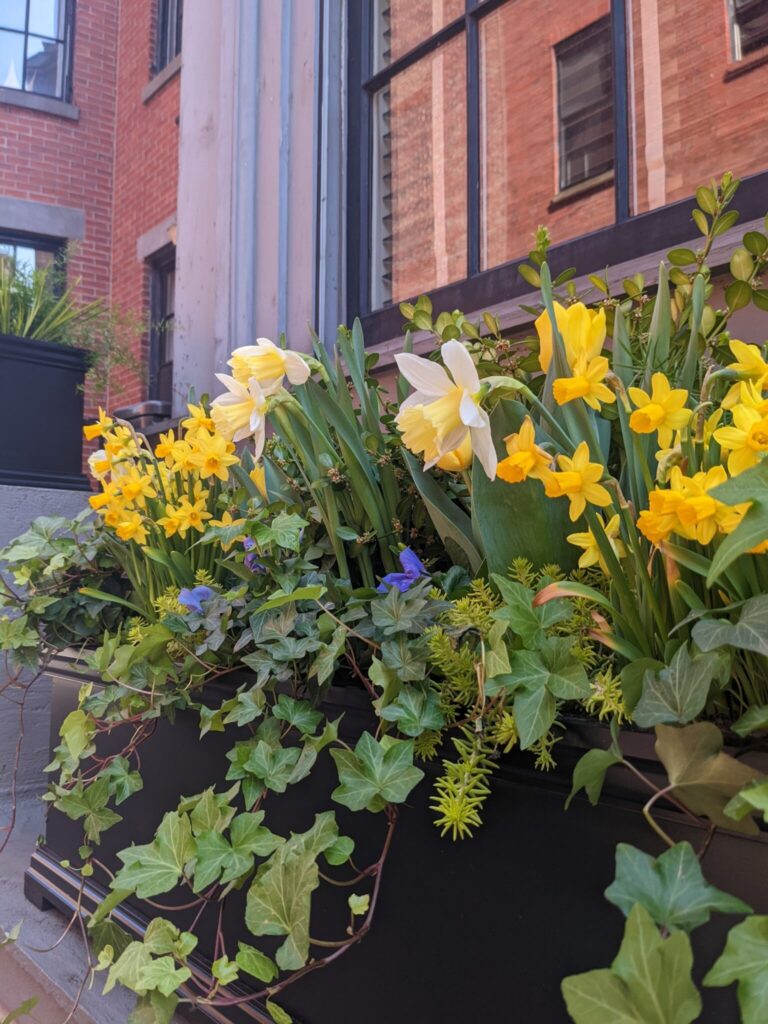
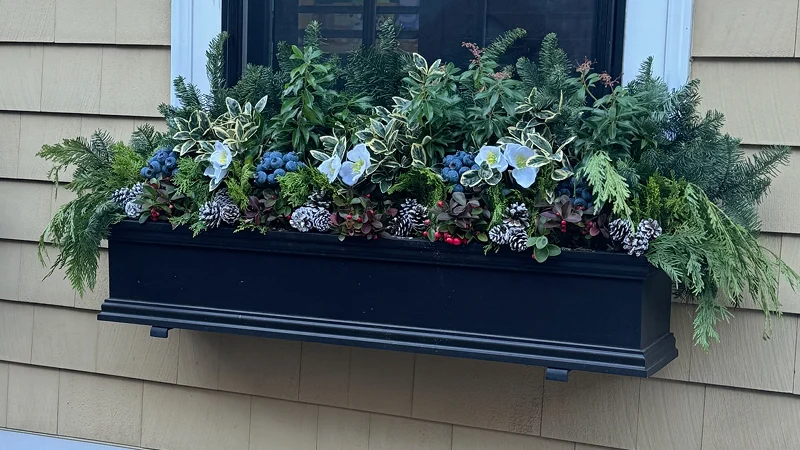
A recurring project type for us in this neighbourhood is a full run of matching window boxes across a single building’s street elevation — a three- or four-unit brick rowhouse where the condo association wants a uniform, historically consistent look across every sill rather than each owner installing something different. We handle the design as one cohesive plan, secure it once through the historic review process on behalf of the association, and then maintain all the boxes on the same visit schedule so the building presents consistently from the street year-round.
Other services we provide in North End
Window boxes rarely stand alone here. If your building has a shared roof deck, we handle roof deck and terrace planting as a companion project, often planted to draw the eye up and away from the street-level boxes rather than compete with them. Where there’s any exposed soil in a rear courtyard or alley, we bring it into a full garden design and installation plan. Ongoing care across boxes, containers, and any courtyard planting is handled through our garden services in North End program, which is the umbrella most of our North End clients are actually on. For freestanding pots on stoops and fire escapes we install and maintain containers sized for the same wind and light conditions as the window boxes. Buildings with any usable soil pocket sometimes add drip irrigation so watering isn’t dependent on someone climbing out a window with a can, and evening curb appeal on landmarked facades is often finished with low-voltage landscape lighting aimed at the boxes themselves.
How this compares across nearby neighbourhoods
The same service looks different a mile away. Our window boxes work across Boston more broadly covers a wider range of building types and review boards, while our window boxes in Downtown Boston and window boxes in North End pages describe the wind, access, and masonry conditions specific to those two neighbourhoods — useful reading if you own property in more than one part of the city.
Start with a consultation
We’re based 1.2 miles away in North End, so a North End site visit fits easily into a single afternoon. Call to set up a consultation — we’ll look at your sills, talk through what the historic district will and won’t approve, and give you a straightforward plan and timeline before anything is ordered.
Other services we provide in North End
Window boxes are often just the starting point for a North End property. Many of the brick facades and narrow street fronts here benefit from a broader planting approach, and our garden design and garden installation services can extend that same care from the sill down to the stoop or entryway. For homes without much ground to work with, container gardens offer another way to bring greenery to a doorway, fire escape, or small landing.
Once plantings are established, fine gardening and garden maintenance keep window boxes and nearby containers looking sharp through the year, while seasonal planting and spring and fall cleanups handle the swaps and tidying that busy North End schedules don’t always allow for.
- Rooftop and upper-level greenery through roof deck planting
- Consistent watering with drip irrigation
- Evening curb appeal via low-voltage landscape lighting
Looking for window box work in another part of the city? Take a look at our projects in North End and Downtown Boston, or read our general Boston overview.
Getting your window boxes installed
Reach out to schedule a visit to your North End address. We’ll look at your window ledges, discuss brackets or mounting options for brick or brownstone facades, and talk through plant choices suited to the light your windows get. You’ll receive a proposal outlining the box materials, plantings, installation approach, and any building or landlord approval details before we begin work.
What Our Customers Say
Frequently Asked Questions
Do window boxes in the North End need historic district approval?
If your building is within the North End Historic District and the box is visible from a public way, yes — the Boston Landmarks Commission reviews material, color, and scale. We prepare applications and design boxes to match precedents already approved on similar buildings nearby, which speeds up the process.
How do you install a window box when there's no truck access?
Most North End streets and alleys don't allow vehicle access to the door. We pre-build boxes off-site and carry materials in by hand cart or up interior stairs, scheduling the install for a low-traffic window so we're not blocking a narrow sidewalk.
Will the wind off the harbor damage my window boxes?
Not if they're mounted correctly. We use galvanized brackets rated for wind load and, on higher floors, a secondary safety cable to an interior anchor. Plant selection also matters — we favor species that flex in wind rather than snap.
Can you match window boxes across all the units in my building?
Yes, and it's one of the more common requests we get from North End condo associations. We design one cohesive look for the full elevation, handle the historic review as a single submission, and maintain every box on the same schedule.
How far is the North End from your North End location?
About 1.2 miles, roughly a five-minute drive. Most consultations and maintenance visits fit within a single trip across the harbor.