- Serving Boston and the Greater Boston Area

Window Boxes in Cambridge, MA
If your window boxes look tired by July, the cause is usually overhead, not neglect. Cambridge’s triple-deckers and Victorians sit under one of the densest street-tree canopies in the region, and by midsummer many street-facing sills get four hours of filtered light or less. Add a Cambridge Historical Commission district on top of that, and the plant list has to be decided before the design does, not after. We build window boxes for this exact combination — houses on Avon Hill, Mid-Cambridge, and the Half Crown-Marsh district among them — where the sill, the shade, and the review board all shape the same box.

What Window Boxes looks like in Cambridge
Most of the work we do on window boxes in Cambridge starts with the building, not the flowers. Triple-deckers have three sets of sills stacked above each other, and the light hitting the third floor is rarely the light hitting the first — a west-facing third-floor box on a Cambridgeport triple-decker can run four zones brighter than the parlor-level box directly below it. We plant each level on its own logic rather than repeating one scheme up the facade, which is the detail that keeps a whole building looking considered instead of matched-and-mismatched.
Victorians in Cambridge bring their own set of problems: deep window surrounds, decorative brackets that limit box depth, and sills that were never built to hold soil weight over a full season. We measure before we design, and where the sill can’t take a standard box we build a lighter cellular-foam insert or a bracket-hung box that spreads the load onto the wall rather than the wood.
Soil moisture is the other variable that’s specific to this housing stock. Mature canopy overhead means less direct sun but also less airflow, so window boxes here dry out unevenly — bone-dry on a windy corner, soggy under a low eave. We spec the growing medium and drainage layer per box rather than using one mix across a job, and we set up simple drip lines on multi-box facades so watering isn’t a daily manual chore for the homeowner or property manager.
What we account for here
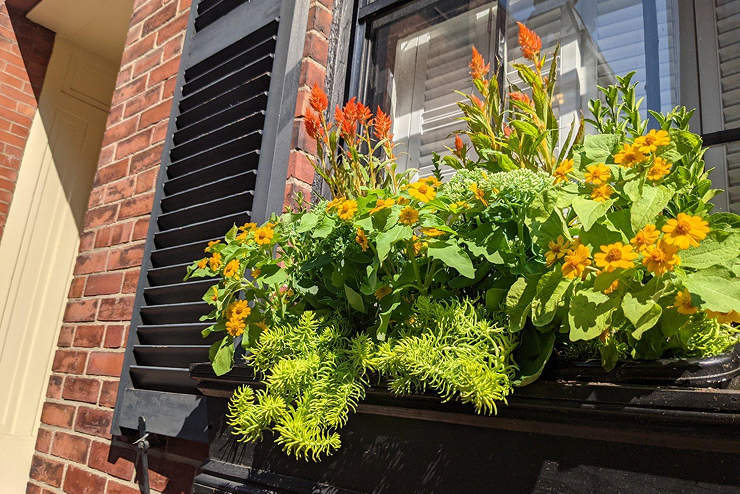
What we account for here
Cambridge homes vary block to block, so every window box installation starts with a look at what the building and its site actually allow. We take stock of sill depth, mounting surface, and exposure before we recommend a box size or planting mix.
Details we weigh include:
- Condition and material of the window frame or sill
- Bracket placement relative to trim and utility lines
- Drainage so water doesn’t sit against siding or masonry
- Seasonal light changes across Cambridge’s tree-lined streets
These checks keep the finished box secure and easy to maintain.
Historical Commission review on street-facing elevations
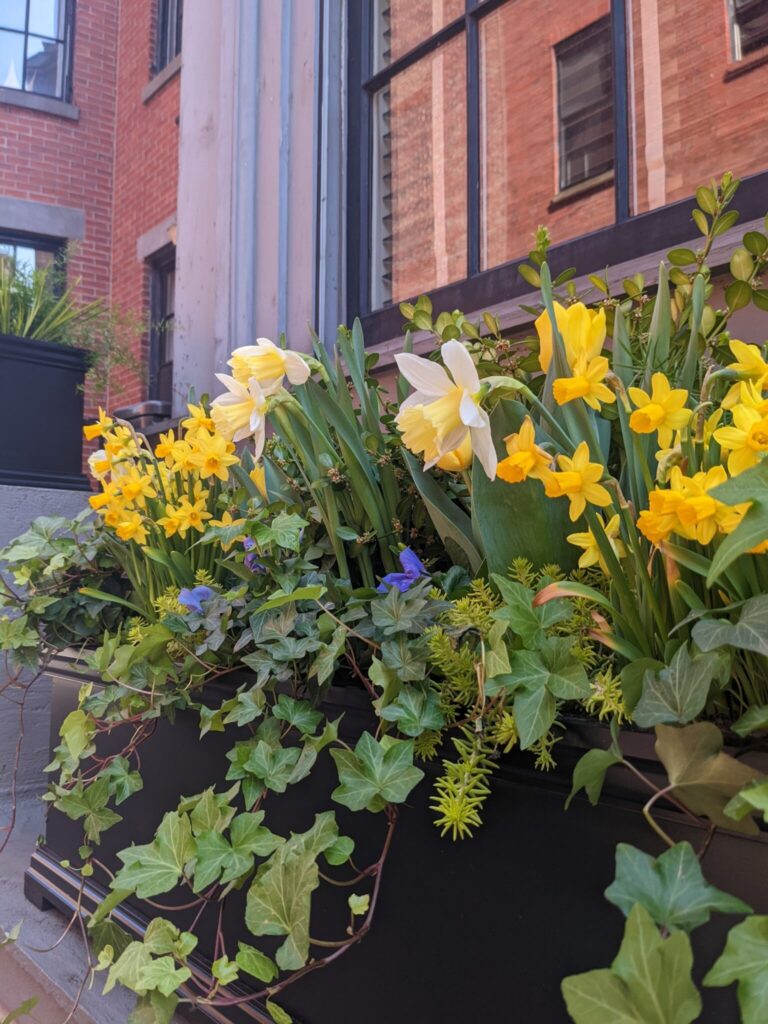
A large share of Cambridge’s older housing stock sits inside a local historic district, and window boxes mounted on brackets that penetrate historic wood trim can fall under Cambridge Historical Commission review, particularly on a primary facade. We design street-facing boxes with removable, non-penetrating mounting where the trim condition calls for it, and we can prepare the simple documentation a homeowner or property manager needs if a case does require sign-off. The goal is a box that reads as original to the house, not an obvious later addition.
Heavy shade from mature street trees
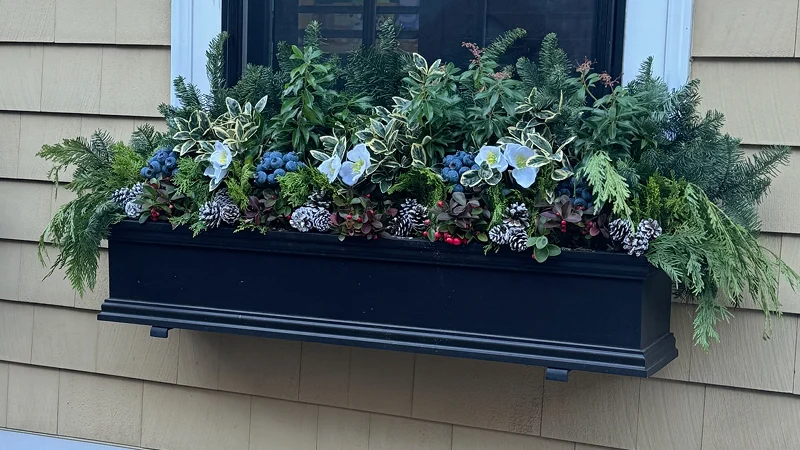
Cambridge’s tree canopy is a genuine asset to the streetscape and a genuine constraint for anything planted below it. We build window box schemes around the shade level of each specific sill rather than a generic ‘part shade’ plant list — heuchera, ferns, and trailing lamium hold color under a dense elm or maple canopy where petunias and geraniums simply thin out by August. On boxes that get a narrow window of afternoon sun between buildings, we mix in plants that tolerate both extremes so the box doesn’t scorch on the one bright day it gets.
Narrow streets and limited curb access
Many Cambridge blocks — Mid-Cambridge, Cambridgeport, parts of Central Square — have narrow one-way streets, resident permit parking, and little room for a service vehicle to sit for long. We schedule window box installation and seasonal changeovers in short, focused visits, park according to the building’s own resident permits where possible, and carry soil and hardware up in hand loads rather than blocking a street with a truck for hours.
Soil weight and sill condition on older frame houses
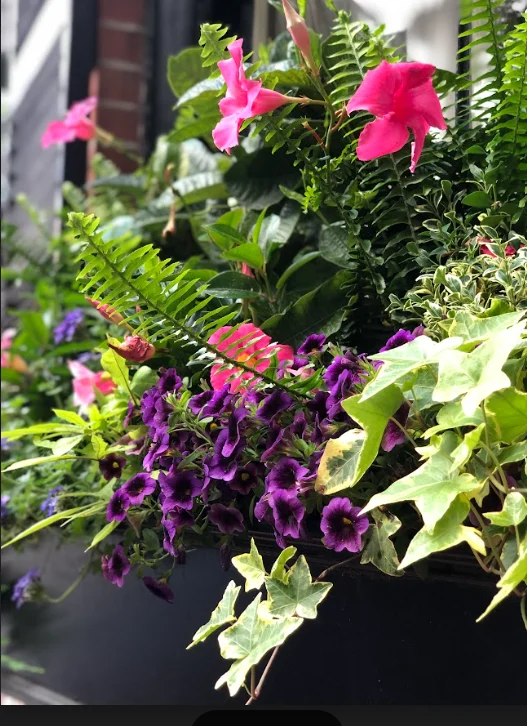
Wet soil is heavy, and a lot of Cambridge’s wood-frame housing has sills and brackets that were sized for decoration, not for a saturated box after a storm. We calculate loaded weight before we choose hardware, use lightweight soil-free growing media where the sill is original and unreinforced, and add discreet safety bracing on upper-floor boxes so the box stays put through wind and winter freeze-thaw cycling.
Recent Cambridge work
A recent project on a Mid-Cambridge Victorian involved three floors of window boxes on the front elevation, each planted to its own light level and mounted with non-penetrating brackets to satisfy the property’s historic district requirements. Nearby, a Cambridgeport triple-decker’s conversion to condominiums brought us in to design a matching but individually-tuned box scheme for three separate owners on one facade, coordinated through the property manager so the building presents as one design rather than three unrelated ones. Both jobs are typical of the shade-and-review balancing act that defines this kind of work in Cambridge.
Other services we provide in Cambridge
Window boxes are usually one piece of a larger planting plan for a Cambridge property. We also provide full garden services in Cambridge, including garden design and installation for front dooryards and rear yards, fine gardening and ongoing maintenance through the growing season, container plantings for porches and entries, roof deck and terrace planting for condo conversions with private outdoor space, drip irrigation sized to each property’s water pressure and access, and low-voltage landscape lighting for facades, walkways, and courtyard gardens. Most Cambridge clients start with window boxes and fold in one or two of these once they see how the boxes are maintained through the season.
Start with a consultation
We’re based at 5 Crescent St in Cambridge, about 2.8 miles from most of Cambridge’s historic districts, and we schedule Cambridge window box consultations directly from that shop. Call us and we’ll walk the facade with you, check sill condition and light levels floor by floor, and flag anything that needs Historical Commission review before we design a single box. From there we propose a planting plan, install on a schedule that works with your street’s parking, and return for seasonal changeovers so the boxes carry the house from spring through winter greens.
What Our Customers Say
Frequently Asked Questions
Do window boxes in Cambridge need Historical Commission approval?
It depends on the district and the mounting method. Boxes on street-facing elevations of buildings in a Cambridge Historical Commission district can require review if the bracket penetrates historic trim. We design non-penetrating mounts where possible and can prepare documentation for cases that do need sign-off.
What plants actually hold up under Cambridge's tree canopy?
Heuchera, ferns, trailing lamium, and other true shade plants outperform sun-lovers like petunias and geraniums once the canopy fills in for the season. We choose the plant list per sill based on the actual shade level, not a general assumption about the block.
Can window boxes work on a triple-decker with three different sill conditions?
Yes, and this is one of the most common jobs we do in Cambridge. Each floor gets its own plant list and, where needed, its own hardware, so the building looks coordinated rather than uniform.
How do you handle watering when boxes are hard to reach on upper floors?
We set up simple drip lines on multi-box facades so upper-floor boxes don't depend on someone carrying a watering can up three flights every day. This also evens out moisture on boxes that dry unevenly in the wind.
How far is Rouvalis Gardens from Cambridge?
Our shop is at 5 Crescent St in Cambridge, about 2.8 miles from Cambridge's historic districts. We schedule consultations, installs, and seasonal changeovers directly from there.