- Serving Boston and the Greater Boston Area

Window Boxes in Beacon Hill, MA
If your window boxes on Chestnut, Mount Vernon, or Louisburg Square keep cooking by August, the culprit is the same brick that makes the block so handsome. South- and west-facing facades on Beacon Hill radiate heat long after the sun moves off, and a standard nursery mix in a shallow box simply cannot hold moisture through that. Add cobbled sidewalks that rule out a delivery truck parking at the curb, and iron brackets original to the building that were never engineered for a soaked-through cedar box, and you have a planting problem specific to this hill. We solve it here, on foot, with soil built for the exposure and a maintenance visit schedule built around it.

What Window Boxes looks like in Beacon Hill
On Beacon Hill, a window box installation starts with the wall, not the plant list. We check what the bracket is actually rated to hold, because a great many of the wrought-iron supports on Chestnut and Cedar Streets are original ironwork that has carried the same box for decades and was never sized for today’s wetter soil blends or a fully grown trailing planting. Where brackets are sound, we build the box to the load they can safely carry. Where they are not, we say so before anything goes in, rather than after a July storm.
Light is the second variable, and it is brutal in places most clients do not expect. A box on a south-facing brick elevation on Pinckney or Willow can run ten to fifteen degrees hotter than the air around it by mid-afternoon, because the brick behind it stores heat all day and releases it into the root zone through the evening. We plant for that exposure specifically — deeper reservoirs, drought-tolerant textures worked in among the seasonal color, and a watering schedule that assumes the wall is working against the plant, not for it. North-facing boxes on the flatter, shadier lanes near the river get a completely different palette, because what thrives on Mount Vernon in full sun will sulk in the shade two blocks over.
Then there is access. Delivery vans cannot get onto most of the Hill’s narrow, cobbled streets, so every box, every bag of soil, and every flat of plants gets hand-carried in from the nearest legal loading spot. That changes how we schedule a job and how much soil we stage per box, because we are not making a second trip for what a truck could have carried in one load anywhere else in the city.
What we account for here
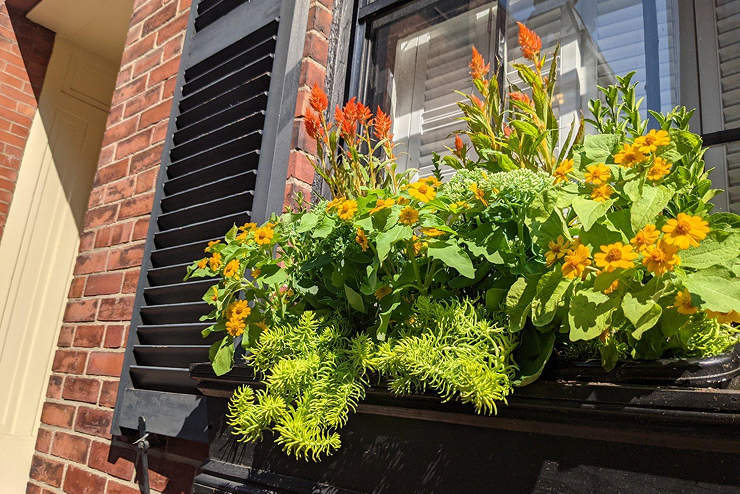
What we account for here
Beacon Hill’s brick rowhouses and narrow sidewalks mean every window box project has a few fixed realities we plan around from the start. We look at the age and condition of the sill or brackets, the amount of sun a given elevation actually receives, and how materials will hold up against foot traffic and weather on a tight street.
- Weight and mounting suited to the existing masonry
- Plant choices matched to sun exposure and season
- Materials and colors that suit the block’s character
- Practical access for installation and future care
Historic District Commission review
Beacon Hill sits inside one of the strictest local historic districts in New England, and street-facing window boxes on Chestnut, Mount Vernon, Beacon, and the surrounding lanes are visible from the public way, which means the Beacon Hill Architectural Commission has a say in box material, color, and mounting hardware. We build boxes and select finishes that align with what the commission has approved on comparable facades nearby, and where a property’s documentation is unclear we tell the client what to confirm before we install anything permanent, rather than guessing and risking a violation notice.
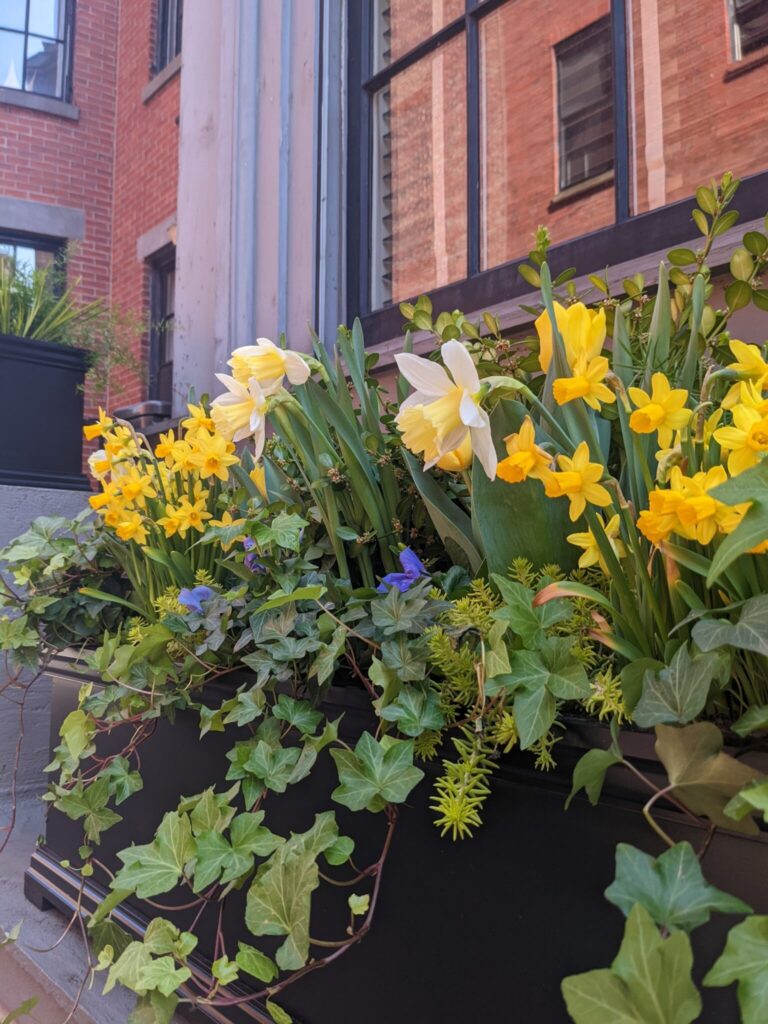
South-facing brick heat load
The Flat of the Hill and the sunnier faces of Chestnut and Pinckney bake containers in a way that shaded elevations near the river never do. We address this with heavier-gauge liners that resist warping under repeated heat cycling, soil blends with added water-holding amendment, and a watering visit frequency set higher for those specific exposures rather than a one-size schedule across the whole property.
Original iron brackets and mounting hardware
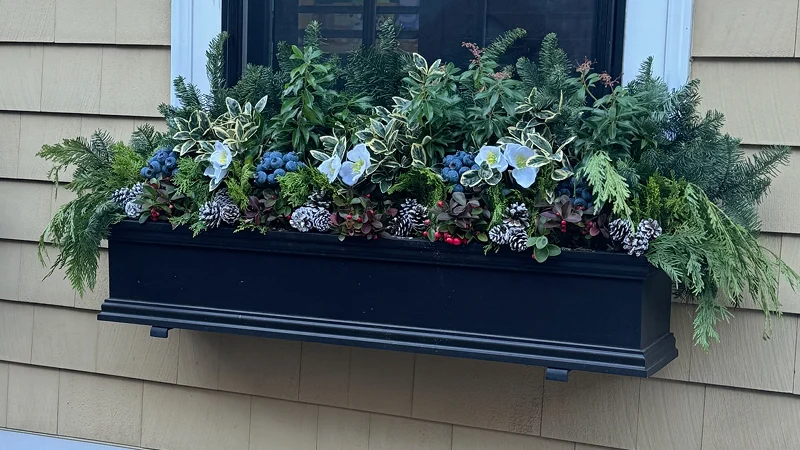
Many of the Hill’s window-box brackets are original ironwork, decades old and often re-painted many times over, and they were not engineered for modern soil weights or a fully mature trailing display. Before we hang a box, we inspect the bracket, the fasteners, and the sill condition underneath. Where the hardware needs reinforcement or a period-appropriate replacement, we handle that conversation with the client and, where required, with the commission before installation.
No vehicle access on the narrow lanes
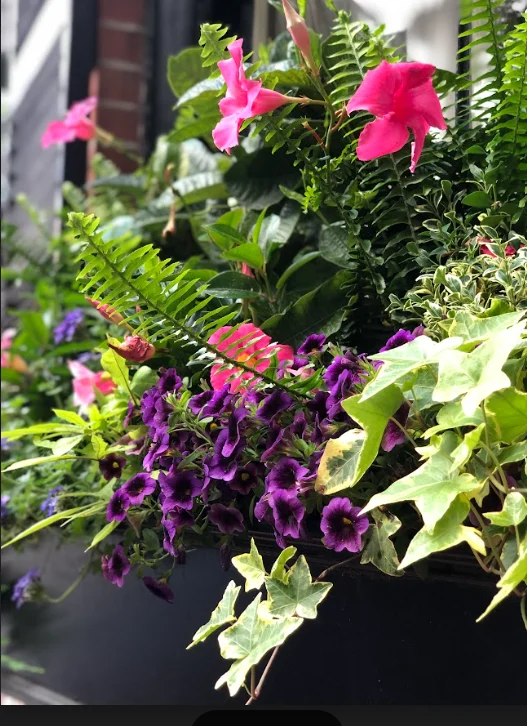
Cobbled, one-lane streets like Acorn and the upper stretches of Willow and West Cedar do not allow a delivery truck to park at the door. Every box and every bag of soil for a Beacon Hill job comes in by hand cart from the nearest legal spot, which means our crews plan the load and the visit sequence in advance so a single trip covers everything a property needs for the season.
Recent Beacon Hill work
A recent project on one of the Hill’s brick townhouses involved replacing a set of aging cedar boxes on a south-facing elevation with reinforced liners set into the existing period brackets, paired with a heat-tolerant planting scheme that held its shape through a hot August without the twice-weekly hand-watering the old boxes had required. On a shadier Mount Vernon-area facade, we’ve matched box style and mounting to commission-approved precedent from an adjacent address, so the installation moved through review without delay. Neither job needed a truck at the curb — everything went in by hand from the nearest loading point.
Other services we provide in Beacon Hill
Window boxes are one piece of what we do on the Hill. We also handle full garden services in Beacon Hill, from small rear-yard beds behind townhouses to the container and roof-deck plantings that make use of the limited private outdoor space many of these properties have. If your window boxes are part of a larger property that also needs a roof terrace planted, a drip irrigation line run to containers that can’t be hand-watered every day, or low-voltage lighting to show off a front dooryard garden after dark, we scope all of it as one relationship rather than a series of separate calls. For comparison, the same window-box program we run here is also available a short distance away in Downtown Boston, where the access and light conditions differ from the Hill’s.
Start with a consultation
We’re 1.9 miles from Beacon Hill, over the bridge from our Beacon Hill location at 5 Crescent St, and most Beacon Hill window-box conversations start with a short site visit rather than a phone quote, because bracket condition, exposure, and commission history are things we need to see in person. Call us and we’ll set a time to walk the facade, check the hardware, and talk through what the commission will and won’t need to see. From there you get a plan and a planting schedule, and we handle the carrying, the installation, and the seasonal changeouts on foot, street by street, the way this neighborhood requires.
What Our Customers Say
Frequently Asked Questions
Do Beacon Hill window boxes need Historic District Commission approval?
If the box is visible from a public street, generally yes. The Beacon Hill Architectural Commission reviews material, color, and mounting for street-facing elevations. We plan installations around precedent already approved on comparable nearby facades and flag anything that needs formal sign-off before we install.
Can you check whether my existing iron bracket is safe to reuse?
Yes. We inspect bracket condition, fasteners, and sill attachment before hanging any new box. Many Beacon Hill brackets are original ironwork, and if a bracket needs reinforcement or replacement we handle that as part of the project rather than after the fact.
How do you get soil and materials to a house with no street parking?
By hand cart from the nearest legal loading point. Beacon Hill's cobbled, narrow lanes don't allow delivery trucks at most addresses, so we plan the full load for a visit in advance and carry everything in on foot.
Will a south-facing box need more watering than a shaded one on the same street?
Usually significantly more. Brick on sunny elevations along Chestnut and Pinckney holds heat well into the evening, which dries containers faster than boxes on shaded, north-facing walls a block away. We set watering frequency and soil composition to the specific exposure, not a blanket schedule.
Do you handle seasonal changeouts, or just the initial install?
We handle the full year, including spring planting, summer maintenance visits, fall changeout, and winter greens if the property wants them. Given the hand-carry logistics on the Hill, most clients prefer we manage the whole calendar rather than book each season separately.