- Serving Boston and the Greater Boston Area

Seasonal Container Planting in North End, MA
If you’re gardening in the North End, you are almost certainly gardening in a pot, a box, or a bracket bolted to a fire escape, because there is barely any ground-level soil to speak of. Add the wind that funnels off the harbor and down the narrow streets, and the fact that a delivery truck can’t get within a block of most front doors, and you have a planting problem that has nothing in common with a Back Bay dooryard or a Brookline lawn. Seasonal container planting here is really a logistics-and-engineering exercise dressed up as a gardening one.

What Seasonal Container Planting looks like in North End
Most of our North End clients garden on one of three surfaces: a roof deck with a view of the harbor and full wind exposure, a set of fire-escape or window-ledge containers facing Hanover, Salem, or one of the narrow side streets, or a small paved rear yard shared with two or three other units. There is rarely a lawn, rarely a planting bed, and almost never six inches of native topsoil to work with. Every plant lives in a container, and every container lives somewhere with real physical constraints — a railing rated for a certain load, a ledge four stories up, a gangway barely wide enough for a wheelbarrow.
Light is often better than people expect, particularly on upper floors and roof decks that clear the surrounding rooflines, but it comes paired with wind that will shred anything not chosen and staked for it. At street level, containers do double duty as streetscape — many North End buildings sit within view of pedestrians and neighborhood associations who notice when a window box goes brown in August, so the seasonal changeover schedule matters as much as the plant list.
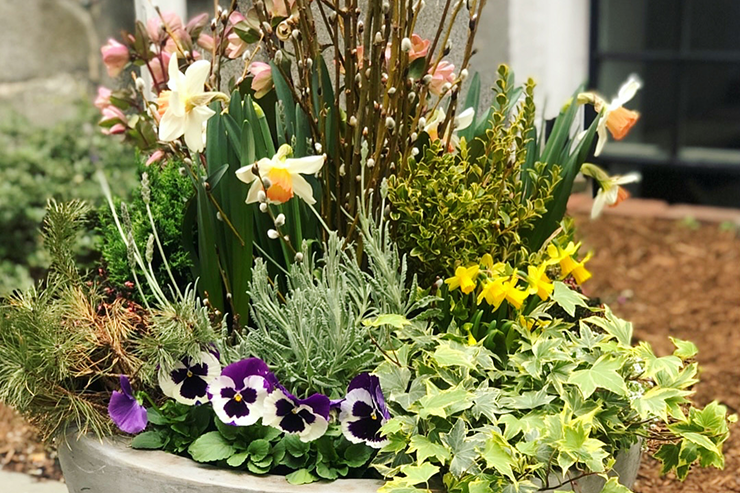
We plan four rotations a year for most North End clients: a spring planting timed to when the wind finally settles enough for tender growth to survive, a summer refresh for anything that struggled through a hot, reflective July on a rooftop, a fall display that can take a punch of cold and salt air, and a winter arrangement built from evergreens and cut branches that hold their look through the harshest months without needing water. Soil mix, drainage, and pot weight are engineered for the specific location before a single plant goes in.
What we account for here
What we account for here
Wind off the harbor and the wind tunnels between buildings
North End’s street grid channels wind in ways that catch people off guard, especially on corners near the waterfront and on open roof decks. We choose plant material for wind tolerance first and aesthetics second, use heavier soil mixes and ballasted containers to keep pots upright, and stake or cage anything with height. A design that looks right in a nursery can be stripped bare in one nor’easter if it wasn’t specified for this.
No ground soil and no easy way to bring more in
Almost everything here is container culture from the ground up. We calculate volume and drainage per pot rather than assuming a bed’s worth of soil buffer, and we build in irrigation or a hand-watering plan from day one, since a container dries out far faster than a planting bed ever would.
Alley and stoop-only access
Many North End buildings back onto alleys too narrow for a truck, or front directly onto a sidewalk with no driveway at all. We plan deliveries around load size — smaller, more frequent trips with hand-carts and dollies rather than one large drop — and we schedule around the neighborhood’s tightest pinch points, like Sunday market mornings on Salem Street, so materials move without blocking foot traffic.
Historic streetscape expectations
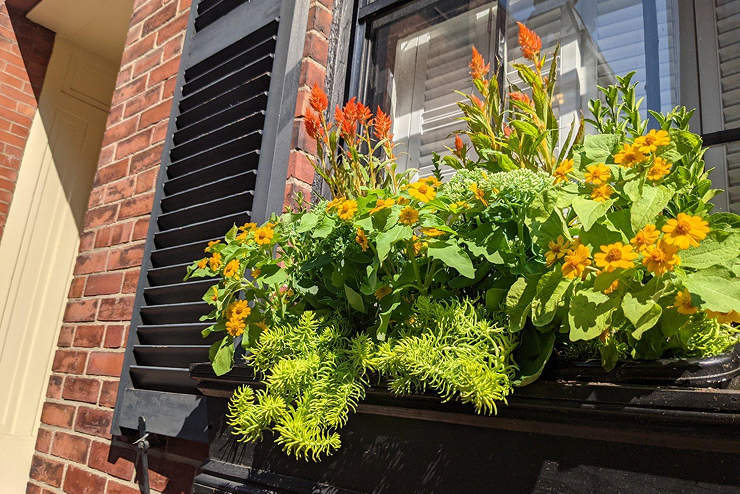
A visible window box or stoop container on a North End facade is part of the streetscape, whether or not the building is under a formal historic designation. We keep street-facing plantings tidy, seasonally appropriate, and proportioned to the facade, so they read as considered rather than incidental.
Recent North End work
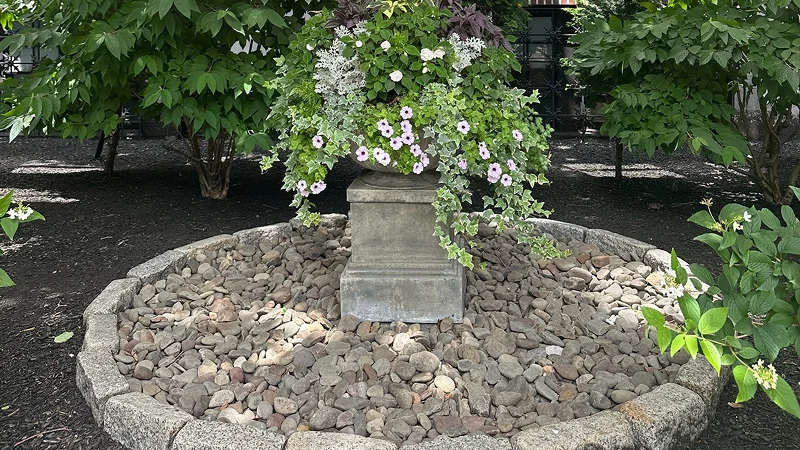
A typical recent project: a fourth-floor roof deck near the waterfront where the previous containers had been blown over twice in one winter. We reworked the layout with lower-profile, wind-firm plantings anchored in weighted fiberglass pots, added a simple drip line run off the deck’s hose bib, and set a four-season rotation so the space reads finished in every month rather than just June through September. On the residential side, we regularly take over a building’s street-facing window boxes on a maintenance contract, handling the seasonal swap-outs so a resident association doesn’t have to think about it.
Other services we provide in North End
Container planting is rarely the only need on a North End property. We also handle roof deck and terrace planting for the harbor-view decks that are common throughout the neighborhood, drip irrigation so containers and window boxes don’t depend on someone remembering to water, and low-voltage lighting for roof decks and entries that get used well past dusk. For buildings that also have a rear courtyard or a shared common area, we provide full garden services in North End, including fine gardening and ongoing maintenance, along with garden design and installation for anyone reworking a space from scratch. Property managers overseeing multiple North End buildings often bundle several of these into one seasonal contract, which is worth discussing at the first consultation.
Start a North End container planting plan
Rouvalis Gardens is based 1.2 miles away at 5 Crescent St in North End, close enough to walk North End projects on foot when access is tight and equipment needs to move by hand-cart rather than truck. Call to set up a site visit — we’ll look at your roof deck, window boxes, or fire-escape space, measure wind and light exposure, and come back with a seasonal plan and a straightforward quote. After that, planting and rotation scheduling happens on our calendar, not yours.
Container palettes suited to the North End
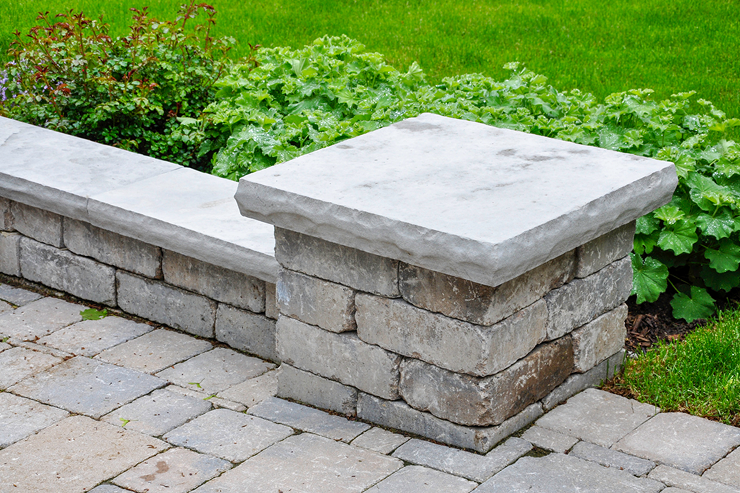
Narrow brick facades, iron railings, and small stoops call for containers that read well up close and hold their shape through a season of foot traffic and reflected heat off pavement. We plan color combinations that stay sharp from spring bulbs through fall mums, sizing pots to fit tight sidewalks and balconies common to the neighborhood.
- Compact plantings for narrow stoops and entryways
- Heat-tolerant selections for sun-baked brick and stone
- Rotations timed to each season’s change
Other services we provide in North End
Seasonal container planting is often just the starting point for what North End properties actually need. Many of our container clients on the narrow brick streets here also ask about garden design and installation for the small courtyards and stoops tucked behind the facades, or a standing fine gardening and maintenance program that keeps pots, window boxes, and any planted beds on one consistent schedule rather than treated as separate jobs.
Where a building has fixed window boxes instead of freestanding pots, we handle that as its own window box planting service, since the sightlines from the street and the installation method differ from a stoop urn. For the North End’s rooftop decks and small terraces, we offer roof deck and terrace planting, frequently paired with drip irrigation installation so containers several flights up aren’t left to hand watering, plus low-voltage landscape lighting for properties that get used in the evening.
Container turnover pairs naturally with spring garden cleanup and fall garden cleanup, timed around each seasonal changeover. For owners with any in-ground planting space, we also provide perennial borders and urn and planter arrangements as a coordinated look, and a standalone garden consultation for anyone who wants a plan before committing to installation.
- Garden design and installation
- Fine gardening and maintenance
- Window box planting
- Roof deck and terrace planting
- Drip irrigation installation
- Spring and fall garden cleanup
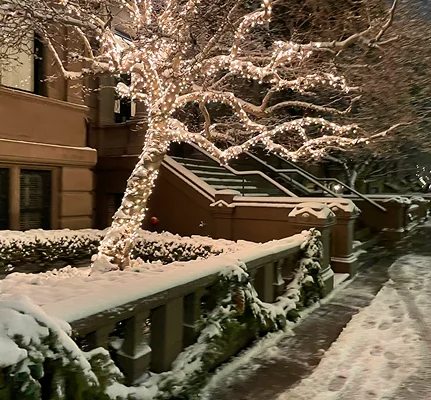
Ready for pots that suit the North End
From narrow brick stoops to rooftop terraces overlooking the harbor, North End entries deserve plantings that hold up to foot traffic and salt air. Reach out to describe your space, and we will suggest a container palette, plan the seasonal swaps, and coordinate access with your building or association before work begins.
What Our Customers Say
Frequently Asked Questions
Can containers survive on a North End roof deck year-round?
Yes, with the right selection and anchoring. Evergreens, ornamental grasses, and cold-hardy shrubs handle the wind and winter exposure well when planted in weighted, properly drained containers, and we build a four-season rotation so the deck never sits empty.
How do you get soil and plants into buildings without driveway access?
We plan deliveries in smaller loads carried by hand-cart or dolly through gangways and stoops, and we schedule around the neighborhood's busiest pedestrian times, particularly near Hanover and Salem Streets, so materials move without disrupting foot traffic.
Do window boxes need historic commission approval in North End?
Requirements vary by building and whether it falls under a specific historic overlay. We keep street-facing plantings proportioned and seasonally appropriate regardless, and we can point clients toward the right resource if their building requires formal review.
How often do you rotate seasonal containers here?
Most North End clients are on a four-times-a-year schedule: spring, summer refresh, fall, and a winter arrangement built to hold up without water through the cold months.
What's different about planting on a North End roof deck versus a rear courtyard?
Roof decks get more light but far more wind, so we favor lower-profile, wind-firm plants and heavier pots. Rear courtyards are often shaded by surrounding buildings, so we lean on shade-tolerant material and adjust watering for the reduced sun exposure.