- Serving Boston and the Greater Boston Area

Seasonal Container Planting in Lexington, MA
A front-facing urn on a Battle Green-era colonial has different problems than a courtyard pot in the city. In Lexington, the three variables that decide whether containers survive the season are historic district sightlines, wide-open sun exposure with little tree canopy to soften it, and deer that move through even the most manicured Massachusetts Avenue-adjacent properties without hesitation. A planting plan that ignores any one of those three fails by July.

What Seasonal Container Planting looks like in Lexington
Lexington’s housing stock skews older and more architecturally formal than most of the western suburbs we work in, which changes how containers get chosen and placed before a single plant goes in the soil. A pair of urns flanking a Federal or Colonial Revival entry has to read as period-appropriate — which usually means we steer away from glossy modern fiberglass in favor of lead-look composite or true cast stone, finished in colors the town’s historic commission has already seen and approved on similar properties.
Light is the second variable, and it runs the opposite direction from what people expect. Many Lexington lots, particularly the larger parcels off Hancock Street and around the Battle Green corridor, were cleared generations ago and never fully re-canopied, so containers on the street side often get eight or more hours of direct sun with almost no afternoon relief. That calls for heat-tolerant combinations — argyranthemum, angelonia, lantana standards — rather than the shade-leaning ferns and heuchera that work two towns over in a leafier setting. We build the soil mix to hold moisture through that exposure and pair it with drip irrigation so the containers aren’t rationed to whatever a homeowner remembers to hand-water.
Deer are the third and most Lexington-specific factor. Between the conservation land bordering the Minute Man corridor and the number of properties backing onto undeveloped buffer, deer traffic through residential containers here is constant and largely unbothered by proximity to the house. Container planting that ignores this gets stripped within a week of installation, urns and all. We plan around it from the first design conversation rather than treating it as an afterthought.
What we account for here
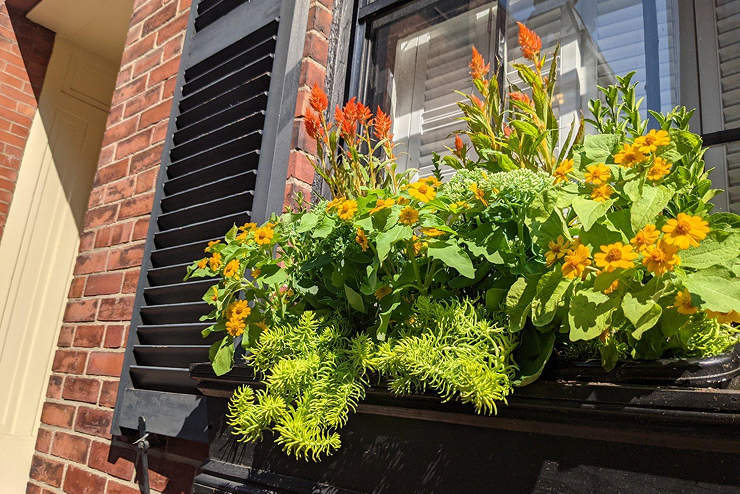
Street-facing containers and the Historic District Commission
Properties within or adjacent to Lexington’s local historic districts — and there are more of these than most homeowners realize when they first buy — often require exterior changes to be reviewed before they’re visible from a public way. Containers themselves rarely need a filing, but the line gets blurry when a planting plan involves new pedestals, permanent urns set in mortar, or lighting integrated into the display. We keep records of what’s been approved on comparable Lexington streets and design toward that precedent, so a homeowner isn’t the one discovering mid-season that a fixture needs to come back down.
Full sun exposure with minimal canopy relief
Where a Cambridge or Newton client might be planting for dappled shade, a Lexington front walk is frequently baking in unbroken sun from mid-morning through early evening. We select cultivars bred for heat and UV tolerance and build reservoir capacity into the container itself, because a soil mix designed for a shaded courtyard will dry out and scorch within days under this kind of exposure.
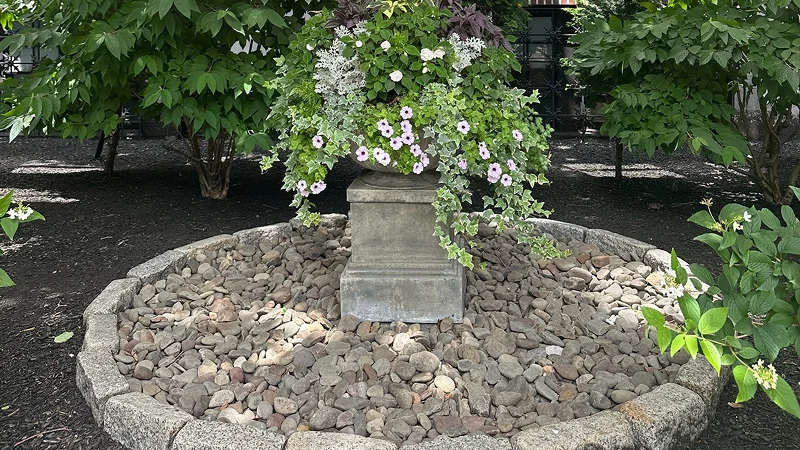
Deer pressure from adjacent conservation land
Lexington’s proximity to Minute Man National Historical Park and its network of conservation parcels means deer move through residential yards as a matter of routine, not exception. Our plant palette for Lexington containers leans on selections deer reliably pass over — dusty miller, licorice plant, most salvias — reserving anything deer find palatable for pots close enough to the house to deter browsing, or treating vulnerable displays with repellent applications on a maintenance schedule.
Recent Lexington work
A recent project for a Colonial Revival property near the historic center involved matching a new pair of entry urns to century-old stone detailing already on the house, filling them with a heat-tolerant white-and-silver palette that reads correctly from the street, and setting up a rotating deer-repellent schedule to protect the plantings through a summer with heavy browsing pressure nearby. The containers were sized and placed to satisfy an informal historic district review before installation, avoiding any after-the-fact adjustment.
Other services we provide in Lexington
Container planting is rarely the only thing a Lexington property needs. We provide full garden services in Lexington, including garden design and installation for period-appropriate landscapes, fine gardening and ongoing maintenance built around a formal historic streetscape, roof deck and terrace planting where a property has one, drip irrigation to keep containers and beds alike from depending on hand-watering through Lexington’s sunny stretches, and low-voltage landscape lighting designed to meet historic district expectations for a subdued, appropriate glow rather than anything that reads as commercial.
Start a Lexington container planting plan
Rouvalis Gardens is based at 5 Crescent St in Lexington, roughly 10.2 miles from Lexington center, and we work regularly with homeowners and property managers across town including on properties inside the local historic districts. Call to set up a consultation: we’ll walk the property, review any relevant historic guidelines, and come back with a container plan built for Lexington’s sun exposure and deer pressure before the first frost date or spring planting window arrives, whichever is closer.
Seasonal turnover on a formal, visible schedule
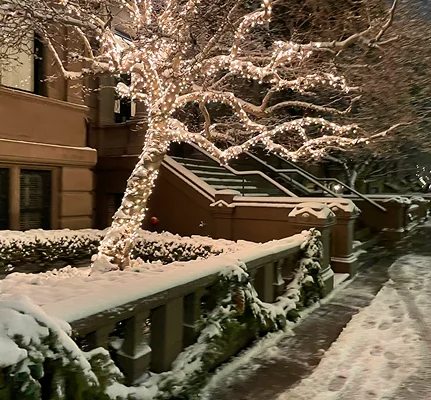
Because so many Lexington properties present a formal public face — a front door seen from the sidewalk, a set of urns that frame a Colonial entry — the spring-to-fall-to-winter changeover has to happen on a tight, reliable calendar rather than whenever it’s convenient. We schedule turnovers ahead of known town dates, including Patriots’ Day weekend when foot traffic through the historic center is heaviest and a tired or half-changed container is most visible.
What Our Customers Say
Frequently Asked Questions
Do container plantings in Lexington need Historic District Commission approval?
Freestanding seasonal containers generally do not require a filing, but permanent pedestals, mortared urns, or integrated lighting visible from a public way can. We check against precedent from comparable Lexington properties and design around it before installation, not after.
How do you keep deer from stripping containers on Lexington properties?
We build the plant list around selections deer typically avoid, such as dusty miller, licorice plant, and most salvias, and place anything deer do find appealing close to the house or on a repellent application schedule. Properties near conservation land get the most conservative palette.
Will containers survive full sun exposure on a Lexington front walk with no shade?
Yes, with the right cultivar selection and soil mix. We choose heat-tolerant plants like angelonia and lantana standards and build in moisture-holding capacity plus drip irrigation so the display doesn't depend on someone remembering to hand-water twice a day.
Can you match new containers to an existing Colonial or Federal-style entry?
Yes. We source urns and pedestals in finishes and proportions appropriate to the architecture, and we keep track of what's already been approved on similar Lexington streets so the choice holds up to scrutiny from neighbors and, where relevant, the historic commission.
Do you serve other western suburbs near Lexington?
We provide the same seasonal container planting service in <a href="/seasonal-container-planting-weston-ma/">Weston</a> and <a href="/seasonal-container-planting-newton-ma/">Newton</a>, and offer it in the city at our <a href="/seasonal-container-planting-boston-ma/">Boston seasonal container planting</a> page as well.