- Serving Boston and the Greater Boston Area

Roof Deck Planting in Weston, MA
A roof deck on a Weston estate rarely behaves like a roof deck anywhere else. Set above tree canopy on a large wooded lot, it can sit in full sun by midday while the approach path below stays in deep shade, and it’s often reachable only by a irrigation line run far longer than the fixture manufacturer ever anticipated. Add a deer population that will climb three flights of logic to find a planter it likes, and the planting plan has to be built around the property, not borrowed from a downtown terrace list.

What Roof Deck Planting looks like in Weston
Most of the roof decks we work on in Weston sit above a home set well back from the road, often at the end of a long drive through mature oak, maple, or white pine. That positioning changes the planting brief in three ways before we even discuss style. First, the deck is usually elevated above the deer line, which makes it one of the few places on the property where a client can finally grow tulips, hostas, or roses without a browse guard — we treat that as a design opportunity, not a footnote. Second, tree cover at ground level does not always follow the deck upward; a roof plane that clears the canopy can run six to eight hours of direct sun even while the lawn below reads as shaded woodland, so we test actual light at deck height rather than assuming from the site’s general reputation as a shade lot. Third, wind exposure on an elevated deck surrounded by tall trees is different from wind on an open urban roof — gusts funnel and eddy around the canopy edge, which affects container weight, staking, and species choice for anything upright.
Soil is entirely engineered here — lightweight growing medium in insulated, well-drained containers, sized to the structural allowance the architect or engineer has specified for the deck. Irrigation is drip-fed from a line that, on many Weston lots, has to travel considerably farther from the house’s water source than it would on a tighter in-town parcel, so line sizing, pressure, and freeze-protection get engineered up front rather than patched in after the first dry spell. Where the property falls under local conservation commission or historic district guidance, we plan plant palette and any visible structure to stay within what the board will approve, and we handle that conversation before installation, not after.
What we account for here
What we account for here
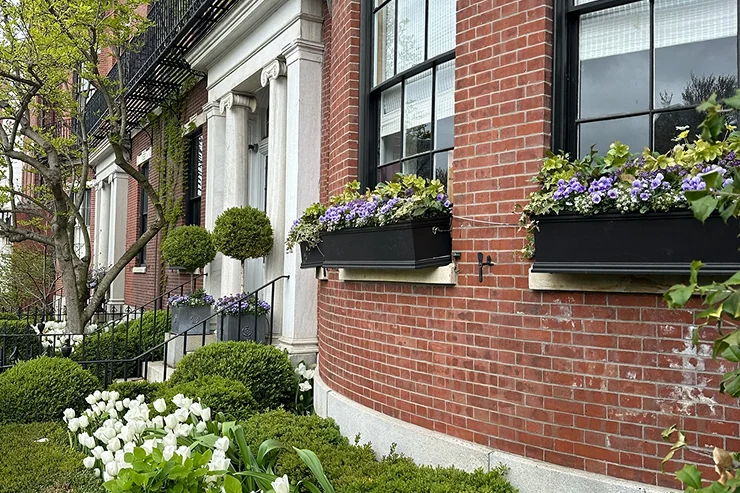
Weston roof decks carry real structural and environmental constraints. We weigh weight-bearing capacity, drainage paths, and how planters interact with membrane and railing systems before choosing containers or plant material.
- Load limits per structural plan
- Drainage and waterproofing details
- Access for maintenance and materials
Deer pressure at ground level, opportunity at height
Weston’s deer population will strip a ground-floor bed of tulips, hosta, and hydrangea in a single overnight visit — it’s one of the defining constraints of gardening on these lots. A roof deck sits above that pressure entirely, which means we can specify plants that would be indefensible at grade: roses, lilies, and tender perennials that simply are not deer-browse candidates on an elevated surface. We still choose species deliberately, since deer occasionally test rail-height planters near a low roofline, but the deck becomes the one part of many Weston properties where the plant list isn’t dictated by what a deer won’t eat.
Shade at grade, sun at deck height
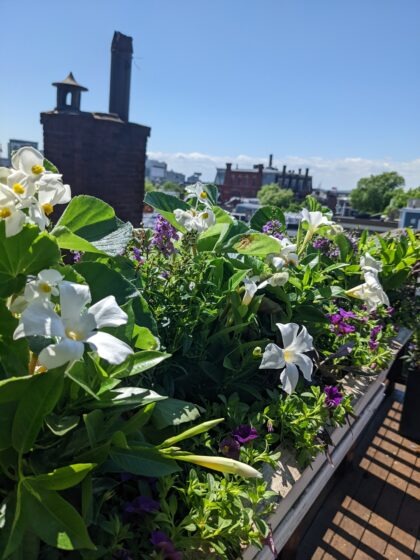
Extensive tree canopy across these estate lots creates deep shade at ground level, but that shade pattern does not automatically extend upward. We take actual sun readings at deck height across a full day before finalizing a plant list, because a deck that clears mature white pine or oak canopy can run far sunnier than the rest of the property would suggest. Getting this wrong is the single most common cause of a disappointing first-season roof deck — plants chosen for the woodland character of the lot struggling in full sun forty feet above it.
Irrigation over long house-to-deck runs
Large lots mean long distances between the house’s water source and the roof structure, and a drip system fed from too far away with undersized line will underperform no matter how well the planting is designed. We size supply line, install pressure-compensating drip emitters, and add a dedicated shutoff and drain-down point for winter, so the irrigation reaches full deck capacity without straining a system built for a much shorter run.
Wind funneling off surrounding tree lines
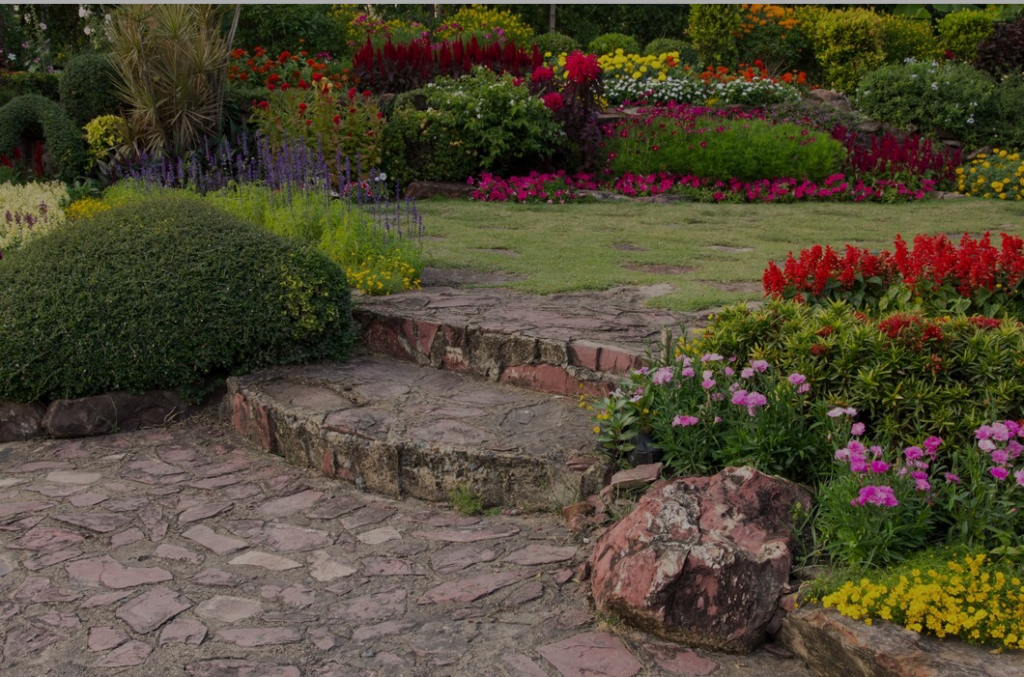
A deck ringed by mature trees experiences gusting and eddy effects that a fully open urban roof does not — wind accelerates around canopy gaps and can hit a deck corner harder than the open middle. We weight and anchor containers accordingly, choose upright plant forms with flexible rather than brittle stems, and stake anything tall through the first two growing seasons while root systems establish in the container medium.
Recent Weston work
A recent project on a wooded Weston lot involved converting a roof deck above the garage wing into a working cutting and container garden — a direct response to the client wanting flowers the deer couldn’t reach. We ran a new drip line from the nearest interior shutoff, engineered lightweight containers sized to the deck’s load allowance, and built the plant list around six-plus hours of measured sun the deck received despite sitting below a heavy tree line at ground level. It’s a typical pattern on these estate properties: the ground floor stays woodland and shade-tolerant, the roof deck becomes the sunny, deer-free garden the client actually wanted all along.
Other services we provide in Weston
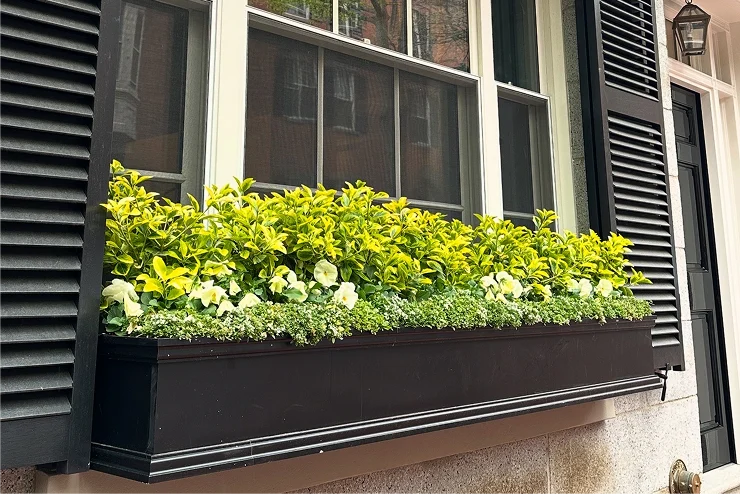
Roof deck planting is one piece of a broader gardening relationship on most Weston properties, and we typically pair it with our full garden services in Weston, which cover the estate as a whole rather than one elevated surface. That includes garden design and installation for the woodland and border areas at grade, fine gardening and season-round maintenance to manage the deer pressure and shade conditions across the property, containers and window boxes for entries and terraces below deck level, drip irrigation extended to garden beds beyond the deck’s own line, and low-voltage landscape lighting to carry the garden’s character into the evening along drives, paths, and tree lines. Clients often start with the roof deck and extend the plan outward once they see how it performs.
Start with a site visit
Weston sits roughly 13.8 miles from our Weston base, and we schedule roof deck consultations there on the same basis as our in-town clients — a site visit to measure actual sun at deck height, confirm structural load allowances with your engineer or architect if needed, and walk the irrigation route from house to deck. From there we put together a plant and container plan, a proposed installation date, and a maintenance schedule built around the deer and shade conditions specific to your lot. Call us to set up that visit, or reach out through our contact page and we’ll follow up to schedule.
What Our Customers Say
Frequently Asked Questions
Can roof deck plants in Weston really escape deer damage?
In most cases yes. Deer browse at grade, and a deck elevated above ground level is generally out of reach, which is why many Weston clients use the deck to grow roses, lilies, and other plants they can't keep anywhere else on the property. We still check for rail-height exposure near low rooflines before finalizing a list.
Why does a Weston roof deck get more sun than the rest of the property?
Mature tree canopy on large wooded lots shades the ground, but a deck that sits above or level with that canopy can receive direct sun for most of the day. We measure actual light at deck height rather than assuming the deck matches the shade pattern below.
How do you run irrigation to a roof deck on a large estate lot?
We size the supply line for the full distance from the house's water source to the deck, install pressure-compensating drip emitters so flow stays even over that length, and add a shutoff and winter drain-down point specific to the run.
Does a Weston property need historic or conservation approval for roof deck planting?
Some Weston properties fall under conservation commission guidance depending on the parcel. We review what applies before installation and design within it, rather than raising it after materials are ordered.
How far is Weston from your Weston location?
About 13.8 miles. We treat roof deck consultations in Weston the same way we do in-town, with a full site visit before any plan is proposed.