- Serving Boston and the Greater Boston Area

Planting & Maintenance in Downtown Boston, MA
A container that thrives on a Beacon Hill stoop will shred itself apart forty stories above the Financial District. Downtown Boston’s growing conditions are set by the building, not the season: wind loading on a terrace parapet, a freight elevator that books in fifteen-minute windows, and a management office that wants a certificate of insurance before anyone touches the roof. Light is rarely the problem here — exposure usually is. Rouvalis Gardens plans planting and maintenance around the tower first, the garden second.

What Planting & Maintenance looks like in Downtown Boston
Most of our Downtown Boston work happens on private terraces, roof decks, and lobby-adjacent plantings attached to residential towers and Class A office addresses along Summer Street, the Financial District, and the Seaport-facing blocks near South Station. The soil, when there is any, sits in engineered containers or built planters rated for a specific load — so plant selection starts with weight, not aesthetics. We favor lightweight soil blends, dwarf and columnar cultivars, and root systems that won’t heave a planter designed to a structural tolerance the building engineer signed off on years ago.
Wind is the dominant design variable at height. A terrace on the 30th floor sees gusts that would flatten a perennial border at street level, so we lean on ornamental grasses, boxwood, and woody structure that flexes instead of snapping, staked and cabled where the exposure demands it. Irrigation has to be self-contained and low-drip, since most high-rise terraces have no hose bib and every gallon has to be accounted for against the building’s water allowance. Maintenance visits are scheduled around the building’s own calendar — freight windows, concierge sign-in, service elevator reservations — so a normal seasonal changeover can take three site visits instead of one.
None of this is unique to a single tower. It’s the operating reality of every high-rise garden downtown, and it’s why the crews who show up need building experience, not just horticultural training.
What we account for here
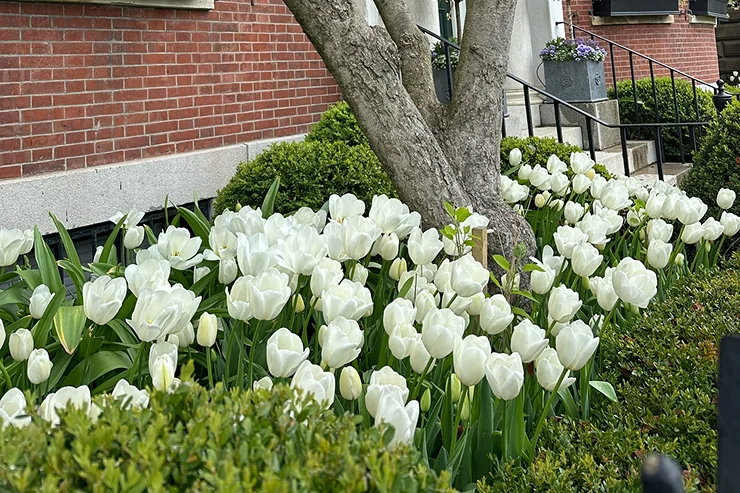
What we account for here
Four constraints come up on almost every downtown property we maintain. Each has a standard way we handle it before the first plant goes in.
Building management approval and insurance
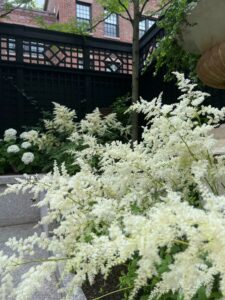
Property managers require a certificate of insurance, a scheduled access window, and often a written scope before any crew reaches the elevator bank. We carry the documentation standing and submit it ahead of the visit so a maintenance stop doesn’t stall at the front desk.
Freight elevator logistics
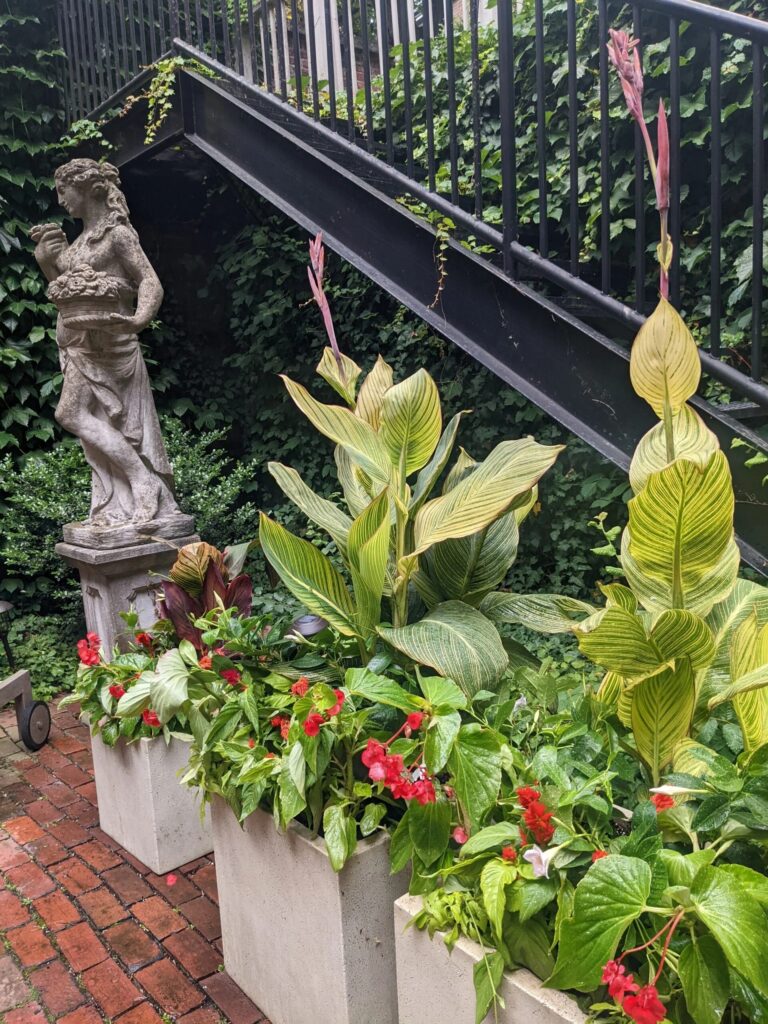
Most downtown towers restrict planting materials and equipment to a single freight car, booked in narrow windows shared with moving crews and deliveries. We plan install and rotation days around the building’s freight schedule, pre-stage materials, and move in one efficient trip rather than several.
Structural load limits on terraces and roof decks
Planters, soil volume, and hardscape all count against a load rating the building’s engineer has already fixed. We work from lightweight growing media and, where the terrace allows it, modular planters sized to the documented weight allowance rather than guessing at what looks right.
Wind exposure at height
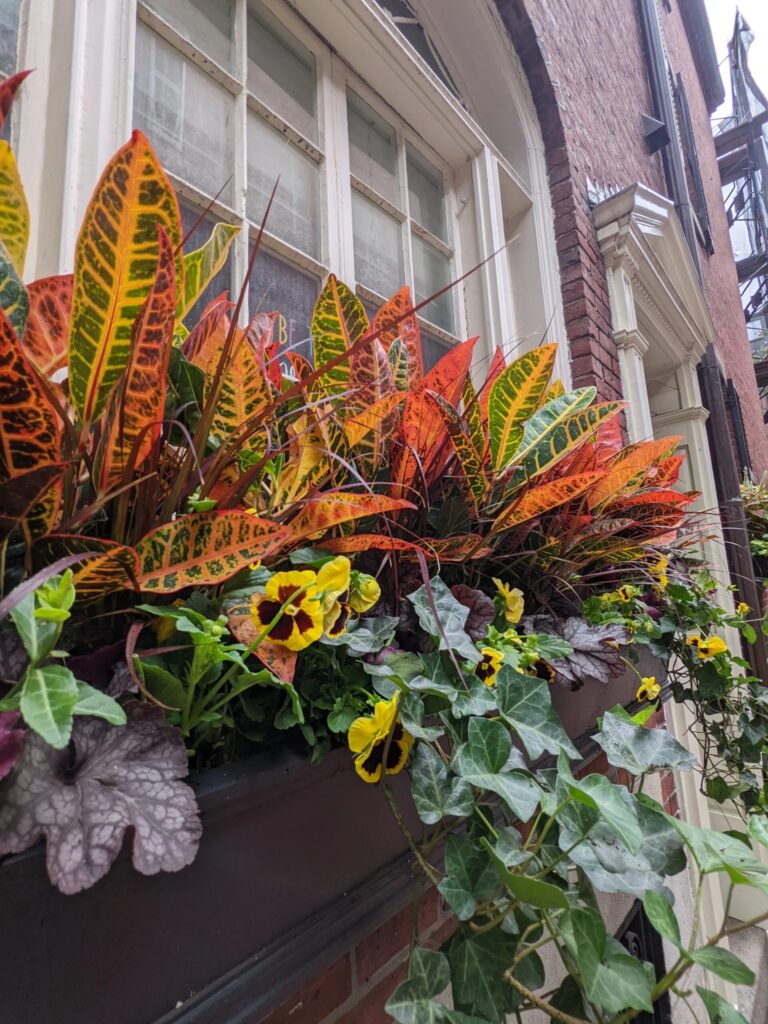
Above roughly the tenth floor, sustained wind — not sun or shade — determines what survives. We select flexible, wind-tolerant plant material, anchor larger specimens, and site containers against parapets or mechanical screens that break the worst of the gusts.
Recent Downtown Boston work
A recent engagement involved converting a residential high-rise terrace from a handful of struggling annual containers into a structured planting of dwarf conifers, ornamental grasses, and a drip-irrigated planter run, coordinated entirely through the building’s freight and insurance requirements before a single plant arrived. We’ve also handled seasonal container rotations for a Financial District office lobby, timed to the building’s own event calendar so nothing looked tired during a tenant showing. The through-line on every downtown project is the same: the horticulture is straightforward once the logistics are solved.
Other services we provide in Downtown Boston
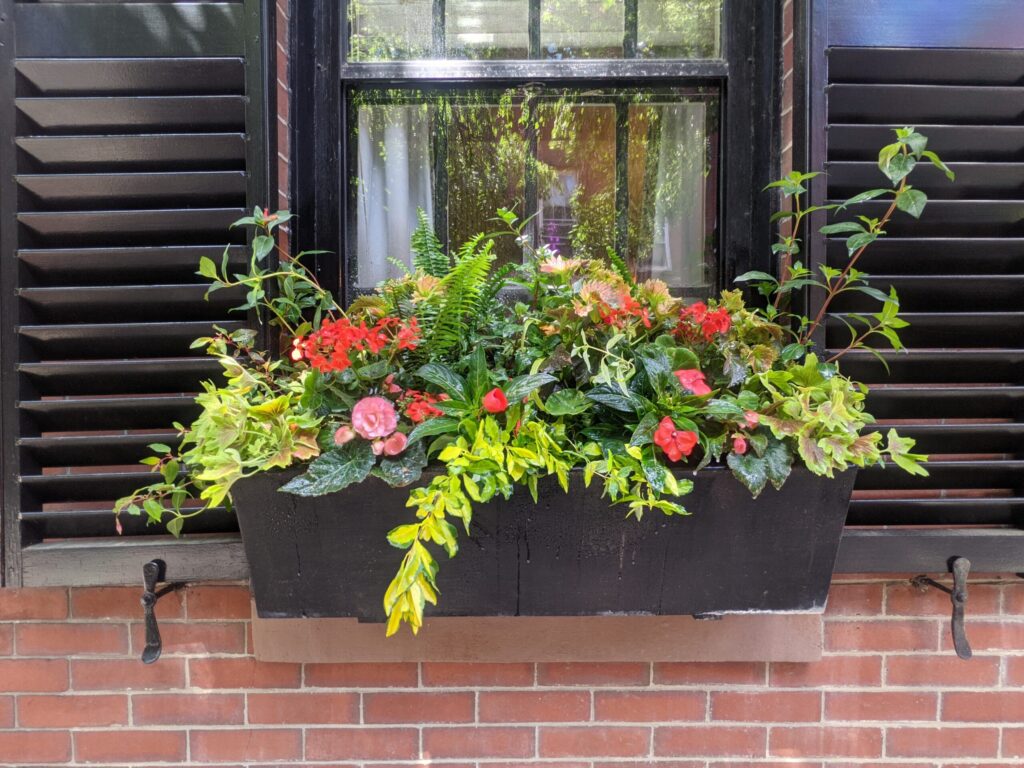
Planting and maintenance is one piece of a broader service set we run for downtown properties. We design and install full garden schemes for buildings starting from scratch, build and plant custom containers and window boxes for entries and terraces, and handle roof deck and terrace planting where structural review and wind exposure are the central design problem. Where a terrace has no hose access, we install drip irrigation systems sized to the building’s water allowance, and for evening use we add low-voltage landscape lighting that meets historic-district and building-façade lighting rules where they apply. Every one of these services is coordinated through the same building-approval process described above, so a client dealing with one management office only has to explain the rules once.
Serving Downtown Boston from Downtown Boston
Rouvalis Gardens is based at 5 Crescent St in Downtown Boston, about 1.6 miles from Downtown Boston. That proximity means a maintenance crew can make a scheduled freight window without the drive itself becoming the constraint, and it means a same-week consultation is realistic rather than aspirational. We also maintain gardens for clients in Beacon Hill and the North End using the same access-first approach, and our citywide planting and maintenance service covers neighborhoods across Boston built around this same discipline: plan the logistics, then plant.
What Our Customers Say
Frequently Asked Questions
How do you get planting materials up to a high-rise terrace downtown?
Through the building's freight elevator, scheduled in advance and coordinated with management and concierge staff. We submit our certificate of insurance and access request ahead of the visit so the crew isn't held up at the loading dock, and we pre-stage soil, plants, and containers to move in the fewest possible trips.
Is wind really a bigger issue than sunlight for downtown terraces?
On most towers above the tenth floor or so, yes. Sun exposure is usually generous, but sustained wind and gusting off surrounding buildings can shred foliage and topple containers that would be perfectly stable at street level. We choose plant material and staking specifically for that exposure.
Do you need approval from my building's management office before you start?
Almost always. Most downtown towers require a certificate of insurance, a scoped work order, and a scheduled access window before any outside crew reaches a resident terrace, roof deck, or common area. We handle that paperwork directly with your property manager.
What kind of containers do you use on load-restricted terraces?
Lightweight, engineered growing media in containers sized to your building's documented weight allowance, rather than standard nursery soil and heavy ceramic pots. On rated roof decks we often use modular planter systems that spread load more evenly across the deck.
How often do you visit for maintenance once a downtown terrace is planted?
It depends on the planting and the building's access windows, but most downtown terraces see us on a seasonal or monthly rhythm for pruning, irrigation checks, and rotation of containers, scheduled around your building's freight and concierge calendar rather than a fixed day of the week.