- Serving Boston and the Greater Boston Area

Landscape Lighting in North End, MA
There is almost no ground-level soil in the North End, and that single fact decides everything about how landscape lighting gets designed and installed here. The work happens on roof decks, at fire-escape containers, and in window boxes three and four stories up, in a neighborhood where wind off the harbor moves through the narrow streets with real force and where getting a ladder or a spool of low-voltage cable down Hanover, Salem, or Prince Street is its own logistical puzzle. We plan every North End lighting project around access first, fixture second.

What Landscape Lighting looks like in North End
Ground-mounted path lights and in-grade well lights, the default vocabulary of landscape lighting almost everywhere else, mostly do not apply here. There is no bed to sink a stake into and no lawn to wash with a wide beam. Instead the lighting plan works with what North End properties actually have: roof deck perimeters, railing lines, container plantings on fire escapes, and window boxes that read from the street below. That changes the fixture selection and the wiring strategy from the ground up.
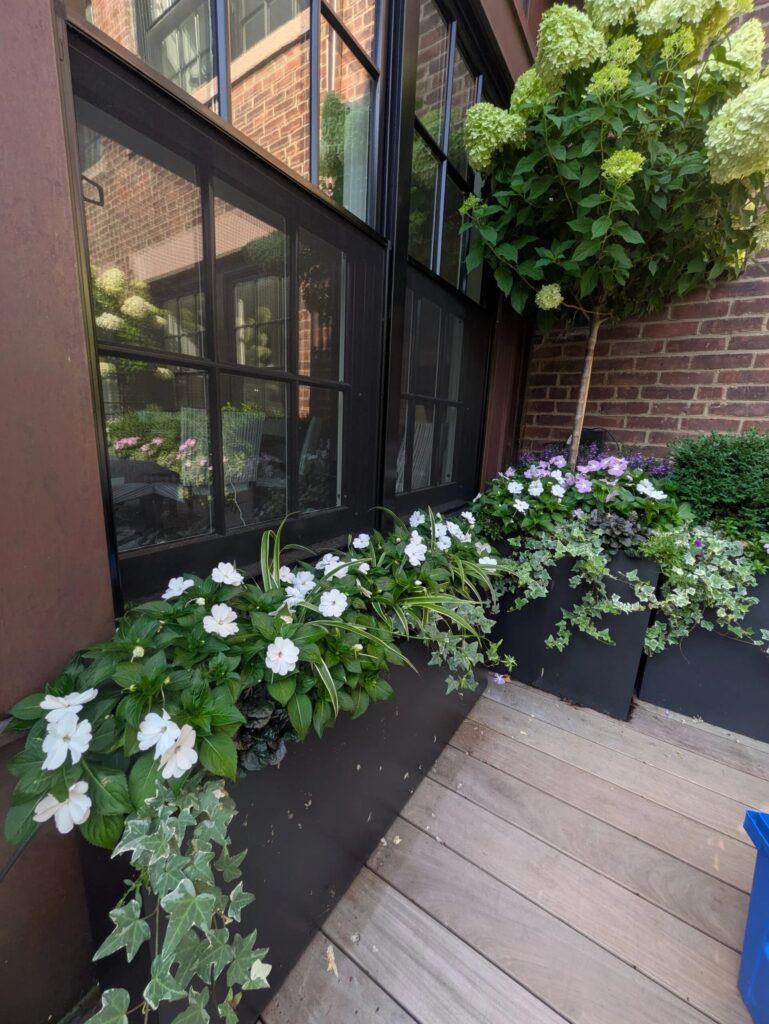
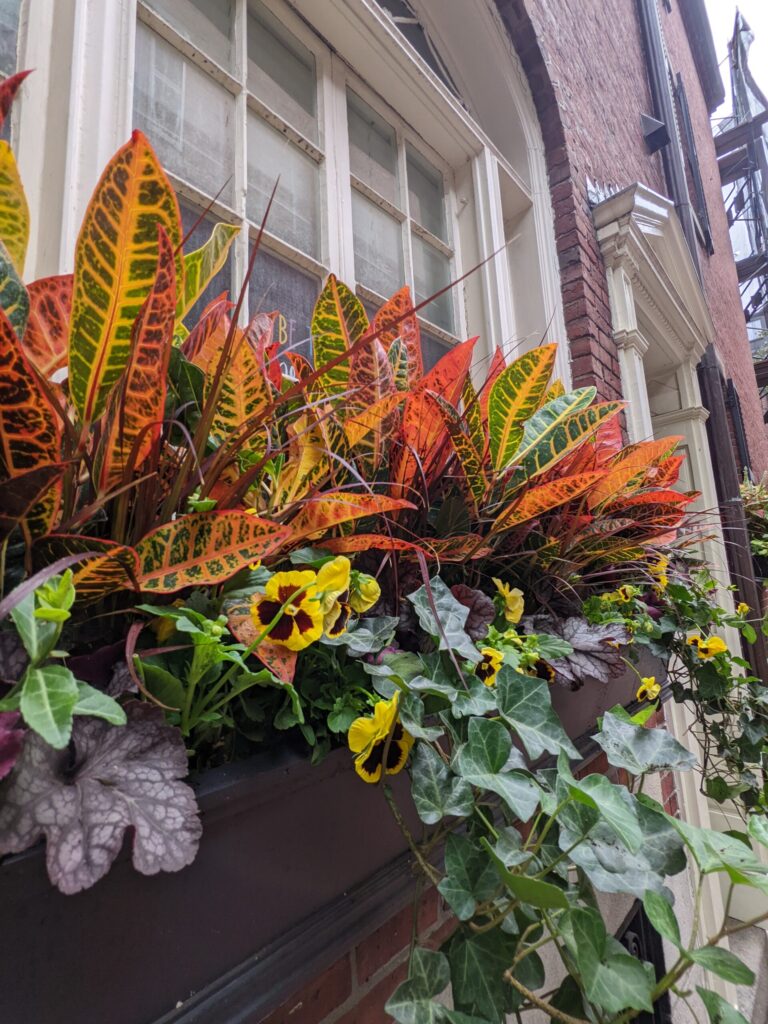
On a roof deck, we run low-voltage lines along rail caps and planter edges rather than burying them, using surface-mount channel or discreet clips rated for exposed, weather-beaten installations. Fixtures need to be genuinely marine-grade, not just labeled weather-resistant, because a North End roof deck takes salt air, direct sun, and gusts that regularly exceed what a suburban install ever sees. Fire-escape and window box lighting is smaller in scale but higher in visibility — these are often the only greenery a passerby sees on a North End block, so a well-placed small fixture on a window box does real work for the building’s presence at night.
Access shapes the installation schedule as much as the design. Many North End buildings have no elevator and no rear alley wide enough for a work cart, so materials get hand-carried up narrow stairwells in stages, and we sequence deliveries to avoid blocking the sidewalk or a neighbor’s stoop during the tourist-heavy evening hours. Anything visible from the public way, including deck-edge lighting facing a Freedom Trail-adjacent street, gets reviewed with the same restraint the North End Historic District expects of any exterior change, so fixture finish and mounting method are chosen to stay unobtrusive by day and functional by night.
What we account for here

What we account for here
No ground-level soil to work with
Nearly every North End install we do is on a roof deck, fire escape, or window box rather than in a yard. We design lighting layouts around planter rims, rail caps, and container groupings instead of garden beds, using surface-run cable and clip-mounted fixtures rather than trenched wiring.
Extreme wind exposure at height
Roof decks in the North End catch wind that a ground-floor garden never would. We spec fixtures and mounting hardware rated for sustained exposure, and we secure cable runs so wind does not work fixtures loose or fray connections over a season.
Near-impossible alley access
Many buildings have no loading access and stairwells too narrow for standard equipment. We hand-carry materials in smaller batches, schedule around foot traffic on the busiest streets, and plan the job in stages rather than a single-day install.
Historic streetscape sightlines
Fixtures visible from the sidewalk or from across the street are chosen for low profile and neutral finish, so the lighting supports the building at night without altering how it reads by day.
Recent North End work
A recurring project type in this neighborhood is a roof deck lighting refresh paired with new container plantings — rail-mounted low-voltage fixtures aimed down into deck planters, plus a handful of accent lights on the parapet edge that let the deck function well after sunset without a single floodlight visible from the street. We have also wired fire-escape window boxes on multiple buildings along the same block, coordinating with each unit’s electrical access so the work reads as one considered lighting scheme rather than a patchwork of individual fixes.
Other services we provide in North End
Landscape lighting is rarely the only need on a North End property, and we handle the rest of the exterior with the same access-first approach. That includes general garden services in North End for buildings managing rooftop and container plantings year-round, roof deck and terrace planting design for the decks that stand in for a yard, drip irrigation runs sized to reach containers spread across a deck or fire escape without a hose, and container and window box design built to survive wind and salt air across a full season. If a property spans both a roof deck and a small rear courtyard, we plan lighting and planting together so the two spaces read as one design rather than two separate jobs.
Landscape Lighting, North End, MA — 1.2 miles from North End
Our shop is at 5 Crescent St in North End, about 1.2 miles from the North End across the harbor. That proximity means we can move a crew and materials into the neighborhood on a tight access window without the trip itself eating the schedule, which matters when a job depends on a narrow stairwell or a quiet hour on the sidewalk. We also install landscape lighting in Downtown Boston and in North End itself, and for a broader view of how we approach this service across the city, see our landscape lighting in Boston overview.
Lighting details for North End courtyards
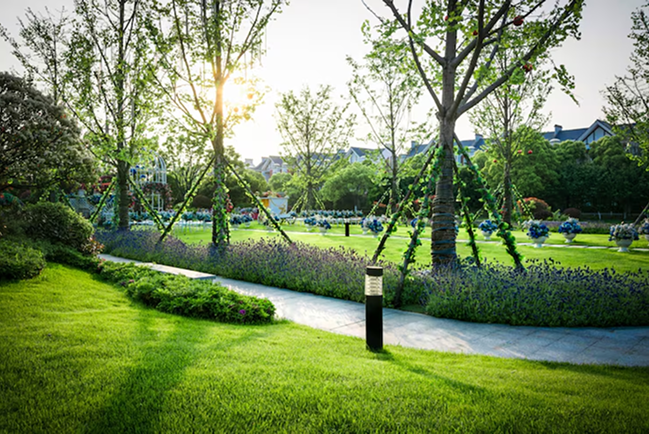
Many North End properties sit on narrow lots with brick facades and compact rear gardens, so fixtures need to earn their place. We favor low-profile path lights along tight walkways, discreet uplighting on trellises or potted trees, and soft wall washes that highlight masonry without glare.
- Compact fixtures suited to small courtyards
- Glare control near shared walls and windows
- Wiring routed to stay hidden underfoot
Why lighting design matters in North End
In North End, landscape lighting has to do more than illuminate a path — it needs to respect the tight courtyards, narrow alleys, and historic brick facades that define the neighborhood. We design fixtures and layouts that highlight container gardens, entryways, and small patio spaces without overpowering them, using low-voltage systems that fit discreetly into limited outdoor square footage.
Every install accounts for shared walls, close-set buildings, and the character these old streets already have.

Ready to plan your North End lighting install
Reach out to set up a walkthrough of your rooftop deck, alley entrance, or window boxes. We’ll map fixture placement, flag any considerations tied to your building’s historic status, and hand you a clear quote before any equipment is ordered.
- Fixture and wiring plan
- Historic property notes, if relevant
- Firm quote before purchase
What Our Customers Say
Frequently Asked Questions
Can you run landscape lighting on a North End roof deck without an electrician's permit process?
Low-voltage lighting on a transformer typically does not require the same permitting as line-voltage electrical work, which is one reason it is the practical choice for roof decks here. We handle the transformer placement and circuit planning so the install stays within that lower-voltage scope, and we flag anything that would need an electrician's involvement before work starts.
How do you get materials up to a roof deck with no elevator or loading access?
We hand-carry cable, fixtures, and transformers up in stages, scheduled around building hours and foot traffic on the street. Most North End buildings need this staged approach, and we plan the job timeline around it rather than treating it as a delay.
Will exterior lighting fixtures need Historic District approval?
Fixtures visible from the public way in the North End Historic District are reviewed for exterior appropriateness, so we select low-profile, neutral-finish fixtures and mounting methods designed to stay unobtrusive from the street. We can walk through what typically clears review before finalizing a design.
Do window box and fire escape lights need different fixtures than a roof deck?
Yes. Window box and fire escape lighting is smaller in scale and mounted closer to view from the sidewalk, so we use compact, low-glare fixtures there, while roof deck perimeter lighting uses larger, wind-rated fixtures built for open exposure at height.
How does salt air affect fixture choice in the North End?
Proximity to the harbor means real salt exposure even several blocks inland, especially at roof height. We spec marine-grade fixtures and connectors rather than standard weather-resistant hardware, which holds up far longer against corrosion in this environment.