- Serving Boston and the Greater Boston Area

Garden Maintenance in Seaport, MA
A container garden on a Seaport roof deck or harborside terrace behaves nothing like one at ground level. Wind off the harbor moves faster and drier than wind anywhere else in the city, structural engineers have already told you what your deck can hold before you planted a single pot, and salt carried in off the water will strip a plant that would otherwise thrive. Maintenance here is not a seasonal tidy-up. It is a standing irrigation and monitoring plan built around a specific building, a specific exposure, and a load limit that does not move.

What Garden Maintenance looks like in Seaport
Most of the properties we maintain in Seaport are new construction — glass towers on Seaport Boulevard, Fan Pier residences, or converted warehouse buildings near the Innovation District with a shared roof amenity or a private terrace off a single unit. None of these sites have soil in the conventional sense. Everything grows in engineered containers set on pedestal pavers or built-in planters lined for drainage, and every one of those containers sits inside a load calculation the building’s structural engineer signed off on before occupancy. That number does not move for a client who wants more plant material, and it is the first thing we confirm before proposing a maintenance plan.
Light is abundant and largely unobstructed, which sounds like an advantage until you account for what unobstructed exposure at height actually does to a plant. There is no tree canopy, no adjacent building, and often no parapet high enough to break the wind coming off the harbor. That wind dries soil and foliage far faster than a ground-level garden a mile inland, which is why irrigation on a Seaport roof is not a convenience feature — it is the difference between a planting surviving August and not. Salt spray is a second, related stressor: on the harbor-facing decks near Fan Pier and the Fish Pier, we see leaf burn on anything not selected for salt tolerance within a single season.
Access is its own variable. Some buildings have loading docks and service elevators sized for our crews and equipment; others require materials to move through a residential lobby and a passenger elevator on a scheduled window, which we coordinate with the property manager or condo association in advance. A maintenance visit in Seaport is scheduled around the building as much as around the garden.
What we account for here
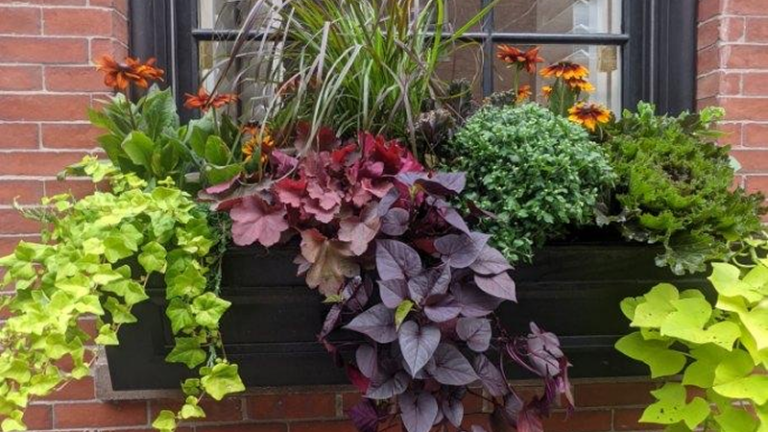
What we account for here
Wind exposure at height
Harbor wind at eight, ten, or twenty stories is a different force than street-level wind. We select structural plantings — ornamental grasses, dwarf conifers, wind-tolerant perennials — anchored properly in the container, and we avoid top-heavy specimens that catch wind like a sail.
Structural load limits
Every planter, drainage layer, and soil volume on a Seaport roof deck is weighed against the building’s engineered capacity, not against what would look best. We work from the load report on file with the property manager and select lightweight growing media and container systems that meet the aesthetic brief without exceeding it.
Salt air off the harbor
Plant selection on harbor-facing decks favors species with a genuine tolerance for salt spray — many coastal grasses and select shrubs — rather than inland ornamentals that will scorch by midsummer. We also rinse foliage after storm events that carry heavier salt.
Mandatory irrigation, not optional irrigation
Because containers dry out fast at height and in wind, drip irrigation on a timer is standard on every Seaport install we maintain, not an add-on. We check emitters and timer settings on every visit, since a single clogged line can mean a dead planting within days in July heat.
Recent Seaport work
A typical recent engagement: a residential tower on Seaport Boulevard with a shared roof amenity deck, where we replaced an existing container program that had been struggling with wind damage and inconsistent watering. We rebuilt the planting plan around wind-hardy grasses and salt-tolerant shrubs, added a zoned drip system tied to the building’s water supply, and moved to a maintenance schedule that checks irrigation performance on every visit rather than only at seasonal changeovers. The result was a deck that held its planting through a full summer of harbor wind without the die-back the previous program had seen.
Other services we provide in Seaport
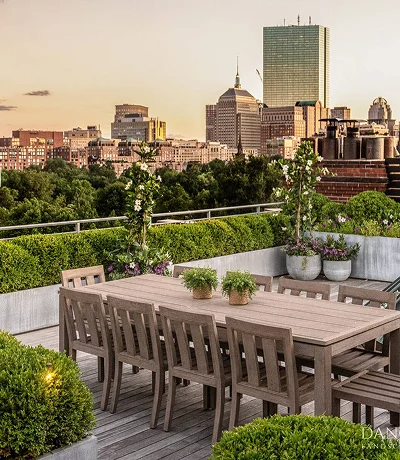
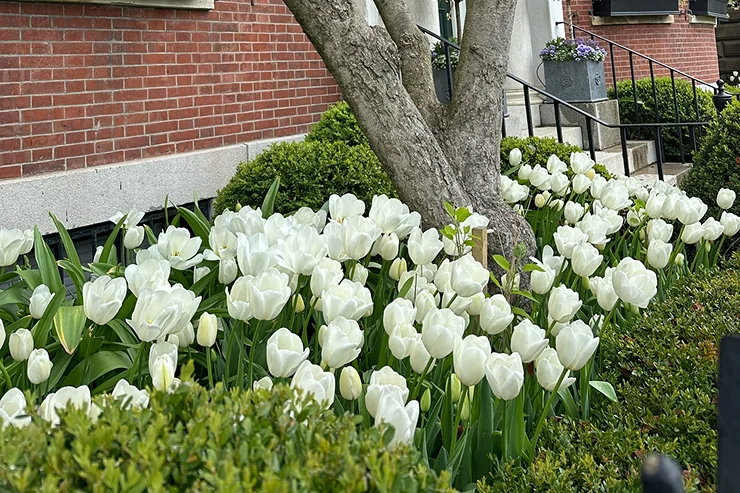
Garden maintenance is usually the second conversation, not the first. Many Seaport clients start with garden design and installation for a new roof deck or terrace, then move into an ongoing maintenance program once the planting is established. Container and window box programs are common on street-level Seaport townhouse entries and building lobbies, and roof deck and terrace planting is close to the default garden type in this neighborhood given how much of Seaport’s outdoor space sits above ground. Drip irrigation is built into nearly every install we do here for the reasons above, and low-voltage landscape lighting is a frequent addition for decks used in the evening, both for ambience and for safe footing near the parapet edge. If your property spans a full renovation rather than an existing space needing upkeep, our broader garden maintenance across Boston page covers how we scope that work citywide.
How we handle building coordination
Property managers in Seaport buildings generally require advance notice for elevator use, loading dock scheduling, and sometimes a certificate of insurance on file before crew access is granted. We handle that coordination directly with building staff so the unit owner or condo board does not have to manage logistics for every visit. Once a schedule is established, it repeats without needing to be renegotiated each time.
Seasonal changeovers at height
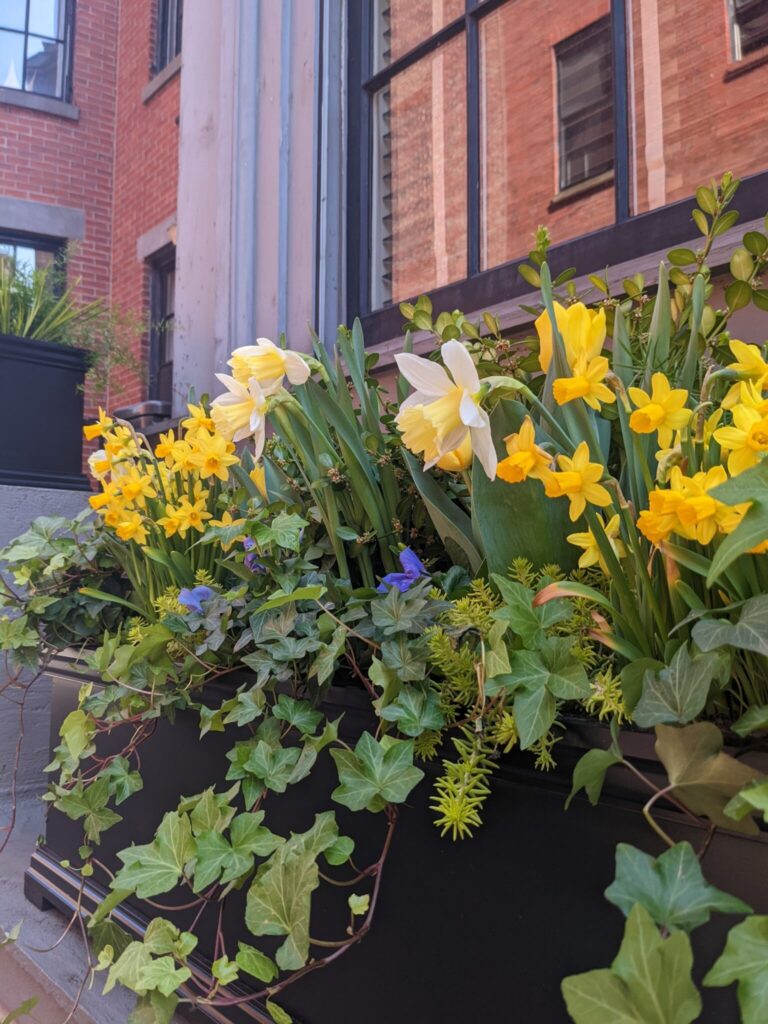
Seasonal planting changeovers on a roof deck carry more logistics than the same job at ground level — everything has to move through the same access constraints as routine maintenance, and timing has to account for wind forecasts, since a changeover day with sustained harbor gusts is not a good day to have loose soil and open containers at height. We schedule changeovers around weather windows rather than a fixed calendar date.
Start a Seaport garden maintenance plan
Rouvalis Gardens is based at 5 Crescent St in Seaport, 2.4 miles from Seaport, and we maintain roof decks and terraces throughout the neighborhood on a regular schedule. Call to arrange a site visit. We will look at your deck’s load documentation, current irrigation setup, and access arrangement with your building, then propose a maintenance plan built around what your specific property can actually support. From there, visits are scheduled directly with you or your property manager and repeat on a set cadence through the season.
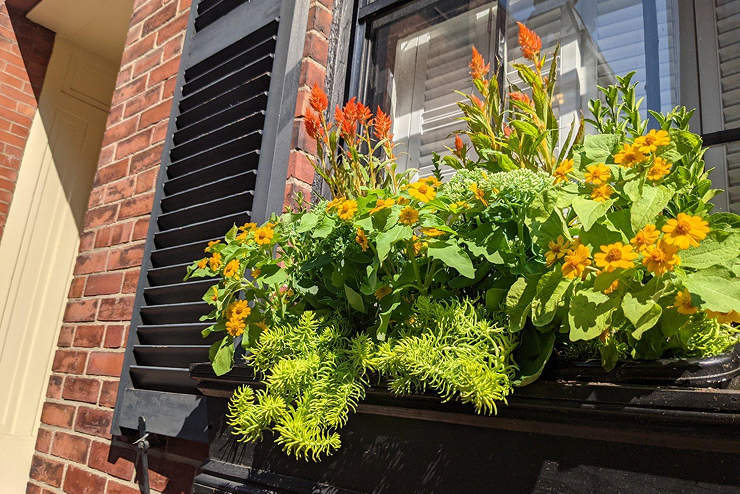
Keeping Seaport plantings on schedule
Rooftop terraces, lobby containers, and streetside beds in Seaport all move on their own clock, shaped by wind and sun exposure near the water. We check in regularly, adjusting watering, pruning, and feeding so plantings stay full and presentable through every season without gaps in care.
What Our Customers Say
Frequently Asked Questions
Is irrigation really necessary for a Seaport roof deck garden?
Yes. Containers at height dry out far faster than ground-level soil because of constant harbor wind and full sun exposure with no windbreak. We treat drip irrigation as a standard part of every Seaport install rather than an optional upgrade, and we check it on every maintenance visit.
How do you know what my roof deck can structurally support?
We work from the load documentation your building's structural engineer and property manager already have on file. That figure sets the limit for container weight, soil volume, and material choice before we propose any planting plan.
Do you coordinate with my building's property manager for access?
Yes. Many Seaport buildings require scheduled elevator or loading dock access and sometimes a certificate of insurance. We handle that coordination directly so you are not managing logistics for every visit.
Can plants actually survive the salt air near the harbor?
With the right selection, yes. We choose species with genuine salt tolerance for harbor-facing decks and terraces, and we rinse foliage after storms that carry heavier salt spray. Plants chosen for an inland setting typically fail here within a season.
How far is Rouvalis Gardens from Seaport?
Our base is at 5 Crescent St in Seaport, about 2.4 miles from Seaport. We maintain gardens throughout the neighborhood on a regular schedule.