- Serving Boston and the Greater Boston Area

Garden Maintenance in North End, MA
If your garden in the North End is a roof deck, a run of fire-escape containers, or a pair of window boxes bracketing a brick facade, standard maintenance schedules do not apply to you. There is almost no ground-level soil in this neighborhood, so nearly every planting lives in a container that dries out fast, gets hit hard by wind funneling between narrow streets, and has to be maintained by someone willing to carry tools up three or four flights or work from a ladder on Hanover or Salem Street. We built our North End maintenance program around those realities, not around a generic lawn-and-bed route.

What Garden Maintenance looks like in North End
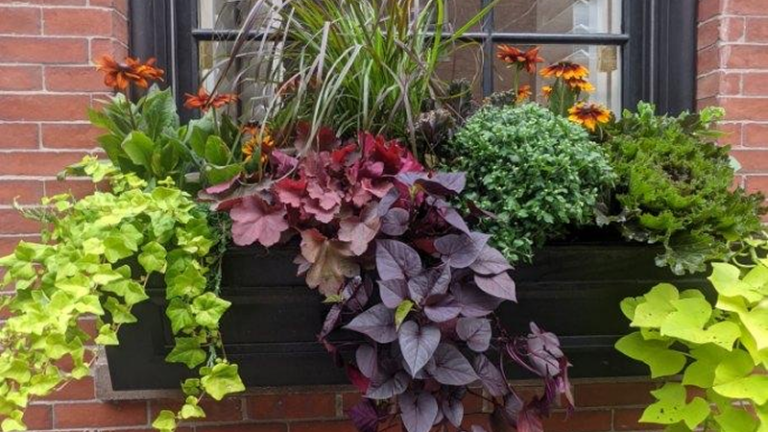
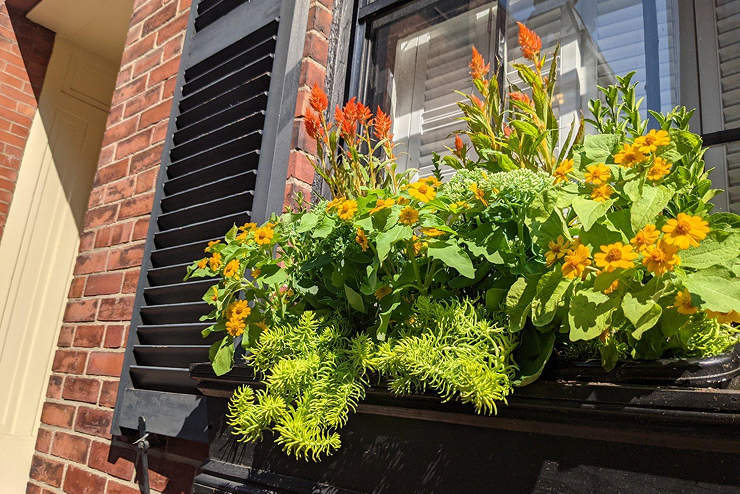
A North End maintenance visit rarely starts at ground level, because there usually isn’t any ground to start at. Most of our clients here garden three stories up on a roof deck, from a fire escape rail, or in window boxes fixed to a masonry sill that has been there since before the neighborhood had modern plumbing. That changes everything about how the work gets done.
Containers on a roof deck dry out far faster than an in-ground bed, especially with the direct sun and open exposure most North End decks get once you clear the roofline of neighboring buildings. We check moisture and adjust watering frequency block by block, not on a fixed calendar, because a deck above the Rose Kennedy Greenway corridor can dry out in half the time of one tucked behind a taller building on Prince Street.
Light is another variable that shifts house to house. A window box on a north-facing unit near Copp’s Hill gets a fraction of the sun that a roof deck two streets over gets, so plant selection and feeding schedules are set per location, not per neighborhood average. Alley access is tight or nonexistent on most North End streets, so soil, mulch, and replacement plants typically go up by hand or freight elevator rather than by truck to the door. We plan material deliveries around that constraint before the season starts, not after we discover a locked gate on the day of service.
Because so much of the North End sits under historic district guidelines, exterior changes visible from the street — window box style, deck railing plantings, anything altering the building’s public face — often need a lighter touch and sometimes a check against commission expectations before we swap in a new container or add hardware. We handle that review conversation as part of the maintenance relationship, not as a surprise mid-season.
What we account for here
What we account for here
Wind exposure on exposed decks and fire escapes
North End roof decks and fire escapes sit in a wind tunnel effect created by the narrow street grid and the harbor’s open exposure to the east. We anchor containers, choose wind-tolerant plant varieties, and stake or brace taller specimens so a February nor’easter or a summer squall off the harbor doesn’t undo a season of growth overnight.
Near-zero ground soil
With almost no in-ground planting available to most North End properties, containers and window boxes carry the entire load. We manage soil volume, drainage, and nutrient depletion aggressively in every pot, because a container has none of the buffering capacity that native ground soil provides during a dry August stretch.
Alley and stair access for materials
Getting a bag of soil or a replacement planter up to a fourth-floor roof deck on Hanover, Salem, or Fleet Street is a genuine logistical problem, not an inconvenience. We schedule bulkier material moves in advance, use hand trucks and stair carries where trucks cannot reach, and batch deliveries to minimize the number of trips through a shared entry.
Historic review on visible plantings
Window boxes and street-facing containers in parts of the North End fall under historic district guidelines that govern what is visible from the sidewalk. We keep container style and plant scale within the range that has cleared review in similar buildings nearby, so a maintenance swap does not turn into a compliance conversation.
Recent North End work
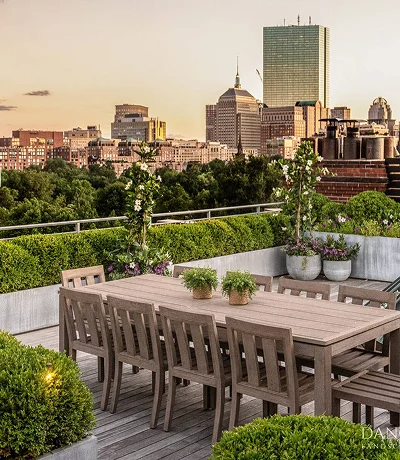
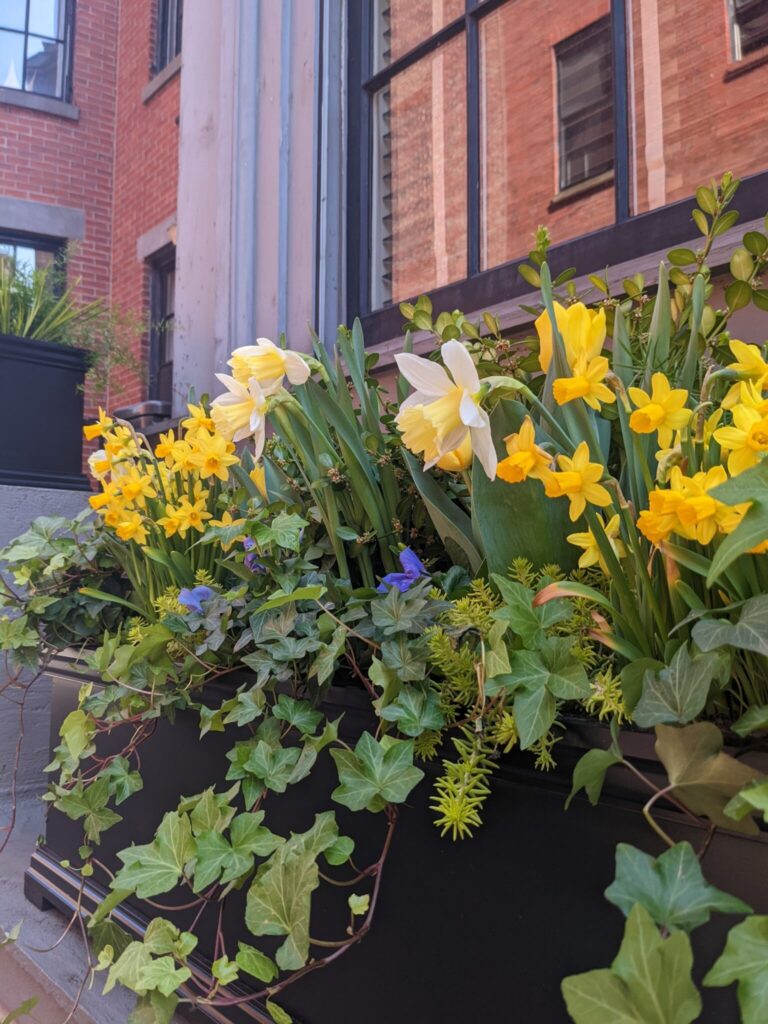
A typical recent North End engagement involves a fourth-floor roof deck near the Greenway where the prior planting scheme couldn’t survive the wind exposure — we rebuilt the container layout with lower-profile, wind-tolerant perennials and grasses, added drip irrigation run off the deck’s water line, and set a biweekly maintenance route to manage watering through the driest weeks of summer. Alongside that, we’ve handled a run of street-facing window boxes on a historic Salem Street building, where the brief was seasonal color that reads correctly from the sidewalk and stays within the building’s approved streetscape appearance.
Other services we provide in North End
Garden maintenance is one piece of what we handle for North End clients. Many of the same properties come to us first for garden design when a roof deck or window box scheme needs a full rethink rather than upkeep, or for a new roof deck and terrace planting plan once a building’s outdoor space is renovated. Because containers are the backbone of nearly every North End garden, we’re frequently asked to design or refresh containers and window boxes on their own, sometimes alongside a drip irrigation retrofit so watering holds steady during vacation weeks or a stretch of hot weather. For decks and terraces used into the evening, we also install low-voltage landscape lighting that survives the same wind and salt-tinged air the plantings contend with. If a full outdoor space is being built or reworked from scratch, our broader garden services in North End page covers design and installation together.
How North End differs from nearby Boston neighborhoods
Our North End approach isn’t interchangeable with how we maintain gardens elsewhere in the city. Compare it to our garden maintenance in Boston work broadly, or specifically to garden maintenance in Downtown Boston and North End, where ground-floor courtyards, wider truck access, and different wind patterns off the Charles change both the planting palette and the logistics. North End’s combination of near-total container dependence, tight alley access, and harbor-driven wind is a distinct maintenance problem, and we staff and schedule routes here differently because of it.
What a maintenance visit actually includes
Each visit covers watering assessment and adjustment, deadheading and pruning suited to the plant’s exposure, pest and disease checks that account for the wind-stressed conditions containers face, and seasonal transitions — spring planting, summer maintenance, fall cleanup, and winter protection for anything left out on an exposed deck. We also inspect containers, brackets, and window box hardware for wear, since a failing bracket four stories above Hanover Street is a safety issue we address immediately rather than at the next scheduled stop.
Scheduling and season planning
Most North End clients settle into a weekly or biweekly visit schedule during the growing season, with adjusted frequency in peak summer heat when container watering needs increase. We build the season’s calendar around the building’s access constraints — freight elevator hours, stair-only buildings, or gate codes — so our crew’s arrival never depends on someone being home to let them in.
Start North End garden maintenance
Rouvalis Gardens is based just 1.2 miles away in North End, and North End’s roof decks, fire escapes, and window boxes are a regular part of our route. Call to set up a consultation and we’ll walk the space, assess access and exposure, and put together a maintenance plan built around your specific building rather than a generic package. After that first call, the next step is simple: we schedule a site visit, confirm access logistics, and set your season’s maintenance calendar before the first appointment.
What Our Customers Say
Frequently Asked Questions
Can you maintain a garden with no ground-level access at all?
Yes — this describes most North End properties we work with. Roof decks, fire escapes, and window boxes are the norm here, not the exception, and our maintenance routes are built around container-based gardens rather than in-ground beds.
How do you get soil and plants up to a fourth-floor roof deck?
By hand, stair carry, or freight elevator depending on the building. We plan larger material deliveries in advance and batch them to minimize trips through shared entries, since most North End streets don't allow truck access to the door.
Do window boxes on historic North End buildings need approval before changing plants?
Street-facing window boxes and containers on buildings within North End's historic district can be subject to review for anything visible from the sidewalk. We keep seasonal changes within the range that typically clears review and flag anything that needs a closer look before we proceed.
How often do container gardens need attention in North End compared to a yard in the suburbs?
More often. Containers exposed to harbor wind and full sun dry out faster than in-ground beds, so most North End clients are on a weekly or biweekly visit schedule during the growing season rather than a monthly one.
What happens to roof deck plantings over the winter?
Exposed containers face harder freeze-thaw cycles and wind stress than ground-level plantings, so we assess which plants can overwinter in place, which need to come off the deck, and how to protect containers and hardware until spring.