- Serving Boston and the Greater Boston Area

Garden Maintenance in Downtown Boston, MA
If your terrace containers are shredded by October and your building requires two weeks’ notice before a crew can bring in tools, the problem usually isn’t the gardener — it’s the building. Downtown Boston’s towers funnel wind down plazas and across exposed terraces at speeds no ground-level garden ever contends with, and every visit has to work around a freight elevator schedule, a certificate of insurance on file with the property manager, and a load limit that dictates what can sit on the deck in the first place. Garden maintenance here is a logistics problem before it’s a horticulture problem.

What Garden Maintenance looks like in Downtown Boston
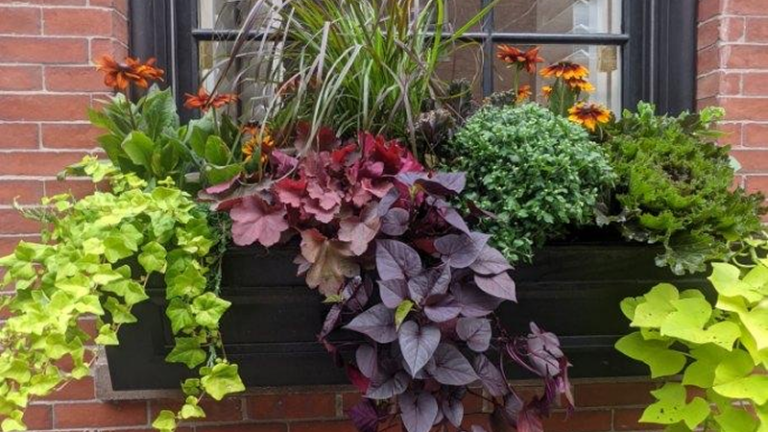
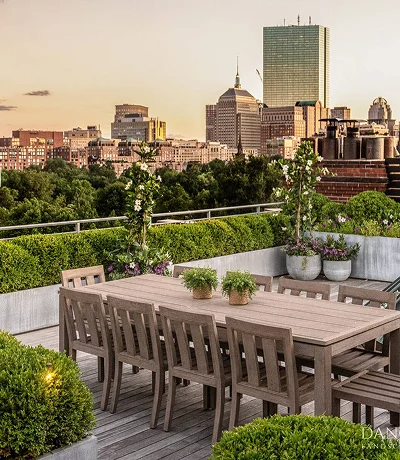
Most of our Downtown Boston clients are maintaining a planted roof deck, a recessed terrace off a high floor, or a small plaza-level bed shared with a condo association — not a traditional yard. That changes almost every assumption a maintenance program normally makes. Soil volume is fixed by planter size, not by the ground, so irrigation and feeding schedules have to be tighter and more consistent than a garden with real earth underneath it. Light is rarely the limiting factor at 20 or 30 stories up; wind is. Exposure that would be unremarkable at street level becomes a constant desiccating force on a high floor, and it dictates which plants survive a Boston winter in a container and which ones need to be swapped before the first hard frost.
Access is the other variable that shapes the whole program. A visit to a Downtown terrace usually starts in a loading dock, not a driveway. We coordinate with building management and concierge staff to book freight elevator windows, carry certificates of insurance that satisfy commercial property requirements, and move tools and material through service corridors rather than a front gate. None of that is billed as an inconvenience — it’s simply built into how we schedule Downtown routes, so a maintenance visit here runs on the same predictable cadence as one at a Back Bay townhouse, just with a different set of logistics behind it.
Weekly and biweekly visits typically cover deadheading and grooming, irrigation checks on drip lines feeding container groupings, structural pruning to keep growth from catching wind and toppling planters, and a seasonal changeover plan built around what a specific exposure can actually support through a New England winter.
What we account for here
What we account for here
Four constraints come up on nearly every Downtown property we maintain, and each one changes how the work gets done.
Wind load on planters and structures
Wind, not light, is the design constraint on most Downtown terraces. We select and stake plant material for wind tolerance first, anchor tall specimens and trellised elements against gusts that funnel between towers, and choose container weights and shapes that resist tipping rather than simply looking right on paper.
Freight elevator and delivery windows
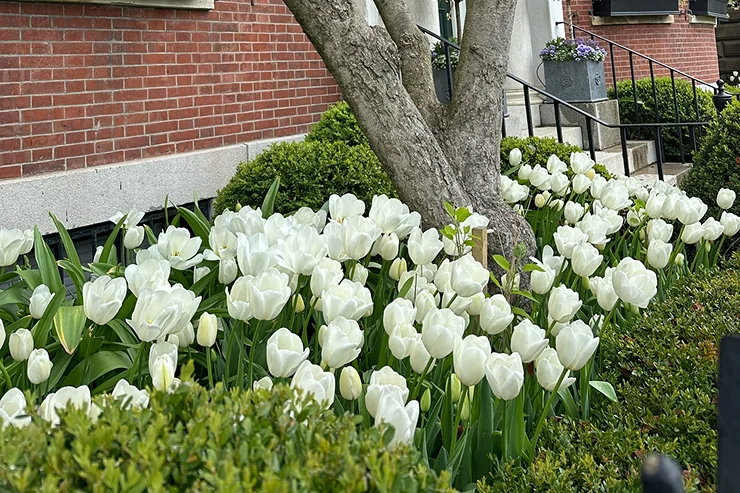
Nearly every Downtown property runs deliveries and service visits through a booked freight window rather than open access. We schedule maintenance routes around building-assigned time slots, keep material staged and ready to move quickly once we’re in the elevator, and build buffer into the route so a delayed slot doesn’t cascade into the next client’s visit.
Building management approvals
Condo associations and commercial property managers typically require a current certificate of insurance, a vendor registration, and sometimes a walk-through before ongoing access is granted. We handle that paperwork once at program start so recurring visits don’t require re-approval every time.
Structural load limits on roof decks and terraces
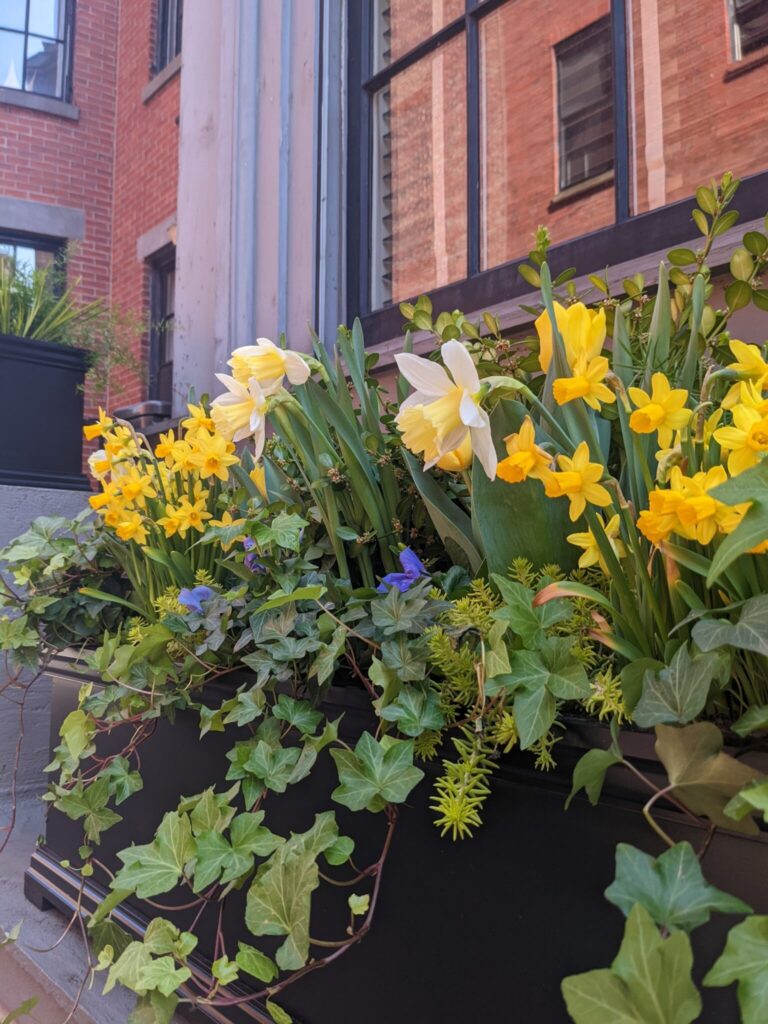
Green roof and terrace assemblies are engineered to a specific load limit, and that number governs planter size, soil volume, and how much hardscape or lighting equipment can go up. We work from the building’s engineering documentation where it exists, and default to lightweight growing media and smaller, denser plantings where it doesn’t.
Recent Downtown Boston work
A recurring project type in this neighborhood is a high-floor terrace maintained under a full-season contract: wind-tolerant perennials and evergreens in engineered lightweight containers, drip irrigation run to each grouping, and a fall changeover that swaps out anything that won’t hold through a windy Boston winter. We’ve also taken on plaza-level condo association beds where the maintenance schedule has to be coordinated with a property manager and a handful of unit owners rather than a single homeowner — a different kind of coordination, but one we’re set up to handle as part of the standard program.
Other services we provide in Downtown Boston
Garden maintenance is usually the ongoing piece of a broader relationship. Many Downtown clients start with a full garden design and installation plan for a new terrace or roof deck, then move into a maintenance contract once the planting is established. Others begin with container and window box programs for street-facing units, add seasonal maintenance across a Boston property portfolio, or bring in drip irrigation and low-voltage landscape lighting as part of the same terrace build-out. If a property spans both a Downtown tower and a townhouse elsewhere in the city, we also maintain the matching program in Beacon Hill and the North End, coordinated on the same schedule.
Start a Downtown Boston garden maintenance program
Rouvalis Gardens is based 1.6 miles away in Downtown Boston, close enough to keep Downtown routes tight and reliable without the delivery delays a farther-out crew would run into. Call to start a maintenance program: we begin with a site and building-access review — freight windows, load limits, current plant condition — then propose a visit schedule and get the paperwork your property manager needs on file before the first visit. Most Downtown clients are on a confirmed schedule within two weeks of that first call.
What Our Customers Say
Frequently Asked Questions
Can you work with our building's freight elevator schedule?
Yes. We book freight windows directly with building management or concierge staff and structure our route around the assigned time, keeping material staged so the visit moves quickly once we're inside.
Do you carry the insurance our condo association requires?
Yes. We maintain certificates of insurance suitable for commercial and residential building requirements and provide them to property management before the first scheduled visit.
Our terrace gets much more wind than sun — does that change the maintenance plan?
It changes almost everything. Plant selection, staking, container weight, and irrigation frequency are all set around wind exposure first on a high floor, since wind dries out containers and stresses plants faster than sun does.
What happens to terrace containers over a Boston winter?
Cold-hardy evergreens and structural plantings can often stay in place with extra insulation around the root zone, while more tender material is swapped for a winter arrangement or removed, depending on the exposure and the planter's material.
Is there a load limit on what we can put on our roof deck?
Most roof decks and terraces have an engineered load limit set by the building. We work from that documentation when it's available, or default to lightweight soil media and smaller container groupings when it isn't.