- Serving Boston and the Greater Boston Area

Landscape Lighting in Brookline, MA
A landscape lighting plan in Brookline has to work around a mature tree canopy, a lot size that often runs deeper than the streetscape suggests, and — in the sections closer to the Newton line — a deer population that will rub against or bed down near anything staked into a planting bed. Add a Preservation Commission review process for many streets in the Town, and the fixture layout and mounting method both need to be settled before anything goes into the ground. This is not a page about generic outdoor lighting. It is about what a low-voltage system actually needs to survive and look right on a Brookline property.

What Landscape Lighting looks like in Brookline
Brookline’s housing stock skews larger and older than much of inner Boston — Colonials and Tudors on quarter-acre-plus lots in Chestnut Hill and Cottage Farm, deep multi-family lots off Beacon Street, and the tighter, denser parcels around Coolidge Corner. That range matters because a single lighting approach does not carry across the town. A Chestnut Hill property with a long approach drive and specimen trees calls for a layered plan: uplighting on mature oaks and beeches, path lighting spaced for a longer walk, and low-glare fixtures near any pool or terrace. A Coolidge Corner triple-decker with a shared side yard needs a tighter, more restrained scheme — fewer fixtures, careful attention to what spills onto a neighbor’s window.
Soil in much of Brookline is workable loam over glacial till, generally better draining and deeper than the ledge-heavy conditions we plan around in parts of Brookline, which means wire runs and transformer placement are usually straightforward from a digging standpoint. The bigger variable is the tree canopy itself. Brookline’s mature street trees and specimen plantings throw dense, shifting shade, so fixture aiming has to account for how a beech or a copper maple will look in full leaf versus bare in winter — a light aimed well in July can wash out or miss the target entirely by November.
For properties inside a local historic district, fixture visibility from the street and any exterior conduit or mounting hardware typically needs to be reviewed before installation. We design around that from the first site visit rather than treating it as a late-stage obstacle.
What we account for here
What we account for here
Four conditions come up on nearly every Brookline project, and each one changes how the system is designed and installed.
Larger lots and layered plans
Bigger properties mean longer wire runs, multiple lighting zones, and transformers sized and placed to avoid voltage drop at the far end of the run. We plan zones — entry approach, specimen trees, terrace, rear garden — as separate circuits so a homeowner can run just the front walk lighting on a quiet weeknight without lighting the whole property.
Deer pressure near the Newton line
In the western sections of Brookline, deer move through regularly, and they will nudge, chew on, or bed against low path fixtures and wiring left exposed at the base of a shrub. We route cable below grade wherever the bed allows and choose fixture placement and mounting that keeps hardware out of browse height, rather than relying on surface staking that deer traffic will eventually disturb.
Preservation Commission districts
Large portions of Brookline fall under local historic district review, and exterior lighting changes visible from a public way can require a hearing before work begins. We handle fixture selection and placement with that review in mind from the start — favoring concealed, low-profile hardware and documenting the plan clearly enough to move through the process without delay.
Mature plantings and established root zones
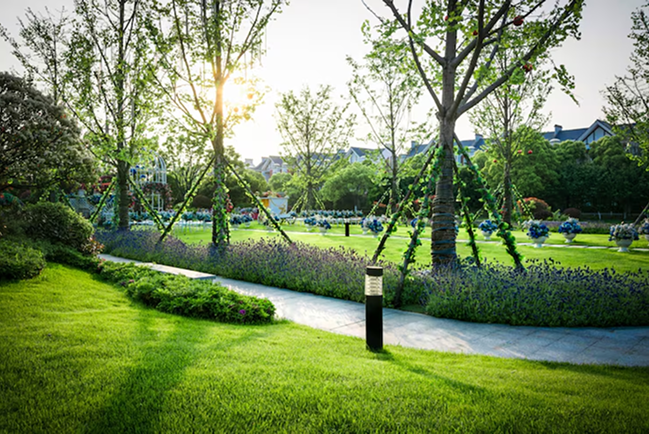
Many Brookline gardens have been developed over decades, with established shrub borders and specimen trees whose root systems are not always where a plan drawn from the street would suggest. We hand-trench near anything mature rather than running a mechanical trencher through a bed that took thirty years to establish, and we sequence installation around what’s actually growing there.
Recent Brookline work
Recent projects in Brookline have included a full lighting redesign for a Chestnut Hill property with a long tree-lined drive, where the priority was even uplighting on a row of mature maples without creating hot spots visible from the street; and a smaller, more restrained installation on a Cottage Farm lot inside a local historic district, where fixture concealment and a documented plan were part of getting the work approved. Both jobs used the same low-voltage components and the same standard of concealed wiring — the difference was scale and the review process, not the underlying craft.
Other services we provide in Brookline
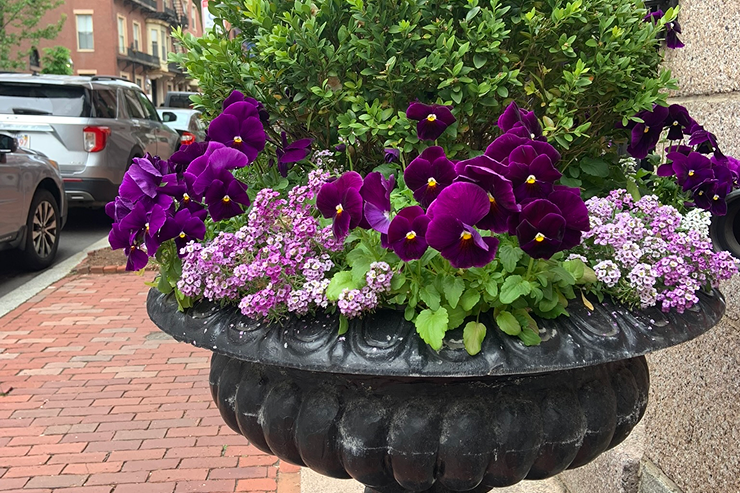
Landscape lighting is rarely the only thing a Brookline property needs. We also provide full garden services in Brookline, including garden design and installation for new plantings and renovations, fine gardening and ongoing seasonal maintenance for properties that want a consistent standard year-round, container and window box design for entries and porches, roof deck and terrace planting where outdoor square footage is at a premium, and drip irrigation systems that keep new and established plantings watered efficiently without hand-watering. Most clients start with one service and add others once they see how the work holds up through a season.
Landscape Lighting, Brookline, MA — 5.4 miles from our Brookline base
Rouvalis Gardens is based at 5 Crescent St, Brookline, MA 02129, about 5.4 miles from central Brookline. We also design and install landscape lighting across Boston, and run comparable programs for larger lots and historic properties in Winchester and in the South End. To start a Brookline project, call to schedule a site visit. We’ll walk the property, note tree canopy, review-board status, and any deer pressure on the lot, then follow up with a fixture and zoning plan before anything is installed.
What Our Customers Say
Frequently Asked Questions
Does landscape lighting in Brookline require Preservation Commission approval?
It depends on the property. Many Brookline addresses fall within a local historic district, and exterior lighting visible from a public way can require review before installation. We identify this during the initial site visit and design fixture placement and mounting with that process in mind.
How do you keep lighting fixtures and wiring safe from deer near the Newton line?
We route cable below grade wherever the planting bed allows and place fixtures out of typical browse height rather than relying on surface staking, which deer traffic in western Brookline will eventually disturb or dislodge.
Will lighting damage the root systems of mature trees and shrubs?
Not with the right method. On established Brookline lots we hand-trench near mature plantings instead of mechanically trenching, and we sequence the wire run around root zones we can see and probe for on site.
How long does a landscape lighting installation take in Brookline?
A straightforward front-entry or path lighting project can often be completed in a day or two. Larger lots with multiple zones, longer wire runs, or Preservation Commission review typically take longer, and we'll give a realistic timeline after the site visit.
Can you design lighting for a shared or narrow side-yard lot near Coolidge Corner?
Yes. Denser Brookline lots need a more restrained plan — fewer fixtures, careful aiming so light doesn't spill onto an adjacent property, and hardware selected for a tighter footprint than what we'd use on a larger Chestnut Hill lot.