- Serving Boston and the Greater Boston Area

Planting & Maintenance in Lexington, MA
If your Lexington property sits inside a historic district, your planting plan needs sign-off before it goes in the ground, and if it sits near open fields or conservation land, your hostas will not survive the season without a deer strategy. Add the full, unshaded sun that many Colonial-era lots get across their front lawns, and you have three constraints working against each other at once. We plan for all three from the first site visit, not as an afterthought once something has already failed or been rejected.

What Planting & Maintenance looks like in Lexington
Lexington’s housing stock skews older and more architecturally protected than most of the towns we work in west of Boston. A large share of the properties we maintain here — particularly along and near the historic district around Battle Green — are subject to design review for anything visible from the street, which includes hedging, foundation beds, and in some cases the style of a window box. That review process shapes our plant selection before it shapes anything else: we default to species and forms with a documented track record of approval in Lexington, rather than proposing something novel and hoping it clears committee.
Beyond the review question, the physical conditions are distinct. Many of these lots were laid out two centuries before anyone thought about afternoon shade, so the front and side yards often sit in open sun with little canopy relief. That means soil dries out faster than the plant list would suggest, and irrigation has to be designed around real exposure, not textbook averages. At the same time, Lexington’s proximity to conservation land, town greenways, and larger, less-fenced residential lots means deer pressure is a daily fact of life rather than an occasional nuisance. A planting plan that ignores this reality gets grazed to stubs by June regardless of how well it was designed on paper.
Our maintenance visits here are built around those two pressures — sun exposure and deer — with irrigation checks and browse damage assessment as standing line items, not add-ons we mention after something goes wrong.
What we account for here
What we account for here
Four conditions come up on nearly every Lexington property we take on. Here is how each one is actually handled, not just acknowledged.
Historic district and Battle Green area review
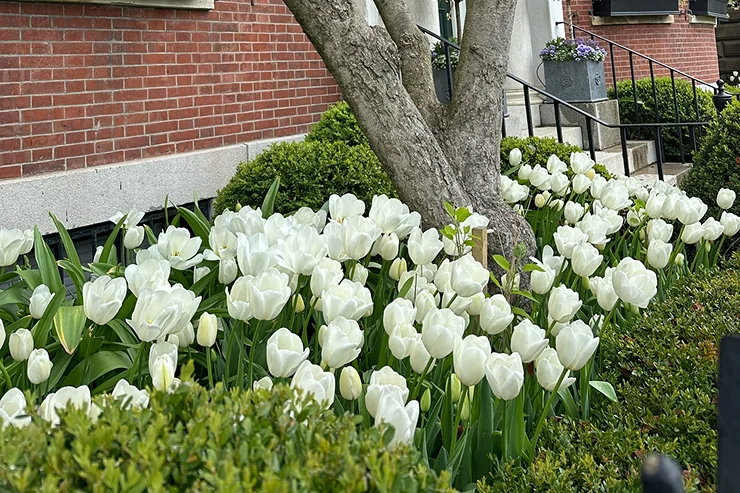
Properties within Lexington’s historic district, and many just outside it, require that street-facing plantings, fencing, and structures fit within guidelines set by the town’s Historic Districts Commission. We prepare planting plans with this review in mind from the outset — species, mature form, and placement all get checked against what has historically been approved on comparable lots before a plan is presented to a homeowner, let alone a board.
Deer pressure from adjacent open land
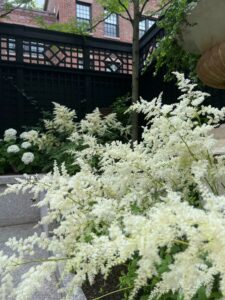
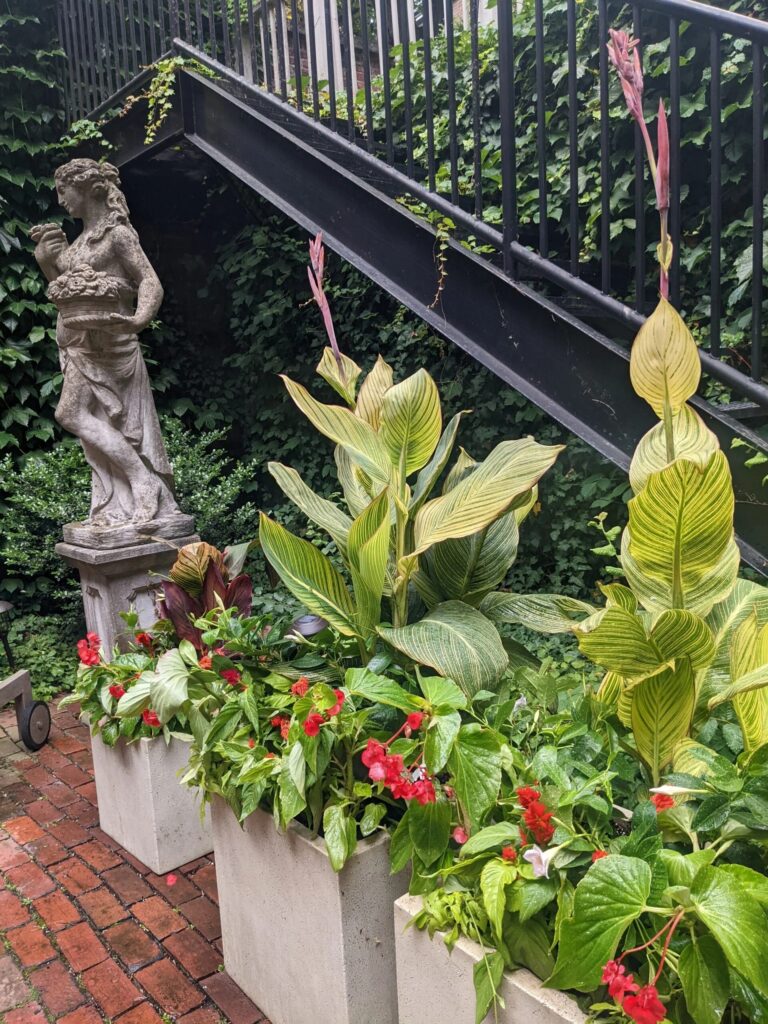
Lexington’s conservation trails, larger unfenced lots, and greenbelt corridors put real browse pressure on any bed that isn’t planned for it. We build palettes weighted toward plants deer reliably avoid — boxwood, andromeda, most ornamental grasses, many herbs — and reserve anything deer find palatable for protected zones close to the house or behind low-voltage fencing where it will not draw attention from a review board.
Open sun with minimal canopy cover
Colonial-era lots in Lexington were often cleared well before mature shade trees existed, and many still carry that open exposure today. We size drip irrigation zones to the actual sun load a bed receives rather than a generic zone plan, and we choose plant material that tolerates full sun without constant supplemental watering once established, which keeps maintenance visits productive instead of reactive.
Seasonal transitions on older, less-amended soil
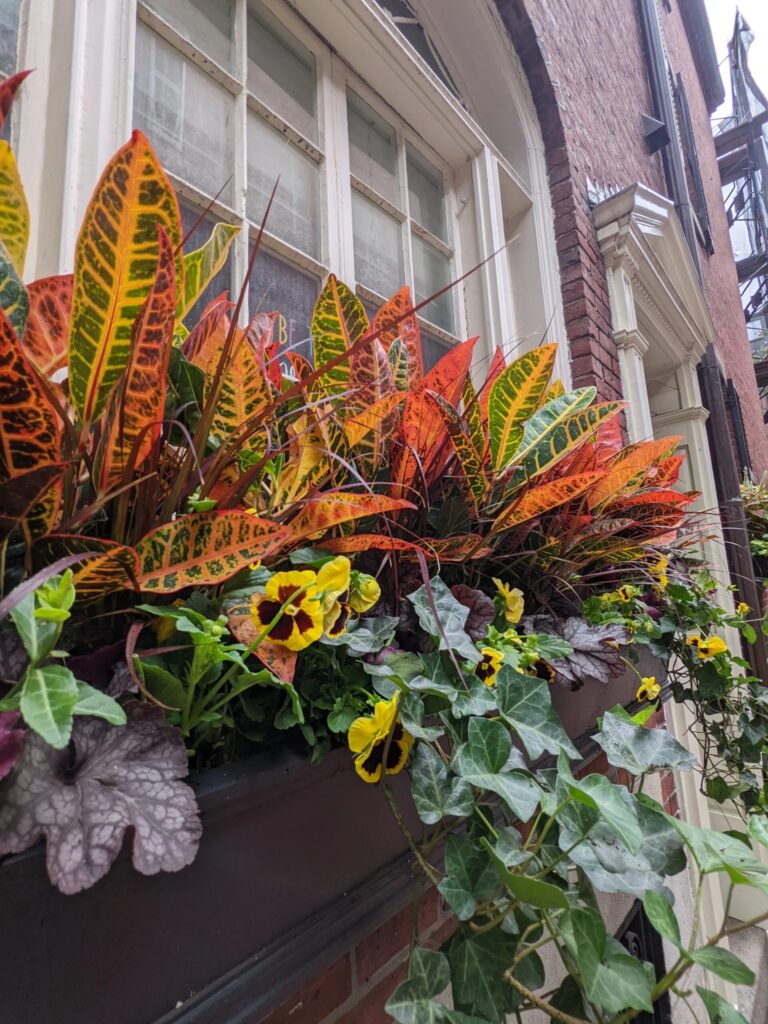
A lot of Lexington’s original topsoil has been worked, compacted, or thinned over generations of use, and it does not hold moisture or nutrients the way newer amended beds do. Our maintenance program includes soil-building as a routine task — top-dressing, targeted amendment, and mulch depth checks each season — so the planting plan keeps performing instead of declining year over year.
Recent Lexington work
A recent Lexington project involved reworking the front foundation beds of a Colonial-era home inside the historic district: replacing a deer-damaged, sun-stressed planting with a palette pre-checked against district guidelines, paired with a new drip zone sized for the property’s full southern exposure. Work like this is typical of what we do across Lexington — matching plant selection to both the review process and the site’s actual light and browse conditions, rather than treating either as a footnote.
Other services we provide in Lexington
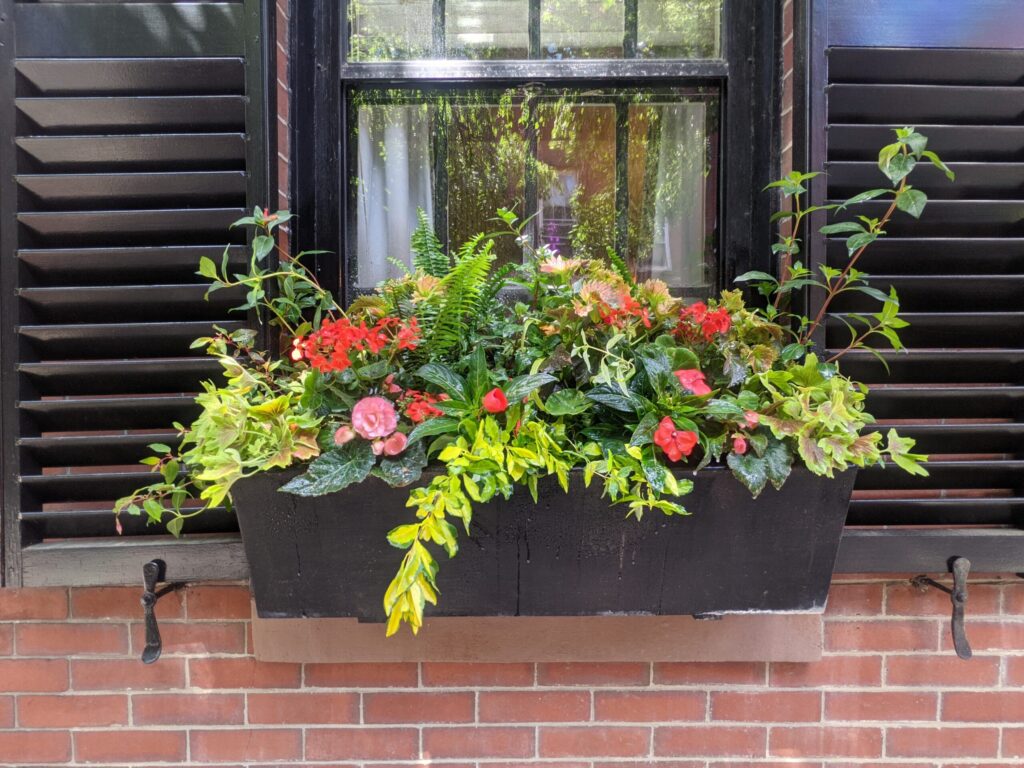
Planting and maintenance is one piece of a broader garden services program in Lexington that most of our clients here eventually use in full. Many of the same historic-district and deer-pressure considerations apply directly to garden design and installation, where we set the bones of a property before planting ever begins. Roof deck and terrace planting comes up less often in Lexington than in Boston proper, given the town’s lower-density lot sizes, but it is still relevant for the handful of properties with elevated outdoor living space. Containers and window boxes are frequently the specific element that needs historic district approval, since they are visible from the street on nearly every Colonial-era facade, and we handle that approval process as part of the design work. Drip irrigation is standard on almost every Lexington property we maintain, given the open-sun conditions described above, and low-voltage landscape lighting is a common addition for homeowners who want their front plantings, stone walls, or specimen trees visible after dark without violating district lighting restrictions. If you are weighing which of these to start with, a single consultation covers all of it.
Rouvalis Gardens is based at 5 Crescent St, Lexington, MA
Rouvalis Gardens operates out of 5 Crescent St in Lexington, roughly 10.2 miles from Lexington. We schedule Lexington maintenance and installation visits on the same weekly routes we run for other western suburb clients, so response times for pruning, irrigation checks, and seasonal planting stay consistent rather than being treated as a special trip. If you also need work done closer to Boston, we cover the same service in Boston, and if your property sits further out, we run identical crews and plant standards in Weston and Newton.
What Our Customers Say
Frequently Asked Questions
Do you handle Historic Districts Commission approval for planting plans in Lexington?
We prepare planting plans with the Commission's guidelines in mind from the start, and we can attend or support a hearing if a homeowner needs it. Because we work regularly on properties in and near the district, our plant lists are already weighted toward species with a track record of approval, which shortens the review process considerably.
What do you actually plant to keep deer from destroying a Lexington garden?
We lean on species deer reliably leave alone, such as boxwood, andromeda, most ornamental grasses, and many culinary herbs, and we place anything more vulnerable in protected zones near the house or behind unobtrusive low fencing. This is standard practice given how much conservation and open land borders Lexington's residential streets.
My front yard gets sun all day with almost no shade. Does that change your maintenance approach?
Yes. Open, unshaded exposure is common on Lexington's older Colonial lots, and it changes both plant selection and irrigation sizing. We design drip zones around the actual sun load rather than a standard template, and we choose sun-tolerant material so beds are not stressed by midsummer.
Can you maintain a garden that's already inside the historic district without new approvals?
In most cases, yes. Routine maintenance — pruning, seasonal color rotation within an already-approved bed, irrigation servicing — typically does not trigger a new review. New plantings or changes visible from the street are what generally require a fresh look from the Commission.
How far is Lexington from your Lexington location, and does that affect scheduling?
Lexington is about 10.2 miles from our Lexington base. We run regular maintenance routes through the western suburbs, so Lexington properties are scheduled on the same recurring basis as our Boston clients rather than as occasional out-of-area visits.