- Serving Boston and the Greater Boston Area

Planting & Maintenance in Newton, MA
A foundation bed on a Newton Centre or Waban lot rarely fails for lack of a plan — it fails because the deer found it, the mature canopy left it too dark for what was planted thirty years ago, or a removal got tangled in the town’s tree ordinance before anyone thought to check. Newton’s older villages were platted tight, planted early, and shaded heavily, and any planting and maintenance program here has to work around those three facts before it works around anything else. That is the job, and it is a different job from the one we do on an open lot in the western suburbs.

What Planting & Maintenance looks like in Newton
Newton is a city of villages — Newtonville, Auburndale, Chestnut Hill, Waban, Newton Centre, Newton Highlands — and each one carries its own version of the same problem set: lots platted in the early 1900s with foundation plantings that have since matured into deep shade, narrow side yards that limit equipment access, and a deer population that treats hosta, arborvitae, and yew as a standing buffet. A planting plan that ignores any one of these three tends to look good for a season and then quietly fail.
We start by reading the light. Many Newton foundation beds sit under 60- to 80-year-old oaks, maples, and the odd remaining elm, and what was full sun when the house was built is now dense shade by mid-June. That changes the plant palette entirely — away from sun-loving perennials and toward shade-tolerant natives and deer-resistant selections that can actually survive without a fence. We also account for soil that has been undisturbed and root-bound for decades near these older trees, which changes how we amend and where we can safely dig without damaging root structure the town has an interest in protecting.
Access matters more in Newton than in newer towns. A lot of Chestnut Hill and Newton Centre properties have narrow driveways or no rear vehicle access at all, so maintenance crews plan equipment and material staging in advance rather than discovering the constraint on arrival. And because Newton’s Tree Preservation Ordinance governs removal of trees above a certain diameter on both public and, in some cases, private property, any planting plan that involves taking something out — even a declining specimen crowding a bed — gets checked against that ordinance before it gets scheduled, not after.
What we account for here
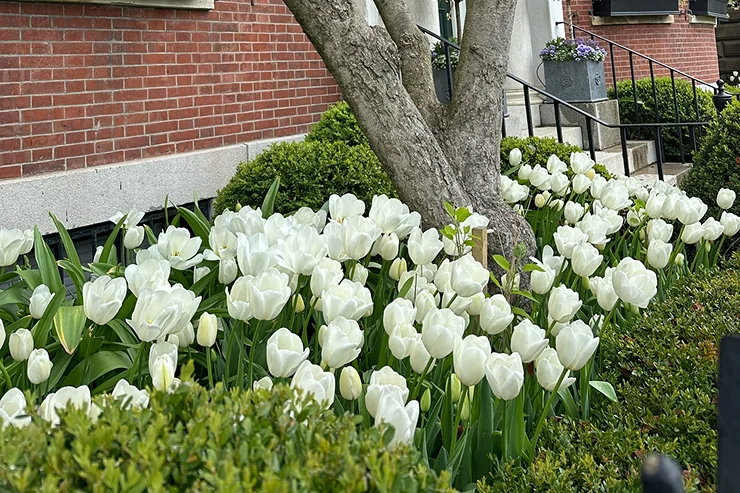
What we account for here
Newton’s clay-heavy soils, established tree canopy, and village-by-village microclimates all shape how we plant and maintain beds. We factor in drainage, root zones, and seasonal watering needs before selecting plants, so your landscape settles in and thrives long-term.
Deer pressure on foundation beds
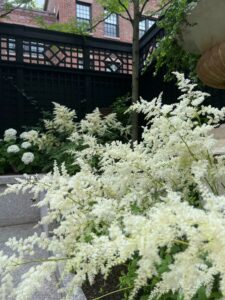
Newton’s tree canopy and proximity to the Charles River reservation corridor support a deer population that will strip a newly planted bed in a single season if the palette is wrong. We plan around this with deer-resistant selections — boxwood, andromeda, certain hellebores and ferns — rather than relying on repellent sprays as the primary defense, since sprays require reapplication schedules that most property owners do not want to manage themselves.
Mature shade from established canopy
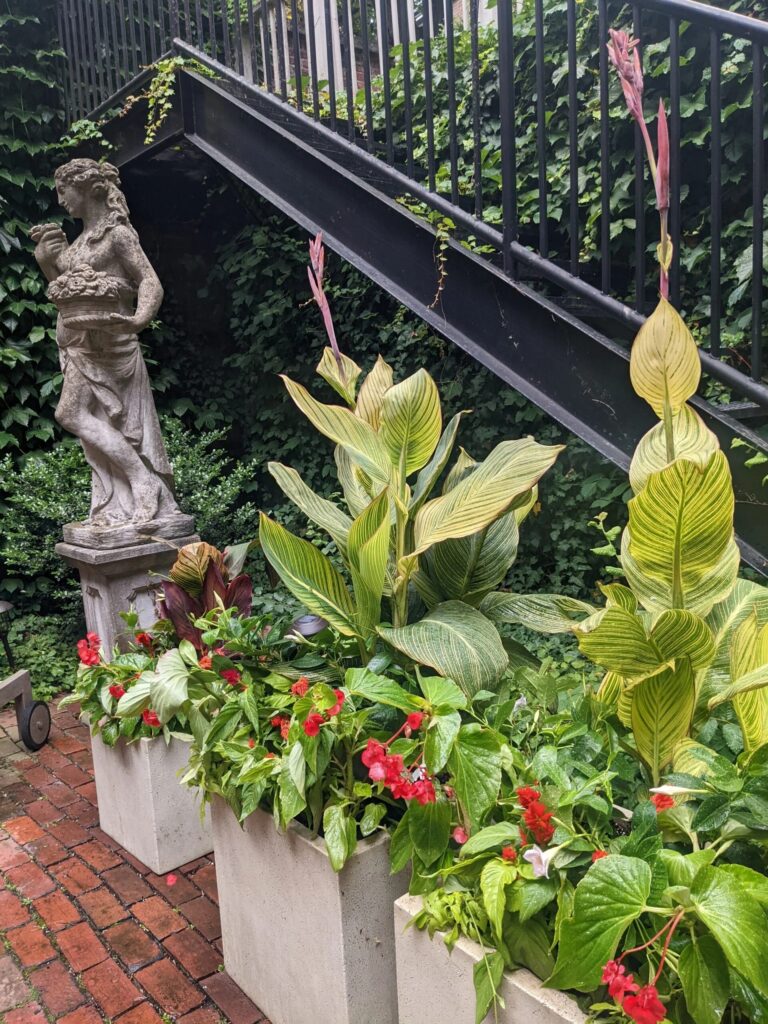
Decades-old oaks and maples on classic Newton lots cast shade that shifts as the trees age, so a bed planted for partial sun ten years ago may now sit in near-total shade. We reassess light conditions as part of ongoing maintenance rather than assuming the original planting plan still applies, and we adjust the palette accordingly instead of continuing to fight the canopy.
Root competition and undisturbed soil
Beds tucked against mature trees often have compacted, root-bound soil that has not been worked in years. We amend carefully and dig selectively to avoid damaging structural roots, since root damage near a large canopy tree can affect both the tree’s health and its standing under the town’s preservation rules.
Tree ordinance compliance on removals
Newton regulates removal of trees over a set diameter, including in some cases trees on private property near the street line or in designated zones. Before any planting plan calls for taking a tree out to open up light or make room for new beds, we confirm what the ordinance requires and handle the paperwork side rather than leaving a homeowner to discover a violation after the fact.
Recent Newton work
Recent work in Newton has generally fallen into one of two categories: renovating a decades-old foundation planting that has gone leggy and shade-starved under a mature canopy, and building deer-resistant perennial borders for homeowners who had given up on flowering plants entirely after repeated losses. Both project types share the same starting point — an honest light and browse assessment before a single plant goes in the ground — rather than reusing a stock plan that ignores what the property is actually doing.
Other services we provide in Newton
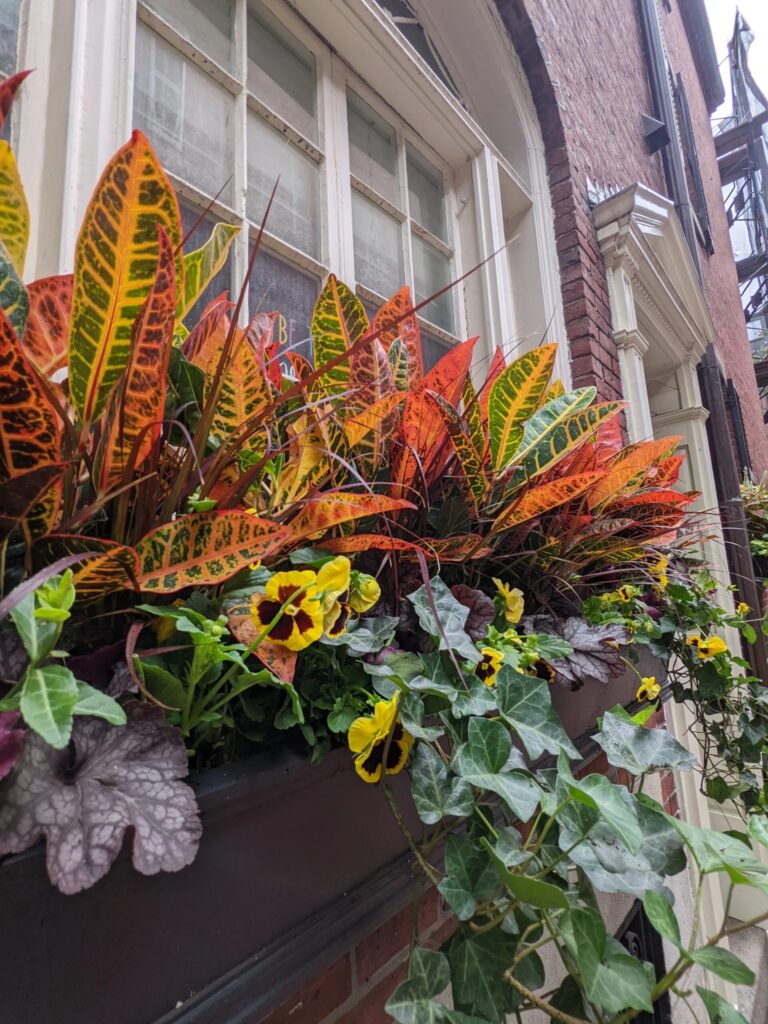
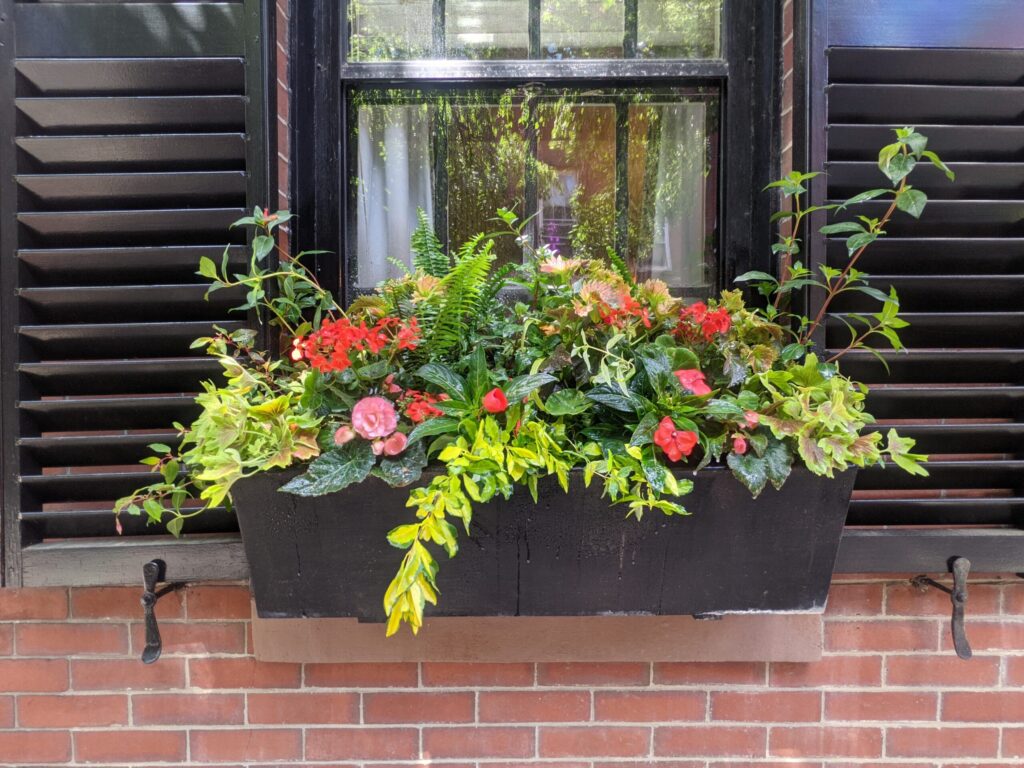
Planting and maintenance is one piece of a broader program we run for Newton clients. Many of the same properties also use us for general garden services in Newton, drip irrigation to keep new plantings alive through dry summer stretches without hand-watering, low-voltage landscape lighting to make the most of a shaded front walk after dark, container and window box plantings for houses where street-facing curb appeal matters, and roof deck or terrace planting for the newer condo and multi-family buildings along Washington Street and Needham Street. Seasonal cleanup, bed edging, and pruning of overgrown foundation shrubs typically run alongside the core planting and maintenance program rather than as separate, disconnected visits.
Nearby coverage
We run the same planting and maintenance program in comparable towns nearby — see our work in Lexington and Winchester, both of which share Newton’s mix of mature canopy, historic-era lots, and deer pressure. For a broader look at how this service works across the region, our Boston planting and maintenance page covers the fundamentals in more detail.
What Our Customers Say
Frequently Asked Questions
Do you deal with the Newton tree ordinance for us?
Yes. Before any planting plan calls for removing a tree above the regulated diameter, we check the requirement and handle the permitting process rather than leaving it to the homeowner.
Can you actually keep deer away from new plantings?
We plan around deer pressure by choosing resistant plant material first — boxwood, andromeda, ferns, certain hellebores — rather than relying only on repellent sprays, which need frequent reapplication most homeowners don't want to manage.
Our foundation beds get almost no sun anymore. Can they be replanted?
Yes. This is common on older Newton lots where the canopy has matured well past what the original planting plan assumed. We reassess actual light levels and choose a shade-appropriate palette instead of reusing plants that were suited to the yard as it looked decades ago.
Do you work on properties with tight or no rear access?
Yes. Many Newton village lots have narrow driveways or no vehicle access to the back yard. We plan equipment and material staging around that constraint before scheduling the work, not after crews arrive.
How far is Newton from your Newton location?
About 8.6 miles. We schedule Newton planting and maintenance visits on a regular route through the western suburbs, so travel distance doesn't affect scheduling flexibility.