- Serving Boston and the Greater Boston Area

Planting & Maintenance in Winchester, MA
A bed planted for a flat, full-sun yard in Belmont will not hold up on a sloped lot above the Mystic Lakes, and it will not survive the deer that move through Winchester’s wooded side streets on a predictable evening schedule. Between the lake-adjacent grading, the mature oak canopy that many homes were built under, and browse pressure that ranges from occasional to constant depending on which side of town you’re on, planting here needs to be chosen and placed for the specific lot, not for a generic New England garden.

What Planting & Maintenance looks like in Winchester
Winchester properties fall into a few recognizable patterns, and each changes how we plant and maintain them. Homes near the Lakeview and Ridgefield areas along the Mystic Lakes often sit on grades that shed water fast, which means bed edges erode and mulch migrates unless the planting is designed with the slope in mind rather than against it. We terrace where it makes sense, choose root systems that hold soil, and route drip irrigation so water soaks in rather than sheeting downhill.
Then there’s the canopy. Winchester’s oak cover, particularly around the Symmes and Wedgemere neighborhoods, means a lot of the planting we do is shade-tolerant by necessity, not preference — and it means soil under those oaks is often compacted, acidic, and root-competitive. We test and amend before we plant, not after something fails.
Deer are the third constant. Winchester’s pressure is real and uneven — some blocks barely see them, others get worked over every night. We plan every planting list around what’s actually browsing that specific street, not a town-wide assumption, and we maintain plantings with an eye toward what’s been nibbled since the last visit so we can adjust before it becomes a bare patch.
Maintenance visits here also account for oak leaf drop, which is heavier and later than most of Boston’s suburbs, and for the acorn mess that follows in fall — both of which affect bed cleanup scheduling and mulch timing.
What we account for here
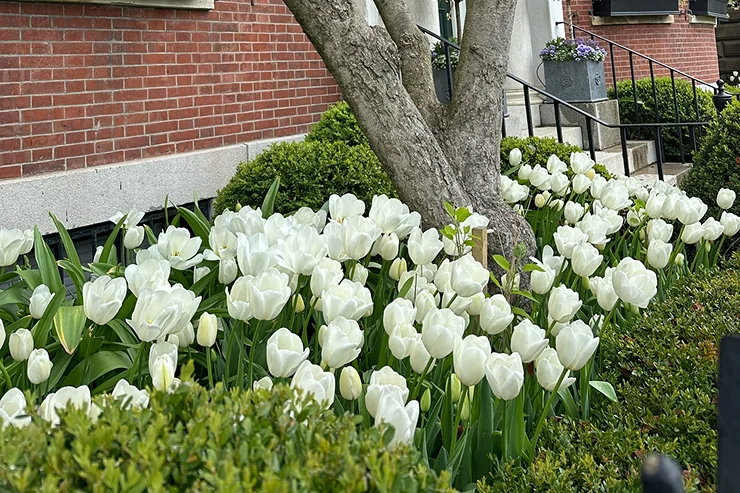
What we account for here
Deer pressure that varies block by block
We don’t hand every Winchester client the same deer-resistant list. Plant selection is matched to the actual pressure on that street, with repellent programs and physical protection for young plantings layered in where browse history warrants it.
Slopes near the Mystic Lakes
Grading toward the water changes how beds are built and how irrigation is zoned. We terrace, stabilize with deep-rooted plantings, and set drip lines to slow water down instead of letting it run off before it’s absorbed.
Mature oak canopy and root competition
Dense shade and compacted, root-filled soil under legacy oaks call for a different plant palette and different soil prep than an open lot. We amend in place and select species that actually perform in that light and root environment.
Seasonal debris load
Heavy leaf and acorn drop from oak-dominant lots pushes cleanup and mulch timing later in the season than a typical Boston-area schedule, and we plan maintenance visits around that reality rather than a fixed calendar.
Recent Winchester work
Recent work in town has included re-planting a lakeside slope near the Mystic Lakes where erosion and deer browse had thinned out an existing bed, replacing failing plantings under a heavy oak canopy with a shade- and deer-tolerant palette, and setting up a maintenance program for a sloped Wedgemere-area property that pairs seasonal planting rotations with drip irrigation adjustments as the grade dries out through summer.
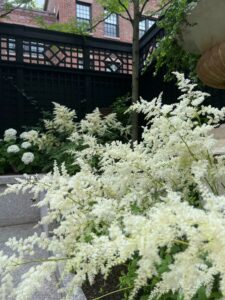
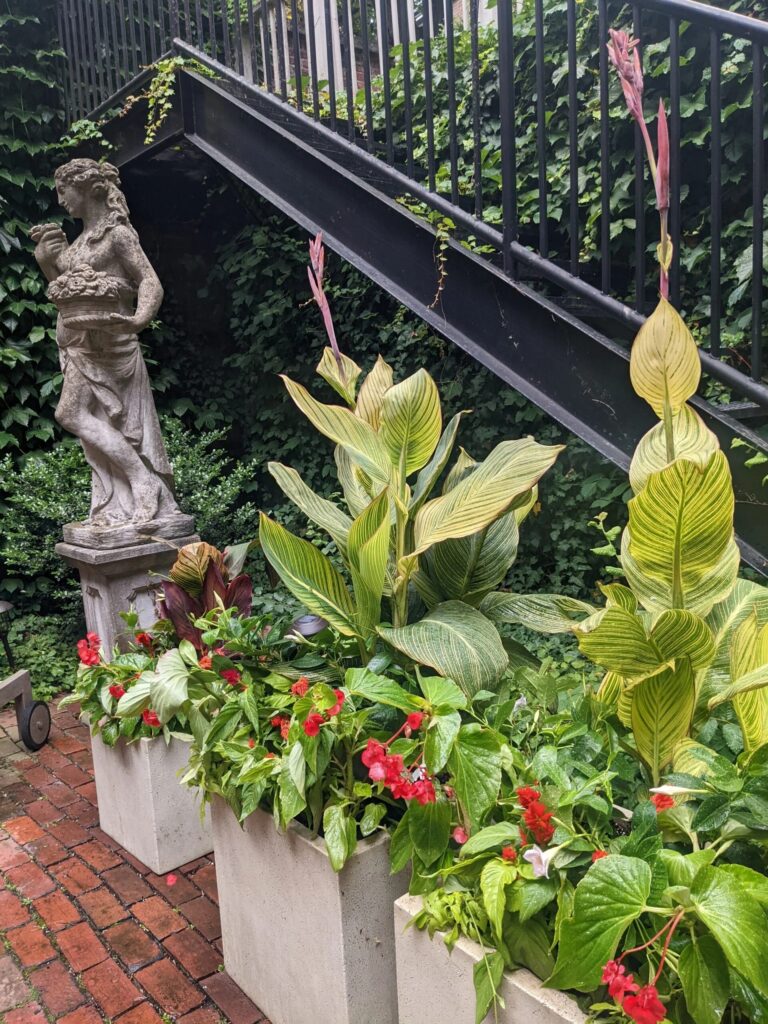
Other services we provide in Winchester
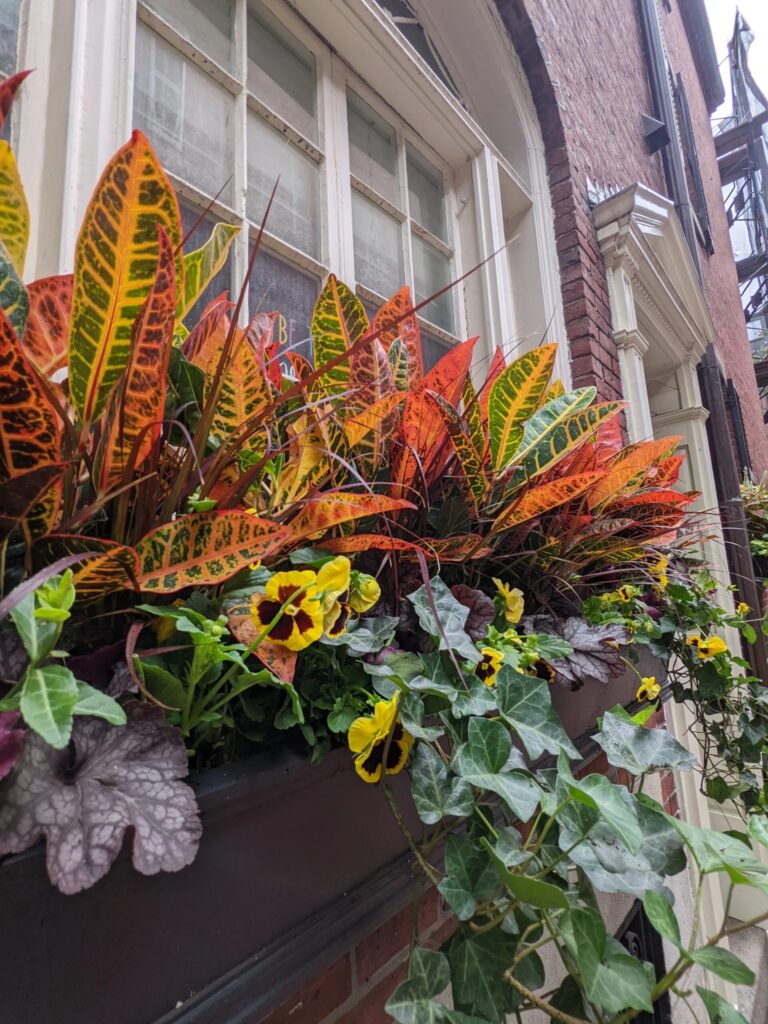
Planting and maintenance is one piece of a broader Winchester program most clients build over time. We design and install new gardens suited to lake-adjacent and wooded lots, build containers and window boxes for entries and porches, plant roof decks and terraces where the site allows, run drip irrigation to keep sloped beds properly watered without runoff, and install low-voltage landscape lighting to handle the deep shadow that oak canopy throws across a property after dark. For the full range, see garden services in Winchester.
How this compares across nearby towns
Winchester’s combination of lakeside grading, oak canopy, and uneven deer pressure is a distinct set of conditions, but the underlying planting and maintenance approach is one we also run in Newton and Brookline, and at broader scale across the city through our Boston planting and maintenance service. Each town gets a plan built around its own lots, not a copy of another neighborhood’s.
Getting started
Rouvalis Gardens is based at 5 Crescent St in Winchester, roughly 6.9 miles from Winchester — a straightforward trip up Route 93 or the Fellsway that keeps regular maintenance visits and seasonal check-ins realistic rather than occasional. Most Winchester projects begin with a walk of the property to look at grading, canopy, sun patterns, and existing deer activity before any plant list is drawn up.
What to expect after you call
A call gets you a site visit scheduled directly with the crew that will do the work, not a call center. We walk the lot, talk through what’s been struggling and what the deer have been into, and follow up with a plan and a straightforward scope before anything is installed. Ongoing maintenance clients get a set visit schedule adjusted for Winchester’s longer leaf season and each property’s specific watering and browse needs.
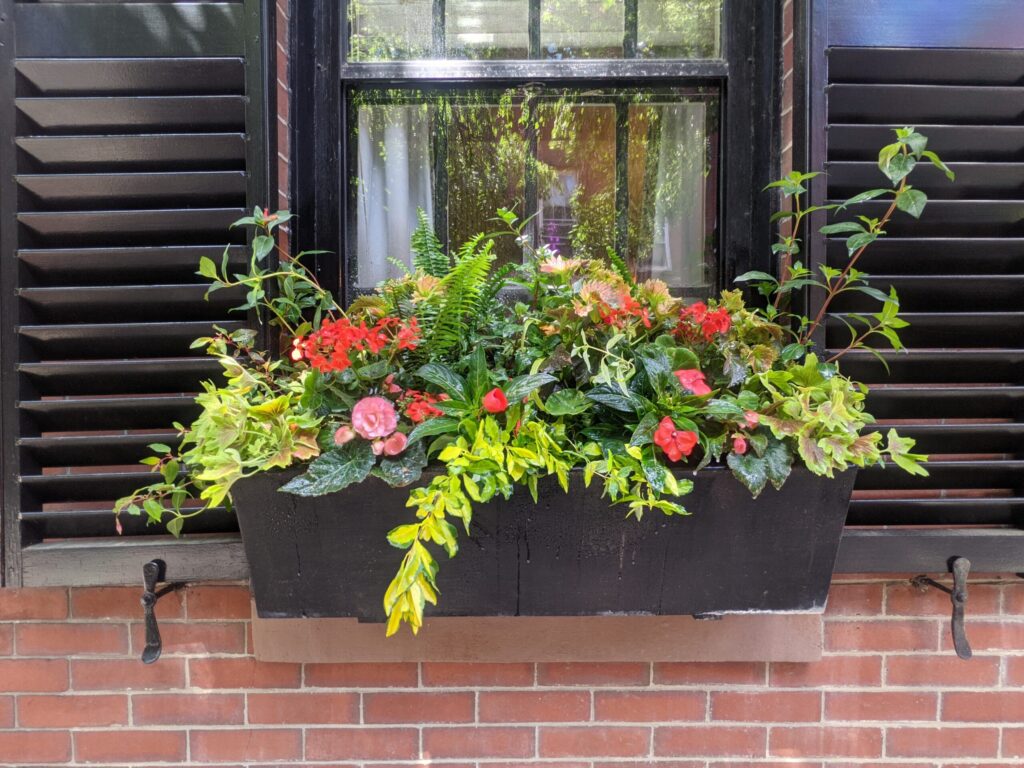
Serving Winchester properties with a personal touch
Reach out to describe your Winchester garden, entry beds, or seasonal color needs, and we’ll arrange a site visit. We’ll review sun exposure, soil, and existing plantings, then provide a written plan and pricing before any work begins.
What Our Customers Say
Frequently Asked Questions
Do you design planting specifically to resist deer in Winchester?
Yes. We build plant lists around the actual browse pressure on a given street rather than a generic deer-resistant list, since some Winchester blocks near the lakes and wooded areas see far more deer traffic than others.
Can you plant on a sloped lot near the Mystic Lakes without erosion problems later?
Yes, this is common in Winchester. We terrace where needed, select deep-rooted plants that hold soil, and set drip irrigation to slow water absorption rather than letting it run downhill.
How does mature oak canopy affect what you can plant?
Dense oak shade and compacted, acidic, root-competitive soil rule out many sun-loving plants. We test soil, amend it, and choose a shade-tolerant palette suited to what's actually growing overhead.
How far is Winchester from your Winchester location?
About 6.9 miles, generally a 20 to 30 minute drive depending on traffic, which keeps regular maintenance visits and quick follow-ups practical.
Do you handle the heavy leaf and acorn drop from oak trees in fall?
Yes. Maintenance schedules for oak-heavy Winchester properties are adjusted for the later, heavier debris load rather than following a fixed regional calendar.