- Serving Boston and the Greater Boston Area

Planting & Maintenance in Brookline, MA
A planting and maintenance plan in Brookline has to work around three things at once: lots big enough to hold decades of mature plantings that were never designed as a system, deer pressure that intensifies as you move toward the Newton line, and a Preservation Commission that has a say in anything visible from the street in the town’s historic districts. A plant list that works two towns over often fails here for one of those three reasons. We build the plan around all three from the first site visit.

What Planting & Maintenance looks like in Brookline
Brookline properties tend to be larger and older than what we see closer to the city, which changes the maintenance math. A quarter-acre lot in Cottage Farm or Fisher Hill might carry sixty-year-old rhododendron and hydrangea beds, a mature shade canopy, and perennial borders that have been added to piecemeal by three or four different owners. Before we plant anything new, we walk the whole property and figure out what’s actually worth keeping, what’s competing for light or root space, and where the soil has been depleted by decades of the same shrubs pulling the same nutrients.
Light is rarely simple here. Big, established trees mean genuine shade gardens on one side of a house and full, unobstructed sun on the other, sometimes within the same forty feet. We plant accordingly rather than defaulting to a single palette across the property. Soil in the older sections of town — Longwood, Cottage Farm, parts of Chestnut Hill on the Brookline side — tends to be heavier clay loam that’s been amended inconsistently over the years, so we test before committing to anything drought-sensitive.
Then there’s the review question. A meaningful share of Brookline’s housing stock sits inside a local historic district, which means hedges, fences, and anything street-facing that reads as a structural change can require a look from the Preservation Commission before it goes in. We know which plantings are a simple swap and which ones need a conversation first, and we handle that conversation so the homeowner isn’t the one tracking down a case number.
Deer pressure closes out the list. It’s not uniform across town, but it’s real and growing closer to the Newton border, in the larger-lot neighborhoods with more tree cover and less foot traffic. A planting plan that ignores it means replacing hostas and arborvitae every spring. We don’t ignore it.
What we account for here
What we account for here
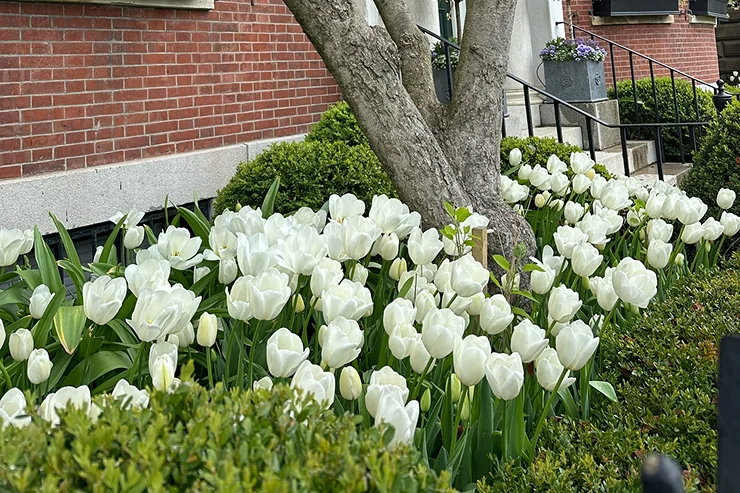
Brookline’s mix of tight urban lots and older soil beds means we look at drainage, root competition from established trees, and seasonal exposure before recommending a planting plan, so maintenance stays manageable rather than reactive year after year.
Mature, layered landscapes with decades of undocumented planting choices
Large, older Brookline lots rarely come with a planting history. We spend real time in the first visit identifying what’s original, what’s volunteer, and what’s been struggling quietly for years before we touch a shovel. Renovation of an existing bed is usually more work than a blank-slate install, and we plan for that honestly rather than underscoping it.
Deer pressure toward the Newton line
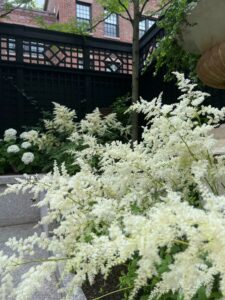
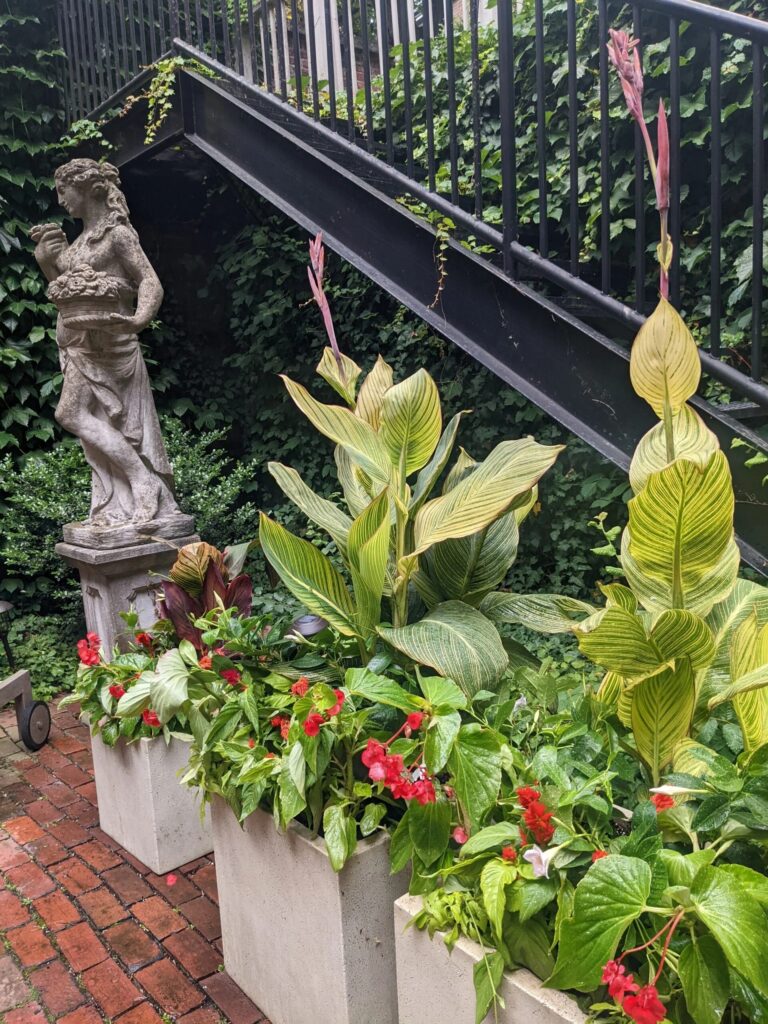
For properties in the parts of town closer to Newton, we lean on deer-resistant plant selections — boxwood, andromeda, most ornamental grasses, and a longer list of perennials that deer tend to leave alone — and use repellent programs or targeted fencing where a client wants to keep a species that isn’t naturally resistant. We tell clients up front which plants on their wish list will need protection, rather than letting them find out the hard way in May.
Preservation Commission review on street-facing work
Brookline’s local historic districts mean hedge lines, fences, and some front-yard hardscape can require Preservation Commission sign-off before installation. We identify early whether a proposed planting plan is likely to trigger review, and we prepare the drawings and plant specifications in the format the Commission expects so the process doesn’t stall the schedule.
Larger lots, longer maintenance routes
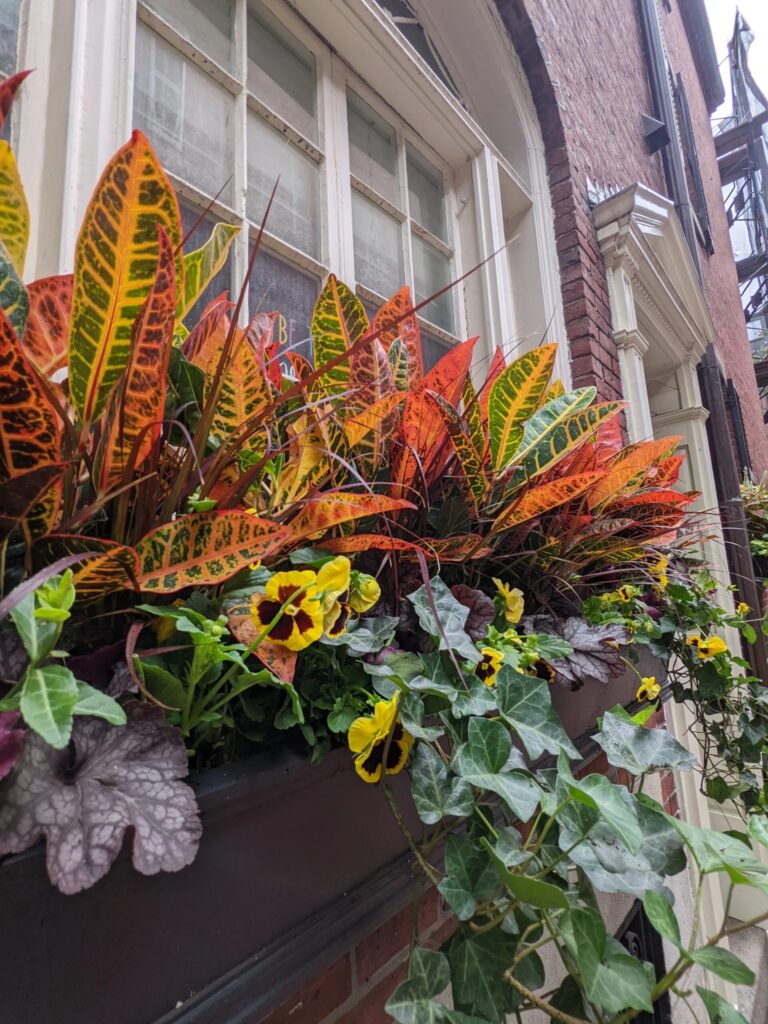
A quarter-acre or half-acre property changes the maintenance calendar — more bed edge, more lawn-to-planting transition, more irrigation zones to check each visit. We scope maintenance visits around the actual square footage of a Brookline property rather than applying a flat visit template built for a smaller in-town lot.
Recent Brookline work
Recent work in Brookline has centered on renovating overgrown perennial borders on larger properties near Fisher Hill and Cottage Farm — thinning and dividing what’s salvageable, replacing what isn’t, and rebuilding the bed’s soil before replanting. We’ve also handled deer-resistant foundation planting for a Chestnut Hill-adjacent property that had lost several seasons of hosta and yew to browsing, and set up a season-long maintenance program to keep it that way.
Other services we provide in Brookline
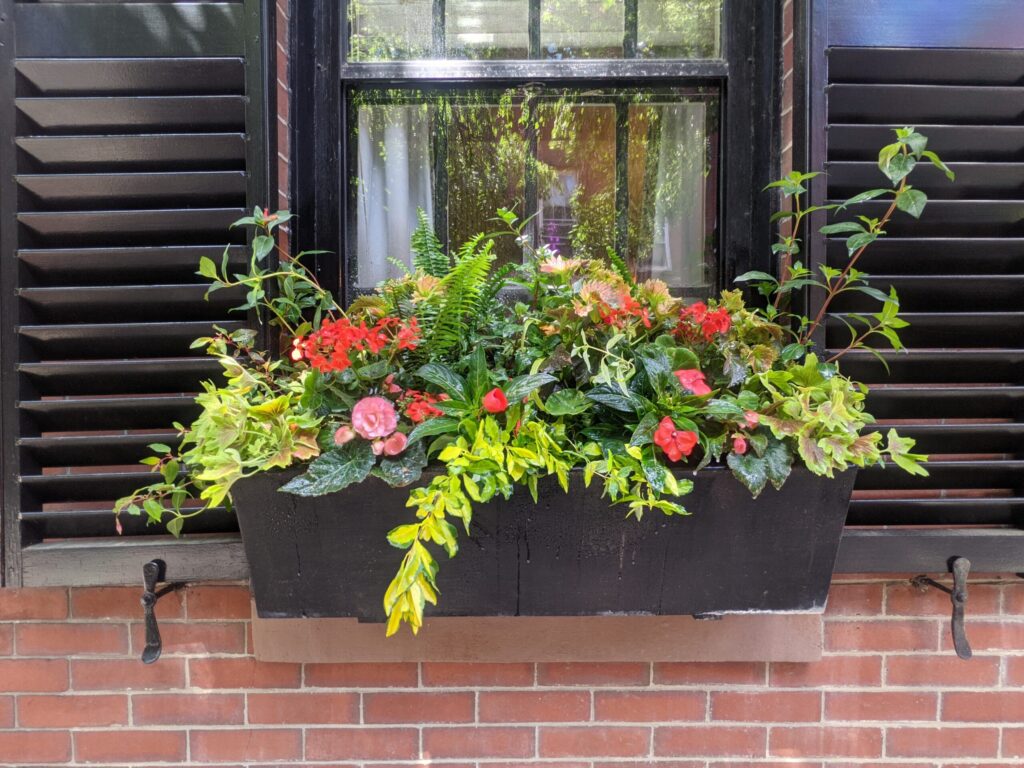
Planting and maintenance is usually the anchor service for Brookline properties, but it’s rarely the only one. For a full look at what we offer in town, see our garden services in Brookline overview. Many clients pair ongoing planting care with garden design and installation for a border renovation or new bed layout, containers and window boxes for the front entrance and any street-facing planters that need to read as maintained through the historic district’s sightlines, roof deck and terrace planting where the property has one, drip irrigation to keep larger beds consistent through the summer without daily attention, and low-voltage landscape lighting to extend the use of mature gardens into the evening. We scope these together so the crew visiting for maintenance can also handle irrigation checks and lighting adjustments in the same visit.
This same service, in other neighborhoods
We run the same planting and maintenance approach — adjusted for local conditions — in Boston, and for two other towns with their own distinct site challenges: the deer- and wildlife-heavy lots of Winchester and the tight, historic-district rowhouse gardens of the South End. If your property sits somewhere between those conditions, the crew that services Brookline can typically take on the work directly.
What Our Customers Say
Frequently Asked Questions
Does Rouvalis Gardens handle plantings that need Preservation Commission approval?
Yes. In Brookline's local historic districts, hedges, fences, and some street-facing planting changes require Commission review. We identify early whether a plan is likely to need approval and prepare plant specifications and drawings in the format the Commission expects.
How do you handle deer in Brookline gardens?
Deer pressure is uneven across town but noticeably higher toward the Newton line. For properties in those areas, we build plant lists around deer-resistant species first, and add repellent programs or targeted fencing for any plant a client wants that isn't naturally resistant.
Can you take over maintenance on an overgrown, mature garden?
Yes, this is common work for us in Brookline. We assess what's salvageable in an established bed, divide or thin what's crowded, replace what's declined, and rebuild soil before replanting, then set up an ongoing maintenance schedule sized to the property.
Do you work on larger lots, not just small in-town gardens?
Brookline's lot sizes are part of what shapes our approach here. Larger properties mean more bed edge, more irrigation zones, and more planting variety across sun and shade conditions, and we scope both installation and maintenance visits around the actual size of the property rather than a flat template.
How far is Brookline from your Brookline location?
Rouvalis Gardens is based at 5 Crescent St in Brookline, about 5.4 miles from Brookline. We service Brookline regularly and can schedule a site visit to assess your property and its specific light, soil, and review conditions.