- Serving Boston and the Greater Boston Area

Garden Maintenance in Wellesley, MA
A Wellesley border planted for a formal, symmetrical look falls out of balance fast once deer find it, or once a stand of hundred-year oaks starts throwing more shade than the original plan accounted for. Properties near Wellesley College and along the older estate roads carry all three pressures at once: dense mature canopy that shifts light patterns season to season, deer that move through the College’s green corridors and adjacent conservation land, and a garden tradition — clipped hedges, structured perennial beds, allées — that shows every gap or leggy stem immediately. Maintenance here has to be proactive, not reactive.

What Garden Maintenance looks like in Wellesley
Most of the properties we maintain in Wellesley were laid out with a formal hand — boxwood parterres, clipped yew hedges, symmetrical perennial borders flanking a front walk or terrace. That kind of design has no tolerance for neglect. A single dead boxwood in a matched pair reads as a mistake, not a detail, so our visits are built around consistency: same crew, same eye, on a schedule tight enough that nothing drifts before it’s noticed.
The mature tree canopy across much of Wellesley — old oaks, beech, sugar maple on the larger lots — changes what a bed can support underneath it. Beds that were full-sun when a garden was designed decades ago are often part-shade now, and we adjust the underplanting rather than fight the trees. Root competition also means irrigation and feeding schedules need to run heavier than a catalog planting plan would suggest, particularly for anything installed within a canopy’s drip line.
Soil across town varies more than people expect — heavier clay-loam on some of the older estate parcels near the College, sandier and faster-draining on newer construction sites toward the Natick line. We test rather than assume, and we adjust amendments bed by bed instead of applying one program across an entire property.
Access on estate-scale lots is usually generous compared to city gardens, which lets us bring the right equipment for large hedge work and lawn-adjacent bed maintenance without the compromises smaller in-town lots require. That said, many Wellesley clients still want crews working discreetly and on a fixed window, particularly on streets with heavy morning school and college traffic.
What we account for here
What we account for here
Deer pressure from the College and conservation land
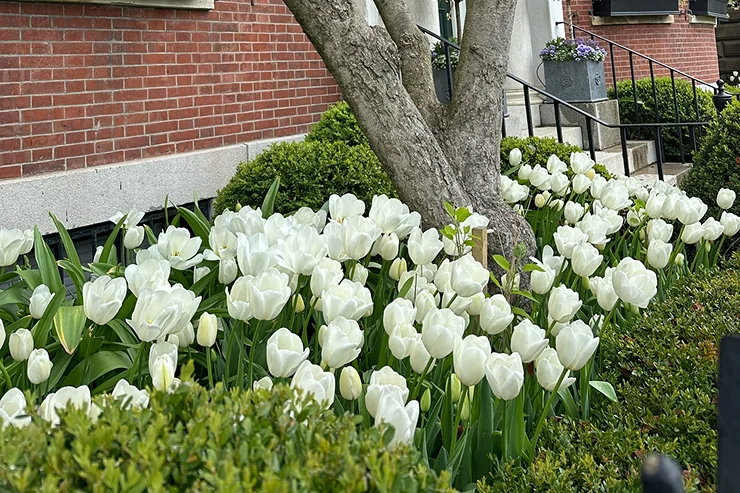
Wellesley College’s grounds and the adjoining conservation parcels give deer a corridor straight into residential gardens, and hostas, hydrangea, and tulip bulbs take the worst of it. We build planting plans around deer-resistant selections where the design allows, and where a client wants a species deer will happily eat, we use repellent rotation and, on high-value plantings, discreet fencing worked into the garden’s structure rather than bolted on as an afterthought.
Mature canopy and shifting light
Decades-old trees on Wellesley’s larger lots don’t just cast shade, they compete hard for water and nutrients. We track how light patterns move through a property over the growing season and adjust underplanting, feeding, and irrigation zone by zone rather than treating a shaded bed the same as one in full sun.
Formal garden structure
Clipped hedges, parterres, and symmetrical borders are unforgiving of inconsistency. Our maintenance visits are scheduled tightly enough — and staffed by the same crew — that hedge lines stay even and beds stay full without the gaps that show up when a garden is maintained on an irregular or rotating basis.
Variable soil across estate lots
Older Wellesley parcels near the College tend toward heavier clay-loam, while newer construction on the town’s edges often sits on faster-draining, sandier fill. We test soil property by property and set fertilizing and amendment schedules to match, rather than running one blanket program across every bed.
Recent Wellesley work
Recent work in town has included restoring a formal boxwood and perennial border on an estate property near the College where deer damage and canopy shade had left the planting thin and uneven, and taking over year-round maintenance for a family whose previous crew had let hedge lines drift out of symmetry. In both cases the fix wasn’t a redesign — it was a disciplined maintenance program built around the specific pressures already on the property.

Other services we provide in Wellesley
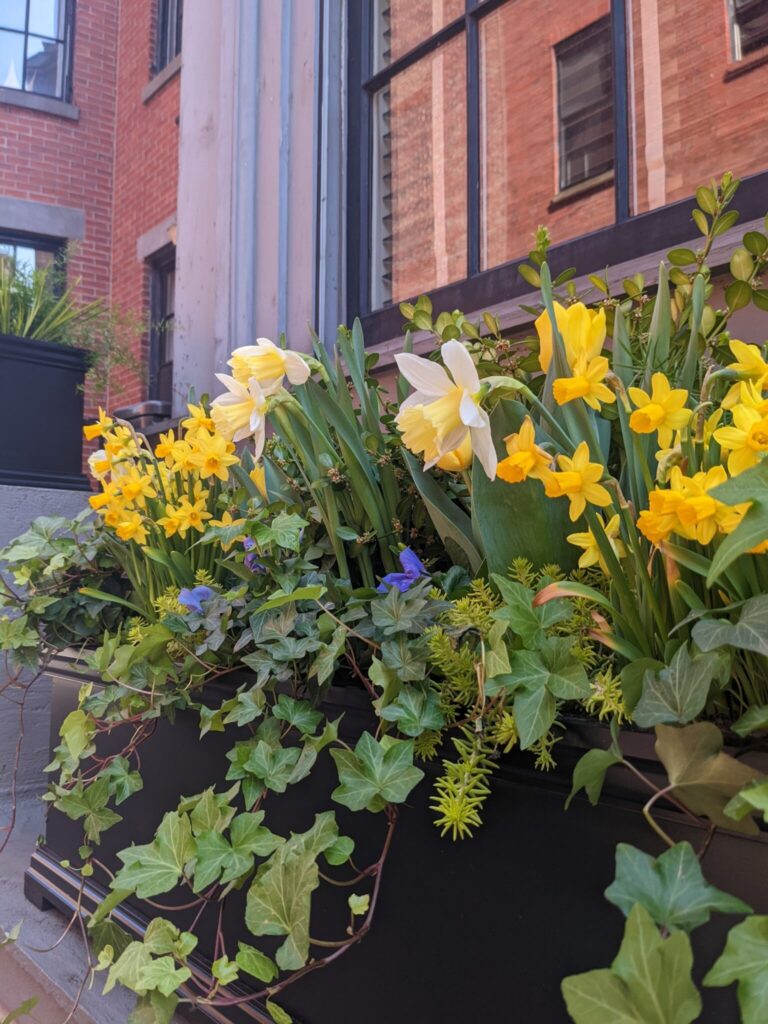
Garden maintenance is often the entry point, but many Wellesley clients bring us in for the full scope of a property. We handle garden services in Wellesley more broadly, along with design and installation for new beds and border renovations, container and window box plantings for entries and terraces, drip irrigation to keep root-competitive beds properly watered under mature canopy, and low-voltage lighting to bring structure and hedge lines into relief after dark. Where a property has a pool terrace or a formal lawn panel, we coordinate maintenance across all of it on one schedule rather than treating each area separately.
How the deer conversation actually works
Every new Wellesley client asks about deer within the first walkthrough, and the honest answer is that no planting is fully deer-proof once pressure is high enough. What we do instead is triage: identify which beds are most exposed to the College corridor and conservation land, prioritize resistant plantings there, and reserve repellent and fencing strategies for the specimens a client isn’t willing to give up. That approach costs less and looks better than blanket fencing across an entire property.
Scheduling around estate life
Wellesley properties are often occupied year-round rather than seasonally, which means maintenance has to work around family schedules, school pickup timing, and, on some streets, College event traffic. We set recurring visit windows in advance and hold to them, so a property owner isn’t guessing which week a crew will show up or coordinating access on short notice.
Start a Wellesley garden maintenance program
Wellesley is roughly 14.6 miles from our Wellesley location, and we run maintenance crews out to town on a regular schedule. Call to arrange a walkthrough — we’ll look at the existing planting, flag the deer and canopy pressures specific to your lot, and propose a maintenance calendar built around them. From there, most clients move to a recurring visit schedule within the first two weeks.
Questions before you commit
Not sure whether your Wellesley property needs weekly visits or a lighter seasonal touch? We’re happy to talk through it before anything is scheduled.
- What a typical maintenance visit includes
- How we handle beds, lawns, and shrubs together
- Adjusting the plan as seasons change
What Our Customers Say
Frequently Asked Questions
How do you handle deer damage in Wellesley gardens without fencing the whole property?
We prioritize deer-resistant plantings in the beds most exposed to the College corridor and conservation land, and reserve repellent rotation or discreet, targeted fencing for specimen plants a client wants to keep despite the pressure. Full-perimeter fencing is rarely the first recommendation.
Our garden was designed decades ago and the light has changed under the trees — can maintenance fix that?
Yes. As canopy matures, beds that were originally full-sun often become part-shade, and we adjust underplanting, feeding, and watering to match current conditions rather than the original planting plan.
Do you work with historic or estate-designated properties in Wellesley?
We do. Many of the properties we maintain follow formal garden traditions with clipped hedges and symmetrical beds, and we schedule visits consistently enough to keep that structure intact without gaps or drift.
How often do you visit for garden maintenance in Wellesley?
Visit frequency depends on the property, but formal beds and hedges near mature canopy typically need a tighter schedule than a simpler planting would. We set a recurring calendar during the initial walkthrough based on what the garden actually needs.
Do you also maintain gardens in Weston or Lexington?
Yes, we provide the same garden maintenance program in <a href="/garden-maintenance-weston-ma/">Weston</a> and <a href="/garden-maintenance-lexington-ma/">Lexington</a>, both of which share similar estate-scale conditions and canopy pressure.