- Serving Boston and the Greater Boston Area

Garden Maintenance in Winchester, MA
A garden a quarter mile from the Mystic Lakes has different problems than one in Winchester Center. Mature oak canopy shades the beds for most of the day, slopes shed water toward the shoreline instead of holding it, and deer move through lakeside yards on a schedule most homeowners only notice after the hostas are gone. Maintenance here has to account for all three before it accounts for anything else.

What Garden Maintenance looks like in Winchester
Winchester’s lakeside lots and older estate properties near Highland Avenue and the Fells share a set of conditions that shape how we schedule and execute maintenance visits. Oak canopy—often decades old and protected under town shade tree provisions—cuts direct light to beds below to a few hours a day, which narrows what will actually thrive there and changes how we prune to open just enough light without over-limbing a tree the neighborhood has grown up around.
Slope is the other constant. Many properties step down toward Winchester’s ponds and lake frontage, which means irrigation has to be zoned so lower beds don’t drown while upper beds go dry, and mulch and soil top-dressing has to be applied in a way that resists washing downhill after a hard rain. We check erosion points and drainage swales on every visit rather than waiting for a homeowner to notice a bare patch forming.
Then there’s pressure from deer moving between the Fells reservation, the lake edges, and residential yards, especially in the shoulder seasons. A maintenance plan that ignores this will show it within a month—new growth stripped, buds taken before they open. We build plant selection and seasonal protection into the maintenance visit itself, not as an afterthought.
We work with property managers as often as homeowners here, and many Winchester clients also want their gardens to read well from the water side of the property, not just the street side, which changes how we approach sightlines and screening during routine care.
What we account for here
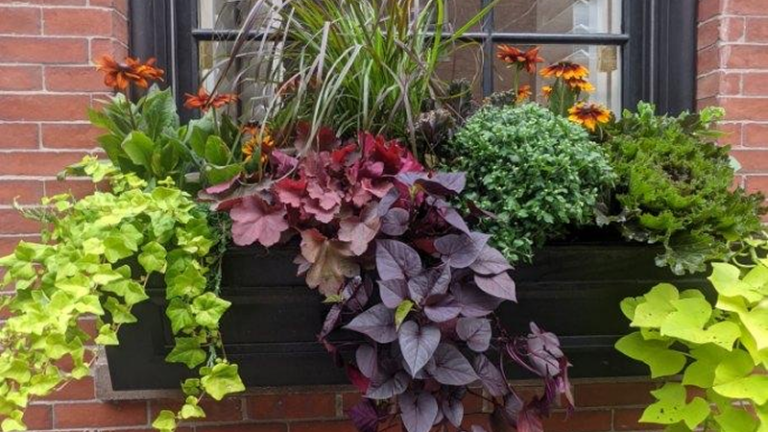
What we account for here
Oak canopy and filtered light
Beds under mature oaks get a fraction of the light a full-sun bed gets, and root competition below ground is significant. We select and rotate shade-tolerant perennials and structure pruning schedules around the tree’s health, not just the bed’s appearance, since removing canopy near the lake isn’t something the town or a careful homeowner takes lightly.
Slope drainage toward the lakes
Grading on many Winchester properties pushes water toward Mystic Lake or the Aberjona corridor. Irrigation zones are split by elevation, and we monitor for the kind of soil erosion that shows up as thinning turf or exposed roots at the base of a slope before it becomes a real repair.
Deer pressure near the reservation and lake edges
Winchester’s proximity to open land and water corridors means deer traffic is a real planning input, not a seasonal nuisance. We favor deer-resistant plant palettes where the browse pressure is heaviest and use repellent rotation and seasonal fencing on beds with plantings a homeowner isn’t willing to give up.
Mature tree root systems and soil compaction
Old oak and maple root systems compact soil and compete hard for water and nutrients. We adjust fertilization and watering schedules bed by bed rather than applying a single blanket program across a property with this much variation in canopy and root depth.
Recent Winchester work
A recurring project type in this town is the lakeside perennial bed rehabilitation—reworking planting under established oak canopy on a sloped lot near the water, correcting drainage first, then rebuilding the bed with a deer-resistant palette that still reads full and layered from the house and from the water. We’ve also handled seasonal maintenance contracts for property managers overseeing several Winchester homes at once, where consistency across properties with very different light and slope conditions is the real deliverable.

Other services we provide in Winchester
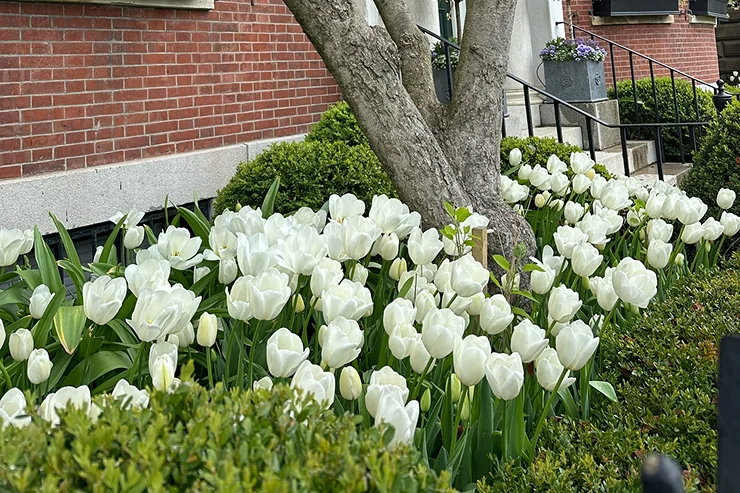
Garden maintenance is one piece of a broader practice we run in Winchester. If you’re starting from the ground up, our garden services in Winchester cover design and installation for lakeside and sloped lots, and full-yard design work follows the same conditions—canopy, slope, deer—that shape maintenance visits. Many Winchester clients also add containers and window boxes for entries and terraces that need seasonal color without competing with shade-heavy beds, roof deck and terrace planting for homes with lake views worth building around, drip irrigation zoned specifically for sloped lots, and low-voltage landscape lighting that makes the most of a property after dark without disturbing neighbors along the water. We coordinate all of it under one maintenance calendar so nothing on the property gets attention on a different schedule than the rest.
How maintenance visits are scheduled
Most Winchester properties are on a biweekly or weekly visit schedule during the growing season, with visit frequency and scope adjusted seasonally—more attention to spring cleanup and deer protection setup in April and May, more pruning and canopy management in late summer, and a fall program that focuses on leaf management under oak cover and winterizing irrigation before the first freeze. Property managers overseeing multiple Winchester addresses get a single point of contact and a shared calendar across all of them.

Working around lake-facing properties
Where a garden is meant to be seen from the water as much as from the street, maintenance crews are briefed on which sightlines matter and adjust pruning and bed shaping accordingly. This is a detail that gets missed by crews treating every yard as a standard residential lot, and it’s one of the more common reasons Winchester clients move from a general landscaping service to a dedicated gardening practice.
Start a Winchester garden maintenance plan
Winchester is about 6.9 miles from our Winchester location, and we run regular maintenance routes through the lakeside and Fells-adjacent neighborhoods already. Call to set up a site visit—we’ll walk the property, note the canopy, slope, and deer pressure specific to your yard, and propose a maintenance schedule built around what’s actually there rather than a standard package. From that first call, the next step is a scheduled visit, not a sales pitch.
Ready when your garden is
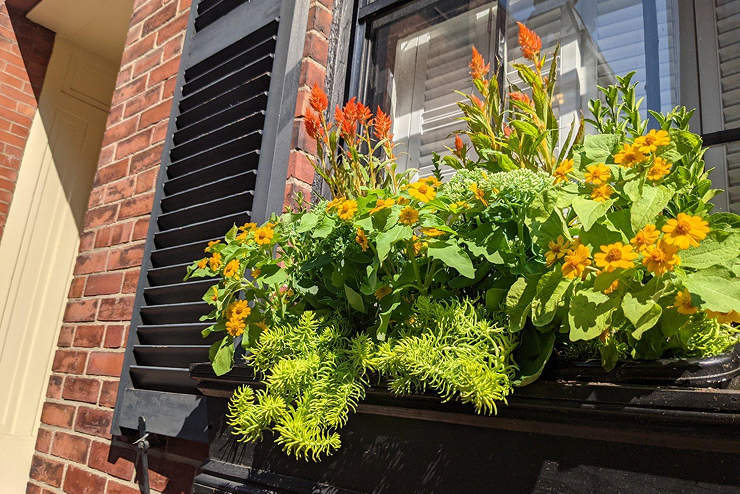
If your Winchester property is due for a tidy-up or a season of steady care, we’re happy to take a look. We’ll walk the beds, borders, and lawn together, talk through what’s needed, and put together a maintenance plan suited to how you actually use the space.
What Our Customers Say
Frequently Asked Questions
How does deer pressure near the Mystic Lakes change a maintenance plan?
We build plant selection around what deer reliably leave alone in this area and add repellent rotation or seasonal fencing on beds where a homeowner wants to keep plants deer typically browse. It's addressed at the maintenance-plan level, not treated as a one-time fix.
Can you maintain a garden on a sloped lakefront lot without erosion problems?
Yes. Irrigation is zoned by elevation so lower beds aren't overwatered while upper beds dry out, and we check erosion points on slopes at every visit rather than waiting for bare patches or exposed roots to appear.
Will heavy oak canopy limit what can be planted in my beds?
It limits full-sun options but not the possibilities generally. We work with shade-tolerant perennials and shrubs suited to filtered light under mature oaks, and we prune with the tree's long-term health in mind rather than stripping canopy for a short-term light gain.
Do you work with property managers overseeing multiple Winchester homes?
Yes, this is a common arrangement in Winchester. We set up a shared maintenance calendar across properties with one point of contact, adjusting scope for each property's specific canopy, slope, and light conditions.
How far is Winchester from your Winchester location?
About 6.9 miles. We run maintenance routes through Winchester regularly, including the lakeside and Fells-adjacent neighborhoods.