- Serving Boston and the Greater Boston Area

Window Boxes in Lexington, MA
A window box on a Colonial-era house in Lexington has to clear a review board before it earns its right to bloom, then survive open, unshaded sun and a deer population that treats tulips and hosta like a standing invitation. That is a different design problem than a shaded brick townhouse in Boston proper. We build boxes here for houses on Massachusetts Avenue, Hancock Street, and the roads ringing the Battle Green that carry real architectural weight, and we plant them to hold up once the truck pulls away.

What Window Boxes looks like in Lexington
Most of the window box work we do in Lexington starts with the house itself. A Federal or Greek Revival facade near the historic core has proportions, trim details, and sash spacing that dictate box length, mounting height, and even the acceptable range of hardware finish. We measure to the window, not to a stock box size, and we build or source containers that read as original to the house rather than applied to it.
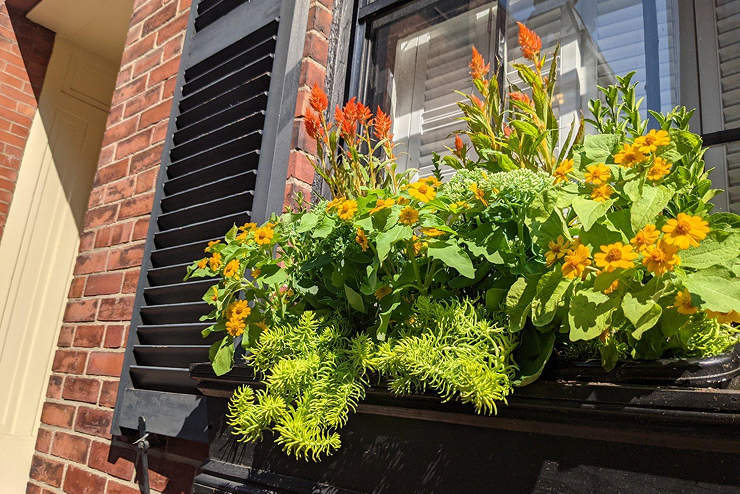
Light is the second variable, and in Lexington it tends to run to extremes. Many of the town’s colonial and early-19th-century properties sit on open lots with little tree canopy close to the facade, which means south- and west-facing boxes can see six or more hours of direct sun through a Massachusetts summer. That calls for plant selection and soil moisture management tuned to full exposure, not the part-shade mixes that work fine two towns over. We use a lightweight, moisture-retentive soil blend and, where the house allows discreet tubing, tie the boxes into drip irrigation so they are not dependent on someone remembering to water on the hottest week of July.
Then there is the deer. Lexington’s residential lots back onto conservation land, town-owned open space, and generously wooded rear yards in numbers that make deer browsing a near-certainty rather than an occasional nuisance, especially for anything at ground level or on a low porch rail. Window boxes mounted above first-floor sill height are naturally harder for deer to reach, but we still favor plant palettes — angelonia, licorice plant, scented geranium, certain heucheras — that deer sample once and leave alone, rather than tulips, pansies, or hosta that get stripped in a single overnight visit.
What we account for here
What we account for here
Four constraints come up on nearly every Lexington window box job, and each one changes a decision we would make differently elsewhere.
Historic District and Precinct One design review
Properties within Lexington’s Battle Green area historic districts, and many along the town’s older corridors, face design review for street-visible alterations, and mounting brackets or box materials can fall under that scrutiny depending on the house. We build boxes and select finishes that read as sympathetic to the period of the house — painted wood or metal in colors pulled from the trim, not a plastic composite — so an install does not become a submission headache.
Full, unbroken sun exposure
Open lots and wide setbacks mean many facades get sun for most of the day with no relief. We plant for that specifically, choosing heat-tolerant species and setting irrigation to run early enough that foliage isn’t scorched by midday watering, and we check soil moisture retention through the first hot stretch of the season rather than assuming a spring install will coast through August.
Sustained deer pressure
With conservation land, greenways, and unfenced wooded lots common across town, deer move through residential yards on a predictable circuit. Window height helps, but we still build the plant list around species deer consistently avoid, and we’ll flag any low mounting locations where a browse-resistant palette matters even more.
Seasonal turnover on tight schedules
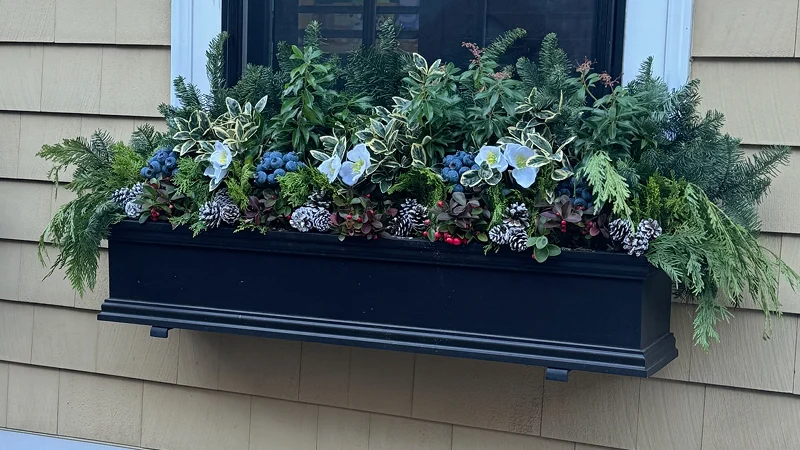
Many Lexington clients want a spring change-out timed to town events on the Green and a fall refresh before the holidays, on a schedule set well in advance. We plan the season’s rotation at the first visit so both changeovers happen on the date agreed, not whenever the crew has an opening.
Recent Lexington work
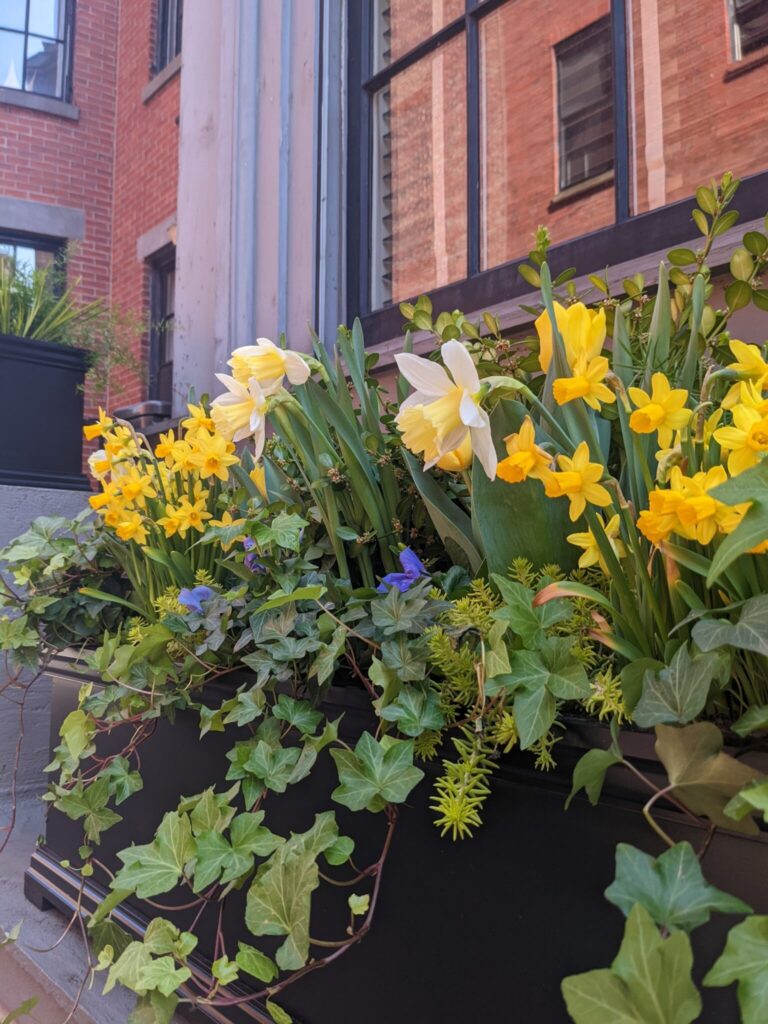
A recent project on a house near the historic center involved matching new cedar boxes to existing sash proportions on a facade under design review, then planting a full-sun, deer-resistant mix that needed only a mid-season check rather than a full replant. Another, on a more contemporary property off Waltham Street, called for a simpler paint-grade box and a bolder color palette, since the house carried no review restriction and the owner wanted something that would stand out from the street. Both jobs used the same underlying discipline — measure the window, read the light, plan for the deer — applied to two very different houses.
Other services we provide in Lexington
Window boxes are usually one piece of a larger plan for a Lexington property. We also handle full garden services in Lexington, including garden design and installation for front and side beds that need to hold up to the same sun and deer conditions, and ongoing fine gardening and maintenance so beds and boxes stay on the same seasonal rhythm. For properties with roof decks, patios, or terraces, we design and plant those spaces with the same full-sun, wind-exposed considerations that shape our box work here, and we install drip irrigation and low-voltage landscape lighting so containers, beds, and outdoor living space all run on one coordinated system rather than three separate ones.
Start with a consultation
Lexington is about 10.2 miles from our Lexington base, and window box visits there run on the same schedule as our Boston-area work — a site visit to measure the windows and read the sun and deer exposure, a proposal with box style and plant palette, and installation timed to your spring or fall change-out. Call to set up a consultation for your Lexington property, or ask us about coordinating boxes with a broader garden or terrace plan. We’ll tell you plainly what a review board is likely to accept and what the deer will leave alone before any materials are ordered.
How a Lexington window box project runs
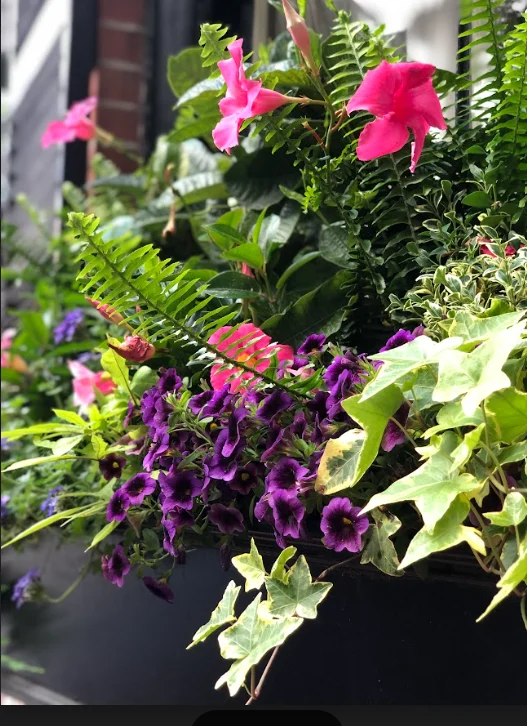
Most Lexington window box installs follow the same general arc: a walkthrough of the home’s window openings and sun exposure, a design proposal sized to each sill or bracket mount, and an install day once materials and plantings are ready. Colonial and center-hall homes near the historic district often call for proportions that respect the trim, while newer builds allow more flexibility with box size and plant selection.
- On-site measurement and mounting review
- Custom planting plan by exposure
- Seasonal swap scheduling
Rounding out the rest of your property
Window boxes are a great start, but they are just one piece of what a Lexington home or storefront can look like when the whole property gets the same attention. If the yard behind the façade could use a fresh eye, our garden design and garden installation services turn a rough idea into a planted reality, while garden renovation handles a bed or border that has outgrown its original plan.
Once the beds are in, fine gardening and garden maintenance keep everything looking deliberate rather than accidental, backed by seasonal planting and spring and fall cleanups timed to New England’s calendar. For entries, patios, and terraces beyond the window sill, container gardens and terrace planting extend the same style down to ground level.
- Drip irrigation for consistent watering without daily attention
- Low-voltage landscape lighting to keep plantings visible after dusk
- Seasonal planting swaps to match spring, summer, and fall
Any of these can be paired with your window boxes or scheduled on their own, depending on what your Lexington property needs.
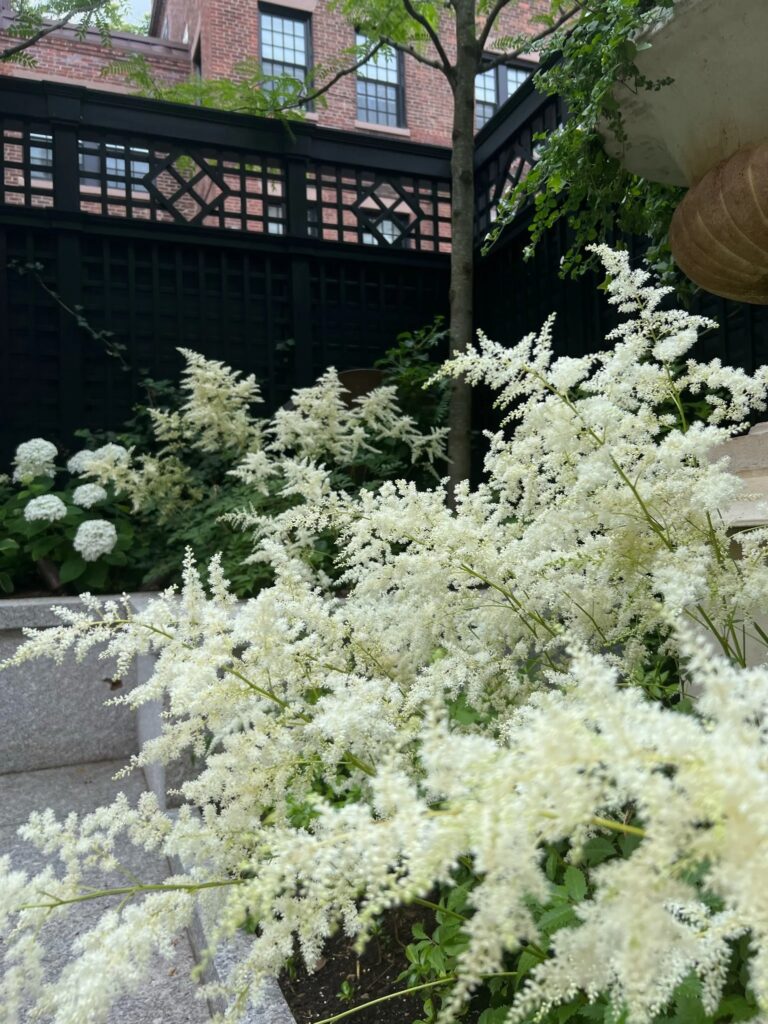
Choosing the right box for your home
Lexington homes range from colonial facades to updated capes, and window box style should follow suit. We help you pick materials and proportions that suit your window trim and siding, then plan plantings that hold color through the season.
- Wood, PVC, or metal boxes sized to your sills
- Mounting suited to brick, clapboard, or shingle
- Plant choices for sun, shade, or mixed exposure
What Our Customers Say
Frequently Asked Questions
Do window boxes on Lexington's historic homes need approval before installation?
If the house sits within one of Lexington's historic districts, such as the area around the Battle Green, alterations visible from the street — including permanent mounting brackets — can require design review. We design boxes and finishes to fit the house's period so they are far less likely to raise concerns, and we can advise on what documentation, if any, a specific property needs.
Will deer eat what's planted in a window box mounted above the first floor?
Height helps but does not guarantee anything, especially on porches or low additions. We plant Lexington boxes with species deer reliably avoid — angelonia, scented geranium, licorice plant, and similar — so the box holds up even on properties bordering conservation land or open yards where deer traffic is constant.
My house gets full sun all day. Will a window box survive a Lexington summer without daily watering?
With the right soil blend and, where possible, a drip line tied into the box, yes. We plan irrigation and plant selection specifically for full-sun exposure rather than using a shade-tolerant mix that will stress and drop by midsummer.
Can you match new window boxes to an older Lexington house without them looking like an obvious retrofit?
That is the standard we build to. We measure sash width and sill proportions on-site and size boxes and brackets to the window rather than installing a stock size, and we choose materials and paint colors that read as original to the house's period.
Do you handle the seasonal change-out, or is that a separate call?
We schedule spring and fall change-outs at the same time we plan the initial install, so both visits are already on the calendar rather than something you have to remember to arrange later in the year.