- Serving Boston and the Greater Boston Area

Window Boxes in Brookline, MA
If a deer has already eaten last season’s window box plantings, or your house sits inside a Brookline Preservation Commission district where the front elevation gets scrutinized, the plant list matters as much as the design. Brookline’s larger lots and mature tree canopy mean more shade than a typical rowhouse street, and the closer a property sits to the Newton line, the more likely browsing deer will find a window box before you notice the damage. We design and install window boxes around these realities rather than around a generic seasonal plan.

What Window Boxes looks like in Brookline
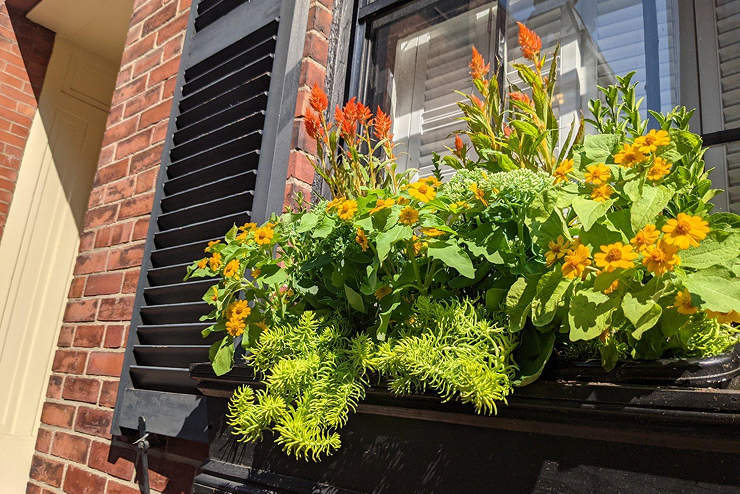
Brookline is not a single streetscape. A Georgian on Cottage Farm Road with deep-set sills and a wide lawn setback has almost nothing in common, horticulturally, with a triple-decker window box near Coolidge Corner facing a bus route. On the larger, older lots — Chestnut Hill, Fisher Hill, parts of Cottage Farm — mature oaks and beeches throw dense shade over front-facing windows for most of the day, which rules out the sun-hungry annuals that read well in photographs but fail by July. We plant these boxes with shade-tolerant combinations: heuchera, dusty miller, trailing lamium, and ferns paired with a smaller ratio of blooming accent plants, refreshed seasonally rather than left to struggle.
Where the lot opens up and gets more light — south-facing facades near Washington Square or the flatter blocks toward Longwood — we build fuller compositions with verbena, calibrachoa, and dwarf dahlias, still selected for resistance to browsing since deer pressure increases as you move west and south toward the Newton border. Soil in the window boxes themselves is never the issue; a well-built mix and a drip-fed irrigation line solve that everywhere. The real variables in Brookline are canopy shade, deer traffic, and, on a meaningful share of properties, what the town’s design review will and won’t approve on a street-facing sill. We size, plant, and install with all three in mind before a box ever leaves the shop.
What we account for here
What we account for here
Four conditions come up on nearly every Brookline window box project, and each changes a real decision — the plant list, the box material, or the install itself.
Preservation Commission districts
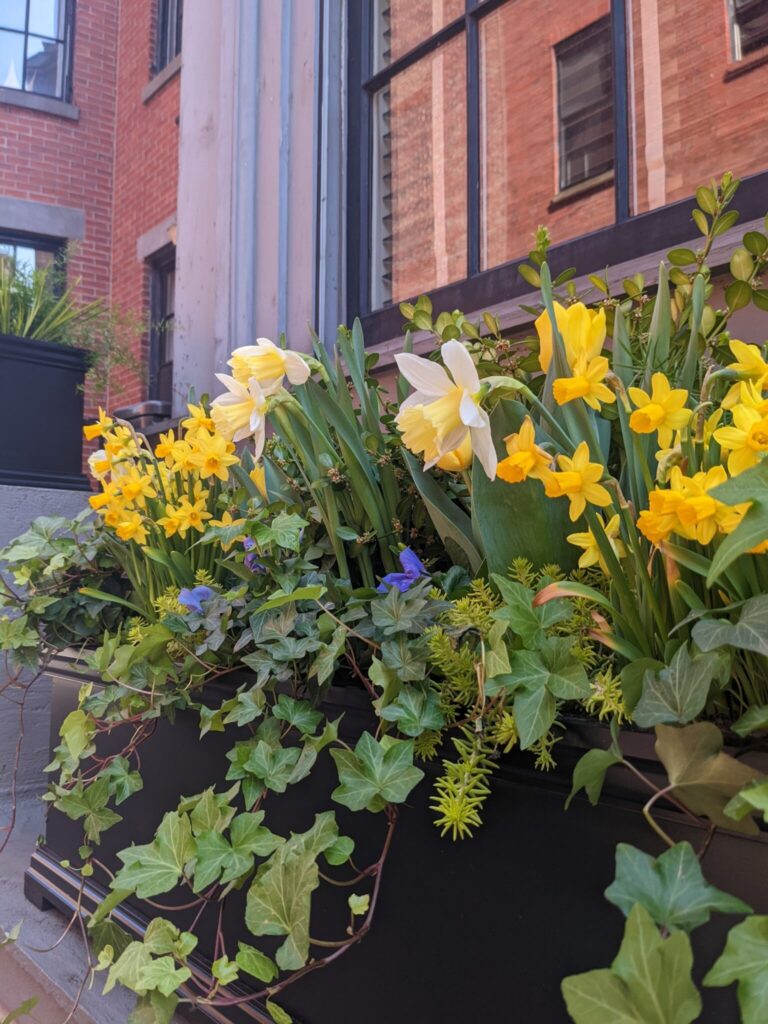
A meaningful stretch of Brookline — including parts of Cottage Farm, Fisher Hill, and the Linden-Sewall area — falls under local historic district review, and window boxes on a front, street-facing elevation can fall within that review’s scope depending on the property and the proposed hardware. We keep window box brackets and box materials in a range that reads as appropriate to the period detail of the house, and where a property’s status is unclear, we say so plainly and help you confirm it before installation rather than after.
Deer pressure near the Newton line
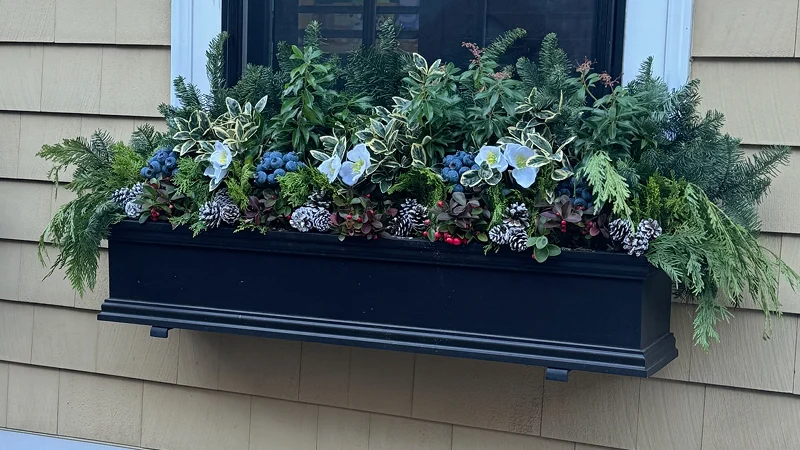
Properties in Chestnut Hill and the western edges of Brookline see regular deer traffic, and window boxes at ground-floor or low second-story height are well within reach. We plant these boxes with selections deer reliably pass over — dusty miller, lamium, most ferns, strongly aromatic herbs — and reserve the more palatable, showier bloomers for boxes higher up or on properties further from the pressure zone.
Mature tree canopy and shade
Brookline’s older residential streets carry decades of tree growth that most newer Boston neighborhoods simply don’t have. A window box that would bake in full sun on a South End rowhouse can sit in near-total shade here. We assess light at the specific sill, not the street, before finalizing a plant list, and we revisit that assessment seasonally as canopy fills in or thins with the year.
Larger lots and longer sightlines
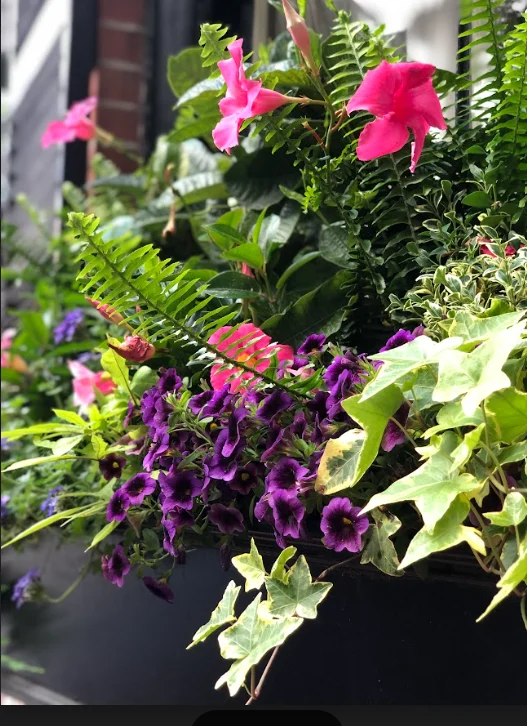
Wider setbacks and bigger front lawns mean a window box here is viewed from further away and often alongside more landscaping than a single planter on a narrow street. We scale box size and planting density so the composition holds up at a distance and reads as part of the property’s overall front-of-house plantings, not as an isolated accent.
Recent Brookline work
Recent projects in the neighborhood have included seasonal window box installations for a Colonial-style property in the Cottage Farm local historic district, where box style and bracket hardware were selected to satisfy the review process before installation, and a shade-adapted planting program for a Chestnut Hill home with heavy deer traffic, where the front boxes were planted entirely in deer-resistant foliage after a prior season’s annuals were repeatedly stripped. Both projects run on the same seasonal swap schedule we use across Brookline — spring, summer, and a fall or winter refresh depending on the client’s preference.
Other services we provide in Brookline
Window boxes are usually one part of a broader planting picture in Brookline, and most of our clients here use several of our services together. We provide full garden services in Brookline covering design, fine gardening, and seasonal maintenance for the larger properties typical of the neighborhood. Many of the same Preservation Commission and deer-pressure conditions that shape window boxes also shape our container plantings, entryway urns, and perennial border work here, and where a property has a terrace or roof deck, we extend the same seasonal planting approach with drip irrigation built in so nothing depends on hand watering during a hot, dry August. For properties bordering wooded lots near the Newton line, we also handle low-voltage lighting design so evening curb appeal doesn’t rely on porch fixtures alone.
Start with a consultation
Brookline is roughly 5.4 miles from our Brookline shop, and it’s a neighborhood we work in regularly, so scheduling a site visit is straightforward. Call us and we’ll set a time to walk the specific sills or brackets in question, take note of light, deer traffic, and any historic district status that applies to your address, and put together a plant list and seasonal schedule before anything is installed. From there, most clients move to installation within a few weeks, timed to the season and, where relevant, to any commission review that needs to happen first.
What Our Customers Say
Frequently Asked Questions
Do Brookline's historic districts affect window box installation?
On properties within a local historic district such as Cottage Farm or Fisher Hill, changes visible from the street — including window box brackets on a front elevation — can fall under Preservation Commission review depending on the specifics of the property. We help confirm status before installing and select hardware and box materials suited to period detail where review applies.
Will deer eat window box plantings in Brookline?
On properties closer to the Newton line and in Chestnut Hill, yes, deer regularly browse ground-floor and low window boxes. We plant these boxes with selections deer typically avoid, such as dusty miller, lamium, and most ferns, and adjust the plan further for properties with heavy documented deer traffic.
My window box gets very little sun because of mature trees. What can you plant?
Brookline's older streets often carry heavy tree canopy that puts front-facing sills in shade most of the day. We use shade-tolerant combinations — heuchera, ferns, trailing lamium, dusty miller — with a smaller share of blooming accents, rather than sun-loving annuals that won't hold up.
How often do you service window boxes in Brookline?
Most clients run a three-season schedule: a spring planting, a summer refresh as needed, and a fall or winter seasonal swap. We build the irrigation and plant selection around each season's conditions rather than reusing one static plan year-round.
Do you install window boxes on larger Brookline lots with more than one facade to plant?
Yes. Larger lots often have window boxes on multiple elevations with different light exposures, and we plan each one individually rather than repeating a single plant list across the whole house.