- Serving Boston and the Greater Boston Area

Window Boxes in Seaport, MA
A window box on a Seaport high-rise faces a different set of physics than one on a bowfront in the Back Bay. Wind off the harbor moves through these corridors at a force that dries soil in a day and can shear an unsecured box off a sill. Salt air off the water accelerates corrosion on hardware and burns foliage that isn’t chosen for it. And because most Seaport buildings are new construction with engineered facades, every box has to answer to a structural load limit before it answers to anyone’s taste. Rouvalis Gardens designs for those constraints first, then makes the boxes look effortless.

What Window Boxes looks like in Seaport
Seaport is not a historic district, which removes one layer of approval that governs work in Seaport or Back Bay, but it replaces that layer with something stricter in practice: building management and condo association sign-off on anything attached to a facade, plus the structural realities of glass-and-steel construction that wasn’t built with masonry ledges or deep sills in mind. Most window boxes here mount to curtain-wall systems or narrow precast sills, which means hardware selection is not optional trim, it is the engineering that keeps a planted box in place through a nor’easter.
Light is abundant and unfiltered. South- and harbor-facing exposures on towers along Seaport Boulevard and the Harborwalk get long, hot, reflective sun bounced off glass neighbors, which pushes soil temperatures up and moisture down faster than a planting plan built for a shaded brownstone street would anticipate. We plant for that: salt-tolerant, wind-firm species with deep root systems that don’t rock loose in gusts, irrigation that runs on a schedule rather than a hope, and drainage that assumes hard rain blown sideways rather than falling straight down.
Because so much of Seaport is new-build residential and commercial, the building itself often dictates the box. Weight limits from property management, cable or bracket specifications from the developer, and in some cases a defined planting palette from the HOA all shape what we install before a single plant goes in the mix. We work from those documents at the outset so the finished box is compliant on day one, not flagged after the fact.
What we account for here
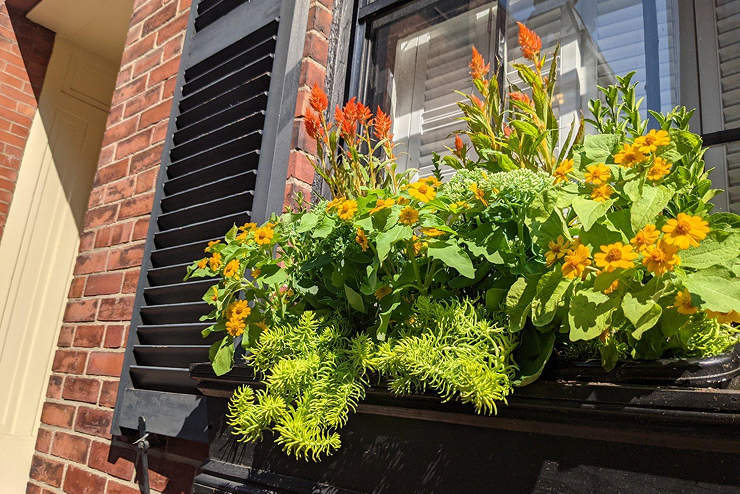
What we account for here
Wind load and hardware failure
Harbor-corridor wind is not occasional in Seaport, it is a daily condition. We specify marine-grade brackets and safety cabling rated for sustained gusts, and we position boxes away from the corner-acceleration zones common on tall glass buildings where wind speed is highest.
Salt exposure on hardware and foliage
Airborne salt off the harbor pits standard steel and dulls foliage that isn’t suited to it. We use stainless or powder-coated hardware throughout and build plant lists around species that tolerate salt spray without scorching by midsummer.
Structural load limits on sills and railings
New-build facades and terrace railings carry defined weight allowances that a planted, watered box can exceed quickly. We calculate saturated soil weight, not dry weight, against the building’s stated limits before finalizing box size and material.
Irrigation as a requirement, not an amenity
Between wind desiccation and reflective heat off glass towers, an unirrigated Seaport box can go from lush to stressed within 48 hours in summer. Drip irrigation on a timer is standard on every installation we do here, not an upsell.
Recent Seaport work
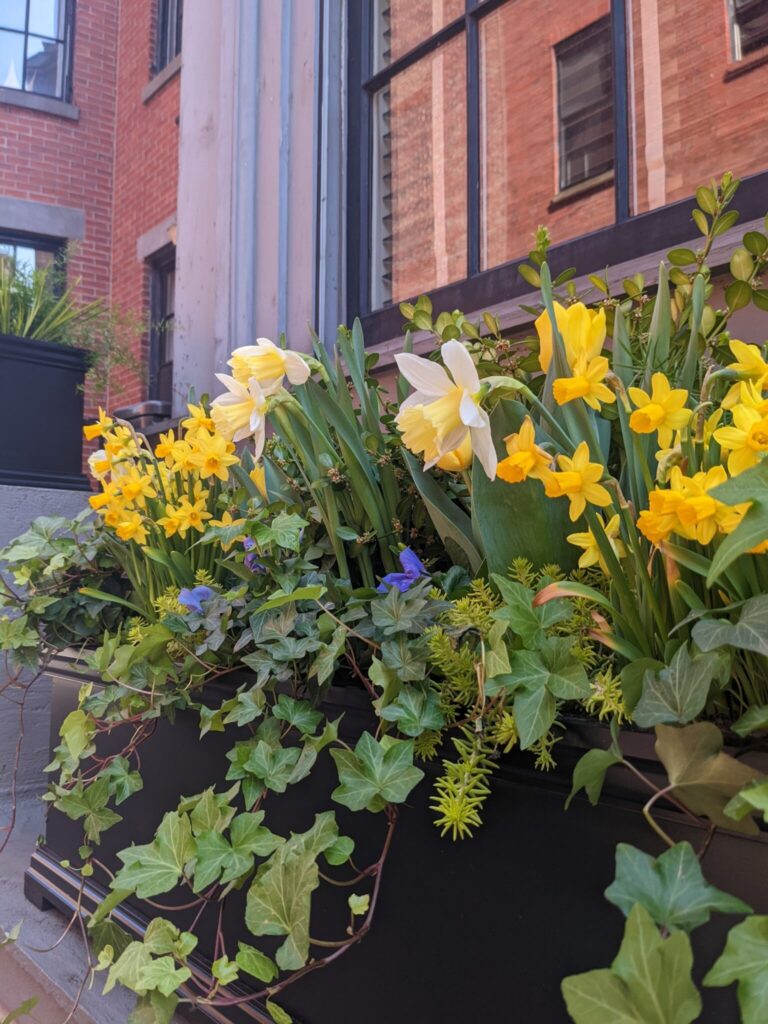
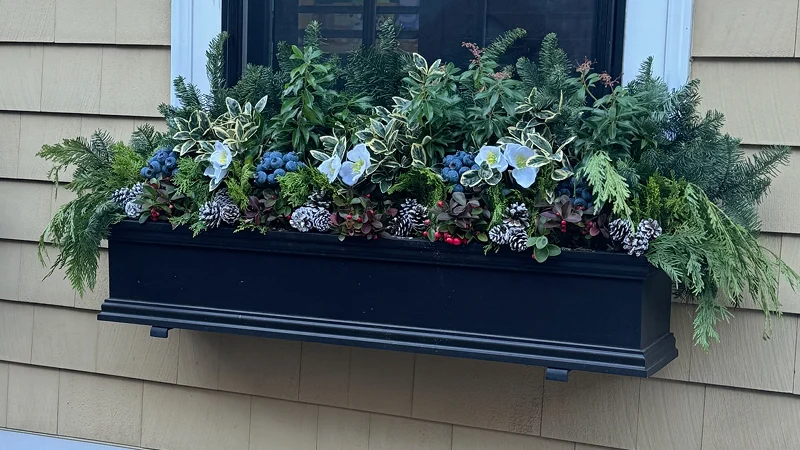
Recent work in the neighborhood has included window box installations on residential towers along the Harborwalk, where the primary design problem was reconciling a property manager’s weight allowance with the client’s request for a fuller, more layered planting than lightweight boxes typically allow. We solved it with a lighter engineered soil mix and a bracket system that distributed load across two points instead of one, which let us plant more densely within the same structural ceiling. We’ve done similar work on commercial ground-floor frontages near the Seaport World Trade Center corridor, where salt-tolerant evergreen structure carries the box through winter when seasonal color isn’t being rotated.
Other services we provide in Seaport
Window boxes are one piece of a broader planting strategy for most Seaport clients, and we typically pair them with our full range of garden services in Seaport. That includes container plantings for lobby entries and terraces, roof deck and terrace planting designed for the same wind and load conditions we account for in window boxes, drip irrigation systems that run the whole property rather than one box at a time, and low-voltage landscape lighting that extends outdoor space into evening hours common in this neighborhood’s condo and office towers. For clients with recurring buildings across our service area, we also handle garden design and installation from scratch and ongoing fine gardening and maintenance, so plantings are checked, seasonally rotated, and adjusted for how a given exposure has performed rather than left to fend for themselves through a harbor winter.
Start with a consultation
Rouvalis Gardens is based in Seaport, roughly 2.4 miles from Seaport, and we work in this neighborhood regularly enough to know which buildings restrict hardware, which corners take the worst wind, and which plant lists actually survive a full season here. A consultation starts with a site visit to check sill dimensions, weight allowances, and exposure, followed by a proposed design and planting plan built around what that specific building will permit. Call us to schedule a visit and we’ll walk through what’s realistic for your address before any commitment is made.
How installations come together in Seaport
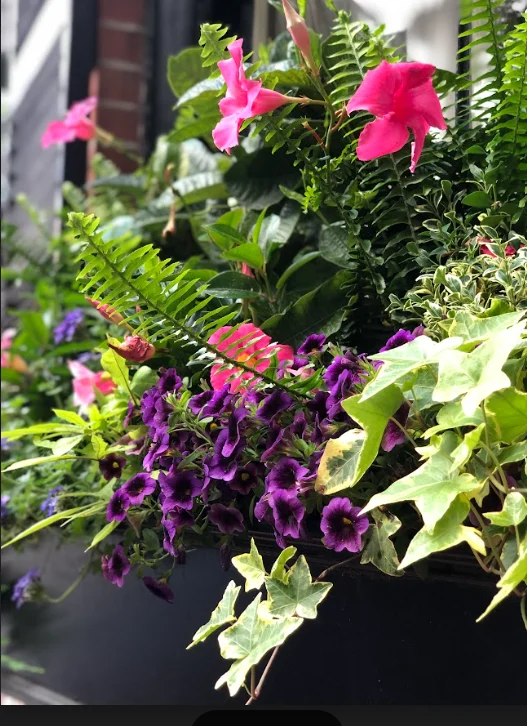
Most window box projects here move through a similar sequence: a site visit to check window dimensions, sun exposure, and bracket options against building materials common to Seaport’s mix of modern facades and converted warehouse structures. Once mounting is confirmed, we build a planting plan suited to wind exposure near the water and the light pattern of the unit.
Installation is scheduled around building access, and we set up a seasonal rotation so boxes stay full and tidy through the year.
Other services we provide in Seaport
Window boxes are just one piece of how we care for a Seaport property. For the rest of the exterior, our garden services in Seaport are a good starting point. When a rooftop or balcony needs a plan, garden design and garden installation cover the layout and the build, while container gardens handle pots and planters at entries and along walkways.
Once plantings are in place, fine gardening and garden maintenance keep everything tidy across the seasons, paired with seasonal planting and spring and fall cleanups to match the calendar. Given how many buildings here have outdoor living space, roof deck planting and terrace planting are especially useful for making the most of limited square footage.
- Drip irrigation for dependable watering
- Low-voltage landscape lighting for evening appeal
- Garden renovation for larger overhauls
Considering window boxes for a property in another part of the city? Take a look at our work throughout the Boston area.
Ready when you are, Seaport
Getting started is simple. Reach out to tell us about your building and windows, and we will set up a time to come see the space in person. We will look at sun exposure, window depth and the surrounding architecture before sketching any options, so what we recommend actually suits your unit.
You will get a clear proposal with materials, planting choices and installation steps before any work begins.
What Our Customers Say
Frequently Asked Questions
Do window boxes in Seaport need special hardware because of the wind?
Yes. Harbor-corridor wind is strong and constant enough that standard residential brackets are not adequate. We use marine-grade, corrosion-resistant hardware with safety cabling rated for sustained gusts, and we avoid mounting boxes at building corners where wind acceleration is highest.
Will my building's weight limit stop me from having a full-looking window box?
Not usually. Most new-build weight allowances account for saturated soil load, and by using lightweight engineered soil mixes and distributing weight across multiple mounting points, we can often achieve a fuller look within the stated limit.
Is irrigation actually necessary, or can I hand-water?
In Seaport, irrigation is effectively mandatory. Wind exposure and reflected heat off glass facades dry soil far faster than hand-watering can reliably keep up with, and a missed day or two in summer can stress or kill plantings. Every box we install here includes drip irrigation on a timer.
Does my condo association or property manager need to approve the design?
In most Seaport buildings, yes. Bracket type, box material, and sometimes even the planting palette are governed by building management or HOA guidelines. We review those requirements with you before finalizing a design so approval isn't a late-stage surprise.
How do you choose plants that handle salt air without looking sparse?
We build around salt-tolerant species with proven structure, layering evergreen anchors with seasonal color that's replaced before it shows salt burn, rather than relying on delicate annuals that scorch by midsummer.