- Serving Boston and the Greater Boston Area

Seasonal Container Planting in Newton, MA
A container plan for a Newton village lot has to solve three problems before it solves style: the deer that move through Waban and Chestnut Hill yards at dusk, the shade thrown by mature foundation plantings that were never pruned with a plan in mind, and a town tree ordinance that can complicate even minor removals near a driveway or walk. If your last few seasons of pots got eaten, faded in the shade, or clashed with the rhododendrons someone planted forty years ago, the fix starts with reading the site correctly, not with buying nicer plants.

What Seasonal Container Planting looks like in Newton
Most of the container work we do in Newton sits in front of or beside houses built between 1900 and 1960, on lots where the original landscape plan was foundation shrubs — yew, boxwood, old rhododendron and azalea — installed decades before anyone thought about seasonal color. Containers here do the job those shrubs no longer can: they carry bloom and structure through the seasons that broadleaf evergreens sit out, and they let a homeowner refresh the entrance without touching the bones of a mature planting bed.
Light is the first variable we measure, not the last. A north-facing entry in Waban or a walk shaded by a neighbor’s oak canopy in Newton Centre gets a different plant list than a south-facing terrace in Newton Highlands. We walk the property at the time of day the containers will actually be seen, note where the shade line falls by midsummer, and build a planting palette — heuchera, ferns, caladium, or shade-tolerant evergreens for winter pots — that will still look intentional in August, not just in May.
Deer pressure varies block by block but is real across most of Newton’s leafier sections, particularly near Cold Spring Park, the Newton Cemetery boundary, and the wooded edges of Waban and Auburndale. We default to deer-resistant material — boxwood, dusty miller, salvia, most ferns, alliums — and reserve anything deer find appealing for containers close to the house or behind a gate, where browsing pressure drops off. Soil in raised beds and older masonry planters here also tends to compact and drain poorly after fifty-plus years of the same fill, so we typically refresh the mix at each seasonal changeover rather than planting into whatever is already in the pot.
What we account for here
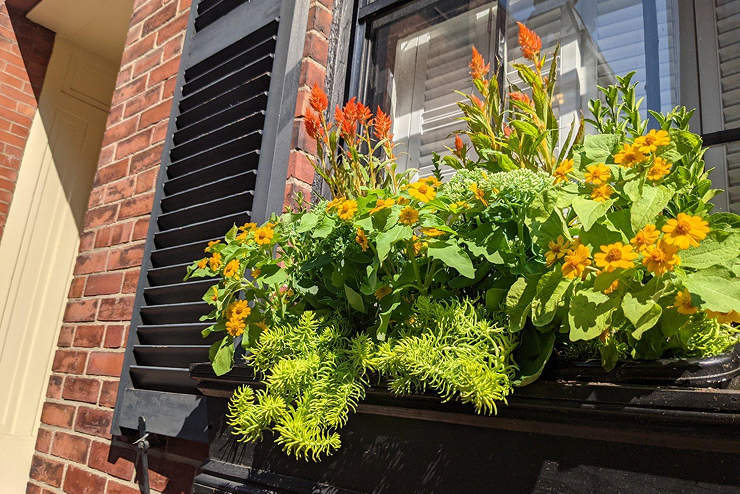
What we account for here
Established foundation plantings that limit sun and root space
Many Newton entries are flanked by yew, holly, or overgrown azalea that block afternoon light and compete for root space with anything nearby. We size and position containers to sit clear of root zones and choose plant lists rated for the actual light the spot receives, not the light a south-facing catalog photo implies.
Deer moving through yards at dusk and dawn
Rather than fencing every planting, we build the seasonal palette around material deer typically pass over and place anything more tempting — tulips, hosta, certain annuals — in containers set closer to the house, on a porch, or behind a low gate where scent and access work against browsing.
Heavy shade from mature street and yard trees
Newton’s older streets carry a significant tree canopy, and a container that reads well in a nursery display can wash out or rot in a shaded gangway or side entry. We plant for the darkest month of the display window, not the brightest, so containers hold their look through a shaded July as well as a sunnier April.
The town tree ordinance and any removal near plantings
Newton’s tree preservation rules can affect work near or under protected trees, including root disturbance from new planters or in-ground beds. When a container plan sits close to a tree covered by the ordinance, we plan placement and any digging to stay clear of protected root zones and flag anything that would need town sign-off before we touch it.
Recent Newton work
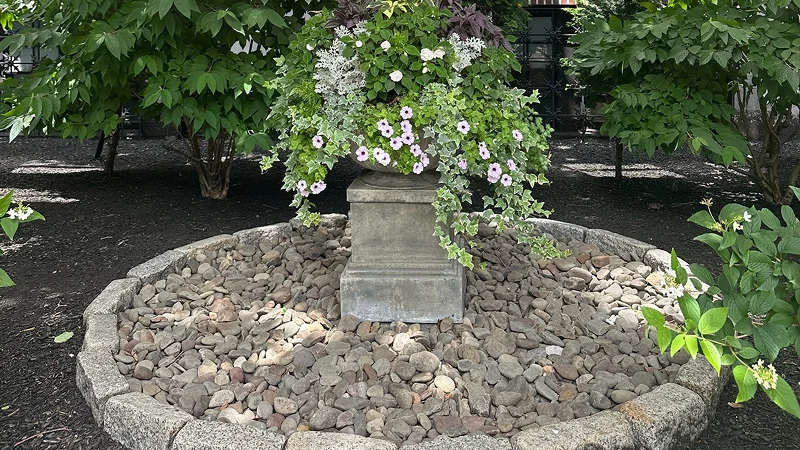
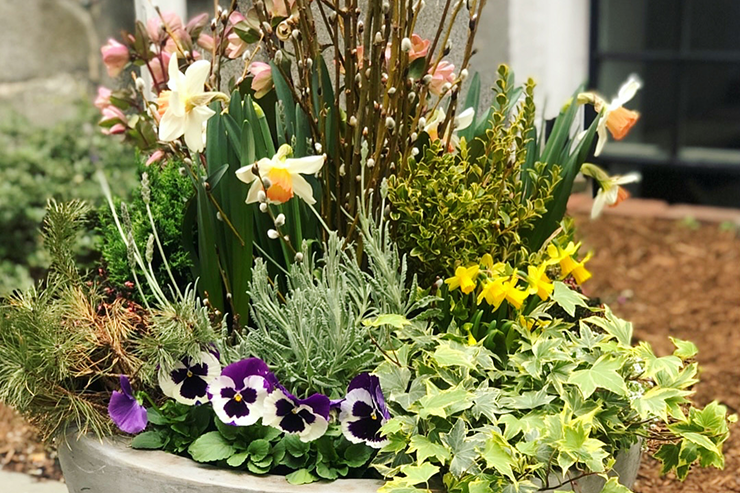
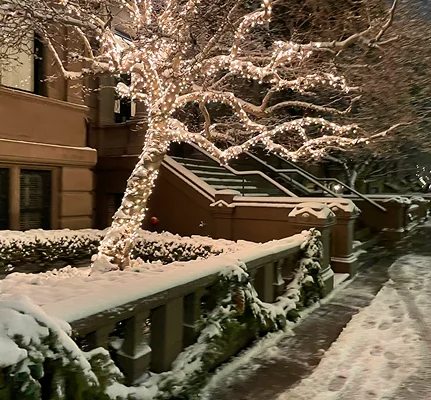
A recurring project type across Newton is the entry refresh on a house with mature, foundation-era shrubs — replacing tired urns flanking the front door with a coordinated container program that carries color from early spring bulbs through a deer-resistant summer mix into a structured winter arrangement of cut greens and berry stems. We’ve also handled shaded side-yard walks in Newton Centre and Newtonville where the client wanted year-round presence without fighting the tree canopy above, and rear patios in Waban set behind wooded lot lines where deer-resistant planting was the deciding factor in every plant selection.
Other services we provide in Newton
Container planting is usually one piece of a broader landscape conversation in Newton. We also handle full garden design and installation for homeowners reworking those older foundation beds, ongoing fine gardening and maintenance to keep established plantings healthy through the season, and window box installations for Colonial and Victorian facades where a container at ground level isn’t enough. For homes with rear decks, screened porches, or roof terraces, we design and plant those spaces directly, run drip irrigation to keep containers and beds consistent through dry stretches, and add low-voltage landscape lighting to extend an entry or terrace planting into the evening. Each of these pairs naturally with a seasonal container program rather than competing with it.
How container planting fits an established Newton landscape
Because so many Newton properties already carry a mature, established landscape, our approach treats containers as an addition to that structure rather than a replacement for it. We map out where the existing shrubs, trees, and beds already provide year-round structure, then use container placement to fill the seasonal gaps — color at the entry while azaleas are between bloom cycles, texture near a shaded walk where nothing else is planted, a winter arrangement at the door once the beds have gone dormant. This keeps the property looking cared for across all twelve months without disturbing plantings that may have taken decades to mature.
Access and scheduling around village-lot properties
Newton’s older neighborhoods — Newton Centre, Newton Highlands, Waban, Auburndale, Chestnut Hill — mix narrow driveways, shared walks, and tight side-yard access with larger, more open lots than you’d find closer to Boston proper. We schedule seasonal changeovers around each property’s actual access, whether that means working from a driveway with room for a full crew and truck or hand-carrying material through a side gate to a rear terrace. Either way, changeovers are planned to be efficient and to leave the property clean the same day.
Start a Newton container planting plan
Rouvalis Gardens is based at 5 Crescent St in Newton, about 8.6 miles from Newton, and we work throughout the city’s villages on a seasonal schedule that fits how each property actually gets used. Call to set up a walk-through: we’ll look at your light, your existing shrubs, and your deer pressure on site, then propose a container plan for the coming season. After that first call, the next step is a scheduled visit — no obligation, no generic quote sent without seeing the property.
Plan your Newton containers with us
Ready to refresh your entryway, terrace, or porch for the season? Reach out to Rouvalis Gardens and we’ll set up a walkthrough of your Newton property to assess light, wind exposure, and access before recommending plant combinations suited to your home’s style. Most Newton properties can be scheduled for a design consultation within a week.
What Our Customers Say
Frequently Asked Questions
Do you account for deer when planning containers in Newton?
Yes. Deer move through most of Newton's leafier sections, especially near Cold Spring Park, the Newton Cemetery edges, and the wooded parts of Waban and Auburndale. We default to deer-resistant plant material for exposed containers and reserve anything more tempting for spots close to the house or behind gates.
Does Newton's tree ordinance affect container or planter installation?
It can, if a container or in-ground planting sits near or requires digging under a protected tree. We check placement against root zones before installing and will flag anything that needs town review before work begins.
What plants actually hold up in shaded Newton entries?
Heuchera, ferns, caladium, and several shade-tolerant evergreens perform reliably under mature canopy or beside overgrown foundation shrubs. We select the palette based on the darkest point in the display window, not the brightest.
How often do seasonal containers get changed over?
Most Newton clients run four changeovers a year — spring, summer, fall, and a winter arrangement — though some properties only need three depending on exposure and how the containers are used.
Do you work on both village-center and larger residential lots in Newton?
Yes. We plant tight entries in Newton Centre and Newtonville as well as larger, more wooded lots in Waban and Chestnut Hill, adjusting plant choice and access planning to each site.