- Serving Boston and the Greater Boston Area

Seasonal Container Planting in Winchester, MA
If your containers get browsed down to stems by June, the culprit is almost certainly deer coming off the green corridor around the Mystic Lakes, not a watering problem. Add a mature oak canopy that shifts full sun to dappled shade by July, and a sloped lot where drainage runs downhill toward a lake-facing lawn, and a planting plan that works in Belmont or Arlington often fails here within a season. Winchester containers need to be chosen for these three conditions specifically, then planted and rotated on a schedule that accounts for them.

What Seasonal Container Planting looks like in Winchester
Winchester is a town of two planting realities. Close to the Lakes and along Ridge, Highland, and the streets feeding into them, properties sit under significant oak, beech, and maple canopy that changes the light available to a container from spring to midsummer. A window box that reads as full sun in April is filtering light through leaves by June. We build the palette around that shift from the start, rather than planting for one moment and watching it decline.
Slope is the second reality. Many Winchester lots step down toward the water or toward a lower street grade, which means containers near foundations, terraces, and stair landings deal with runoff that pools or channels depending on the season. We check drainage at the container level and at the bed level, and we set saucers, risers, or gravel bases where a lot’s grading would otherwise waterlog roots after a heavy rain off the lake basin.
Deer are not occasional visitors here — they move through yards adjacent to conservation land and the Lakes with real regularity, and a container planted with tulips, hosta, or soft annuals at ground level reads as a buffet. We plant most street-level and yard-level containers with material deer pass over, reserving anything deer find appealing for elevated boxes, porches, or courtyards a deer would have to work to reach. Combined with an install-and-rotate calendar for spring, summer, and fall color, this is what keeps a Winchester container program looking intentional in October instead of picked over.
What we account for here
What we account for here
Four site conditions come up on nearly every Winchester property we plant, and each changes a decision we’d otherwise make differently.
Deer pressure near the Lakes and conservation edges
Properties within a few blocks of the Mystic Lakes or bordering conservation land see deer traffic through the yard on a near-nightly basis in season. We build container recipes around textured, aromatic, or fuzzy-leaved plants deer typically avoid, and we reserve any deer-preferred material — tulips especially — for boxes raised above browsing height or set inside gated courtyards.
Oak and mature shade canopy
A container planted for full sun under a young street tree behaves nothing like one under a 60-year-old oak. We assess actual light at the container’s location in the season it will be viewed, not just the exposure on paper, and select shade-tolerant textures — heuchera, begonia, ferns — for anything reading dappled to full shade by midsummer.
Sloped lots and drainage
Lakeside and hillside properties often grade steeply from house to street or house to water. We check where runoff travels before placing containers at grade, and we elevate or reroute drainage at the container so a downpour doesn’t leave roots standing in water for days.
Access to lakefront and set-back properties
Some Winchester lots sit well back from the road or down a long driveway toward the water, which changes how we schedule install days and seasonal swaps. We plan routes and timing around each property’s actual access rather than assuming a driveway pull-up is available.
Recent Winchester work
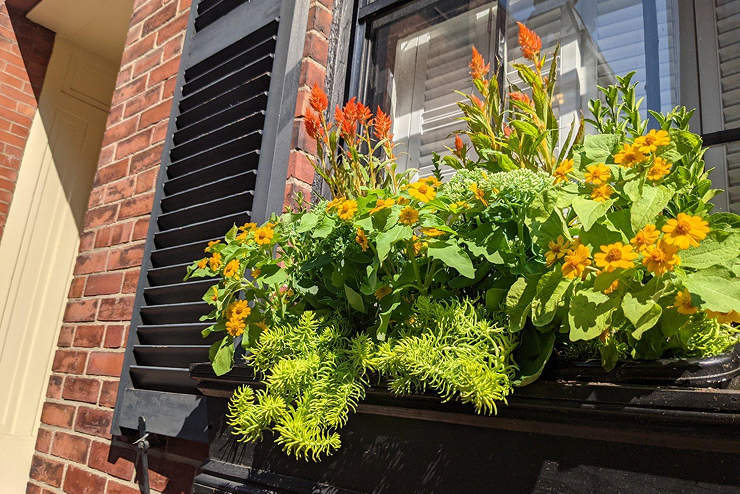
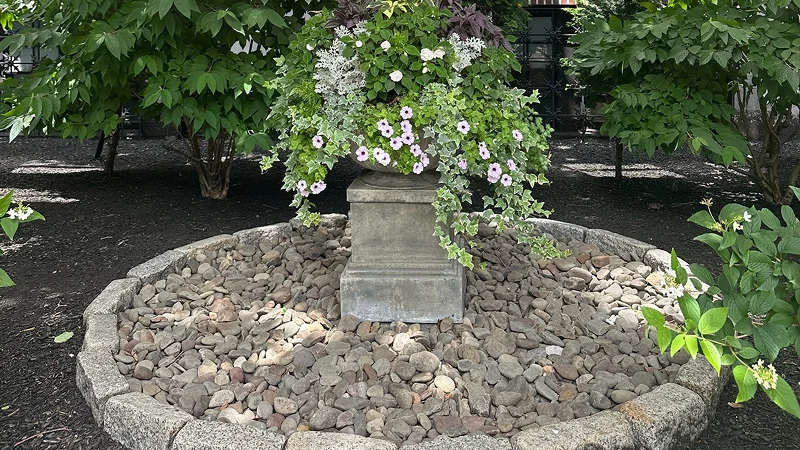
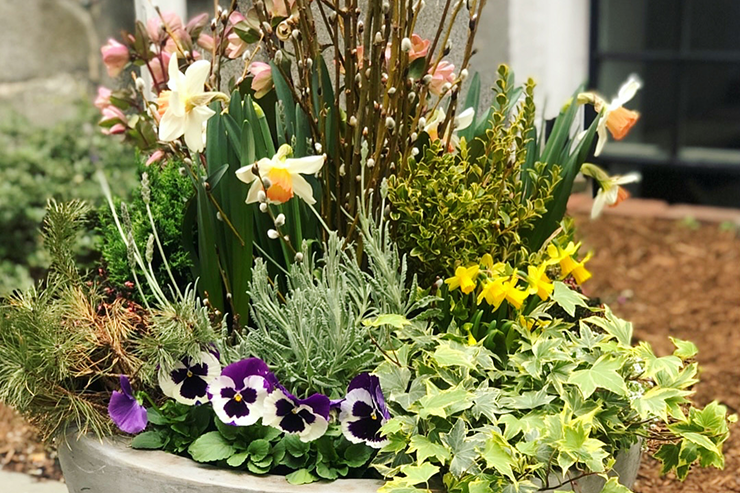
A recurring project type in Winchester is a full-perimeter container refresh on a lakeside or near-lake property: entry urns, a rear terrace grouping, and a set of window boxes, all planted on a spring, summer, and fall rotation with deer-resistant selections built in from the first design. We’ve also handled shade-forward courtyard containers under established oak cover, where the brief was color that reads well in filtered light rather than a full-sun palette that would fade under the canopy by July.
Other services we provide in Winchester
Container planting is usually one piece of a broader property plan. For Winchester clients we also provide full garden design and installation, ongoing fine gardening and maintenance built around a sloped or shaded lot, roof deck and terrace planting for properties with lake views, drip irrigation runs that account for uneven grade, and low-voltage landscape lighting for entries and pathways that lose light early under heavy tree cover. If your property backs onto conservation land or the Lakes directly, we typically start with a walk-through that covers deer pressure, shade patterns, and drainage together, since those three drive nearly every planting decision that follows.
Container planting across the Boston area
How the season is scheduled
Winchester containers get planted on a three-part calendar: a spring installation once the risk of hard frost passes, a summer refresh as heat and canopy shade shift what performs, and a fall rotation for color that holds through the first frosts off the lake basin. Each swap is scheduled around the specific property, not a fixed townwide date, since a shaded lakefront lot and an open, south-facing driveway a half mile away are rarely ready at the same time.
What a first visit covers
A first visit to a Winchester property is a walk of every container location — entry, terrace, window boxes, courtyard — noting actual light at each spot, drainage behavior on the slope, and any signs of existing deer activity. We leave with a season-long plan and a quote before any plant order goes in, so there’s no guesswork about what the property will look like in August versus April.
Start a Winchester container planting plan
Winchester is roughly a twenty-minute drive from our Winchester location, and we plant on the same schedule for clients around the Lakes as we do closer to the water in town. Call to set up a walk-through of your property’s containers, window boxes, or terrace, and we’ll come back with a seasonal plan and a quote — not a generic template — built around your specific light, slope, and deer exposure.
What Our Customers Say
Frequently Asked Questions
Do you plant containers that hold up against deer near the Mystic Lakes?
Yes. Deer traffic is heavy on properties near the Lakes and along conservation edges, so we build most Winchester container recipes around plants deer typically pass over, and reserve anything deer prefer — tulips especially — for elevated boxes or gated areas they can't easily reach.
My property is shaded by oak trees most of the day — what will actually grow in a container there?
We assess the light at each container's exact spot through the season, since a location that's sunny in April can be fully shaded by an oak canopy in July. For consistently shaded spots we plant heuchera, begonia, ferns, and other shade-tolerant textures rather than a sun-palette that would fade.
How do you handle drainage on a sloped lot?
We check where water travels across the property before placing any container, and elevate or add drainage at the container itself where the natural grade would otherwise leave roots sitting in water after a heavy rain.
How often do containers get swapped for the season?
Most Winchester properties get three rotations — spring, summer, and fall — timed to that property's actual light and exposure rather than a fixed calendar date, since a shaded lakefront lot and an open driveway can be ready weeks apart.
Do you service properties set back from the road or down long driveways near the water?
Yes. We plan install and swap-day routes around each property's actual access, including longer lakefront driveways and set-back lots, so scheduling accounts for it in advance rather than on the day.