- Serving Boston and the Greater Boston Area

Seasonal Container Planting in Brookline, MA
A container planting plan for a Brookline property has to solve three problems most Boston gardens do not face together: mature plantings that already dictate scale and light, deer moving in from the Newton line that will strip a poorly chosen container overnight, and, for many streets in Cottage Farm, Fisher Hill, and the Longwood area, a Preservation Commission that reviews what sits at the front of the house. Containers here are sized to the house, planted to survive browsing pressure, and specified with an eye toward what a review board will and will not object to.

What Seasonal Container Planting looks like in Brookline
Brookline lots run larger than the Boston average, and that changes the brief before a single plant is chosen. A driveway urn pairing that reads fine on a South End stoop gets lost against a Fisher Hill facade or a Cottage Farm circular drive. We scale containers to the architecture first — often a matched set of larger-format planters flanking an entry, or a graduated run along a fieldstone wall — rather than defaulting to the smaller, denser combinations that suit tighter city frontages.
Established tree canopy is the second variable. Many Brookline properties were planted decades ago, and mature oaks, beeches, and old rhododendron hedges throw deep, moving shade that shifts through the season. Container mixes are chosen against the actual light at the specific pot location — not a generic sun/shade split — because a container thirty feet from the same house can sit in full sun in April and heavy shade by July once the canopy fills in.
Then there is the deer question, which does not exist on most of our Boston routes. Properties toward Newton, Chestnut Hill Ave, and the reservoir side of town see regular browsing, and a container planted with tulips or soft annuals in an open front yard is a standing invitation. We plan around this from the start rather than replacing eaten plants mid-season.
Finally, a meaningful share of Brookline’s older neighborhoods — Cottage Farm, parts of the Town Green area, and select historic districts — fall under design review for anything visible from the street. Container material, color, and placement at a front door or bay window can be part of that conversation, so we plan installations that read as appropriate and permanent-feeling rather than seasonal decor that might draw a second look.
What we account for here
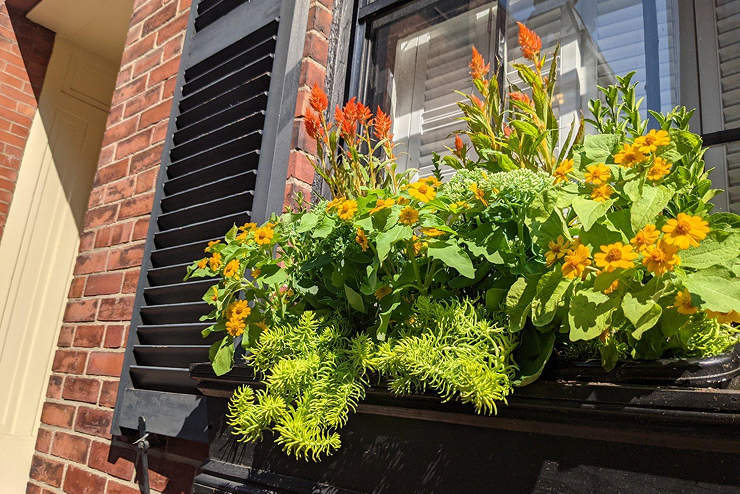
What we account for here
Brookline properties bring their own set of variables to seasonal container work, and we plan around them before ordering plant material. That means reading the specific spot — sun exposure, wind off a corner lot, foot traffic near an entry — rather than applying one formula across the whole property.
- Existing pots, urns, and window boxes already in place
- Soil and drainage inside older or ornamental containers
- Timing swaps around the town’s freeze and bloom patterns
Larger lots, larger-scale plantings
Brookline’s bigger footprints mean containers are often specified in pairs, trios, or long runs rather than as single statement pots. We size and space them to hold their own against long driveways, deep front lawns, and substantial house facades, and we plan planting density so the composition still reads correctly from the street, not just up close.
Deer pressure near the Newton line
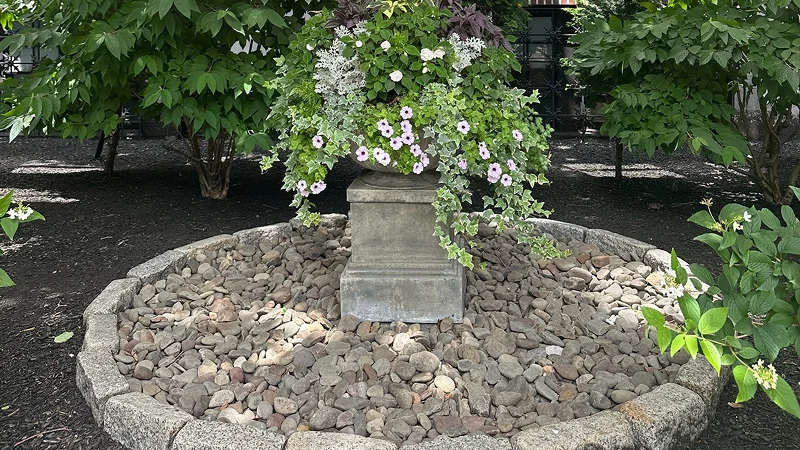
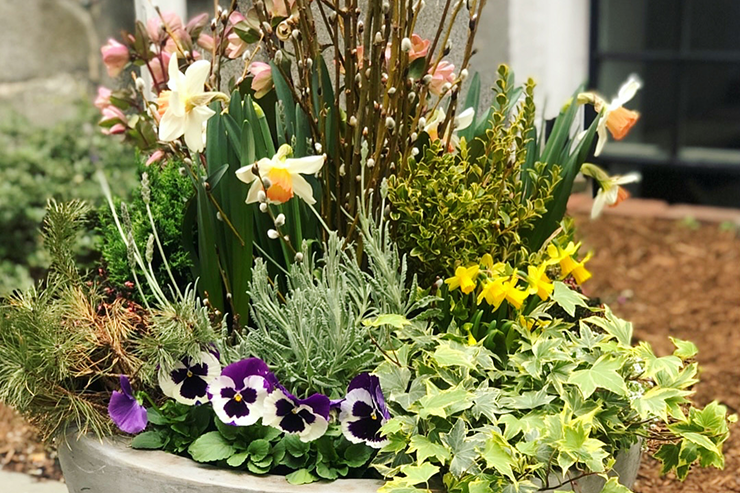
For properties in the western sections of Brookline where deer move through regularly, we select container plantings that deer tend to pass over — dense textural foliage, aromatic herbs, and selections with a track record locally — and we place vulnerable material closer to the house or on raised levels where browsing is less likely. Where pressure is heavy, we build the plan around a deterrent-friendly palette from the start rather than reacting after damage.
Mature plantings and shifting shade
Decades-old trees and shrub borders common on Brookline lots change the light on a container as the season progresses. We evaluate each planting location for how shade will move once deciduous canopy fills in, and choose combinations that hold their form and color through that shift rather than plantings suited only to early-spring light levels.
Preservation Commission and historic district review
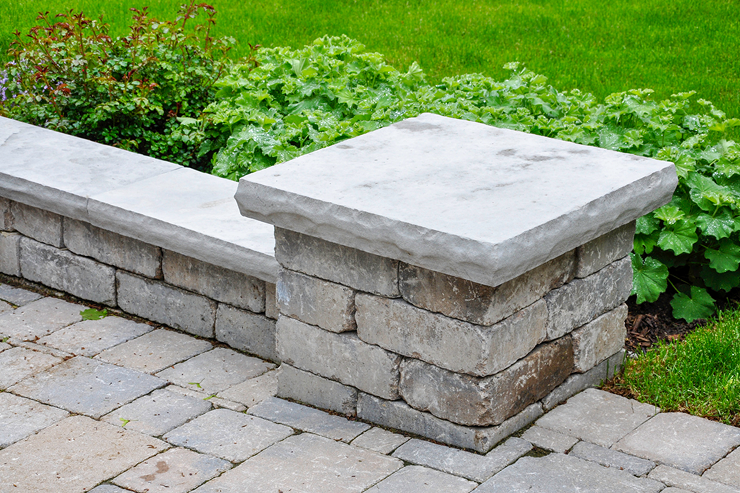
Streets under design review in Brookline’s historic districts have expectations about what sits at a front entry or is visible from the public way. We work within those expectations — appropriate materials, restrained color palettes, and placement that respects the house’s period detailing — so container plantings support the property’s presentation rather than becoming a point of scrutiny.
Recent Brookline work
Recent work in Brookline has included a paired-urn entry planting for a Georgian-style house in Cottage Farm where deer pressure required a deterrent-friendly palette, a run of large-format planters along a Fisher Hill driveway sized to match the scale of the property, and seasonal rotations for a historic district home near the Town Green where container material and plant selection were chosen with an eye toward the street-facing review process. We do not publish client names or addresses, but these describe the type of project we handle regularly in town.
Other services we provide in Brookline
Seasonal container planting is usually one piece of a broader plan. Many Brookline clients pair it with full garden services in Brookline, including fine gardening for mature perennial borders, design and installation for lots being reworked around existing trees, drip irrigation to keep containers and beds consistent through dry stretches, and low-voltage lighting that carries a planted entry or driveway into the evening. Roof deck and terrace planting is less common on Brookline’s larger lots than in denser parts of Boston, but it comes up for properties with elevated patios or pool terraces, and window box planting remains a frequent request for houses with street-facing sills under Preservation Commission review. We coordinate all of it as one seasonal calendar so container rotations, bed maintenance, and irrigation stay in sync rather than being scheduled as separate, disconnected visits.
Start a Brookline container planting plan
Brookline is about 5.4 miles from our Brookline location at 5 Crescent St, and we schedule regular routes through Fisher Hill, Cottage Farm, and the neighborhoods toward the reservoir. Call to set up a walkthrough — we look at your lot’s scale, light, and any deer pressure or review-board considerations on site, then follow up with a seasonal planting plan and a straightforward quote. From there, installation is scheduled around your calendar and each seasonal changeover is handled on a standing schedule so you are not fielding the decision four times a year.
What Our Customers Say
Frequently Asked Questions
Do you plan containers around Brookline's deer pressure?
Yes. For properties in western Brookline and areas near the Newton line, we select plants deer are less likely to browse and place more vulnerable material where it is better protected. This is planned into the design up front rather than addressed after plants are damaged.
Will container planting need Preservation Commission approval in my part of Brookline?
It depends on the district and whether the containers are visible from the street. We are familiar with what tends to draw scrutiny in Brookline's historic areas and design plantings that fit within those expectations, but we recommend confirming specifics with the Commission for properties under active review.
Can you size containers appropriately for a larger Brookline lot?
Yes. Many Brookline properties have deeper setbacks and larger facades than typical Boston lots, and we scale container size, grouping, and spacing so the planting reads correctly from the street rather than looking undersized against the house.
How do you handle containers in the shade thrown by mature trees?
We assess how shade moves across the planting location through the season, since many Brookline lots have decades-old canopy that changes light levels significantly between spring and mid-summer, and choose combinations suited to that shift.
How often do container plantings get changed out?
Most Brookline clients run three to four seasonal rotations a year. We set a standing schedule so spring, summer, fall, and winter changeovers happen automatically without you needing to call each time.