- Serving Boston and the Greater Boston Area

Seasonal Container Planting in Cambridge, MA
A container planting scheme that works on a wide-open Newton lawn will often fail on a Cambridge stoop. The mature street trees that line blocks in Mid-Cambridge, Cambridgeport, and Old Cambridge cut direct sun to a few hours a day at best, triple-decker porches and bow-front Victorians leave uneven, narrow footprints to plant into, and anything visible from the sidewalk in a local historic district is subject to a level of scrutiny most towns don’t apply. Container planting here has to be designed against those three facts, not around them.

What Seasonal Container Planting looks like in Cambridge
Most of the container work we do in Cambridge starts with the building, not the plant list. A triple-decker with three stacked porches needs three related but distinct schemes — what reads well from the second-floor bay window is not what reads well from the sidewalk, and we plant each level with that sightline in mind. A single-family Victorian near Brattle Street or Avon Hill usually has a front dooryard, a set of stairs, and maybe a bay window ledge, each with different light and different wind exposure off the street.
Light is the recurring problem. Norway maples, honey locusts, and old elms along Cambridge streets throw dense, dappled shade from May through October, and a container planted for full sun will thin out and stretch by July. We work from a shade-tolerant palette — heucheras, ferns, caladiums, torenia, coleus — and reserve the sun-loving standards for the handful of properties that actually get open sky, usually corner lots or homes set back from a wide avenue.
Soil volume matters more in Cambridge than almost anywhere else we work. Porch and stoop containers are often the entire root zone a plant will ever have, with no in-ground bed to draw on, so we size pots generously and build a soil mix that holds moisture through August without staying wet enough to rot roots on a shaded, poorly-drained porch. Wind funneling between attached triple-deckers can dry out an exposed container fast even without direct sun, so irrigation planning is part of the design, not an afterthought.
What we account for here
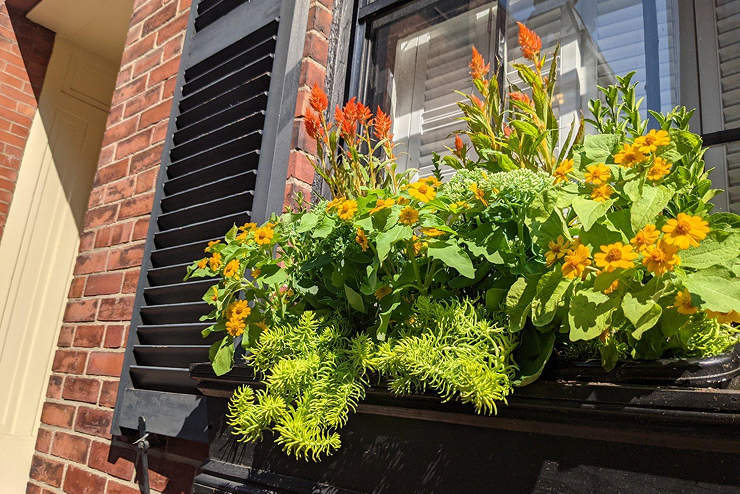
What we account for here
Four constraints come up on nearly every Cambridge property we plant, and each has a specific answer rather than a generic one.
Cambridge Historical Commission review
Large swaths of Cambridge — Old Cambridge, Half Crown-Marsh, parts of Cambridgeport — sit inside local historic districts where anything visible from a public way can be subject to Commission review, and container planters attached to a porch or built into a stoop rail sometimes cross that line. We keep street-facing schemes freestanding and reversible wherever a property is under active review, and we build seasonal rotations that read as appropriate to the house’s period rather than drawing attention to themselves.
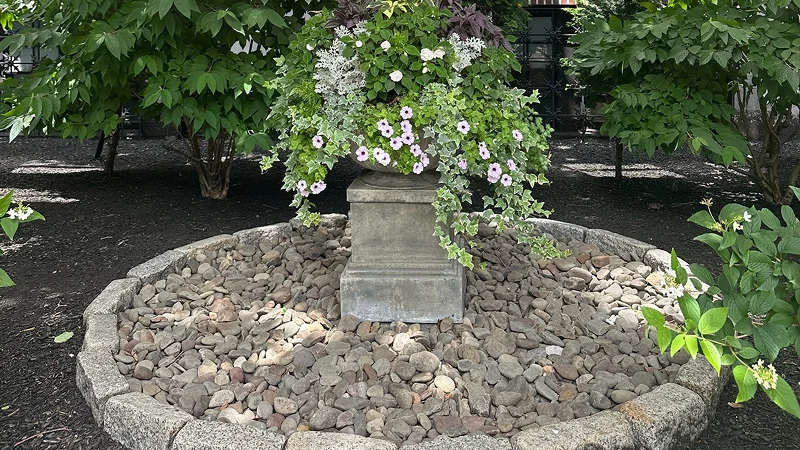
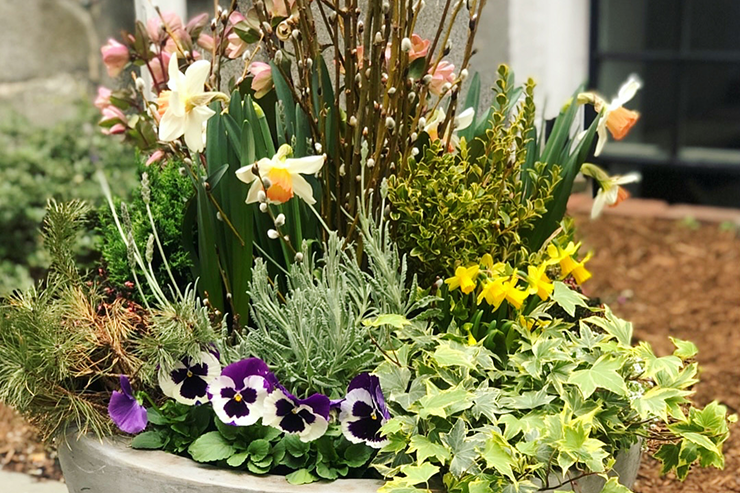
Triple-decker porch light and tiered sightlines
A three-family porch stack means three different light readings and three different audiences — the tenant looking out, the passerby looking up, and the owner looking down from above. We plant each level on its own light budget and choose a palette that ties the building together visually without forcing identical pots onto floors with different sun.
Narrow gangways and no vehicle access
Many Cambridge triple-deckers and rowhouses have a side gangway three feet wide or less between the property line and the neighbor’s, with no way to bring a cart or wheelbarrow through. Soil, containers, and plant material get hand-carried in trip loads, which is standard practice for our crews here and factored into scheduling rather than treated as a surprise on install day.
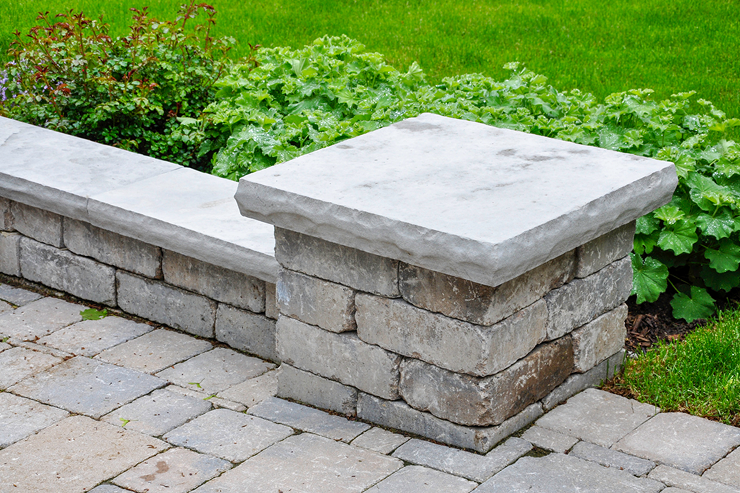
Deep shade from protected street trees
Cambridge’s street canopy is old and protected, and a client can’t simply prune it back to get more light onto a porch. Rather than fight the shade, we design around it with foliage-forward planting — variegated Solenostemon, Japanic ferns, and shade begonias hold color and texture through a Cambridge summer without needing the sun a Back Bay roof deck gets.
Recent Cambridge work
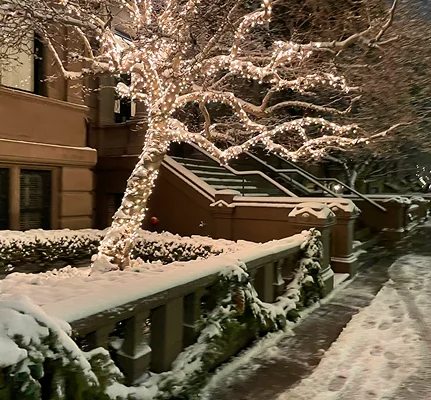
Recent projects have included a full seasonal rotation across the three stacked porches of a Cambridgeport triple-decker, replanted four times a year to track spring, summer, fall, and a winter evergreen display; and a pair of matched dooryard urns on a Brattle Street-area Victorian, sized and detailed to satisfy an active Historical Commission filing while still giving the entrance real seasonal presence. Both are typical of the balance most Cambridge properties need — visible from the street, appropriate to the house, and easy to maintain without vehicle access to the site.
Other services we provide in Cambridge
Container planting is usually one piece of a larger Cambridge property plan. We also handle garden design and installation for the small front and rear yards typical of Cambridge lots, ongoing fine gardening and maintenance through the growing season, window box planting for porches and bay windows, roof deck and terrace planting for the rarer Cambridge properties with usable outdoor square footage above street level, drip irrigation built to run on timers for owners who travel or manage the property remotely, and low-voltage landscape lighting that respects historic district sightlines while still lighting a walk or a stoop safely after dark.
Start a Cambridge container planting plan
Rouvalis Gardens is based at 5 Crescent St in Cambridge, about 2.8 miles from Cambridge, and we run seasonal container work throughout Cambridgeport, Mid-Cambridge, Old Cambridge, and the triple-decker streets in between. Call to start a plan, or request a consultation online. After you reach out, we schedule a site visit to assess light, access, and any historic district requirements on your street, then come back with a seasonal planting plan and a schedule for the year. If you’re weighing container work against a broader project, our Boston container planting page and our South End and Back Bay container planting page cover how the same service adapts to different building types nearby.
What Our Customers Say
Frequently Asked Questions
Do container plantings on a Cambridge porch or stoop need Historical Commission approval?
It depends on the district and whether the containers are freestanding or physically attached to the structure. In local historic districts like Old Cambridge or Half Crown-Marsh, we default to freestanding, reversible container schemes for anything visible from the street, which typically avoids review triggers. We'll flag any property where a filing looks necessary before we plant.
My porch gets almost no direct sun. Can containers still work?
Yes. Most of our Cambridge clients are planting into shade from street trees or a neighboring triple-decker, and we build the palette around that from the start using foliage plants like ferns, heucheras, and caladiums rather than sun annuals that will fail.
How do you get soil and containers to a porch with no driveway or gangway access?
Hand-carrying material in trip loads through a narrow gangway or up a stoop is standard practice on Cambridge jobs, and we schedule crew time to account for it rather than assuming vehicle access.
How many times a year do you replant containers in Cambridge?
Most clients do three to four rotations — spring, summer, fall, and a winter evergreen display — timed to the growing season and swapped before each display starts to fade.
Do you plant triple-decker porches with multiple units differently from single-family homes?
Yes. Each porch level on a triple-decker usually has different light and a different sightline, so we plant each floor on its own light budget while keeping the overall palette tied together visually.