- Serving Boston and the Greater Boston Area

Container Gardening in Cambridge, MA
A stoop shaded by a hundred-year-old maple, a bow-front bay window with no direct sun after 10am, a front walk regulated by the Cambridge Historical Commission because the house sits inside a local district — this is the starting point for container work here, not an afterthought. Cambridge’s triple-deckers and Victorians were built close to the street and close to each other, under a canopy that has matured for a century. Containers succeed here when they are chosen for filtered light, narrow footprints, and, on many blocks, a review process before anything visible from the sidewalk changes.

What Container Gardening looks like in Cambridge
On a typical Cambridge project we are working with a stoop, a small front yard, a porch, or a fire-escape-adjacent rear deck — rarely a wide-open bed. The street-tree canopy along blocks in Mid-Cambridge, Cambridgeport, and around Avon Hill filters most direct sun to two or three hours a day, so the palette leans on shade and part-shade performers: hakonechloa, heuchera, hosta cultivars bred for container life, ferns, and shade-tolerant annuals like torenia and browallia rather than the sun-hungry standards used in more open suburban settings.
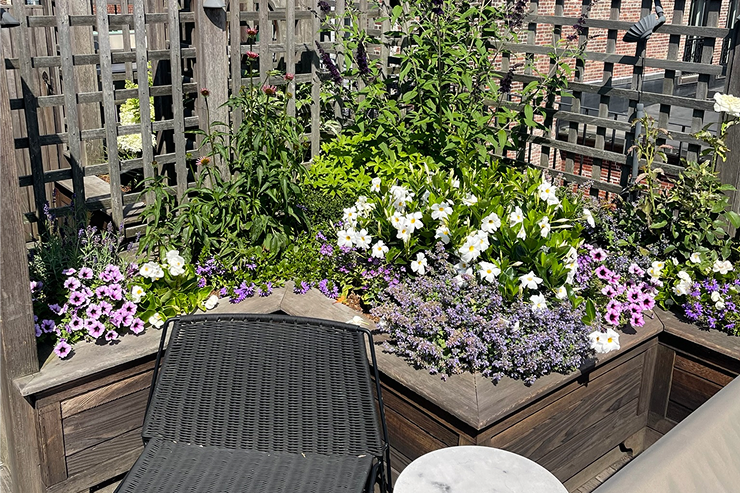
Soil is container soil by necessity — the postage-stamp front yards common to triple-deckers rarely have enough in-ground root run to support anything beyond what’s already there, and many properties have no real yard at all, just a stoop and a window ledge. We build containers with drainage and weight in mind, since porches and bow-front window ledges have load limits, and we size planters to survive Cambridge winters above grade rather than shatter through a freeze-thaw cycle.
Where a property sits inside a Cambridge Historical Commission district — much of Mid-Cambridge, Avon Hill, and parts of Cambridgeport qualify — anything visible from the public way, including permanent window boxes and railings, can fall under review. We design around this rather than around it: freestanding and hardware-light options that read as seasonal display rather than fixed alteration, so a homeowner isn’t waiting on a commission hearing to get color on the stoop by spring.
What we account for here
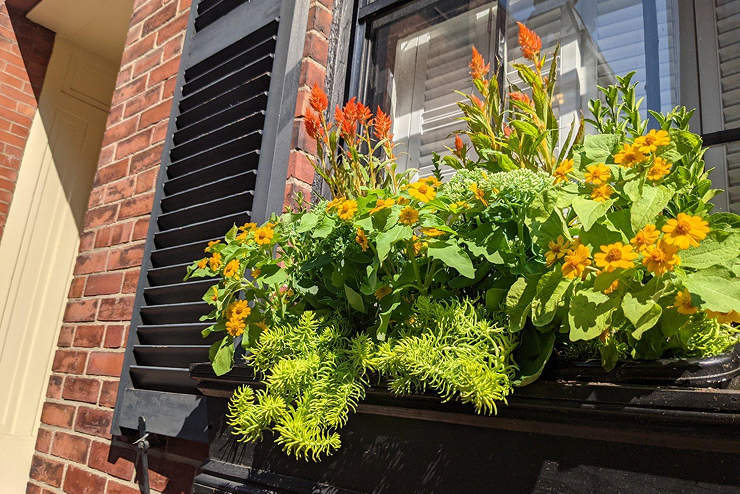
What we account for here
Four constraints come up on nearly every Cambridge container project, and each has a specific answer:
Historical Commission districts
Where a property is under CHC purview, we favor containers and window boxes that install without altering the structure — no drilled brackets into original brick or sills, no permanent fixtures visible from the street that would trigger a certificate of appropriateness. Seasonal, removable plantings keep a homeowner in compliance without a hearing.
Heavy shade from mature street trees
Cambridge’s canopy is a civic asset and a design constraint at once. We select for two-to-four-hour light windows rather than fighting for a full-sun look that will fail by July, and we adjust the palette block by block as the canopy shifts from a young replacement street tree to a full mature elm or maple.
Tight, narrow access
Triple-decker side yards and shared driveways are often two to three feet wide, with no vehicle access to the rear. We plan container sizes, soil delivery, and installation timing around what can physically move through a side gate or narrow alley, and we build in place where a pre-filled container simply won’t fit.
Porch and railing weight limits
Second- and third-floor porches on triple-deckers were not engineered for saturated soil loads. We calculate container weight wet, not dry, and use lightweight soil mixes and materials on any elevated porch, rail, or fire-escape-adjacent planting.
Recent Cambridge work
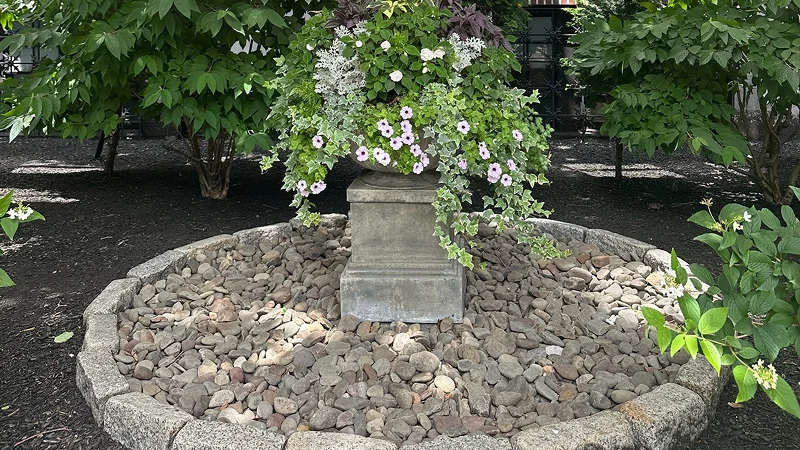
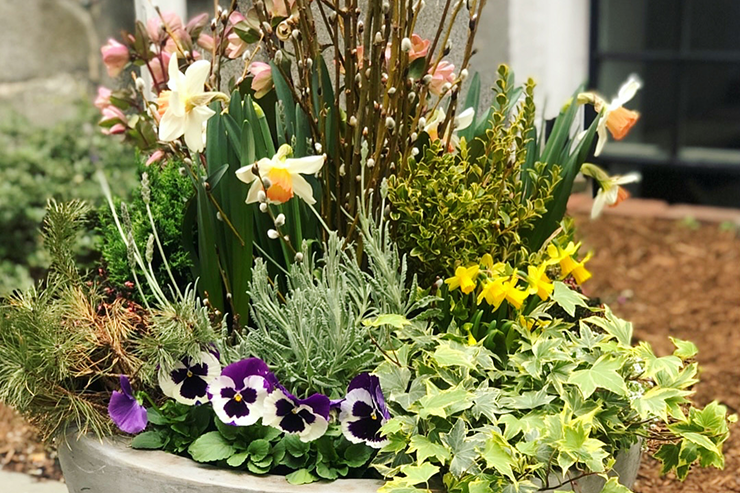
A recent project pattern in Cambridgeport: a triple-decker owner wanted color visible from the sidewalk without triggering a Historical Commission filing, since the property sits in a review district. We built a rotating seasonal container program on the stoop and porch rail — spring bulbs into summer shade annuals into a fall planting — all freestanding, all removable, none requiring a permit. On a separate Avon Hill property, deep shade from a mature oak ruled out anything sun-dependent, so the containers went entirely to textural foliage: hakonechloa, Japanese painted fern, and heuchera, refreshed seasonally rather than relying on bloom.
Other services we provide in Cambridge
Containers are usually one piece of a larger property plan. We also provide full garden services in Cambridge, including design and installation for front yards and rear plantings, fine gardening and seasonal maintenance for properties with limited in-ground space, roof deck and terrace planting for condo conversions above triple-deckers, drip irrigation sized to container beds and narrow side yards, and low-voltage lighting for stoops, walkways, and small rear gardens where a subtle glow matters more than floodlighting. For a homeowner comparing approaches across the river, our container gardening service in Boston covers the same discipline applied to Back Bay bow-fronts and Beacon Hill townhouses, and our team runs the identical program for container gardening in the South End and Back Bay, where similar row-house conditions and review boards apply.
Working from Cambridge, close to Cambridge
Rouvalis Gardens is based at 5 Crescent St in Cambridge, about 2.8 miles from Cambridge — a short cross-river trip that keeps install and maintenance visits predictable, whether the property is a stoop off Mass Ave or a rear deck near Central Square. Call to set up a site visit; we’ll assess the light, the access, and whether the property falls inside a Historical Commission district before recommending containers, sizes, or a seasonal rotation. After that call, expect a proposal within days and an installation window that works around your building’s access, not the other way around.
Container work near Harvard and Porter Square
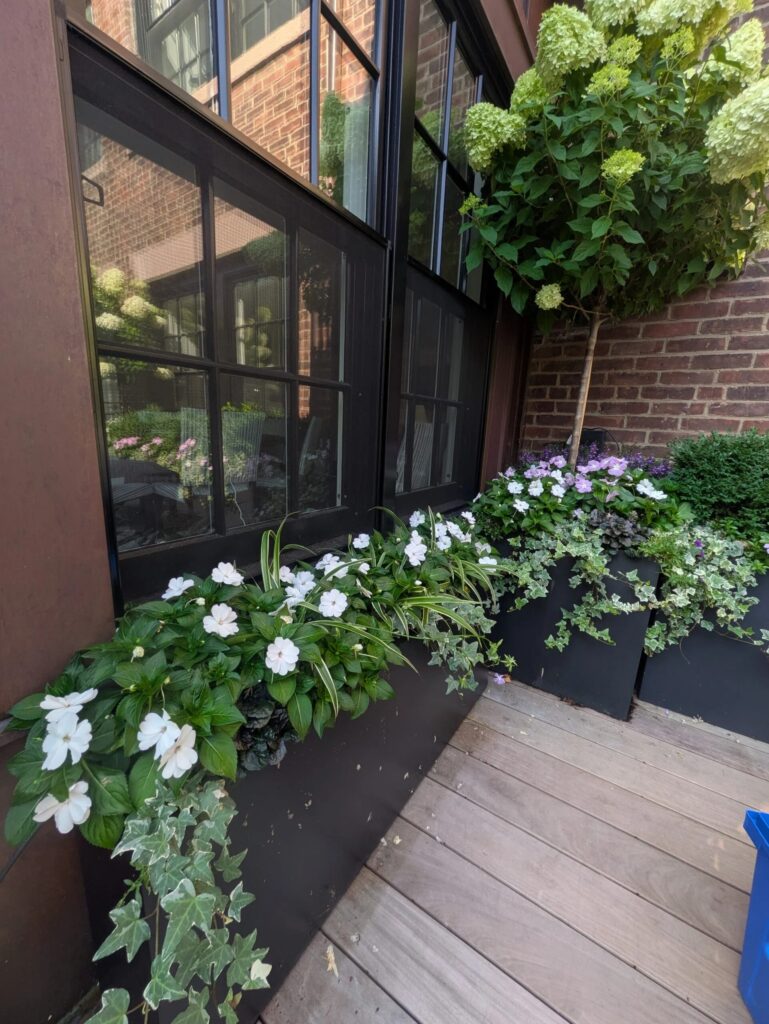
Much of our Cambridge container work centers on tight front stoops and narrow porches near triple-deckers and condo conversions, where a few well-placed pots do the job a full garden bed can’t. We’ve planted stacked containers for graduate student housing courtyards with shared light, and shade-tolerant arrangements for brick-shaded entries close to the squares. Rooftop and fire-escape-adjacent containers in denser blocks call for lighter soil mixes and secure, wind-resistant footing.
We don’t publish addresses, but tight entries, shared courtyards, and rooftop access describe most of the container projects we take on around Cambridge.
Other services we provide in Cambridge
Container gardening is just one piece of the work we do for Cambridge properties. If you’re planning a larger planting scheme beyond pots and boxes, our garden design and installation service builds out front, side, and rear yard plantings from scratch. Once containers or beds are established, our fine gardening and ongoing maintenance visits keep everything looking deliberate rather than neglected as the season progresses.
For street-facing entries and stoops, our window box design and installation service pairs naturally with container work along the same facade. Many Cambridge homes have decks, porches, or rooftop spaces instead of open yards, and our roof deck and terrace planting service is built around the wind, drainage, and weight limits those settings require.
Because containers dry out faster than in-ground beds, we also install drip irrigation to keep plantings consistently watered with minimal hands-on effort. For extending use of a patio or deck into the evening, low-voltage landscape lighting is a common add-on.
- Spring and fall cleanup
- Seasonal container rotation
- Structural and seasonal pruning
- Soil and drainage assessment
- Planting design consultation for phased projects
See our full garden services in Cambridge for the complete list.
Ready to plan your Cambridge containers?
Request a consultation and we’ll set up a visit to your porch, patio, or balcony. We’ll talk through sun exposure, watering access, and the look you’re after, then follow with a planting plan and quote before any pots are placed.
What Our Customers Say
Frequently Asked Questions
Do I need Cambridge Historical Commission approval for window boxes or containers?
It depends on the district and what's being installed. Freestanding containers and seasonal window boxes that don't require drilling into original masonry or trim generally avoid triggering a certificate of appropriateness, but properties in Mid-Cambridge, Avon Hill, and similar districts should have their specific block and installation method reviewed before anything permanent goes up. We design around this by default so most projects don't need a filing at all.
What plants actually survive the shade on a typical Cambridge stoop?
Hakonechloa, hostas bred for containers, heuchera, ferns, and shade annuals like torenia and browallia perform reliably under a mature street-tree canopy that limits direct light to two or three hours a day. We choose the mix based on the exact light window at each property rather than a generic shade list.
Can containers work if my triple-decker has no real yard, just a stoop and a fire escape?
Yes — this is one of the most common Cambridge configurations. We size and place containers for stoops, porch rails, and window ledges specifically, accounting for weight limits on elevated structures and access through narrow side passages.
How do you get soil and containers into a Cambridge side yard with no driveway access?
We plan delivery and installation around what fits through the actual access point, whether that's a two-foot side gate or a shared alley between triple-deckers. In many cases we build containers in place rather than moving pre-filled planters, which avoids needing wider clearance.
Do container plantings need to be reinstalled each season?
Most Cambridge stoop and porch programs are seasonal by design, both for appearance and, on review-district properties, to keep installations classified as removable rather than permanent. We handle the seasonal swap as part of ongoing maintenance so the transition happens without a gap in color.