- Serving Boston and the Greater Boston Area

Container Gardening in Seaport, MA
On a Seaport roof deck or harbor-facing terrace, a container planting is only as good as its ability to survive wind, salt, and the building’s structural limits — that’s the actual design brief before anything gets chosen for color or form. Exposure here is different from a shaded brownstone garden a mile inland: gusts off the water are near-constant, salt spray settles on foliage even several stories up, and the building engineer’s load chart, not the client’s wish list, sets the outer boundary of what’s possible. Irrigation isn’t a nice-to-have on these decks — without it, containers exposed to that much wind and reflected heat can dry out within a day in summer.

What Container Gardening looks like in Seaport
Most of the container work we do in Seaport is on new-construction roof decks and terraces attached to condominium towers and mixed-use buildings along the waterfront and inland toward the Fort Point edge. These are not gardens in the traditional sense — they’re engineered outdoor rooms sitting on a membrane roof, with a fixed structural load limit, a parapet or glass rail that does little to break wind, and full sun for most of the day with almost no canopy shade to soften it. That combination changes every decision, from container material to plant selection to how water gets delivered.
Lightweight fiberglass and high-density resin containers do the structural work that heavy glazed ceramic or cast stone can’t — a filled terracotta urn that would be fine in a Back Bay garden can push a roof deck past its allowable point load once soil and water weight are added. Planting palettes lean on salt-tolerant, wind-firm species: ornamental grasses, dwarf conifers, sedums, and woody plants selected specifically for coastal exposure rather than the shade-garden perennials that work a few blocks inland. Because these decks bake in full sun with wind pulling moisture out of the soil constantly, drip irrigation on a timer isn’t an upgrade here — it’s the only way a planting survives August without daily hand-watering. Access matters too: freight elevators, building move-in windows, and property management coordination shape how installation day actually runs, and we plan around that before a single container arrives.
What we account for here
What we account for here
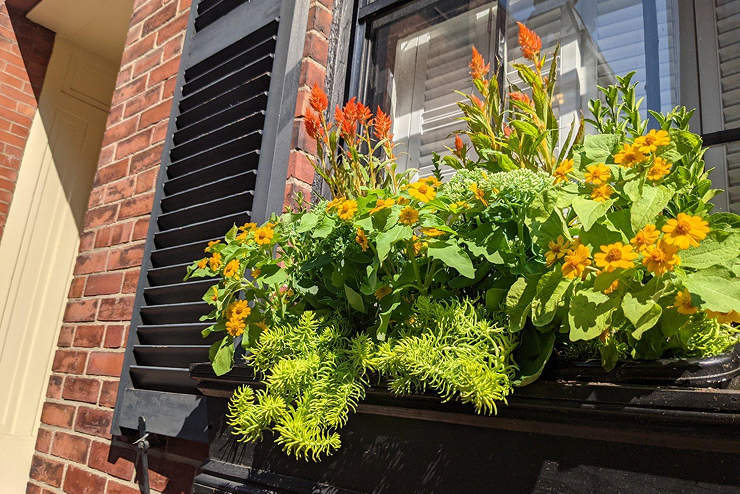
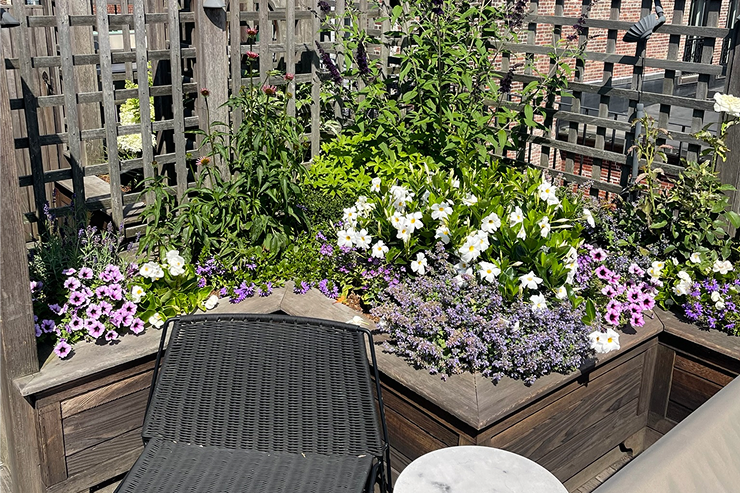
Seaport’s rooftop decks, harborfront breezes, and reflective glass facades all shape how containers perform here. We choose pots and planting mixes suited to wind exposure and heat gain, weigh weight limits on decks and balconies, and account for irrigation access so plantings stay healthy between visits.
Recent Seaport work
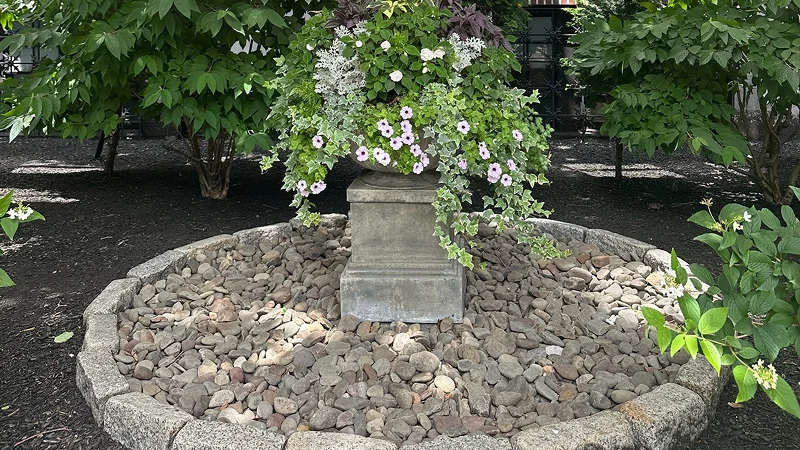
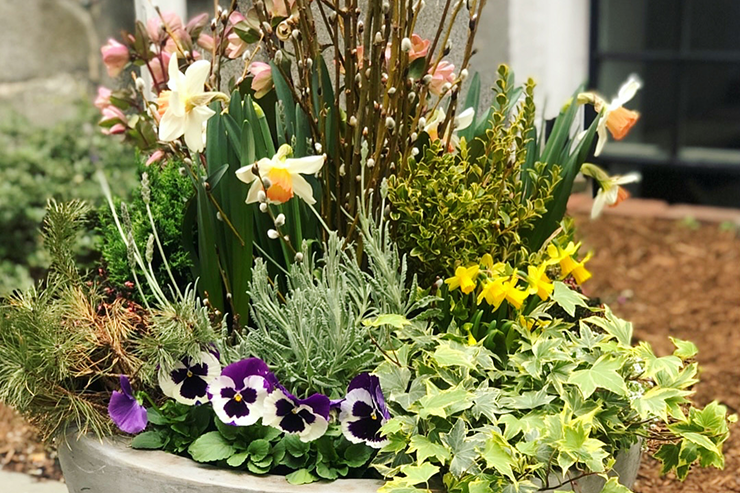
Recent work in the neighborhood has centered on newer residential towers near the waterfront, where we’ve built out roof deck container schemes from scratch — sourcing lightweight planters rated for the building’s load limit, running drip irrigation lines to a rooftop spigot or hose bib, and selecting a planting palette that could take a full season of harbor wind without needing to be replaced by July. We’ve also handled seasonal container refreshes on smaller private terraces off residential units, where the constraint is less about structural load and more about maximizing a compact footprint that gets strong afternoon light but almost no shelter from the wind coming off the channel.
Other services we provide in Seaport
Containers are usually the starting point, not the whole scope. Many Seaport clients ask us to fold in roof deck and terrace planting once we’ve worked out what the structure can carry, and to pair it with drip irrigation so containers don’t depend on someone remembering to water them. On decks and terraces used in the evening, low-voltage landscape lighting gets added to extend the space past sunset without glare off the glass railings. For buildings that want the planting looked after through the season rather than installed and left, fine gardening and ongoing maintenance covers deadheading, feeding, and swapping out anything that doesn’t hold up to the wind. And for a full look at everything we handle in the neighborhood — design, installation, and the services above — see garden services in Seaport.
Container gardening across Boston
The same coastal-exposure logic that shapes container work in Seaport applies, with different specifics, to other Boston neighborhoods. For a citywide view of how we approach container design across conditions, see container gardening in Boston. Clients with properties in both Seaport and the Back Bay often compare notes on plant palette and irrigation setup — see how we handle it over at container gardening in Back Bay.
Based in Seaport, working across Seaport
Rouvalis Gardens is based at 5 Crescent St, Seaport, MA, roughly 2.4 miles from Seaport. That’s close enough that we’re on-site quickly for both the initial assessment and for follow-up visits once a planting is in — useful on roof decks where a single missed irrigation check during a heat wave can undo a season of growth.
The rest of what we handle in Seaport
Containers are often the starting point for a bigger conversation about what a Seaport property needs. Where a rooftop or balcony calls for more than pots, our roof deck and terrace planting service accounts for wind exposure and weight limits that come with elevated outdoor space. For ground-level entries and small plazas, garden design and installation builds out a fuller planting scheme around and beyond the containers.
Once everything is in place, it needs upkeep. Our fine gardening and maintenance visits keep plantings tidy and healthy through the season, and drip irrigation installations solve the watering problem that comes with high-rise living and limited hose access. As daylight fades early for much of the year, low-voltage landscape lighting keeps containers and entryways visible and inviting into the evening.
Beyond these, we also provide:
- Spring and fall cleanups
- Seasonal container rotation and refresh
- Structural and seasonal pruning
- Soil and drainage assessment
- Planting design consultation for phased buildouts
For the complete list, visit our garden services in Seaport page. We do this same container work throughout the Seaport area and in neighboring Boston neighborhoods as well.
Ready to plan your Seaport containers?
Request a consultation and we’ll schedule a walkthrough of your balcony, terrace, or entryway. We’ll evaluate sun exposure, wind, and drainage, then propose a container arrangement and planting palette suited to the space, followed by a clear quote before any work begins.
What Our Customers Say
Frequently Asked Questions
Can containers handle a Seaport roof deck's wind exposure year-round?
Yes, with the right plant selection and container weight. We use wind-firm species — ornamental grasses, dwarf conifers, sedums — and weight or anchor containers so they don't shift or tip in sustained gusts off the harbor. Some tender material still gets swapped seasonally rather than pushed through winter exposure.
Do roof deck containers need irrigation, or can hand-watering work?
On most Seaport roof decks, irrigation is effectively mandatory. Full sun, wind, and elevated exposure dry containers out far faster than a ground-level garden, and hand-watering rarely keeps pace through summer. We typically run a drip line on a timer to a rooftop hose bib as part of the container installation.
How do you know what my roof deck can actually support?
We work from the building's structural load documentation where it's available, and default to lightweight fiberglass or resin containers with engineered soil mixes when it isn't. This keeps filled-weight totals — soil, water, and plant material combined — within a safe margin rather than guessing.
Will salt air off the harbor damage my plants or containers?
Salt spray is a real factor for anything facing the water or exposed on upper floors. We select salt-tolerant plant species for those positions and use container materials that don't corrode or degrade with repeated salt exposure, unlike untreated metal or certain porous stone.
How do you get containers and soil onto a high-rise roof deck?
It depends on the building — usually a freight elevator booking coordinated with property management, sometimes a service entrance move-in window. We handle that scheduling directly with the building so installation day doesn't conflict with resident move-ins or other work.